
Gadgets
7 Must-Check Android Privacy Settings for Enhanced Phone Security

Summary generated by Smart Answers AI
In summary:
- Seven essential Android privacy settings recommended by Tech Advisor can help protect personal data from unnecessary app tracking and permissions.
- Many apps request excessive permissions for advertising purposes, potentially compromising user privacy and device performance.
- Key adjustments include managing app permissions, disabling usage diagnostics sharing with Google, deleting advertising IDs, and restricting background activity for non-essential applications.
Nowadays, our smartphones store a vast amount of personal information that needs to be kept secure, from banking apps to contacts to health data.
A study by NowSecure in 2025 revealed that about 70% of Android apps accessed sensitive data and tracking domains, with over 60% requesting permissions like location, camera, or microphone access.
Android’s multi-layered security model includes privacy controls that users can adjust. Certain built-in features, such as background scanning, enhance user experience but can lead to increased background data activity. It’s important to review and modify these settings if they are not essential for your device usage.
To enhance the security of your phone, it’s crucial to review the following Android privacy settings.
1. Review apps with notification access
Nikhil Azza / Foundry
Have you ever noticed that when you receive a notification on your phone, it also appears on your smartwatch? Android allows certain apps to mirror notifications on other devices.
This feature is commonly used by companion apps for smartwatches, fitness bands, and car infotainment systems.
However, these apps are not restricted to accessing only app-specific notifications; they can view all notifications as they come in.
It’s important to review which apps have this access, as notifications can contain sensitive information like messages, emails, and banking alerts. It is advisable to disable notification access for apps that are not regularly used.
You can manage notification access in the Settings under Apps and Special app access, where you can revoke permissions for individual apps.
2. Disable nearby device scanning (Wi-Fi & Bluetooth scanning)
Nikhil Azza
Google Maps can be frustrating to use with a weak GPS signal. Android employs nearby device scanning to enhance location accuracy by searching for available networks in the vicinity.
Even if you turn off Wi-Fi or Bluetooth, your phone may continue scanning for networks to improve GPS accuracy.
While this feature is beneficial in remote areas, it results in frequent background scans on your device. If highly accurate location services are not necessary, disabling this feature can help conserve battery life.
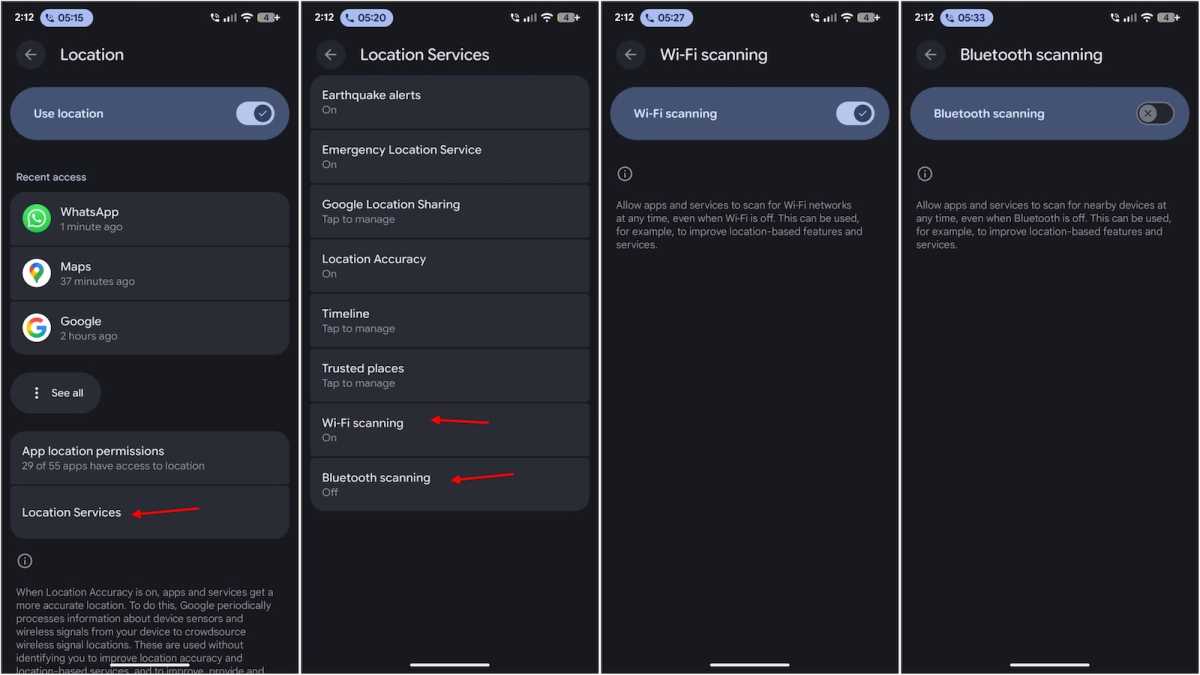
You can turn off nearby device scanning by accessing Location Services in Android’s Location settings. Both Wi-Fi scanning and Bluetooth scanning can be disabled from this section.
3. Erase your advertising ID to reduce ad tracking
On Android devices, targeted ads are displayed frequently. This targeting is achieved by assigning a unique advertising ID to users, which Google utilizes to personalize ads based on app activity.
The advertising ID helps advertisers display more relevant ads and allows them to recognize the same device across various apps.
Ad networks utilize this ID to present interest-based ads. Deleting the advertising ID can restrict how apps and ad networks utilize this identifier.
Even after deleting the ID, ads will still be visible but may be less relevant.
Without the advertising ID, apps find it challenging to create an advertising profile based on your activity. You can delete the ID by navigating to Privacy in Android Settings, selecting Ads, and opting to delete the advertising ID.
4. Disable usage & diagnostics data sharing with Google
Nikhil Azza / Foundry
Android offers an option to share usage and diagnostics data with Google, which is used to enhance Android stability and performance, as well as to address bugs. This data may include device logs, crash reports, and performance data.
The data sharing option is typically enabled by default on many devices. However, your device can function without sharing this information.
Disabling this feature does not impact your Android device or its functionalities but may limit the diagnostic information Google receives in case of bugs or crashes.
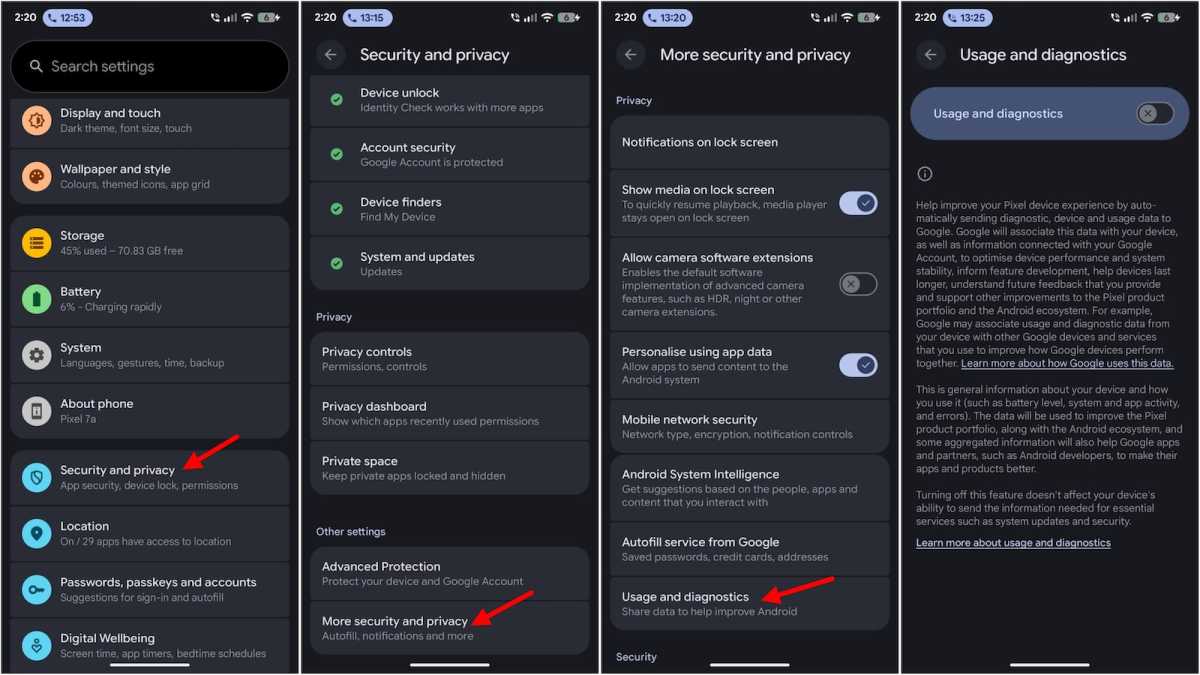
You can turn off usage and diagnostics data sharing in the Privacy section under More security and privacy in your phone’s Settings.
5. Review apps with “Display over other apps” permission
Certain apps on Android have the ability to overlay their screens over other apps, allowing them to appear on top of your current activity. This feature is commonly used by apps with floating chat heads, screen recorders, and accessibility tools.
While this functionality is useful, not all apps require this permission. It’s advisable to check which apps have this permission enabled.
You can revoke the overlay permission for apps that do not genuinely require the floating features. This can be managed in the Special app access section of your phone’s Settings.
6. Determine apps that need unrestricted battery usage
Nikhil Azza / Foundry
Navigation, fitness tracking, and messaging apps require background activity to collect necessary information and stay active. Unrestricted battery usage is crucial for their operation.
While background activity is essential for specific apps, it may not be necessary for most. It’s recommended to review and prevent unnecessary apps from running in the background, allowing only essential apps to have unrestricted battery access.
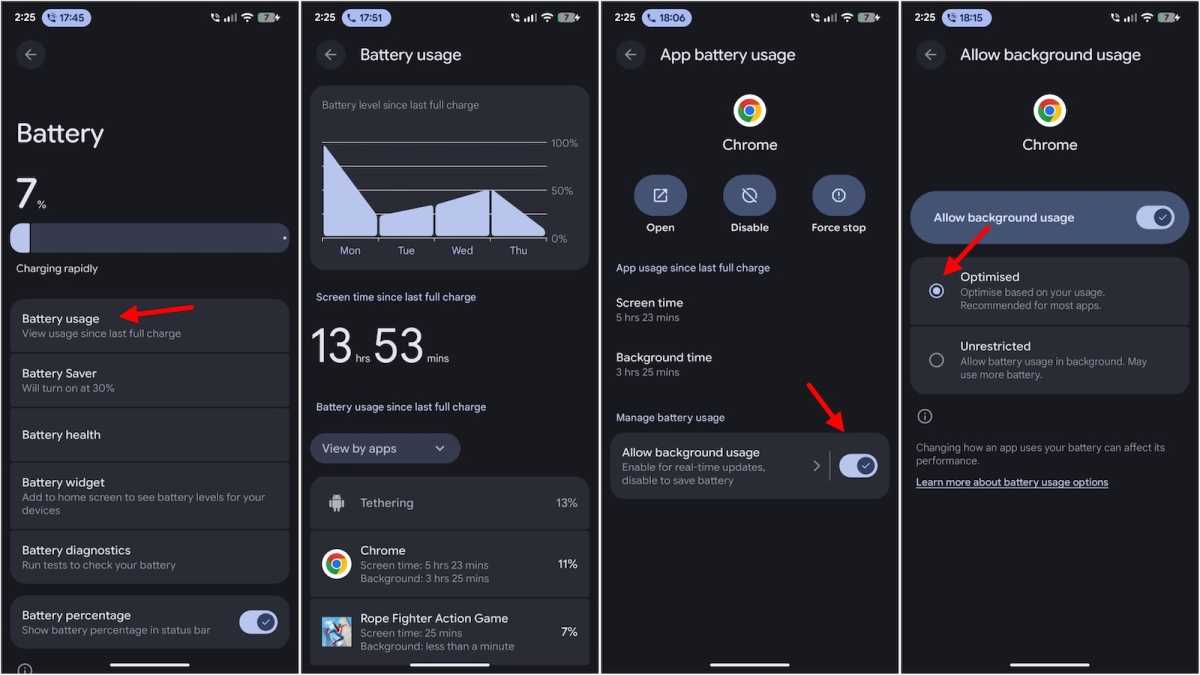
Apps like browsers or YouTube do not need to remain active in the background. You can manage background activity in the battery section of your phone’s Settings. Review apps without restrictions and opt for the optimize option for those deemed unnecessary to be constantly active.
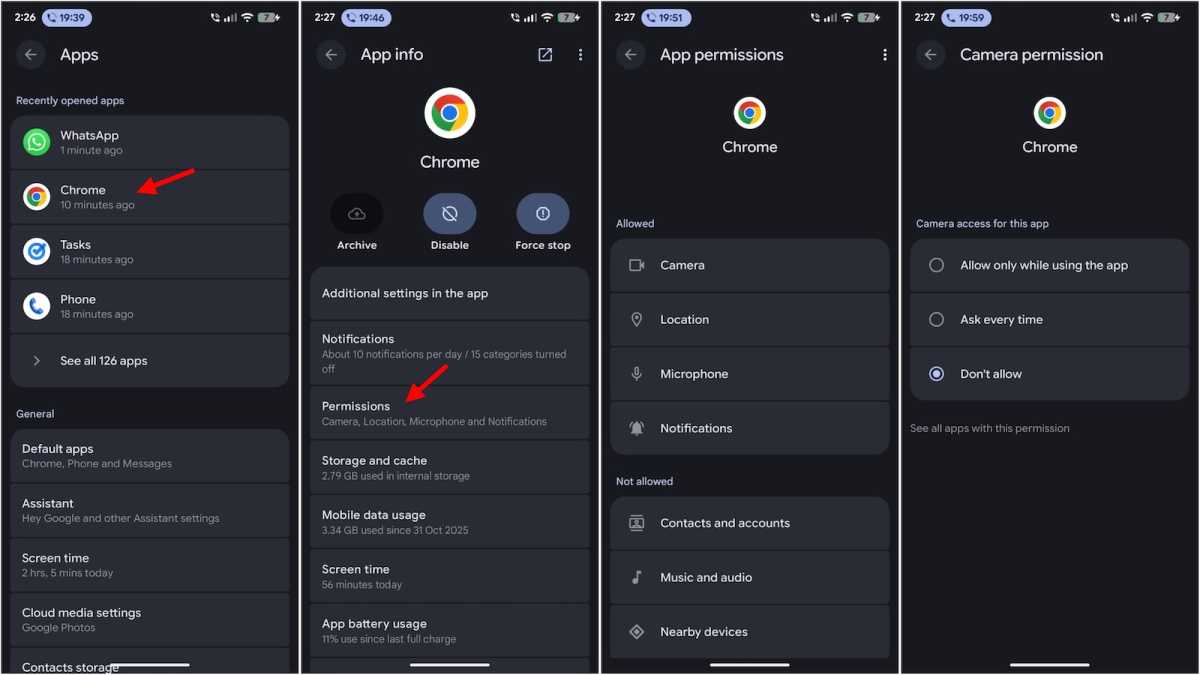
7. Verify an app’s permissions










Gemini’s Guide to Project Organization: A Notebook System for Success

Google Pixel and Android 16: Latest Updates for April

Breaking Down the Latest iOS 26.5 Update: New Features, Release Date, and More

2026 BYD Shark 6: Enhanced Range and Performance Options at Competitive Pricing

Microsoft’s Executive Reshuffling: Developer Division Chief Steps Down

I bought the cheapest smartphones EVER.

Iranian Cyber Attack Targets Israeli Microsoft 365 Organizations: A Password-Spraying Campaign

Pokémon Champions: April 2026 Codes Unleashed

Exploring the Power and Performance of the OnePlus Nord 6: Everything You Need to Know

EU Takes Action Against Instagram and Facebook for Violating Illegal Content Rules

Warning: Facebook Creators Face Monetization Loss for Stealing and Reposting Videos

Facebook Compliance: ICE-tracking Page Removed After US Government Intervention

Facebook’s New Look: A Blend of Instagram’s Style

Facebook and Instagram to Reduce Personalized Ads for European Users

InstaDub: Meta’s AI Translation Tool for Instagram Videos

Reclaim Your Account: Facebook and Instagram Launch New Hub for Account Recovery

Meta discontinues Messenger apps for Windows and macOS

Breaking Updates: Meta Connect 2025 Unveils Latest Developments
I bought the cheapest smartphones EVER.

Xiaomi Mi 10 Ultra – Unboxing and Review.

Galaxy Note 20 Ultra Review.

I bought every Galaxy Note ever.

Samsung and Google are at War.

OnePlus 7 Pro in 2020 – Wow.

Poco X3 – The Shady Truth.

Huawei is replacing Android.

14 MEGA Smartphone Fails we’ll never forget.
-
 Facebook6 months ago
EU Takes Action Against Instagram and Facebook for Violating Illegal Content Rules
-
 Facebook6 months ago
Warning: Facebook Creators Face Monetization Loss for Stealing and Reposting Videos
-
 Facebook6 months ago
Facebook Compliance: ICE-tracking Page Removed After US Government Intervention
-
 Facebook4 months ago
Facebook’s New Look: A Blend of Instagram’s Style
-
 Facebook4 months ago
Facebook and Instagram to Reduce Personalized Ads for European Users
-
 Facebook6 months ago
InstaDub: Meta’s AI Translation Tool for Instagram Videos
-
 Facebook4 months ago
Reclaim Your Account: Facebook and Instagram Launch New Hub for Account Recovery
-
 Apple6 months ago
Meta discontinues Messenger apps for Windows and macOS
