
Security
Insidious Ransomware Gang Exploits Employee Monitoring Software in Cyber Attacks


The Abuse of Employee Monitoring Software for Ransomware Deployment
Recent incidents have revealed a concerning trend where threat actors, specifically a member of the Crazy ransomware gang, are exploiting legitimate employee monitoring software and remote support tools to infiltrate corporate networks, evade detection, and prepare for ransomware attacks.
Researchers at Huntress have uncovered multiple breaches where attackers utilized Net Monitor for Employees Professional and SimpleHelp for remote access, camouflaging their activities within normal administrative tasks.
During one intrusion, the attackers strategically deployed Net Monitor for Employees Professional via the Windows Installer utility, msiexec.exe, enabling them to install the monitoring agent directly from the developer’s site on compromised systems.
Once operational, the monitoring tool granted the attackers full interactive access to the victim’s desktop, including file transfers and command execution capabilities.
To ensure persistent access, the attackers employed PowerShell commands to download and install the SimpleHelp remote access client, disguising it with filenames resembling legitimate software like Visual Studio vshost.exe.
The SimpleHelp binary was sometimes hidden under filenames simulating association with OneDrive, such as C:\ProgramData\OneDriveSvc\OneDriveSvc.exe, allowing the attackers to maintain remote access even if the monitoring tool was removed.
Through these tools, the attackers could remotely execute commands, transfer files, and monitor system activity in real-time. They even attempted to disable Windows Defender by halting and erasing associated services.
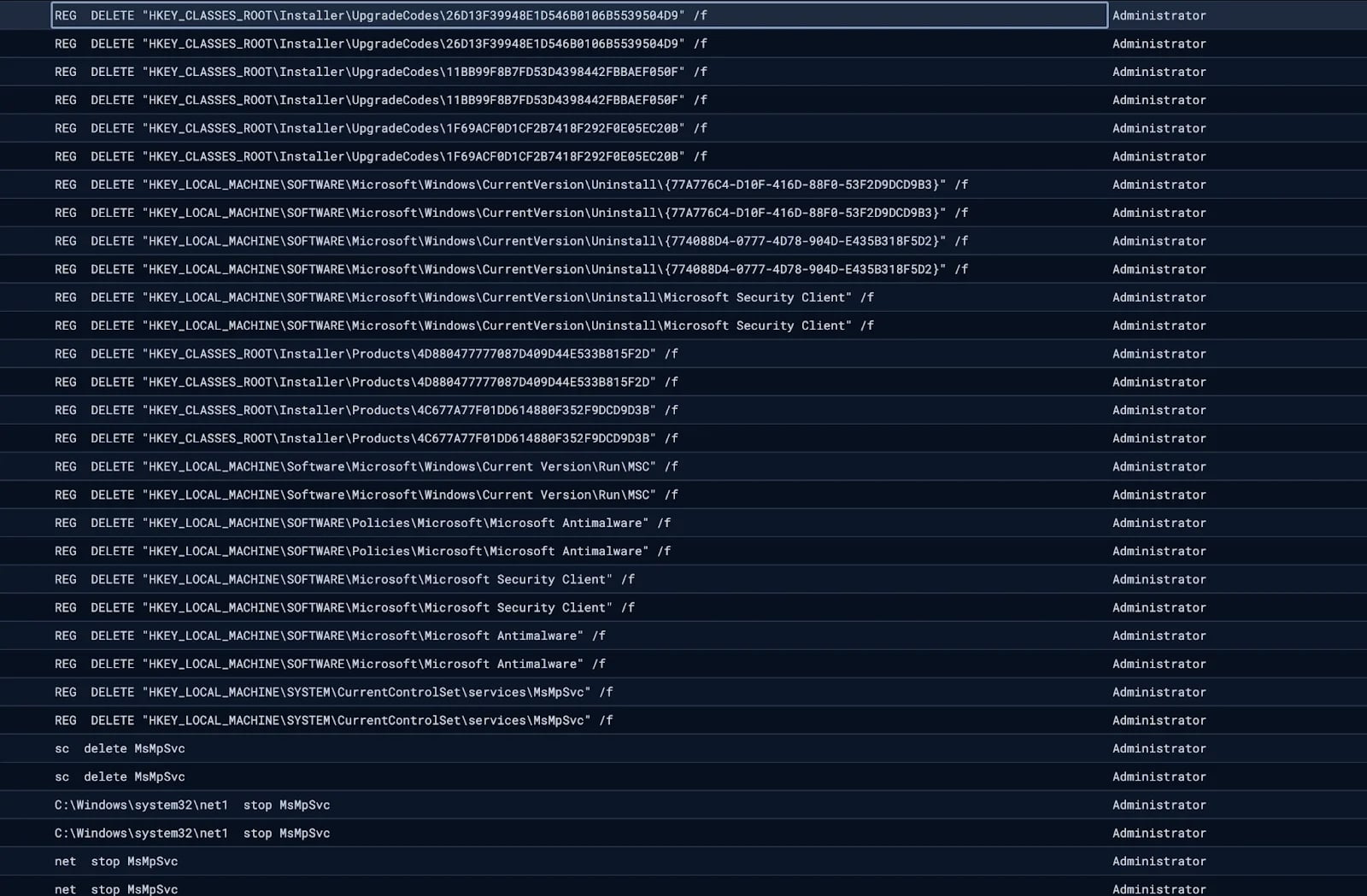
Source: Huntress
In a particular incident, the attackers configured monitoring rules within SimpleHelp to alert them of any activity related to cryptocurrency wallets or remote management tools, indicating preparation for ransomware deployment and potential cryptocurrency theft.
Huntress explains that the attackers monitored keywords associated with cryptocurrency services and remote access tools to detect any suspicious activities on the compromised systems.
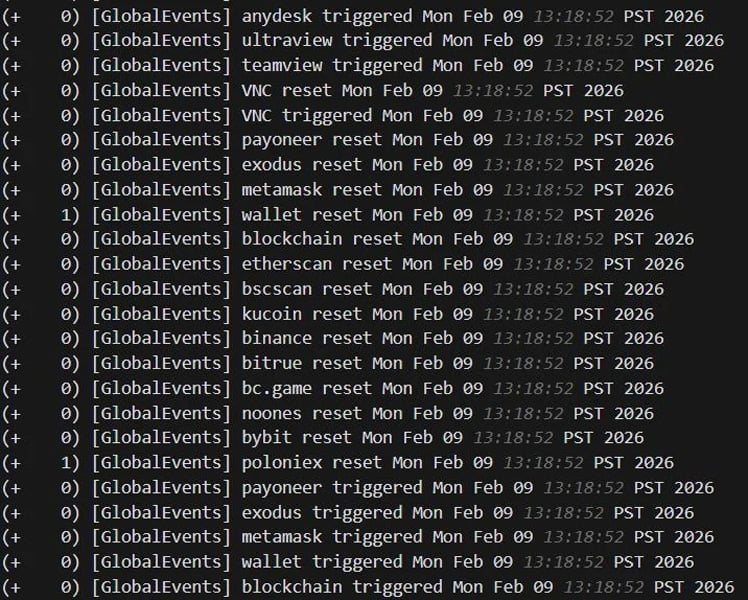
Source: Huntress
By leveraging multiple remote access tools, the attackers ensured continuous access even if one tool was compromised or removed. Although only one incident resulted in Crazy ransomware deployment, Huntress believes the same threat actor is responsible for both intrusions.
Legitimate remote management and monitoring tools are increasingly utilized in ransomware attacks due to their ability to blend in with normal network traffic. Organizations are advised to monitor unauthorized installations of such tools and enforce multi-factor authentication for all remote access services to prevent similar breaches.
Modern IT infrastructure moves faster than manual workflows can handle.
Discover how automated response can reduce delays and enhance reliability in the new Tines guide.











The Surprising TRUTH about Samsung – 15 things you did not know.

McLaren’s Legacy: The Remuera and Muriwai Trademarks

Cloudscape Chronicles: A Fumito Ueda-inspired Parkour Adventure

Rising Prices: Samsung Galaxy Tab S12 and Xiaomi Pad 9 Series

Uncovering the Hidden Profit Potential: Startup Lessons from Healthy Averages

Apple’s Costly Conundrum: $5.7 Billion Damages for Haptic Patent Infringement

Snack Time and Screen Time: Free Peanuts and Fresh Shows

The Ultimate BMW N62 V8 Engine Handbook: Troubleshooting, Performance Upgrades, and Durability

Black Salt Games Launches Team Trifold Studio, Unveiling Nothing Lost

EU Takes Action Against Instagram and Facebook for Violating Illegal Content Rules

Warning: Facebook Creators Face Monetization Loss for Stealing and Reposting Videos

Facebook’s New Look: A Blend of Instagram’s Style

Facebook Compliance: ICE-tracking Page Removed After US Government Intervention

Facebook and Instagram to Reduce Personalized Ads for European Users

InstaDub: Meta’s AI Translation Tool for Instagram Videos

Reclaim Your Account: Facebook and Instagram Launch New Hub for Account Recovery

Meta discontinues Messenger apps for Windows and macOS

Breaking Updates: Meta Connect 2025 Unveils Latest Developments
The Surprising TRUTH about Samsung – 15 things you did not know.

10 Incredible Android DIY Hacks!

Does a Cheap 2018 Smartphone beat a 2013 Flagship?

Samsung Galaxy S9 & S9+ UNBOXING!

Samsung Galaxy S9 Plus vs iPhone X

The BEST $300 Phone (2018) ft. MKBHD, Technical Guruji, iJustine + More

Samsung Galaxy S9 Plus Gaming Review! (vs OnePlus 5T)

THE BEST PHONE HTC EVER MADE?

The Truth about Google?
-
 Facebook11 months ago
EU Takes Action Against Instagram and Facebook for Violating Illegal Content Rules
-
 Facebook12 months ago
Warning: Facebook Creators Face Monetization Loss for Stealing and Reposting Videos
-
 Facebook10 months ago
Facebook’s New Look: A Blend of Instagram’s Style
-
 Facebook12 months ago
Facebook Compliance: ICE-tracking Page Removed After US Government Intervention
-
 Facebook10 months ago
Facebook and Instagram to Reduce Personalized Ads for European Users
-
 Facebook12 months ago
InstaDub: Meta’s AI Translation Tool for Instagram Videos
-
 Facebook10 months ago
Reclaim Your Account: Facebook and Instagram Launch New Hub for Account Recovery
-
 Apple11 months ago
Meta discontinues Messenger apps for Windows and macOS
