
AI
Hitachi’s Strategy: Leveraging Industrial Expertise to Dominate the Physical AI Market

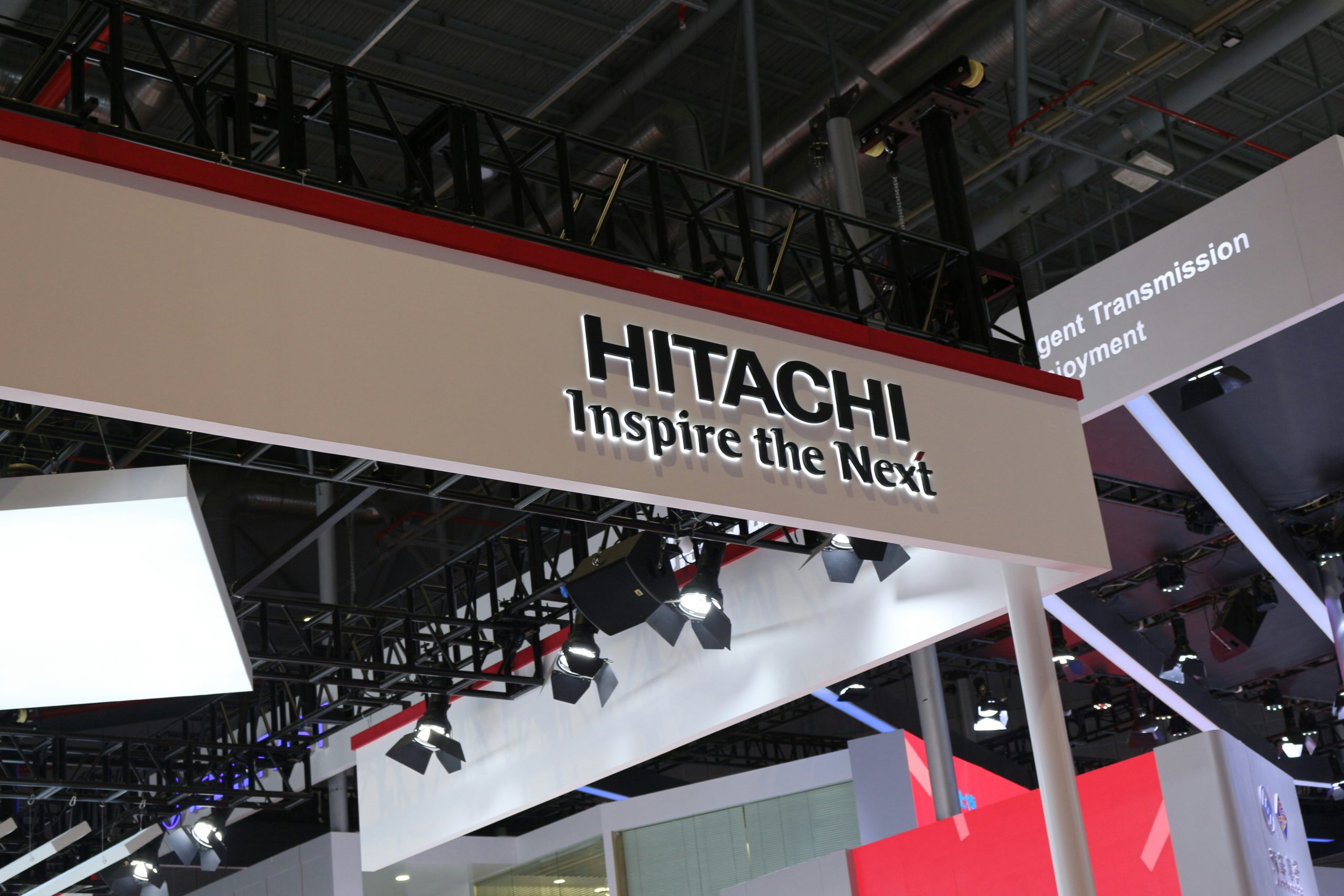
Challenges and Solutions in Physical AI
Physical AI, the facet of artificial intelligence responsible for managing robots and industrial equipment in the real world, faces a significant hierarchy dilemma. At the apex, industry giants like OpenAI and Google are advancing multimodal foundation models. In the middle ground, Nvidia is spearheading the development of platforms and tools for physical AI progression.
However, a third faction, comprising industrial manufacturers such as Hitachi and Siemens from Germany, asserts that a profound understanding of the physical world is fundamental before training machines to navigate it. This viewpoint is transitioning from strategic discussions in boardrooms to practical implementation on factory floors, as highlighted in a recent interview with Hitachi by Nikkei Asia.
The Significance of Foundational Knowledge in Physical AI
Hitachi’s Deputy Director of the Centre for Technology Innovation-Artificial Intelligence, Kosuke Yanai, emphasizes the essential distinction between viable physical AI and theoretical concepts. According to Yanai, a systematic understanding, commencing with foundational physics and industrial equipment knowledge, is imperative for the successful integration of physical AI into society.
Hitachi’s expertise, accumulated over decades through endeavors in railway construction, power infrastructure development, and industrial control systems, forms the bedrock of their argument. The company possesses thermal fluid simulation technology for gas and liquid behavior modeling, along with signal processing tools for equipment condition monitoring. Yanai underscores this engineering foundation as the cornerstone supporting Hitachi’s extensive knowledge in product design and control logic construction.
Successful Deployments and Their Implications
Although Hitachi’s Integrated World Infrastructure Model (IWIM) remains in the concept verification phase, real-world applications demonstrate the practical outcomes of their approach. Collaborating with Daikin Industries, Hitachi has implemented an AI system for diagnosing malfunctions in commercial air-conditioner manufacturing equipment, leveraging maintenance records, manuals, and design drawings to identify faulty components accurately.
Similarly, in partnership with East Japan Railway (JR East), Hitachi has developed an AI system for pinpointing the root causes of malfunctions in Tokyo’s railway traffic management control devices. This system aids operators in formulating response strategies swiftly, crucial in a network where delays impact millions of daily commuters.
Enhancing R&D Efficiency in Industrial AI
Hitachi’s commitment to physical AI innovation is evident in their research endeavors. Recent projects showcased at ASE 2025 focus on addressing a prevalent bottleneck in industrial AI: the time and effort required for control software development and adaptation.
In the automotive sector, Hitachi, alongside subsidiary Astemo, has devised a system utilizing retrieval-augmented generation to automate the generation of integration test scripts for vehicle electronic control units (ECUs). This technology significantly reduces integration testing time, as demonstrated in multi-core ECU testing. Additionally, their logistics sector project introduces variability management technology, facilitating the modularization of robot control software for adaptable warehouse workflows.
Integrating Safety into Physical AI Design
A core tenet across Hitachi’s physical AI initiatives is a focus on safety as a foundational design element rather than an afterthought. The company integrates control and reliability technologies from social infrastructure development to ensure that AI systems operate within human-approved parameters, emphasizing input validation, output verification, and real-time model monitoring to avert operational anomalies.
Recognizing that physical AI systems operate in real-world scenarios, Hitachi prioritizes safety measures to prevent potential risks in sectors such as railway signaling and factory automation, where the implications of failure are substantial compared to less critical applications.
Infrastructure and Partnerships in Physical AI Advancements
Hitachi Vantara, the data and digital infrastructure division of Hitachi, aligns with NVIDIA’s RTX PRO Servers to accelerate physical AI workloads. By combining this hardware with Hitachi’s iQ platform, they develop digital twins for simulating various physical systems, enabling comprehensive testing and analysis.
The Integrated World Infrastructure Model (IWIM) facilitates the integration of NVIDIA’s Cosmos physical AI development platform with specialized models and simulation tools through the model context protocol (MCP). This framework streamlines the utilization of models, simulators, and industrial datasets essential for robust physical AI systems.
Sources: Nikkei Asia (Feb 21, 2026); Hitachi R&D (Dec 24, 2025); Hitachi Vantara Blog (Aug 27, 2025)
Related: Alibaba’s entry into the physical AI domain with the open-source robot model RynnBrain
For more insights on AI and big data from industry leaders, explore the AI & Big Data Expo happening in Amsterdam, California, and London, part of the TechEx event series co-located with the Cyber Security & Cloud Expo. Visit here for further details.
AI News is brought to you by TechForge Media. Discover upcoming enterprise technology events and webinars here.











Samsung Unveils Sneak Peek of Next-Gen Galaxy Z Fold 8

Embracing the Widescreen Phone Revival: Why Oppo Could Lead the Way

The Revolutionary Success of Jev: A $7.5B AI Model in Record Time

Apple TV 4K: A Vintage First-Gen Retrospective

Unbeatable Deals on Australia’s Most Affordable Seven-Seat Diesel SUV

Forza Horizon 6: Revving Up for a 2027 Release on PS5

Embracing Success: A Geek’s Guide to Conquering the Stereotypes of Villainy

Uncovering the Bronze Age Influence in Paradox’s Afterworld: A Deeper Dive Beyond the Top Five Reference Points

iPhone Duo: The Future of Mobile Dominance

EU Takes Action Against Instagram and Facebook for Violating Illegal Content Rules

Warning: Facebook Creators Face Monetization Loss for Stealing and Reposting Videos

Facebook’s New Look: A Blend of Instagram’s Style

Facebook Compliance: ICE-tracking Page Removed After US Government Intervention

Facebook and Instagram to Reduce Personalized Ads for European Users

InstaDub: Meta’s AI Translation Tool for Instagram Videos

Reclaim Your Account: Facebook and Instagram Launch New Hub for Account Recovery

Meta discontinues Messenger apps for Windows and macOS

Breaking Updates: Meta Connect 2025 Unveils Latest Developments

How Smart is the AI-Powered Huawei Mate 10 – with EMUI 8.0?

I used a 2012 Smartphone in 2018 – Here’s what happened.

How to send ANY file Anywhere!

NEW Oneplus 5T Sandstone White Unboxing – The Ultimate Oneplus 5T?

HUAWEI P20 – THE SMARTPHONE REVOLUTION IS HERE?

How OnePlus succeeded when they should have failed.

Samsung sent us THIS! #AD

Ulefone Power 3 – Quad Camera Smartphone that last 2 weeks!

EPIC Smartphone FAILS that people will never forget.
-
 Facebook12 months ago
EU Takes Action Against Instagram and Facebook for Violating Illegal Content Rules
-
 Facebook12 months ago
Warning: Facebook Creators Face Monetization Loss for Stealing and Reposting Videos
-
 Facebook10 months ago
Facebook’s New Look: A Blend of Instagram’s Style
-
 Facebook12 months ago
Facebook Compliance: ICE-tracking Page Removed After US Government Intervention
-
 Facebook10 months ago
Facebook and Instagram to Reduce Personalized Ads for European Users
-
 Facebook12 months ago
InstaDub: Meta’s AI Translation Tool for Instagram Videos
-
 Facebook10 months ago
Reclaim Your Account: Facebook and Instagram Launch New Hub for Account Recovery
-
 Apple12 months ago
Meta discontinues Messenger apps for Windows and macOS
