
AI
China’s Dominance in AI Hardware: America’s Losing Battle

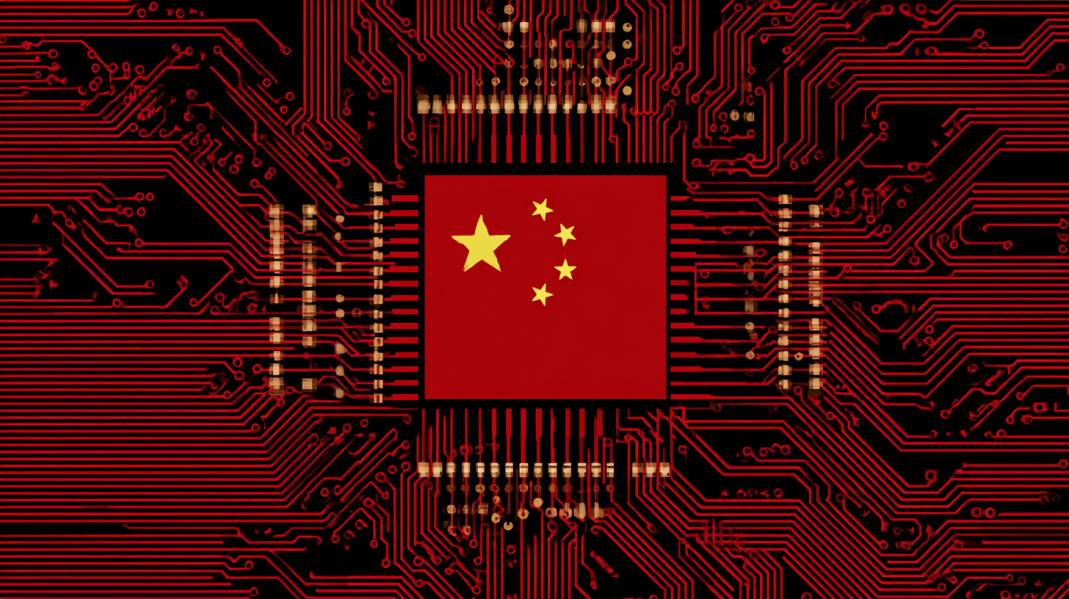
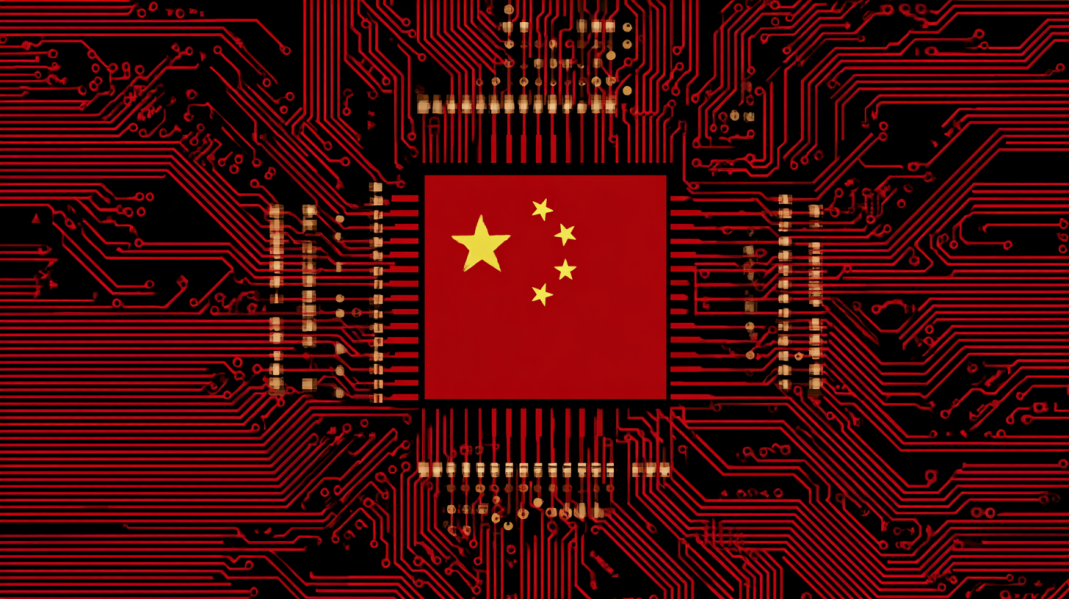
China is on track to dominate consumer artificial intelligence applications and robotics manufacturing within years, but the United States will maintain its substantial lead in enterprise AI adoption and cutting-edge research, according to Kai-Fu Lee, one of the world’s most prominent AI scientists and investors.
In a rare, unvarnished assessment delivered via video link from Beijing to the TED AI conference in San Francisco Tuesday, Lee — a former executive at Apple, Microsoft, and Google who now runs both a major venture capital firm and his own AI company — laid out a technology landscape splitting along geographic and economic lines, with profound implications for both commercial competition and national security.
“China’s robotics has the advantage of having integrated AI into much lower costs, better supply chain and fast turnaround, so companies like Unitree are actually the farthest ahead in the world in terms of building affordable, embodied humanoid AI,” Lee said, referring to a Chinese robotics manufacturer that has undercut Western competitors on price while advancing capabilities.
The comments, made to a room filled with Silicon Valley executives, investors, and researchers, represented one of the most detailed public assessments from Lee about the comparative strengths and weaknesses of the world’s two AI superpowers — and suggested that the race for artificial intelligence leadership is becoming less a single contest than a series of parallel competitions with different winners.
Why venture capital is flowing in opposite directions in the U.S. and China
At the heart of Lee’s analysis lies a fundamental difference in how capital flows in the two countries’ innovation ecosystems. American venture capitalists, Lee said, are pouring money into generative AI companies building large language models and enterprise software, while Chinese investors are betting heavily on robotics and hardware.
“The VCs in the US don’t fund robotics the way the VCs do in China,” Lee said. “Just like the VCs in China don’t fund generative AI the way the VCs do in the US.”
This investment divergence reflects different economic incentives and market structures. In the United States, where companies have grown accustomed to paying for software subscriptions and where labor costs are high, enterprise AI tools that boost white-collar productivity command premium prices. In China, where software subscription models have historically struggled to gain traction but manufacturing dominates the economy, robotics offers a clearer path to commercialization.
The result, Lee suggested, is that each country is pulling ahead in different domains — and may continue to do so.
“China’s got some challenges to overcome in getting a company funded as well as OpenAI or Anthropic,” Lee acknowledged, referring to the leading American AI labs. “But I think U.S., on the flip side, will have trouble developing the investment interest and value creation in the robotics” sector.
Why American companies dominate enterprise AI while Chinese firms struggle with subscriptions
Lee was explicit about one area where the United States maintains what appears to be a durable advantage: getting businesses to actually adopt and pay for AI software.
“The enterprise adoption will clearly be led by the United States,” Lee said. “The Chinese companies have not yet developed a habit of paying for software on a subscription.”
This seemingly mundane difference in business culture — whether companies will pay monthly fees for software — has become a critical factor in the AI race. The explosion of spending on tools like GitHub Copilot, ChatGPT Enterprise, and other AI-powered productivity software has fueled American companies’ ability to invest billions in further research and development.
Lee noted that China has historically overcome similar challenges in consumer technology by developing alternative business models. “In the early days of internet software, China was also well behind because people weren’t willing to pay for software,” he said. “But then advertising models, e-commerce models really propelled China forward.”
Still, he suggested, someone will need to “find a new business model that isn’t just pay per software per use or per month basis. That’s going to not happen in China anytime soon.”
The implication: American companies building enterprise AI tools have a window — perhaps a substantial one — where they can generate revenue and reinvest in R&D without facing serious Chinese competition in their core market.
How ByteDance, Alibaba and Tencent will outpace Meta and Google in consumer AI
Where Lee sees China pulling ahead decisively is in consumer-facing AI applications — the kind embedded in social media, e-commerce, and entertainment platforms that billions of people use daily.
“In terms of consumer usage, that’s likely to happen,” Lee said, referring to China matching or surpassing the United States in AI deployment. “The Chinese giants, like ByteDance and Alibaba and Tencent, will definitely move a lot faster than their equivalent in the United States, companies like Meta, YouTube and so on.”
Lee pointed to a cultural advantage: Chinese technology companies have spent the past decade obsessively optimizing for user engagement and product-market fit in brutally competitive markets. “The Chinese giants really work tenaciously, and they have mastered the art of figuring out product market fit,” he said. “Now they have to add technology to it. So that is inevitably going to happen.”
This assessment aligns with recent industry observations. ByteDance’s TikTok became the world’s most downloaded app through sophisticated AI-driven content recommendation, and Chinese companies have pioneered AI-powered features in areas like live-streaming commerce and short-form video that Western companies later copied.
Lee also noted that China has already deployed AI more widely in certain domains. “There are a lot of areas where China has also done a great job, such as using computer vision, speech recognition, and translation more widely,” he said.
The surprising open-source shift that has Chinese models beating Meta’s Llama
Perhaps Lee’s most striking data point concerned open-source AI development — an area where China appears to have seized leadership from American companies in a remarkably short time.
“The 10 highest rated open source [models] are from China,” Lee said. “These companies have now eclipsed Meta’s Llama, which used to be number one.”
This represents a significant shift. Meta’s Llama models were widely viewed as the gold standard for open-source large language models as recently as early 2024. Chinese companies, such as Lee’s own firm 01.AI, Alibaba, Baidu, and others, have introduced numerous open-source models that now surpass their American counterparts in various benchmarks. This has sparked a debate on the importance of open-source models in AI development. Lee emphasized the benefits of open-source models, highlighting the ability to examine, tune, and improve them for specific applications. He compared this to the success of Linux in operating systems and predicted that open-source models will become more prevalent, although closed models will still dominate in terms of revenue.
Lee also discussed the robotics race between China and the U.S., noting China’s advantage in manufacturing capabilities, lower costs, and investment. While the U.S. can still produce innovative research ideas, the lack of funding for robotics projects compared to China poses a challenge. The integrated supply chain and cost-effective production in China give companies like Unitree a competitive edge in producing affordable commercial robots.
Furthermore, Lee emphasized the significance of energy infrastructure in AI development, pointing out China’s rapid pace of building new energy projects compared to the U.S. This could lead to China surpassing the U.S. in AI capabilities if the trend continues. The potential implications for national security and technological competition were also highlighted.
Despite concerns about the rapid advancement of AI, Lee expressed more immediate worries about unethical use of AI technology or rushed development leading to exploitable flaws in products. He stressed the importance of addressing these risks to prevent potential disasters.
Lee’s insights, drawn from his extensive experience in both Chinese and American AI development, paint a nuanced picture of the global AI landscape. While the U.S. holds advantages in certain aspects of AI, China’s progress in areas like consumer applications, robotics, and open-source models presents a formidable challenge. This dual trajectory suggests a future where different countries excel in different AI domains, shaping economic and geopolitical dynamics. Lee’s analysis serves as a cautionary reminder for American companies and policymakers to navigate this complex strategic landscape effectively. The significance of the AI race is highlighted by the clear message that it is not a single contest but rather multiple races, with the United States and China emerging as leaders in different aspects. Following a conference discussing this topic, a venture capitalist anonymously shared the sentiment that the competition is no longer against China but rather on parallel paths. The question of whether these paths will converge or diverge into distinct technology ecosystems will shape the trajectory of the next decade. The evolution of this competition will determine the future landscape of AI technology and its impact on global innovation.












Oneplus 5T vs Pixel 2 XL vs S8 vs iPhone 8 Battery Charging Speed Test!

The Affordable Next-Gen Xbox: Debunking the $1,800 Price Tag

Revelation: A New Dawn in the Helldivers Universe

Battery Life Halved by Garmin’s New Voice Controls

Revolutionizing Energy: The Future of Next-Gen Battery Life

Warhound Secures $200M Investment to Develop Advanced Military Canines Equipped with Anduril Technology

No, the iPhone Duo isn’t a miniature device

Rebirth of Resilience: The Evolution of Crisis Management in the Digital Age

Australian Court Rules Against Apple’s App Store Monopoly

EU Takes Action Against Instagram and Facebook for Violating Illegal Content Rules

Warning: Facebook Creators Face Monetization Loss for Stealing and Reposting Videos

Facebook’s New Look: A Blend of Instagram’s Style

Facebook Compliance: ICE-tracking Page Removed After US Government Intervention

Facebook and Instagram to Reduce Personalized Ads for European Users

InstaDub: Meta’s AI Translation Tool for Instagram Videos

Reclaim Your Account: Facebook and Instagram Launch New Hub for Account Recovery

Meta discontinues Messenger apps for Windows and macOS

Breaking Updates: Meta Connect 2025 Unveils Latest Developments
Oneplus 5T vs Pixel 2 XL vs S8 vs iPhone 8 Battery Charging Speed Test!

MY NEW CAR?! (Q&A)

Should you buy your Smartphones Refurbished!?

6 Amazing SECRET Android Launchers (2017 / 2018)

6 Value for Money Tech Products you NEED to try!

iPhone X Helicopter 1200ft Drop Test!! + Mous Case Review

7 UNBELIEVABLE Smartphone Magic Tricks!

Oneplus 5T vs Oneplus 1 – 3 Years Later.

Top 20 BEST Smartphones of 2017!
-
 Facebook12 months ago
EU Takes Action Against Instagram and Facebook for Violating Illegal Content Rules
-
 Facebook1 year ago
Warning: Facebook Creators Face Monetization Loss for Stealing and Reposting Videos
-
 Facebook11 months ago
Facebook’s New Look: A Blend of Instagram’s Style
-
 Facebook1 year ago
Facebook Compliance: ICE-tracking Page Removed After US Government Intervention
-
 Facebook11 months ago
Facebook and Instagram to Reduce Personalized Ads for European Users
-
 Facebook1 year ago
InstaDub: Meta’s AI Translation Tool for Instagram Videos
-
 Facebook11 months ago
Reclaim Your Account: Facebook and Instagram Launch New Hub for Account Recovery
-
 Apple1 year ago
Meta discontinues Messenger apps for Windows and macOS
