
Tech News
Future-Forward: Top Healthcare Technology Trends to Keep an Eye on in 2025

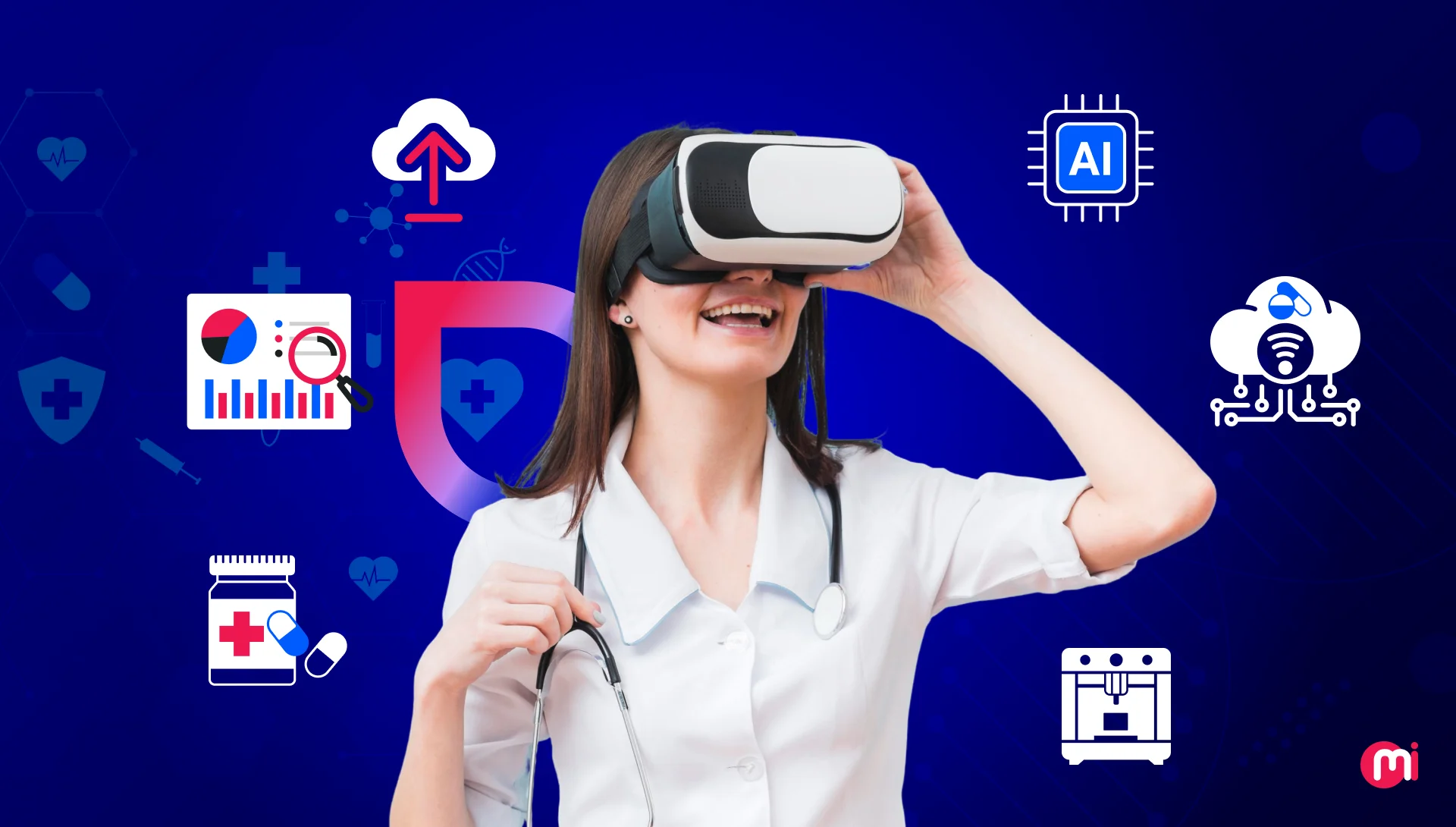
A significant transformation is underway in the global healthcare sector as digital advancements permeate every aspect of care. Technologies such as artificial intelligence (AI), telemedicine, wearable devices, and data-driven platforms are revolutionizing the delivery and experience of healthcare.
According to Business Research Insights, the global digital health market is projected to grow from approximately US$268 billion in 2025 to nearly US$797 billion by 2035, with a compound annual growth rate (CAGR) of around 12.8%.
Similarly, the Imarc Group forecasts that the broader healthcare IT market will expand from about US$363 billion in 2024 to over US$909 billion by 2033, highlighting the urgency of this transformation. These statistics indicate a new era where patients are actively involved, care extends beyond traditional boundaries, and decisions are driven by insights rather than intuition.
From remote monitoring that reduces hospital readmissions to AI-powered diagnostics that expedite outcomes, the technological trends reshaping healthcare are raising expectations, redefining roles, and rewriting norms.
This article unveils the top 10 healthcare technology trends shaping this evolution, outlining their significance, real-world applications, and implications for the future of healthcare.
Key Takeaways
- Emerging healthcare technology trends like AI and machine learning (ML) are revolutionizing clinical decisions through predictive analytics, automation, and personalized patient care.
- The proliferation of telehealth and Internet of Medical Things (IoMT) solutions is transforming access to continuous, connected, and remote healthcare services globally.
- Cloud computing and interoperability are enhancing data sharing, enabling secure collaboration, and streamlining digital transformation across healthcare ecosystems.
- Advancements in 3D printing and nanomedicine are propelling precision medicine, facilitating customized treatments, implants, and drug delivery for better patient outcomes.
- Virtual reality (VR), augmented reality (AR), and neural interfaces represent cutting-edge healthcare IT innovations, enriching medical training, rehabilitation, and human-technology interaction in care provision.
10 Key Healthcare Technology Trends Transforming the Future of Medicine
The healthcare technology trends reshaping medicine in 2025 include AI, ML, VR, AR, telehealth, and nanomedicine. Other notable trends encompass IoMT, interoperability, cloud computing, big data analytics, 3D printing, neural implants, and brain-computer interfaces.
Together, these advancements herald a new era of digital healthcare where technology and medicine converge to enhance outcomes and accessibility globally.
Here’s how these healthcare technology trends are influencing the industry in 2025 and beyond:
1. Artificial Intelligence and Machine Learning
The integration of AI and ML in healthcare is empowering smarter diagnostics, accelerated drug discovery, optimized hospital operations, and truly personalized care. The global AI in healthcare market is expected to reach $187.69 billion by 2030, driven by the benefits of AI in overcoming challenges like data overload and physician shortages.
Generative AI is pushing the boundaries of healthcare innovation, enabling tasks such as drafting clinical reports, designing molecular structures, and expediting research and development processes.
Machine learning aids in identifying intricate patterns within vast healthcare datasets, facilitating predictive analytics for disease progression and treatment pathways.
These capabilities are transitioning healthcare from a reactive model to a proactive and predictive approach that focuses on early intervention.

2. Virtual, Augmented, and Mixed Reality
VR, AR, and MR technologies are pivotal in healthcare, facilitating staff training, procedural preparation, and enhanced patient care.
These technologies replicate complex real-world scenarios in a safe environment, offering non-pharmacological interventions and enabling novel workflows.
Real-world applications of VR/AR/MR technologies are gaining traction, with surgeons utilizing AR overlays for various procedures, enhancing spatial orientation and preparation.
The AR/VR training market is estimated at about US$18.27 billion in 2025, with the healthcare sector accounting for a significant portion.
3. Mainstreaming of Telehealth Solutions
Telehealth solutions have transitioned from emergency responses to essential components of modern healthcare delivery, expanding access and operational efficiency.
Remote Patient Monitoring (RPM) is revolutionizing how clinicians monitor and manage health outcomes between appointments, leveraging connected wearables and continuous data analytics.
Telehealth’s proliferation reflects a broader shift towards preventive and value-based care, extending clinical reach without physical infrastructure expansion.
Major healthcare systems and telehealth companies have embraced virtual consultations, covering various healthcare needs and improving access, particularly in remote regions.
4. Adoption of Nanomedicine
Nanomedicine employs nanoscale materials to deliver drugs, enhance diagnostics, and create smart implants, offering precision targeting and reduced side effects.
Major pharmaceutical companies are increasingly integrating nanomedicine into their portfolios to achieve better outcomes, reduce side effects, and differentiate therapies.
Nanomedicine adoption extends beyond the lab, entering mainstream pharma pipelines and clinical settings, promising enhanced value, shorter treatment times, and improved patient care.
5. Internet of Medical Things (IoMT)
IoMT comprises medical-grade devices, wearables, and software connected via the internet to transmit real-time data, enabling remote monitoring, diagnostics, and care delivery.
IoMT devices facilitate continuous monitoring of chronic conditions, early deterioration detection, and improved hospital asset utilization through connected tracking.
Hospitals are leveraging IoMT devices to monitor equipment, track maintenance, and manage inventory efficiently, ushering in a new era of connected healthcare.
6. Interoperability and Data Sharing
Interoperability in healthcare allows seamless exchange of patient information across different systems, fostering coordinated and data-driven care.
Providers, payers, and policymakers must invest in data governance and align incentives to ensure shared data is usable and integrated into decision-making processes.
Enhanced interoperability benefits patients by ensuring their data and preferences follow them across care episodes, improving safety and experience.
7. Cloud Computing
Cloud computing in healthcare involves using remote servers to store, manage, and deliver data, applications, and services, supporting various healthcare functions such as EHRs, telehealth, and analytics.
Cloud solutions offer scalability, flexibility, and cost-efficiency, enabling rapid deployment of new workflows and fostering collaboration.
With a significant percentage of healthcare organizations already adopting cloud services, the trend is poised to accelerate digital transformation in the industry.
8. Big Data and Analytics
Big Data and analytics leverage diverse datasets to generate insights that enhance decision-making and patient outcomes, facilitating predictive care models and resource allocation.
These technologies are foundational for precision medicine, operational efficiency, and evidence-based decision-making, driving the healthcare industry towards a more intelligent and data-powered ecosystem.
9. 3D Printing
3D printing produces customized medical products such as implants, surgical models, prosthetics, and surgical guides, enabling rapid prototyping and personalized care.
The adoption of 3D printing in healthcare is expanding, with hospitals and device firms integrating the technology for surgical modeling and device innovation.
3D printing is revolutionizing personalized care, surgical precision, and device manufacturing, with increasing adoption across various healthcare sectors.
10. Neural Implants and Brain-Computer Interfaces
Neural implants and BCIs establish direct communication between the brain and external devices, offering potential applications in restoring function, managing disorders, and enhancing human-machine interaction.
These technologies address neurological impairments and leverage technological advancements to overcome technical barriers, positioning BCIs for mainstream healthcare applications.
While challenges remain, the rapid progress in clinical trials and industry investment indicates the imminent integration of BCIs into standard healthcare practices.
Final Verdict
The convergence of technology and medicine is empowering clinicians to make informed decisions swiftly, while granting patients greater autonomy over their health. Healthcare is evolving into a dynamic network of care that adapts to individual needs, driven by intelligent and interconnected systems.
Accelerate Digital Transformation in Healthcare with Custom Healthcare Solutions
Example Company is a leading healthcare software development firm with extensive experience in delivering advanced healthcare solutions. We specialize in modernizing workflows, enhancing capabilities, and delivering top-notch care through cutting-edge technology.
Our expertise encompasses healthcare software development, legacy system modernization, system integration, and managed services. We assist providers in digitizing critical operational areas, including hospital administration, pharmacy supply chain, emergency care, and life sciences research.
Partnering with Example Company grants healthcare organizations access to a comprehensive range of capabilities, from AI-driven diagnostic tools and integrated EHR systems to telemedicine platforms, RPM solutions, and IoT-based asset tracking.
With certifications in ISO 27001, HIPAA, GDPR, PCI DSS, DICOM, and HL7, we develop efficient, scalable, secure, and reliable systems. Our solutions empower organizations to translate vision into value, improve patient outcomes, streamline operations, and stay ahead in the evolving digital healthcare landscape.
FAQs on Healthcare Technology Trends
AI is employed to enhance diagnostics, personalize treatments, streamline administrative tasks, and support clinical decision-making. It enables predictive analytics for disease prevention, aids in medical imaging interpretation, and enhances patient engagement through virtual health assistants.
Healthcare consumerism involves patients actively managing their health and healthcare choices, emphasizing transparency, digital access, personalized care, and value-based services. It encourages individuals to be informed consumers rather than passive patients.
Telepsychiatry utilizes telecommunication technology, such as video calls, to provide psychiatric assessments, therapy, and medication management remotely, enhancing access to mental health care, particularly in underserved areas.
Telemedicine involves delivering clinical healthcare services remotely using digital tools, while telemetry focuses on remote monitoring and transmission of patient data, such as vital signs, to healthcare professionals for analysis.
Payer-provider bonds denote collaborative relationships between insurance payers and healthcare providers to align incentives, improve care coordination, enhance outcomes, and reduce costs through shared data, risk management, and value-based care models.
Cybersecurity in healthcare safeguards sensitive medical data and digital systems from unauthorized access, breaches, and cyber threats, ensuring the confidentiality, integrity, and availability of patient information and protecting hospital networks and medical devices.
Ransomware attacks pose the most significant threat, encrypting patient data and demanding ransom for its release. Other risks include phishing, insider threats, and unsecured medical devices, exploiting the high value of healthcare data on the dark web.











Budget-Friendly E-Paper Experience: Huion Note E Notebook Review

Agent Revolution: Saying Goodbye to Mobile Apps with $4.5M in Funding

BMW’s Cutting-Edge Battery Plant Fuels the Electric Revolution for the 3 Series

Microsoft Gaming Chief Affirms Xbox is Not Available for Sale

Building and Sustaining Research Infrastructure: A Comprehensive Guide

Xbox Remains Unwavering: Not for Sale, Says CEO Asha Sharma

Troubleshooting Android 17 QPR1 Update Problems for Google Pixel Owners

Prime Day Deal: Galaxy S25 FE Drops to Lowest Price Ever at £399

London’s Metaview Secures €53.1 Million Series C Funding to Expand Revolutionary Recruiting Platform

EU Takes Action Against Instagram and Facebook for Violating Illegal Content Rules

Warning: Facebook Creators Face Monetization Loss for Stealing and Reposting Videos

Facebook’s New Look: A Blend of Instagram’s Style

Facebook Compliance: ICE-tracking Page Removed After US Government Intervention

Facebook and Instagram to Reduce Personalized Ads for European Users

InstaDub: Meta’s AI Translation Tool for Instagram Videos

Reclaim Your Account: Facebook and Instagram Launch New Hub for Account Recovery

Meta discontinues Messenger apps for Windows and macOS

Breaking Updates: Meta Connect 2025 Unveils Latest Developments

Samsung Galaxy S9+ Unboxing! (Clone)

Unboxing the First Ever Samsung Galaxy S!!

Huawei P Smart – Huawei’s new Killer Budget Smartphone!

MYSTERY Package from Xiaomi – HUGE UNBOXING!

5 ways you’re using your Smartphone wrong.

THE INSANE DUAL BATTERY SMARTPHONE!

ELEPHONE U PRO UNBOXING AND REVIEW!

Mrwhosetheboss – 1 Million Subscribers

The Surprising TRUTH about Samsung – 15 things you did not know.
-
 Facebook11 months ago
EU Takes Action Against Instagram and Facebook for Violating Illegal Content Rules
-
 Facebook12 months ago
Warning: Facebook Creators Face Monetization Loss for Stealing and Reposting Videos
-
 Facebook10 months ago
Facebook’s New Look: A Blend of Instagram’s Style
-
 Facebook12 months ago
Facebook Compliance: ICE-tracking Page Removed After US Government Intervention
-
 Facebook10 months ago
Facebook and Instagram to Reduce Personalized Ads for European Users
-
 Facebook12 months ago
InstaDub: Meta’s AI Translation Tool for Instagram Videos
-
 Facebook10 months ago
Reclaim Your Account: Facebook and Instagram Launch New Hub for Account Recovery
-
 Apple12 months ago
Meta discontinues Messenger apps for Windows and macOS
