
Cars
The Triumph of BMW: Recapturing Glory in Formula 1 – The 1983 Championship Victory

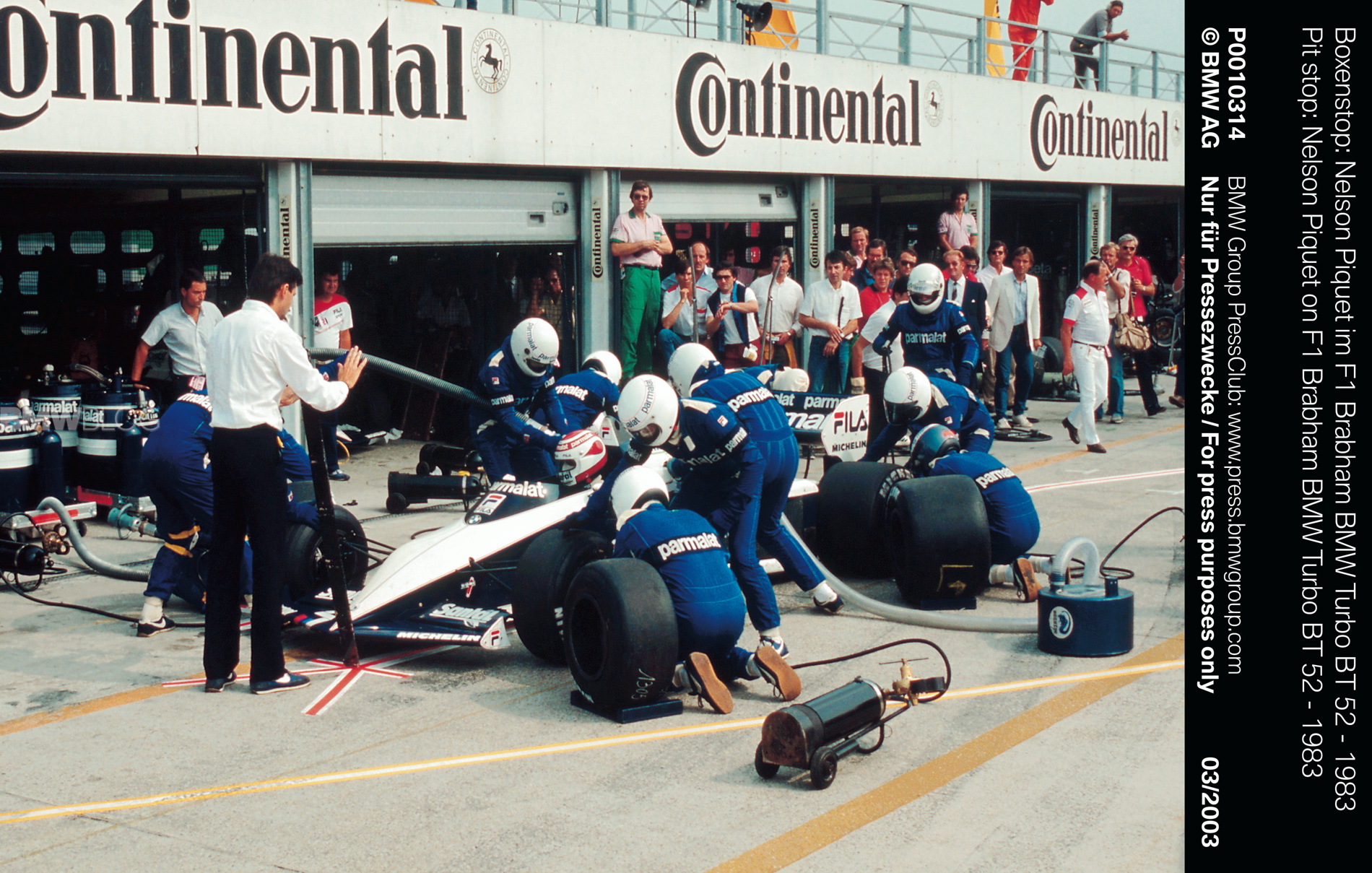
Exploring BMW’s Legendary 1983 Formula 1 Victory
Formula 1 enthusiasts are gearing up for the return of the sport to Las Vegas, a stark reminder of the evolution it has undergone since the early turbo era. The sight of carbon-fiber hybrids racing through the night streets is a far cry from the experimental world of the 1980s, a time when BMW clinched its first and only Formula 1 World Championship in 1983 with Brabham and Nelson Piquet at the helm. The victory was powered by a groundbreaking 1.5-liter BMW engine that pushed the boundaries of power in the sport.
The Evolution from a 1960s Road-Car Block to the Turbo Era
BMW’s triumphant M12/13 engine had humble beginnings, tracing back to the M10, a basic iron block initially used in the early 1960s. Despite not being designed for Formula 1 or the extreme boost pressures of the turbo era, the sturdy M10 block provided a stable foundation for BMW engineers. Led by Paul Rosche, the team transformed the block into a compact powerhouse capable of delivering remarkable power output without succumbing to the rigors of racing.
The M12/13: Power, Fragility, and Thrills
By 1983, BMW’s turbo engine had earned a reputation for its immense power and unpredictable nature. The large KKK turbocharger induced significant lag, followed by a sudden surge of boost that drivers had to anticipate rather than react to. Despite boasting possibly over 1,200 horsepower in qualifying trim, the engine faced reliability issues, with components often failing under full boost. However, when it held together, the M12/13 showcased unparalleled straight-line speed on the track.
Gordon Murray’s BT52: Redefining Design in a New Era
The 1983 season ushered in new regulations that prompted a fresh approach to car design. Gordon Murray, Brabham’s technical director, seized the opportunity to innovate with the BT52, a sleek vehicle tailored around the BMW turbo engine. Murray strategically positioned the weight towards the rear to enhance traction during full boost, while employing light fuel loads and mid-race refueling to maintain agility. Although not the most forgiving car, the BT52 excelled in speed when dialed in correctly.
Nelson Piquet: Mastering the Beast
The BT52 demanded a composed, mechanically astute driver, a role perfectly embodied by Nelson Piquet. With a deep understanding of the engine’s nuances and a knack for managing temperatures and boost pressure, Piquet navigated the challenges posed by the turbocharged engine with finesse. As the 1983 season unfolded, Piquet’s strategic driving and the improving reliability of the BMW engine propelled him back into championship contention.
The Iconic 1983 Title Victory
Monza proved to be the turning point as Piquet’s exceptional speed overshadowed his competitors. With Renault stumbling towards the end of the season, Piquet found himself in a prime position to clinch the championship at Kyalami. A composed drive to third place sealed the deal, marking the first-ever victory for a turbocharged engine in the Formula 1 World Championship.
Legacy of the 1983 Triumph
BMW’s foray into Formula 1 post-1983 yielded fast cars and promising performances, yet none could match the glory of the 1983 victory. The season remains a standout moment in BMW’s racing history, showcasing the resilience of an old block, the audacity of engineering risks, the brilliance of car design, and the precision of driving that propelled Munich to the pinnacle of Formula 1.
As Las Vegas prepares to host the modern iteration of Formula 1 with its hybrid systems and cutting-edge technology, the raw and improvised nature of the 1983 season stands as a captivating chapter in history, underscoring BMW’s unmatched triumph in the early turbo era.












Unleashing the Beast: The 2027 Lamborghini Revuelto SV with 1,050 HP and 80% More Downforce

Strategies for Combatting Identity Fraud in Online Gaming

Kingdom Hearts IV: Coco’s Quest – Unveiling at D23 and Expected Release in Late 2027

Breaking Records: The Top 10 Startup Investments in Sweden in 2021

The Most Powerful Phone on Earth – Turing HubblePhone?

The Open Championship Finds a Home on Apple TV in the US

Critical Insights on Protecting Against Gunra: Highlights from the CISA Advisory

Rideshare Simulator: Unveiling the GenAI Music Experience

RV Entrepreneurship: Is it the Right Fit for You? Essential Tips for Starting a Successful Business

EU Takes Action Against Instagram and Facebook for Violating Illegal Content Rules

Warning: Facebook Creators Face Monetization Loss for Stealing and Reposting Videos

Facebook’s New Look: A Blend of Instagram’s Style

Facebook Compliance: ICE-tracking Page Removed After US Government Intervention

Facebook and Instagram to Reduce Personalized Ads for European Users

InstaDub: Meta’s AI Translation Tool for Instagram Videos

Reclaim Your Account: Facebook and Instagram Launch New Hub for Account Recovery

Meta discontinues Messenger apps for Windows and macOS

Breaking Updates: Meta Connect 2025 Unveils Latest Developments
The Most Powerful Phone on Earth – Turing HubblePhone?

RealMe 2 UNBOXING and REVIEW

Does GPU Turbo make this the Best Budget Gaming Phone?

Pixel 3 Leaked Unboxing – Is Google Lying to us?

Vivo V11 Pro UNBOXING AND REVIEW

Vivo V11 Pro vs Pocophone F1 vs Samsung Note 9 Camera Test Comparison

Huawei Mate 20 PRO – This is why you should be excited.

Huawei Mate 20 lite UNBOXING!

Top 10 Smartphone Gadgets – 2018!
-
 Facebook10 months ago
EU Takes Action Against Instagram and Facebook for Violating Illegal Content Rules
-
 Facebook10 months ago
Warning: Facebook Creators Face Monetization Loss for Stealing and Reposting Videos
-
 Facebook8 months ago
Facebook’s New Look: A Blend of Instagram’s Style
-
 Facebook10 months ago
Facebook Compliance: ICE-tracking Page Removed After US Government Intervention
-
 Facebook8 months ago
Facebook and Instagram to Reduce Personalized Ads for European Users
-
 Facebook10 months ago
InstaDub: Meta’s AI Translation Tool for Instagram Videos
-
 Facebook8 months ago
Reclaim Your Account: Facebook and Instagram Launch New Hub for Account Recovery
-
 Apple10 months ago
Meta discontinues Messenger apps for Windows and macOS
