
AI
AI-Powered Data Integration: Leveraging ChatGPT for Enterprise Knowledge Discovery

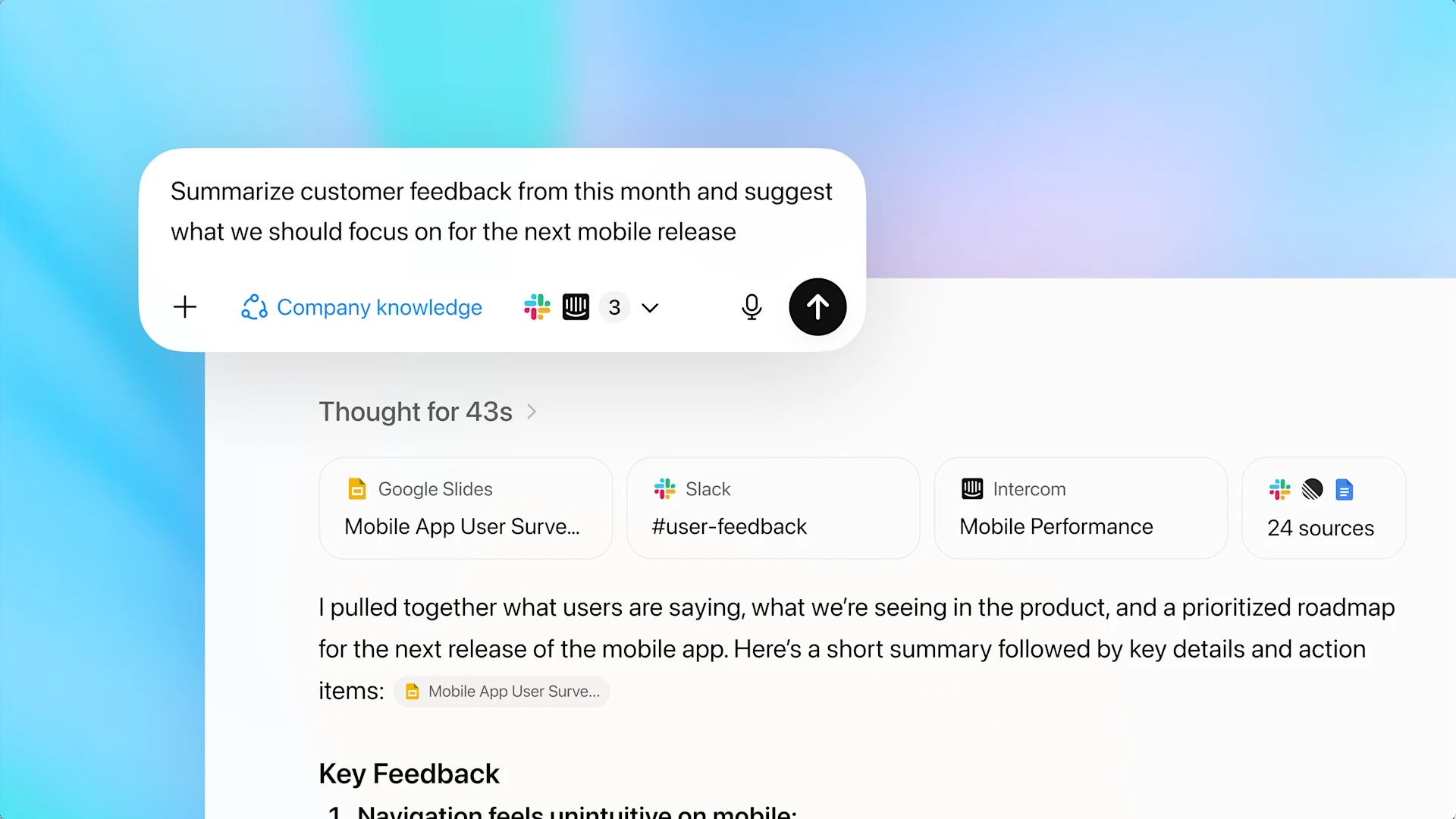
OpenAI is revolutionizing the way company knowledge is accessed by integrating ChatGPT with enterprise data, transforming it into a personalized analyst rather than just a general assistant.
In the realm of generative AI, the potential has always been hindered by the inability to access internal data. OpenAI addresses this issue by highlighting that crucial information often resides within internal tools, but the challenge lies in the scattered nature of this knowledge across various platforms such as documents, files, messages, emails, tickets, and project trackers.
This fragmentation not only causes inconvenience but also impacts efficiency and decision-making processes. The primary obstacle stems from the lack of connectivity between these tools, leading to valuable insights being fragmented across multiple sources.
OpenAI faces stiff competition from major enterprise platforms like Microsoft’s Copilot in Azure and Office 365, Google’s Vertex AI, Salesforce’s Agentforce, and AWS Bedrock, all vying to bridge the gap between models and secure company data.
One of OpenAI’s key features is its utilization of third-party data for ChatGPT enterprise tasks. ChatGPT seamlessly integrates with popular apps such as Slack, SharePoint, Google Drive, and GitHub. Powered by a specialized version of GPT-5, the model scours multiple sources to provide more accurate answers. Each response includes a reference to the source of the information for verification purposes.
This advancement enables a shift from simple writing tasks to complex analysis. For instance, a manager preparing for a client call can request a briefing, and the model can compile information from recent Slack messages, email threads, call notes in Google Docs, and support tickets from Intercom to generate a summary.
Furthermore, ChatGPT can handle ambiguity effectively. When asked about company goals for the upcoming year, the tool summarizes existing discussions, highlights differing viewpoints, and identifies unresolved decisions. This goes beyond mere data retrieval, delving into situational analysis to assist leaders in identifying discrepancies and pending decisions.
The tool’s applications extend to various team functions such as strategy development, reporting, and planning. By consolidating customer feedback, survey results, and support ticket insights, teams can streamline processes and enhance decision-making.
Addressing concerns regarding enterprise AI governance and implementation, OpenAI emphasizes administrative controls and data privacy. The system prioritizes respecting existing company permissions, ensuring that ChatGPT only accesses data visible to individual users.
Admins for ChatGPT Enterprise and Edu have the authority to manage app access and create customized roles. OpenAI emphasizes that the model does not default to training on company data and incorporates security features like encryption, SSO, SCIM, IP whitelisting, and a Compliance API for logs.
However, it’s crucial for tech leaders to acknowledge the tool’s current limitations, such as the requirement for manual activation during conversations and the inability to conduct web searches or create charts while accessing company knowledge. OpenAI is actively working to address these constraints.
The tool’s efficacy is contingent on its ecosystem, which initially includes key platforms and will expand to accommodate connectors for tools like Asana, GitLab Issues, and ClickUp. This strategy mirrors the approach taken by industry players like IBM Watson and SAP Joule.
OpenAI’s focus on surfacing enterprise data knowledge marks a significant evolution for AI assistants like ChatGPT, positioning them at the core of business operations. The emphasis has shifted from the model’s proficiency to secure and seamless data integration.
For business leaders, this development underscores the importance of data assessment, task-specific piloting, setting realistic expectations, monitoring ecosystem compatibility, and comparing platforms to make informed decisions. The key lies in leveraging secure, integrated, and cost-effective data ecosystems.
In conclusion, OpenAI’s innovative company knowledge feature underscores the critical role of secure and efficient data integration in advancing generative AI. While the introduction of this ChatGPT feature streamlines access to company knowledge, it accentuates the significance of data governance and access control. Business leaders are encouraged to prioritize data organization to leverage this technology effectively.
Explore more about AI and big data from industry experts at the AI & Big Data Expo in Amsterdam, California, and London, co-located with other leading technology events like the Cyber Security Expo. Powered by TechForge Media, these events offer a comprehensive platform to delve into the latest enterprise technology trends and insights.
Stay informed about upcoming enterprise technology events and webinars by visiting TechForge Media’s event page. OpenAI’s groundbreaking advancements underscore the shift towards secure and seamless data integration, emphasizing the need for businesses to prioritize data organization to stay ahead in the evolving tech landscape.












Bearlyfy Strikes Russian Companies with Unique GenieLocker Ransomware Attack

Innovative Ventures: The 8 Startups Investors Can’t Resist from YC Demo Day

The Future of iPhone Cameras: Is a 200 MP Lens Coming Soon?

Celebrating the First iX3 Delivery at BMW’s Debrecen Factory

iPhone 12 Pro Max vs Samsung Note 20 Ultra / Huawei / Xiaomi / OnePlus Battery Life DRAIN Test.

Stealthy Malware: The Hidden Threat Within Telnyx PyPI Package

Harvest of Suspicion: Grave Seasons Murder Mystery Farming Sim Arrives in August

Tech Giants Clash: OpenAI Halts Sora as Meta Faces Legal Setback

Apple’s AI Playlist Playground: Where Music Goes to Die

EU Takes Action Against Instagram and Facebook for Violating Illegal Content Rules

Warning: Facebook Creators Face Monetization Loss for Stealing and Reposting Videos

Facebook Compliance: ICE-tracking Page Removed After US Government Intervention

Facebook’s New Look: A Blend of Instagram’s Style

Facebook and Instagram to Reduce Personalized Ads for European Users

InstaDub: Meta’s AI Translation Tool for Instagram Videos

Reclaim Your Account: Facebook and Instagram Launch New Hub for Account Recovery

Meta discontinues Messenger apps for Windows and macOS

Breaking Updates: Meta Connect 2025 Unveils Latest Developments
iPhone 12 Pro Max vs Samsung Note 20 Ultra / Huawei / Xiaomi / OnePlus Battery Life DRAIN Test.

The BEST Smartphone of 2020 🏆

The Self-Healing Smartphones!

Apple is not what it used to be.

Smartphones are Boring now.

The Fastest Android Phone Ever.

Unboxing the $122,000 Smartphone. 🤯

Are Linux Smartphones about to KILL Android?

15 Smartphone FAILS to ruin your day 😂
-
 Facebook5 months ago
EU Takes Action Against Instagram and Facebook for Violating Illegal Content Rules
-
 Facebook5 months ago
Warning: Facebook Creators Face Monetization Loss for Stealing and Reposting Videos
-
 Facebook5 months ago
Facebook Compliance: ICE-tracking Page Removed After US Government Intervention
-
 Facebook4 months ago
Facebook’s New Look: A Blend of Instagram’s Style
-
 Facebook4 months ago
Facebook and Instagram to Reduce Personalized Ads for European Users
-
 Facebook5 months ago
InstaDub: Meta’s AI Translation Tool for Instagram Videos
-
 Facebook4 months ago
Reclaim Your Account: Facebook and Instagram Launch New Hub for Account Recovery
-
 Apple5 months ago
Meta discontinues Messenger apps for Windows and macOS
