
AI-Powered Shopping: Google’s New Feature Allows Users to Call Stores, Browse Products, and Checkout with Ease

Google’s Integration of Artificial Intelligence in Online Shopping
Google is revolutionizing the online shopping experience by infusing artificial intelligence into various aspects, such as enabling an AI tool to make calls to local stores on behalf of users and automatically make purchases.
Starting Thursday, Google users in the US will have access to a range of new AI shopping features, designed to simplify tasks like product searches, comparisons, price tracking, and checkout processes. Some of these features were initially previewed at Google I/O in May.
Conversational Shopping and AI Mode
Google is introducing conversational shopping in AI Mode search, allowing users to describe their preferences in detail. For example, users can refine their search for “women’s sweaters that can be worn with pants or dresses” by adding specifics like “more options in gray colors.” This AI-powered feature utilizes Google’s vast database of 50 billion product listings to provide tailored responses, including side-by-side comparisons and product suggestions. Users can explore items, visit retailer websites, view pricing history, and monitor price fluctuations directly from AI Mode.
Agentic AI Features for Enhanced Shopping
Google is introducing agentic AI features like “Let Google Call,” allowing users to instruct AI to contact local stores to inquire about products, availability, and promotions. The AI agent will identify itself as an automated caller, and merchants have the option to opt out of such calls. After the call, users will receive a summary via text or email. This feature will initially roll out in categories such as toys, health and beauty, and electronics.
AI-Powered Purchasing and Checkout
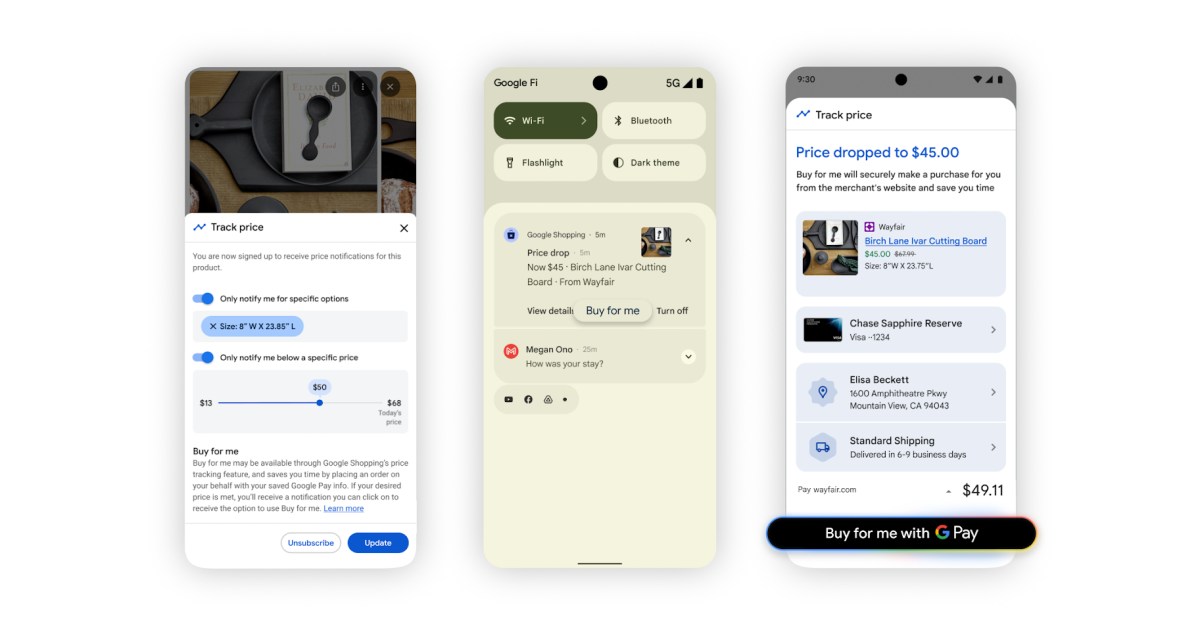
Google is empowering users to task AI agents with making purchases. Shoppers can select items, specify details like color and size, and set a target price. If the item’s price drops below the user’s threshold, Google’s agentic checkout will notify the shopper, seek confirmation, and complete the transaction using Google Pay. This feature will initially be available with select merchants like Wayfair, Chewy, Quince, and Shopify sellers.
Implications of AI-Powered Shopping
Google’s introduction of AI-driven shopping features aims to streamline the shopping process while retaining user control, especially in terms of pricing. This shift towards AI-powered shopping could potentially disrupt traditional methods of product discovery, such as in-store browsing, consumer reviews, and influencer recommendations.
By leveraging AI technology, users can now access personalized product recommendations, comparisons, and pricing information directly through Google’s platform. This consolidation of the shopping experience may challenge the influence of traditional sources like influencers and product review sites. Despite the convenience offered by AI-generated shopping responses, users may still value human recommendations and reviews from platforms like TikTok and Reddit.
As Google continues to innovate in the realm of AI-powered shopping, it presents users with a seamless and efficient way to discover, track, and purchase products. The integration of AI into the shopping experience signifies a shift towards a more automated and personalized approach, potentially reshaping how consumers interact with online retail platforms.













Porsche 911 GT3 RS Facelift: Unveiling the 992.2 Model in August 2026

Bearlyfy Strikes Russian Companies with Unique GenieLocker Ransomware Attack

Innovative Ventures: The 8 Startups Investors Can’t Resist from YC Demo Day

The Future of iPhone Cameras: Is a 200 MP Lens Coming Soon?

Celebrating the First iX3 Delivery at BMW’s Debrecen Factory

iPhone 12 Pro Max vs Samsung Note 20 Ultra / Huawei / Xiaomi / OnePlus Battery Life DRAIN Test.

Stealthy Malware: The Hidden Threat Within Telnyx PyPI Package

Harvest of Suspicion: Grave Seasons Murder Mystery Farming Sim Arrives in August

Tech Giants Clash: OpenAI Halts Sora as Meta Faces Legal Setback

EU Takes Action Against Instagram and Facebook for Violating Illegal Content Rules

Warning: Facebook Creators Face Monetization Loss for Stealing and Reposting Videos

Facebook Compliance: ICE-tracking Page Removed After US Government Intervention

Facebook’s New Look: A Blend of Instagram’s Style

Facebook and Instagram to Reduce Personalized Ads for European Users

InstaDub: Meta’s AI Translation Tool for Instagram Videos

Reclaim Your Account: Facebook and Instagram Launch New Hub for Account Recovery

Meta discontinues Messenger apps for Windows and macOS

Breaking Updates: Meta Connect 2025 Unveils Latest Developments
iPhone 12 Pro Max vs Samsung Note 20 Ultra / Huawei / Xiaomi / OnePlus Battery Life DRAIN Test.

The BEST Smartphone of 2020 🏆

The Self-Healing Smartphones!

Apple is not what it used to be.

Smartphones are Boring now.

The Fastest Android Phone Ever.

Unboxing the $122,000 Smartphone. 🤯

Are Linux Smartphones about to KILL Android?

15 Smartphone FAILS to ruin your day 😂
-
 Facebook5 months ago
EU Takes Action Against Instagram and Facebook for Violating Illegal Content Rules
-
 Facebook5 months ago
Warning: Facebook Creators Face Monetization Loss for Stealing and Reposting Videos
-
 Facebook5 months ago
Facebook Compliance: ICE-tracking Page Removed After US Government Intervention
-
 Facebook4 months ago
Facebook’s New Look: A Blend of Instagram’s Style
-
 Facebook4 months ago
Facebook and Instagram to Reduce Personalized Ads for European Users
-
 Facebook5 months ago
InstaDub: Meta’s AI Translation Tool for Instagram Videos
-
 Facebook4 months ago
Reclaim Your Account: Facebook and Instagram Launch New Hub for Account Recovery
-
 Apple5 months ago
Meta discontinues Messenger apps for Windows and macOS
