
Mobile Tech
Apple’s Groundbreaking Satellite Integration for Future iPhones

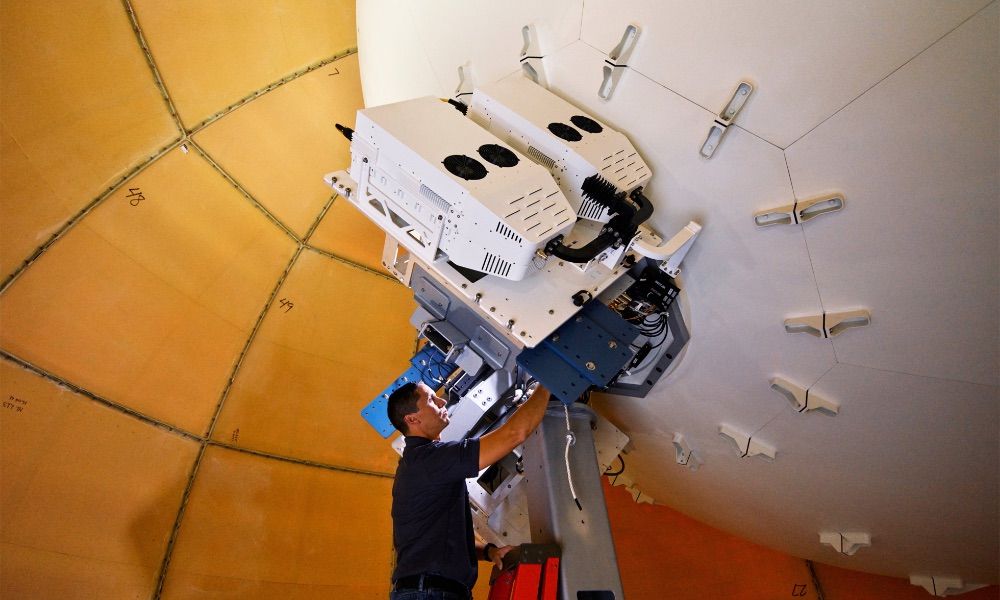
Three years ago, Apple looked to the skies with the first in what would eventually become a series of satellite connectivity features. Starting with the iPhone 14 lineup, Apple added the necessary hardware to punch signals into orbit, first enabling Emergency SOS via satellite and subsequently expanding that into roadside assistance and even text messaging via satellite. However, these early capabilities may only hint at Apple’s broader ambitions for truly ubiquitous connectivity.
While those features may seem limited compared to what SpaceX’s Starlink is now doing with traditional carriers like T-Mobile, Apple’s satellite connectivity features still have a singular advantage: they’re not tied to any particular carrier or region.
Starlink has only gone mainstream over the past year, but its roots go back to before Apple unveiled its first satellite services. However, while Starlink works by effectively beaming 5G signals into space, and therefore requires carrier participation, Apple effectively has its own satellite network that uses traditional L-band and S-band frequencies and is beholden to nobody but Globalstar, the firm Apple has partnered with to launch the actual satellites into orbit.
This has allowed Apple to roll out features like Emergency SOS via satellite globally at a much faster rate. The delays here aren’t about satellite coverage or even frequency licensing in other countries, but rather about partnering with and equipping the necessary emergency services agencies. After all, Apple may be able to receive your satellite request from anywhere on the globe, but it still has to send it somewhere.
The complexities of building these partnerships are even more apparent when it comes to Roadside Assistance via satellite, which is currently available only in the United States through AAA and Verizon, in the UK with Green Flag, and with several providers in Australia. Similarly, Messages via satellite remains limited to North America, since Apple must still tie traditional SMS messages into carrier networks so that replies follow the proper path back to your iPhone.
Still, despite rumors that an Apple-Starlink partnership is seemingly inevitable, it’s more likely that Apple will do everything in its power to go it alone. In a new report, Bloomberg’s Mark Gurman shares some insights into where Apple wants to go, while acknowledging that it’s also chasing an industry that could be moving faster than the satellites around it.
Apple’s Space Race
Apple began recruiting satellite engineers and executives nearly a decade ago, which led to speculation back then that Apple aimed to bypass the carriers and launch its own iPhone communications network. While the satellite services that launched fell far short of that dream, it turns out that the early rumors weren’t entirely wrong — just premature.
Earlier this year, The Information shared insider reports revealing that Apple once considered becoming a full satellite ISP to provide “full-blown wireless internet service” from Apple-controlled satellites. Dubbed “Project Eagle,” in the spirit of other project codenames like “Titan” and “Kalamata,” the initiative would have seen Apple launching thousands of Boeing satellites into orbit to blanket the planet with wireless coverage — delivering universal internet connectivity, with Apple controlling all the pieces.
It wasn’t entirely clear what frequencies Apple would have used for this, or whether traditional voice services would have been part of it, but the report suggests Apple’s ambitions went beyond the iPhone. Apple executives also discussed offering home satellite services via “antennas people could stick to their windows to disperse their internet connection throughout the building,” as The Information described it.
Apple reportedly spent a few million testing the concept at a secret facility in El Segundo, California, but abandoned it due to costs estimated at up to $40 billion, and the high risk of alienating the telecom industry in the process. After Apple scaled down its efforts to focus on emergency satellite connectivity, Elon Musk also reportedly showed up to try to strike a deal to provide exclusive connectivity via Starlink, threatening to go his own way if Apple refused — which it did.
Instead, Apple opted to go with Globalstar, investing over half a billion dollars to launch what was effectively its own satellite constellation. Musk made good on his ultimatum, announcing his partnership with T-Mobile two weeks before Apple launched the iPhone 14 with Emergency SOS via satellite — and the orbital wars began.
Orbital Dominance
With that kind of competitive beginning, it’s little surprise that Apple isn’t about to let Starlink control the skies — especially now that it has its own constellation in place and deep enough pockets to continue offering free satellite connectivity to its customers. That’s more than enough to double down and offer even deeper satellite integration across its hardware and services.
The company took a major step in that direction this fall with the Apple Watch Ultra 3, the first wearable to gain built-in satellite connectivity. It’s an ideal fit for outdoor adventurers, marking the first time Apple’s satellite network has reached beyond the iPhone. Gurman notes that it has also discussed bringing it to the iPad, although that appears to be a longer-term ambition at this point.
Still, with satellite hardware now standard across every iPhone released since 2022, Apple already has a vast base of compatible devices. The next stage appears to be integrating satellite support more deeply into its ecosystem, introducing new features that range from maps and weather to developer APIs that enable third-party apps to tap into its orbiting network.
According to Gurman, Apple is looking to bring satellite connectivity to Apple Maps, which would allow users to navigate without cellular or Wi-Fi access, and code found in iOS 26 suggests that satellite weather could be just around the corner.
A new API will also pave the way for developers to add satellite connectivity to third-party apps, although it’s not yet clear whether this feature will be limited to specific categories.
Developers will have the opportunity to utilize the framework provided by Apple, as the company is optimistic that developers will leverage it effectively.
In addition to this, Apple is looking to enhance its messaging capabilities through satellite technology, aiming to go beyond simple text messages to include the transmission of photos.
One of the key areas of focus for Apple is improving the seamless connectivity offered by satellite technology. Currently, Apple’s satellite features require users to be outdoors with a clear view of the sky. This limitation is a trade-off compared to utilizing 5G technologies like Starlink. However, Apple is working on achieving “natural usage,” which involves staying connected even when the iPhone is in a pocket or indoors.
The feasibility of achieving this with the existing L-band and S-band design remains uncertain. Hence, Apple is exploring the support of 5G NTN (non-terrestrial networks) to enhance its satellite capabilities. While some speculate a potential partnership between Apple and SpaceX, reports suggest that Apple is more likely to invest in upgrading Globalstar’s satellite infrastructure to establish its own 5G NTN network.
Despite this, Apple is open to collaborating with other satellite providers, such as carriers and SpaceX, for more advanced satellite functionalities. Apple’s primary focus is on owning core connectivity features like emergency SOS, messaging, and maps. It is less concerned about users turning to other services for activities like web browsing or photo sharing.
While Apple currently does not plan to enable phone calls, video chats, or web browsing via satellite, SpaceX is actively moving in that direction. There is also a possibility that SpaceX could acquire Globalstar, potentially complicating Apple’s autonomy while presenting new opportunities.
Please note that the information provided in this article is speculative and has not been confirmed by Apple. All rumors should be taken with caution.













Balancing Act: The Decision to Shut Down Sora

Exclusive Arrival: Cupra Born VZ Lands in Australia – But There’s a Twist!

iPhone 12 Pro Max vs Samsung Note 20 Ultra / Huawei Mate 40 Pro Camera Test Comparison.

ClickFix: The New Threat to macOS Security

Kingdom Come: Deliverance 2 – The Rise of Artificial Intelligence

Elon Musk’s Latest Venture Faces Uncertainty as Last Co-Founder Departs xAI

Apple Bids Farewell to the Mac Pro Tower: Is it Truly Dead?

Porsche 911 GT3 RS Facelift: Unveiling the 992.2 Model in August 2026

Bearlyfy Strikes Russian Companies with Unique GenieLocker Ransomware Attack

EU Takes Action Against Instagram and Facebook for Violating Illegal Content Rules

Warning: Facebook Creators Face Monetization Loss for Stealing and Reposting Videos

Facebook Compliance: ICE-tracking Page Removed After US Government Intervention

Facebook’s New Look: A Blend of Instagram’s Style

Facebook and Instagram to Reduce Personalized Ads for European Users

InstaDub: Meta’s AI Translation Tool for Instagram Videos

Reclaim Your Account: Facebook and Instagram Launch New Hub for Account Recovery

Meta discontinues Messenger apps for Windows and macOS

Breaking Updates: Meta Connect 2025 Unveils Latest Developments
iPhone 12 Pro Max vs Samsung Note 20 Ultra / Huawei Mate 40 Pro Camera Test Comparison.

iPhone 12 Pro Max vs Samsung Note 20 Ultra / Huawei / Xiaomi / OnePlus Battery Life DRAIN Test.

The BEST Smartphone of 2020 🏆

The Self-Healing Smartphones!

Apple is not what it used to be.

Smartphones are Boring now.

The Fastest Android Phone Ever.

Unboxing the $122,000 Smartphone. 🤯

Are Linux Smartphones about to KILL Android?
-
 Facebook5 months ago
EU Takes Action Against Instagram and Facebook for Violating Illegal Content Rules
-
 Facebook5 months ago
Warning: Facebook Creators Face Monetization Loss for Stealing and Reposting Videos
-
 Facebook5 months ago
Facebook Compliance: ICE-tracking Page Removed After US Government Intervention
-
 Facebook4 months ago
Facebook’s New Look: A Blend of Instagram’s Style
-
 Facebook4 months ago
Facebook and Instagram to Reduce Personalized Ads for European Users
-
 Facebook6 months ago
InstaDub: Meta’s AI Translation Tool for Instagram Videos
-
 Facebook4 months ago
Reclaim Your Account: Facebook and Instagram Launch New Hub for Account Recovery
-
 Apple5 months ago
Meta discontinues Messenger apps for Windows and macOS
