
Security
Beware: Malicious Chrome Extensions Stealing User Credentials


Malicious Chrome Extensions in Web Store Steal User Credentials
Recently, researchers have discovered two Chrome extensions in the Web Store known as ‘Phantom Shuttle’ that are disguising themselves as plugins for a proxy service. These extensions have been designed to intercept user traffic and extract sensitive data.
Despite the malicious intent of these extensions, they are still available for download on Chrome’s official marketplace and have been operational since at least 2017. The Socket supply-chain security platform released a report detailing the deceptive practices of these extensions.
The primary target audience of Phantom Shuttle includes users in China, particularly foreign trade workers who require connectivity testing from various locations within the country.
Both extensions are attributed to the same developer and are marketed as tools for proxying traffic and conducting network speed tests. They are available for subscription at prices ranging from $1.4 to $13.6.
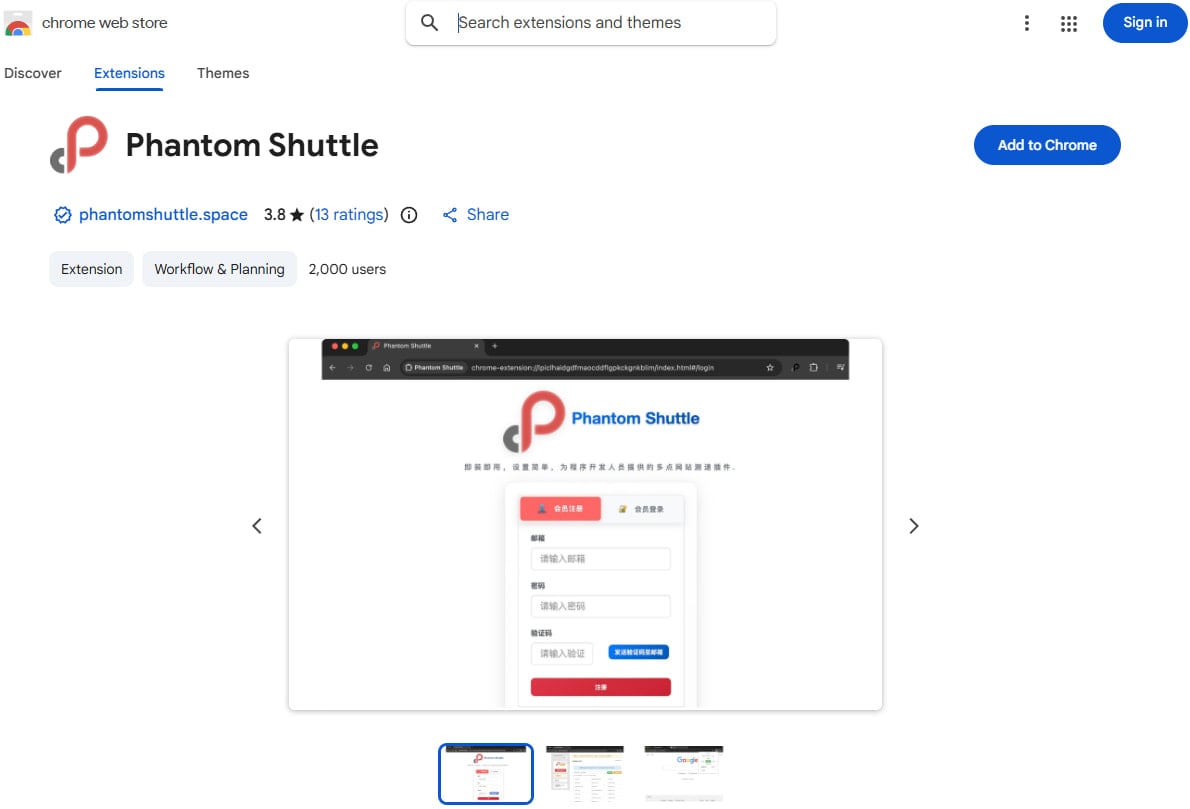
Source: BleepingComputer
Covert Malicious Functionality
Researchers at Socket.dev have uncovered that Phantom Shuttle reroutes all user web traffic through proxies controlled by the threat actor, which are accessible using hardcoded credentials. This malicious code is inserted into the legitimate jQuery library.
The extensions employ a custom character-index encoding scheme to conceal the hardcoded proxy credentials. By utilizing a web traffic listener, the extensions can intercept HTTP authentication challenges on any website.
To redirect user traffic through the attacker’s proxies, the extensions dynamically adjust Chrome’s proxy settings via an auto-configuration script.
Under the default “smarty” mode, over 170 high-value domains are directed through the proxy network, including developer platforms, cloud services, social media platforms, and adult content sites. Notably, local networks and the command-and-control domain are excluded to avoid detection.
While operating as a man-in-the-middle, the extensions can capture data from various forms (credentials, card details, passwords, personal information), extract session cookies from HTTP headers, and obtain API tokens from requests.
BleepingComputer has reached out to Google regarding the presence of these extensions in the Web Store, but no immediate response has been provided.
Chrome users are advised to exercise caution when installing extensions, favoring those from reputable developers, reviewing user feedback, and scrutinizing permissions requested during installation.

Broken IAM isn’t just an IT problem – the impact ripples across your whole business.
This comprehensive guide delves into the reasons traditional IAM practices fall short in meeting modern demands, provides examples of effective IAM strategies, and offers a simple checklist for crafting a scalable approach.













Balancing Act: The Decision to Shut Down Sora

Exclusive Arrival: Cupra Born VZ Lands in Australia – But There’s a Twist!

iPhone 12 Pro Max vs Samsung Note 20 Ultra / Huawei Mate 40 Pro Camera Test Comparison.

ClickFix: The New Threat to macOS Security

Kingdom Come: Deliverance 2 – The Rise of Artificial Intelligence

Elon Musk’s Latest Venture Faces Uncertainty as Last Co-Founder Departs xAI

Apple Bids Farewell to the Mac Pro Tower: Is it Truly Dead?

Porsche 911 GT3 RS Facelift: Unveiling the 992.2 Model in August 2026

Bearlyfy Strikes Russian Companies with Unique GenieLocker Ransomware Attack

EU Takes Action Against Instagram and Facebook for Violating Illegal Content Rules

Warning: Facebook Creators Face Monetization Loss for Stealing and Reposting Videos

Facebook Compliance: ICE-tracking Page Removed After US Government Intervention

Facebook’s New Look: A Blend of Instagram’s Style

Facebook and Instagram to Reduce Personalized Ads for European Users

InstaDub: Meta’s AI Translation Tool for Instagram Videos

Reclaim Your Account: Facebook and Instagram Launch New Hub for Account Recovery

Meta discontinues Messenger apps for Windows and macOS

Breaking Updates: Meta Connect 2025 Unveils Latest Developments
iPhone 12 Pro Max vs Samsung Note 20 Ultra / Huawei Mate 40 Pro Camera Test Comparison.

iPhone 12 Pro Max vs Samsung Note 20 Ultra / Huawei / Xiaomi / OnePlus Battery Life DRAIN Test.

The BEST Smartphone of 2020 🏆

The Self-Healing Smartphones!

Apple is not what it used to be.

Smartphones are Boring now.

The Fastest Android Phone Ever.

Unboxing the $122,000 Smartphone. 🤯

Are Linux Smartphones about to KILL Android?
-
 Facebook5 months ago
EU Takes Action Against Instagram and Facebook for Violating Illegal Content Rules
-
 Facebook5 months ago
Warning: Facebook Creators Face Monetization Loss for Stealing and Reposting Videos
-
 Facebook5 months ago
Facebook Compliance: ICE-tracking Page Removed After US Government Intervention
-
 Facebook4 months ago
Facebook’s New Look: A Blend of Instagram’s Style
-
 Facebook4 months ago
Facebook and Instagram to Reduce Personalized Ads for European Users
-
 Facebook6 months ago
InstaDub: Meta’s AI Translation Tool for Instagram Videos
-
 Facebook4 months ago
Reclaim Your Account: Facebook and Instagram Launch New Hub for Account Recovery
-
 Apple5 months ago
Meta discontinues Messenger apps for Windows and macOS
