
Gadgets
Comparing Home Assistant Connect ZBT-2 and Sonoff PoE Dongle Max: A Zigbee and Thread Coordinator Showdown

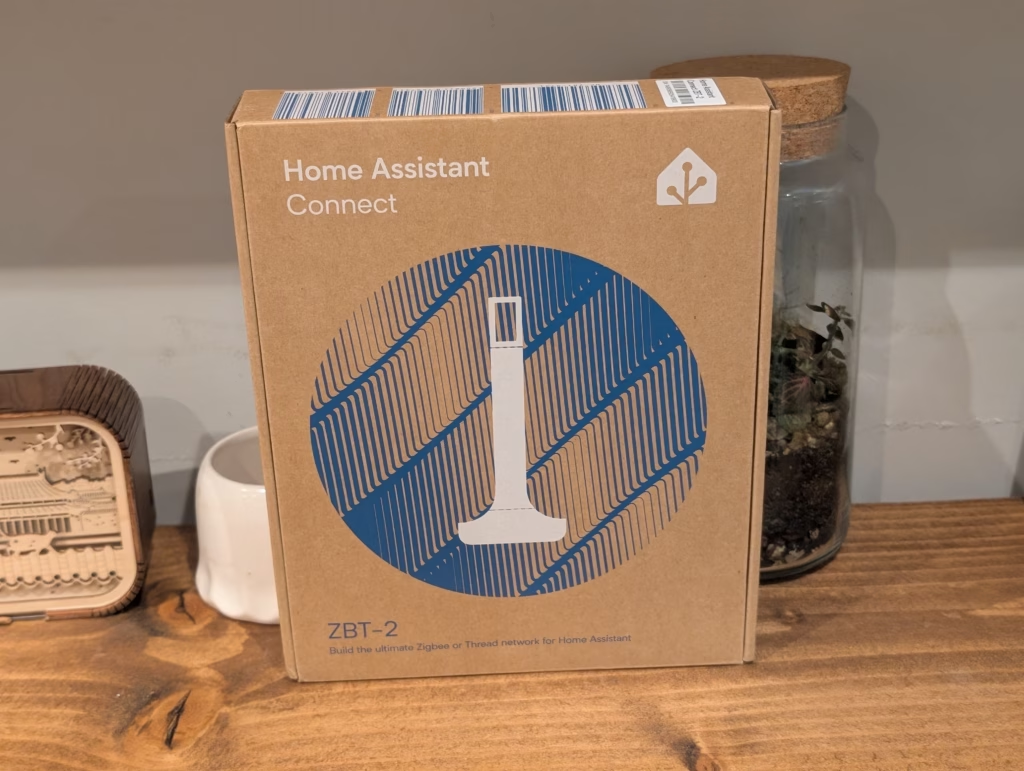
Home Assistant Connect ZBT-2 Review
Summary
The Home Assistant Connect ZBT-2 is a well-executed and much-needed upgrade over the ZBT-1, delivering excellent range, stability, and a genuinely polished setup and migration experience within Home Assistant. Used as a dedicated Zigbee or Thread coordinator, it performs reliably and matches the real-world performance of the Sonoff PoE Dongle Max, while offering tighter Home Assistant integration and a more refined physical design. However, at similar pricing, the lack of PoE and single-protocol limitation make it harder to recommend over the Sonoff for experienced users who want maximum flexibility and optimal placement, even though the ZBT-2 remains an excellent choice for those seeking a clean, officially supported Home Assistant solution.
Pros
-
Excellent Zigbee and Thread performance with strong antenna range.
-
Seamless setup, firmware flashing, and network migration within Home Assistant.
-
Solid build quality and attractive freestanding design suitable for visible placement.
Cons
-
Limited to a single protocol at a time.
-
No PoE support, restricting optimal placement options.
-
Competes directly with cheaper and more flexible alternatives.
A few days ago, I reviewed the superb Sonoff PoE Dongle Max, which I was very impressed with. The more I use it, the more I love it.
In the past, I used the Nabu Case / Home Assistant SkyConnect / ZBT-1, which I used with multi-protocol and was temperamental at best. But, a few days after the Sonoff launch, Home Assistant announced the new ZBT-2, which is a significant upgrade to the old model.
While the ZBT-1 supported multiple protocols, it didn’t work well at all, and Home Assistant have chosen to limit the ZBT-2 to a single protocol at a time. The Sonoff can technically support both protocols, but this is in Beta.
Due to issues with multi-protocol, I have opted to use the Sonoff and ZBT-2 together, with one running Zigbee and the other Thread. In my opinion, they are both quite affordable if you have invested in a lot of smart home devices, so it makes sense to use different devices for each protocol to ensure the most reliable network.
Related Reviews
Specification
| Category | Specification |
| Dimensions and Weight | |
| Device | 83 x 83 x 179 mm, 157 g |
| With box | 227 x 168 x 42 mm, 350 g |
| Material | |
| Enclosure | Polycarbonate plastic |
| Colors | White, semi-transparent |
| Product Details | |
| SoCs | Silicon Labs MG24, ESP32-S3 (USB-serial bridge) |
| Power/Data | USB-C, 5 V DC, 500 mA |
| Supported Protocols | Zigbee 3.0, Thread |
| Antenna Characteristics | |
| Frequency range | 2400–2483.5 MHz |
Features
Improved Performance
Optimised Antenna The ZBT-2 features an optimised antenna design intended to provide improved connectivity with Zigbee and Thread devices. The adapter also enables access to Matter-compatible devices across your network.
Updated Internals The ZBT-2 utilises an updated Zigbee and Thread chipset that delivers higher performance compared to the previous generation, whilst aiming to provide a stable network connection.
More Responsive The adapter operates at a baud rate of 460,800, compared to 115,200 on the ZBT-1. This represents a 4x increase in communication speed, which should translate to improved device responsiveness in practical use.
Second Generation Platform Following the introduction of the ZWA-2, the Connect range now includes the ZBT-2. Despite its more compact form factor compared to the ZWA-2, it shares the same second-generation architecture, focusing on performance and an open platform design that fits into various home environments.
Zigbee or Thread Connectivity
Built for Home Assistant The ZBT-2 has been developed by the team responsible for Home Assistant, ZHA, and Matter.js integration.
Setup and Configuration
- The adapter includes a setup wizard designed to simplify the initial configuration process for Zigbee or Thread networks, with one-click firmware updates available through the interface.
- Users can migrate existing Zigbee or Thread networks to the ZBT-2.
- Setting up a new network involves dedicating the ConnectZBT-2 to either Zigbee or Thread protocol operation.
Design
The Home Assistant Connect ZBT-2 adopts the same desk aesthetic as the Home Assistant Connect ZWA-2. It presents a sleek, modern look with a clear design resemblance to Home Assistant’s Z-Wave dongle, but in a more compact size. The design language aligns with other recent Home Assistant hardware like the Green and Voice, featuring smooth, rounded elements and an appealing mix of white, translucent, and transparent parts for the outer casing.
It is substantially larger than the ZBT-1, which was basically a small USB dongle. The ZBT-2 is now a free-standing antenna with an aesthetic design that you can have sitting out in the open on a shelf or your desk without it looking out of place. Once assembled, it looks like a tiny desk microphone that picked a career in RF engineering. The size is not just about aesthetics though – it is about physics. A big antenna equals big range, and the ZBT-2 delivers on this front.
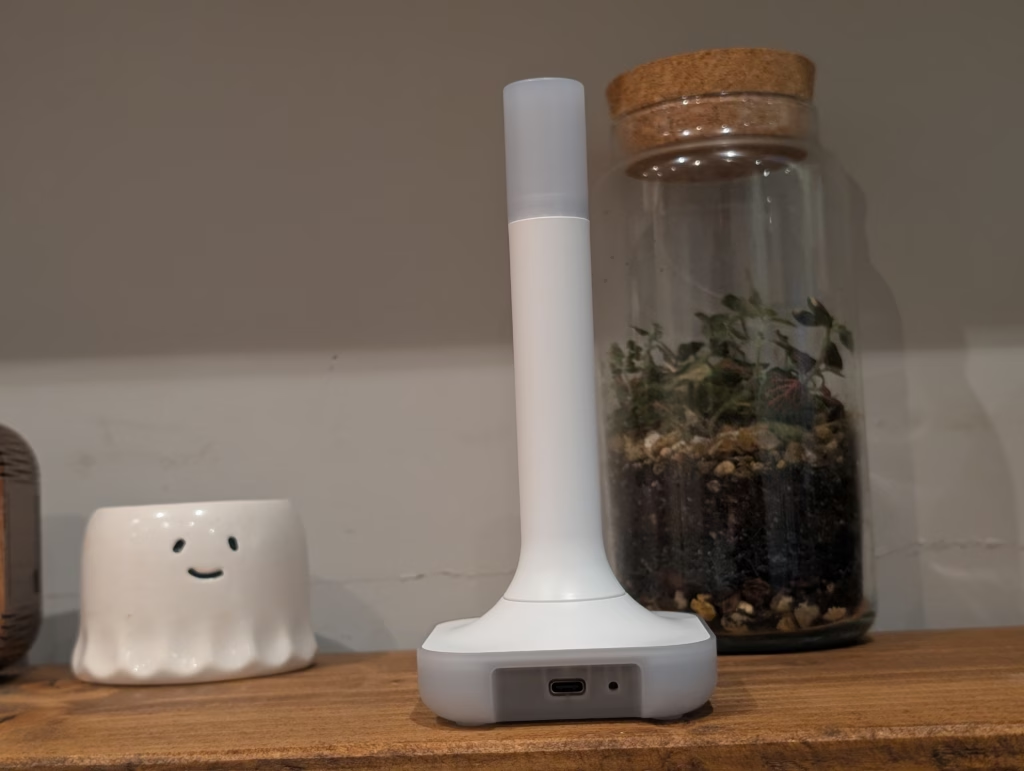
The base unit contains the main components, which include the EFR32MG24 Zigbee/Thread chip. The elongated stem contains the antenna, which maximises range as much as possible.
The Home Assistant Connect ZBT-2 features an LED on top of the antenna for feedback, although it has limited options compared to the Z-Wave version. The current firmware does not activate the LED in Thread mode, but this may change in future updates.
In terms of build quality, the ZBT-2 is very sturdy, unlike the ZBT-1 which was a flimsy plastic dongle that had a problematic batch recalled by Home Assistant. The ZBT-2 has a good weight distribution, allowing it to sit securely on a table without tipping over easily. It also comes with a 1.2 metre USB lead, which is essential for placing the antenna away from potential signal interference.
The design of the ZBT-2 is sleek and modern, resembling the Z-Wave dongle but in a more compact size. It has a similar aesthetic to other Home Assistant hardware like the Green and Voice, with a mix of white, translucent, and transparent components. The larger size of the ZBT-2 is not just for looks, as it allows for better range due to the larger antenna.
Overall, the ZBT-2 is a well-built and aesthetically pleasing antenna that offers good performance and range for Zigbee and Thread signals. The cable comes with a durable, fibre-coated finish that complements the design well, although the white color may be more prone to getting dirty.
When it comes to Zigbee setup and migration, the process was seamless for me. I transferred my Zigbee devices from the Sonoff to the ZBT-2 without any issues. The migration wizard in Home Assistant worked flawlessly, making the transition easy and efficient. Whether you choose ZHA or Zigbee2MQTT, the setup process is straightforward and hassle-free.
Moving on to Thread setup, I found it slightly more time-consuming compared to Zigbee. However, with the ZBT-2 as my main Thread controller, the onboarding process was much smoother and more reliable than my past experiences with Aqara hubs. Setting up Thread with the ZBT-2 was straightforward, and the device performed perfectly as a Thread Border Router.
In terms of performance, the ZBT-2 is on par with the Sonoff PoE Dongle Max. Both devices offer excellent performance, with minimal latency and reliable connectivity. The ZBT-2’s antenna provides a good network range and coverage, making it a reliable choice for home automation setups. The ZBT-2 antenna from the Home Assistant team is claimed to be finely tuned and optimized, and based on personal testing, there is a inclination to believe their claims.
To truly put a coordinator like the ZBT-2 to the test, a large Zigbee network would be required to fully push its capabilities. The EFR32MG24 theoretically can handle up to 200 routers and a total network size of over 500 Zigbee devices within a well-built mesh. However, the overall health and responsiveness of the network will depend on various factors such as the number and placement of mains-powered Zigbee routers, wireless interference from Wi-Fi and other 2.4 GHz signals, electromagnetic interference from other devices and adjacent USB ports, and the proper setup of Zigbee channels.
In terms of price and alternative options, the Home Assistant Connect ZBT-2 can be purchased from pimoroni.com for £41.90 including tax and delivery, but it may be out of stock. Alternatively, Amazon lists it as a US import for £78.30. The SONOFF Zigbee/Thread PoE Dongle Max is considered a strong alternative, with an RRP of £41.30, but available on Amazon for £31.20 at the time of writing. The SMLIGHT MR1, MR2, and MR3 are also options, with the MR1 available for around £45 on Aliexpress.
Overall, the Home Assistant Connect ZBT-2 is seen as a substantial upgrade from the ZBT-1. It is a good choice for those new to Home Assistant, offering better aesthetics and compatibility. However, the Sonoff Dongle Max is viewed as a superior product at a lower price point.
A review of the Home Assistant Connect ZBT-2 highlights its excellent performance and range, seamless setup within Home Assistant, and attractive design. However, limitations such as single protocol support and lack of PoE may make it less flexible compared to alternatives like the Sonoff. It remains a solid choice for those seeking an officially supported Home Assistant solution.
The article was last updated on 2025-12-19, and includes affiliate links. The author, James, is a UK-based tech enthusiast and the Editor of Mighty Gadget, covering a wide range of technology topics since 2007. His expertise spans from computers to smart home devices, with a particular interest in fitness-related technology. Mighty Gadget has been consistently ranked as one of the top technology blogs in the UK by Vuelio. Transform the following:
Original: The company is currently experiencing financial difficulties.
Transformed: The company is currently facing financial challenges. Transform the following:
Original: The weather is very cold today.
Transformed: Today, the weather is extremely cold.









Unmasking the Masterminds: BKA Reveals REvil Leaders Responsible for 130 German Ransomware Attacks

Bluey’s Joyful Adventures: Happy Snaps on Consoles

Spanish startup Xoople secures $130 million in Series B funding to create high-resolution Earth mapping for AI applications

Games for Kids: Pricing and Comparison Guide

Porsche 911 GT3 Sport Cabriolet: Unveiling the Ultimate Open-Air Thrill

Samsung and Google are at War.

Undercover Discovery: Uncovering the BlueHammer Windows Zero-Day Breach

Horsing Around: A Comedy Game of Magnifying Madness

Biggest Ticket Discounts of the Year for Disrupt 2026: Save up to $500 This Week

EU Takes Action Against Instagram and Facebook for Violating Illegal Content Rules

Warning: Facebook Creators Face Monetization Loss for Stealing and Reposting Videos

Facebook Compliance: ICE-tracking Page Removed After US Government Intervention

Facebook’s New Look: A Blend of Instagram’s Style

Facebook and Instagram to Reduce Personalized Ads for European Users

InstaDub: Meta’s AI Translation Tool for Instagram Videos

Reclaim Your Account: Facebook and Instagram Launch New Hub for Account Recovery

Meta discontinues Messenger apps for Windows and macOS

Breaking Updates: Meta Connect 2025 Unveils Latest Developments
Samsung and Google are at War.

OnePlus 7 Pro in 2020 – Wow.

Poco X3 – The Shady Truth.

Huawei is replacing Android.

14 MEGA Smartphone Fails we’ll never forget.

Why Samsung’s Transparent Phone will fail.

6G – Explained!

Is Samsung about to take over?

The Problem with Fast Chargers.
-
 Facebook5 months ago
EU Takes Action Against Instagram and Facebook for Violating Illegal Content Rules
-
 Facebook6 months ago
Warning: Facebook Creators Face Monetization Loss for Stealing and Reposting Videos
-
 Facebook6 months ago
Facebook Compliance: ICE-tracking Page Removed After US Government Intervention
-
 Facebook4 months ago
Facebook’s New Look: A Blend of Instagram’s Style
-
 Facebook4 months ago
Facebook and Instagram to Reduce Personalized Ads for European Users
-
 Facebook6 months ago
InstaDub: Meta’s AI Translation Tool for Instagram Videos
-
 Facebook4 months ago
Reclaim Your Account: Facebook and Instagram Launch New Hub for Account Recovery
-
 Apple6 months ago
Meta discontinues Messenger apps for Windows and macOS
