
Tech News
Comparing MVP and Full-Scale Mobile Apps: Finding the Best Fit

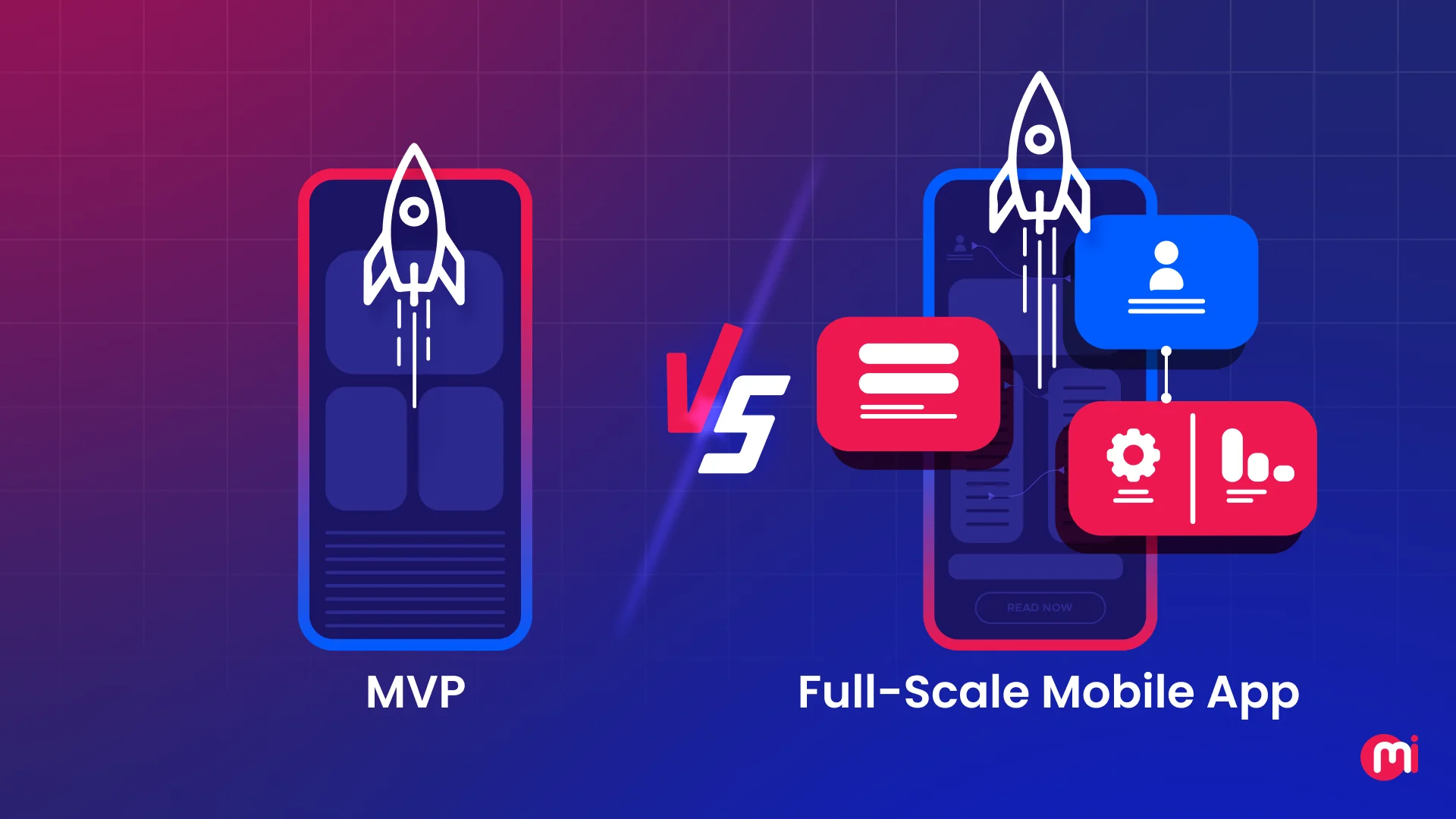
Understanding MVP vs Full-Scale Mobile App Development
When it comes to developing mobile apps, startups often face the dilemma of choosing between building a Minimum Viable Product (MVP) or going straight into full-scale development. Both approaches have their advantages and limitations, and the right choice depends on various factors such as budget, market certainty, risk tolerance, and business goals.
MVP Development: Validating Ideas with Minimum Features
An MVP is the most basic version of a new product that includes only essential features needed to solve specific user problems. The primary goal of an MVP is not perfection but validation. By launching an MVP, businesses can gather real user feedback early, iterate based on that feedback, and improve the product over time. Some key characteristics of an MVP include:
- Focuses on one primary problem
- Limited but functional features
- Faster development cycle
- Lower initial investment
- Designed for testing assumptions
An MVP allows startups to answer critical questions early, such as whether users actually need the solution, if they are willing to use or pay for it, and which features matter most.
Full-Scale Mobile App Development: Comprehensive Features and Scalability
In contrast, full-scale mobile applications are complete apps designed with a comprehensive feature set, advanced user experience, integrations, and scalability considerations from the beginning. These apps aim to deliver a polished experience ready for large-scale adoption. Key characteristics of full-scale apps include:
- Extensive features and functionalities
- Advanced UI/UX design
- Backend scalability
- Third-party integrations
- Performance optimization
- Security and compliance readiness
Full-scale apps are typically built when businesses already understand their users and product requirements clearly.
Examples of MVPs that Scaled to Full-Scale Applications
Many iconic companies like Instagram, Airbnb, Uber, and Spotify started as MVPs with minimal features to validate market demand before scaling into full-scale platforms. For example, Instagram began as a simple photo-sharing app, while Airbnb started as a basic website to test the concept of renting out rooms.
Comparing MVP Vs Full-Scale Mobile Applications
There are several factors to consider when comparing MVP and full-scale mobile app development:
| Comparison Criteria | MVP Development | Full-Scale Mobile App Development |
| Development Time | Typically takes a few weeks to a few months | May take several months or longer |
| Cost Investment | Lower upfront investment | Higher initial costs |
| Risk Level | Reduces risk by validating ideas early | Higher risk due to developing without market validation |
| Time-to-Market | Faster market entry and early traction | Take longer to launch |
| User Feedback Cycle | Encourages early feedback and continuous improvement | Often relies on assumptions |
| Flexibility for Changes | Easier to modify based on user insights | Harder and more expensive to change after development |
| Long-Term Scalability | Require upgrades as the product scales | Designed for long-term growth |
Choosing between MVP and full-scale mobile app development depends on factors like budget, certainty of user needs, speed of feedback needed, and more.
When MVP Development Is Right
An MVP is the right choice when you need to validate core assumptions, minimize development risks, and learn from real user feedback with minimal investment. It is ideal for testing new concepts, establishing product-market fit, or when market demand is uncertain.
Key scenarios where an MVP is the right strategy include:
- Validating Hypotheses
- Limited Resources/Time
- High Market Uncertainty
- Focus on Core Value
Risks of skipping the MVP stage include building unnecessary features, high development costs, delayed launch, difficulty pivoting, and faster depletion of startup capital.
When Full-Scale App Development Is Right
Full-scale app development is suitable for established brands with high-demand, feature-rich products, and long-term scalability needs. It is the right choice for projects with substantial budgets and a need for a polished, high-functioning app.
Key scenarios where full-scale app development is appropriate include:
- Established Market Position
- Complex Functionality
- High-Stakes Competition
- Validated Business Model
Transitioning from an MVP to a full-scale app involves analyzing user feedback, prioritizing features, ensuring user-centered design, strengthening backend architecture, and scaling infrastructure gradually.
The Cost of MVP Vs Full-Scale Mobile App Development
Developing an MVP typically costs between $20,000 and $80,000 and takes 2–6 months, while a full-scale mobile app development can cost $40,000 to over $400,000 and takes 6–18 months. MVP development is more cost-effective, reduces financial risk, and allows for faster market validation.
MVP Vs Full-Scale App: How to Decide What Your Startup Should Build First
Deciding between an MVP and full-scale app development becomes easier when you ask yourself the right questions. Consider factors such as the problem you are validating, certainty about user needs, budget, and time-to-market to make an informed decision.
Remember, both MVP and full-scale app development have their place in the mobile app development journey. Start with an MVP to validate your ideas, learn from user feedback, and then transition to full-scale development when requirements are clear and market demand is proven.
FAQs on MVP vs Full-Scale Mobile App
The difference between an MVP and a full-scale app is that an MVP is a basic version of an app built to validate an idea with essential features, whereas a full-scale app includes complete functionality, advanced design, and scalability for large user bases.
Yes, MVPs usually cost less initially because they include fewer features and shorter development cycles.
Most MVPs can be developed within a few weeks to a few months. However, depending on the factors such as project requirements, developer expertise & experience, it may take more or less time to build an MVP.
Yes. Many successful apps, including Instagram & Airbnb, started as MVPs and evolved into full-scale applications through continuous improvements and scaling.
For the vast majority of new, untested startup ideas, you should build a Minimum Viable Product (MVP) first. That’s because building a full-featured app right away is risky, often leading to wasted time and budget on features no one wants. Build a full-scale app if the concept is already validated.
![Apple pushing back on 'vibe coding' iPhone apps, developers say [U]](https://bennetttechinnovation.com/wp-content/uploads/2026/03/Apple-Stands-Firm-Against-Vibe-Coding-iPhone-Apps-Defying-Developers-400x240.jpg)
![Apple pushing back on 'vibe coding' iPhone apps, developers say [U]](https://bennetttechinnovation.com/wp-content/uploads/2026/03/Apple-Stands-Firm-Against-Vibe-Coding-iPhone-Apps-Defying-Developers-80x80.jpg)









The Self-Healing Smartphones!

Tech Threats: PQC Advancements, AI Vulnerability Hunt, Piracy Dangers, Phishing Schemes & More

Permadeath Protocol: A Star Wars Zero Company Adventure

The Collision of LiteLLM and Delve: A Silicon Valley Showdown

The End of an Era: Apple Officially Retires the Mac Pro

Google’s Effortless Integration of AI Memory into Gemini

Comparing MVP and Full-Scale Mobile Apps: Finding the Best Fit

Defending Your Digital Space: How to Evict Intruders from Your Accounts

Unveiling the Powerhouse: The 2027 Chevy Corvette Grand Sport and its 6.7L V8 Engine

EU Takes Action Against Instagram and Facebook for Violating Illegal Content Rules

Warning: Facebook Creators Face Monetization Loss for Stealing and Reposting Videos

Facebook Compliance: ICE-tracking Page Removed After US Government Intervention

Facebook’s New Look: A Blend of Instagram’s Style

Facebook and Instagram to Reduce Personalized Ads for European Users

InstaDub: Meta’s AI Translation Tool for Instagram Videos

Reclaim Your Account: Facebook and Instagram Launch New Hub for Account Recovery

Meta discontinues Messenger apps for Windows and macOS

Breaking Updates: Meta Connect 2025 Unveils Latest Developments
The Self-Healing Smartphones!

Apple is not what it used to be.

Smartphones are Boring now.

The Fastest Android Phone Ever.

Unboxing the $122,000 Smartphone. 🤯

Are Linux Smartphones about to KILL Android?

15 Smartphone FAILS to ruin your day 😂

World’s Biggest Smartphone Collection?

I switched to iPhone – This is what I found out.
-
 Facebook5 months ago
EU Takes Action Against Instagram and Facebook for Violating Illegal Content Rules
-
 Facebook5 months ago
Warning: Facebook Creators Face Monetization Loss for Stealing and Reposting Videos
-
 Facebook5 months ago
Facebook Compliance: ICE-tracking Page Removed After US Government Intervention
-
 Facebook4 months ago
Facebook’s New Look: A Blend of Instagram’s Style
-
 Facebook4 months ago
Facebook and Instagram to Reduce Personalized Ads for European Users
-
 Facebook5 months ago
InstaDub: Meta’s AI Translation Tool for Instagram Videos
-
 Facebook4 months ago
Reclaim Your Account: Facebook and Instagram Launch New Hub for Account Recovery
-
 Apple5 months ago
Meta discontinues Messenger apps for Windows and macOS
