
Creating Crappy Console Clones: How Google’s AI Inspired My Terrible Nintendo Imitations

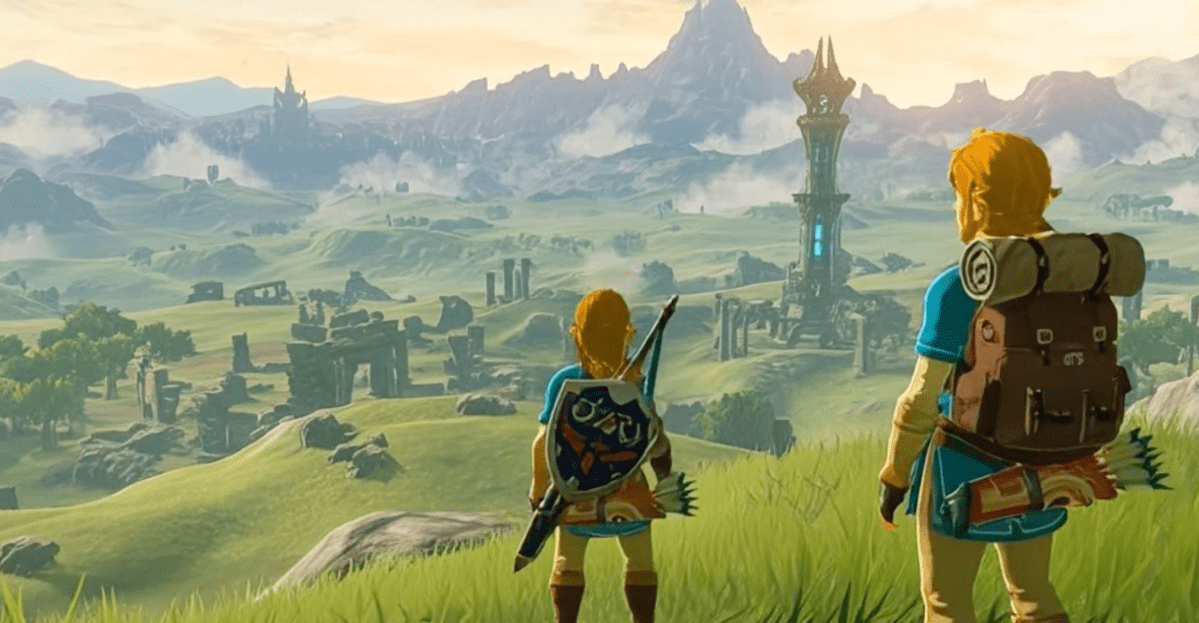
Google recently introduced a new generative AI tool that allowed me to create imitation versions of 3D Nintendo worlds. Through this tool, I was able to experiment with creating my own takes on popular Nintendo games like Super Mario 64, Metroid Prime, and The Legend of Zelda: Breath of the Wild.
This tool, known as Project Genie, is an experimental research prototype developed by Google DeepMind. It enables users to generate virtual interactive spaces based on text or image prompts. While Project Genie is still in the testing phase, Google is eager to see how users utilize it and discover new use cases beyond their initial expectations.
With Project Genie, users have the option to choose from pre-designed worlds by Google or define their own prompts for creating unique environments and characters. The AI first generates a thumbnail preview of the world, followed by the full generation of the virtual space. Users can explore these generated worlds for a limited time, experiencing them in 720p resolution with a frame rate of 24fps.
During my exploration with Project Genie, I experimented with various Nintendo-themed worlds, including a rendition of Super Mario, Metroid Prime, and The Legend of Zelda. While these creations brought a sense of amusement, they lacked interactive elements such as scores or objectives, making them more like virtual dioramas than fully-fledged games.
However, Project Genie faced limitations when I attempted to create a world based on the scenario of Kingdom Hearts. Despite providing detailed descriptions of characters, the AI blocked the generation of the experience, indicating restrictions on certain content.
One of the generated worlds, named “Rollerball,” featured a blue orb rolling in a snowy landscape, leaving a trail of paint behind. While visually intriguing, the lack of interactivity and input lag hindered the overall experience. Another world, “Backyard Racetrack,” offered a more engaging experience with a track to follow, but inconsistencies such as grass replacing the road detracted from the immersion.
Overall, Project Genie shows promise in the realm of AI-generated worlds, but it still has room for improvement. The input lag, limited interactivity, and inconsistencies in world generation raise concerns about its practicality for extended use. Despite its current limitations, Project Genie represents a step towards a future where AI blurs the lines between different forms of media.
As Google continues to refine Project Genie, it will be interesting to see how the tool evolves and whether it can overcome its current challenges to provide more engaging and seamless interactive experiences. The potential for AI-generated worlds is vast, but for now, the genie remains in the bottle as Google works towards enhancing this innovative technology.










The End of Security: iOS 13 and 14 Vulnerabilities in 2026

Exclusive Look: The 2027 Chevrolet Corvette Grand Sport Unleashed at Sebring

DON’T buy a Screen Protector before watching this.

Exploiting Vulnerable Drivers: How EDR Killers Use BYOVD to Disable Security

Alphabet’s X Unveils Innovative Spinout Targeting Costly Bureaucratic Challenges

Lawsuit: Halide co-founder accuses Sebastiaan de With of code theft for Apple

Previewing the Next Level: Apple Unveils iOS 26.4 RC for iPhone with Exciting New Features

Revamped Design: BMW’s Modern Makeover for the i3 Sedan

GitHub Actions Exploited in Trivy Vulnerability Scanner Breach, Infostealer Unleashed

EU Takes Action Against Instagram and Facebook for Violating Illegal Content Rules

Warning: Facebook Creators Face Monetization Loss for Stealing and Reposting Videos

Facebook Compliance: ICE-tracking Page Removed After US Government Intervention

Facebook’s New Look: A Blend of Instagram’s Style

Facebook and Instagram to Reduce Personalized Ads for European Users

InstaDub: Meta’s AI Translation Tool for Instagram Videos

Reclaim Your Account: Facebook and Instagram Launch New Hub for Account Recovery

Meta discontinues Messenger apps for Windows and macOS

Breaking Updates: Meta Connect 2025 Unveils Latest Developments
DON’T buy a Screen Protector before watching this.

Beware of Fake Reviewers! ⚠️

Xiaomi Mi 11 Unboxing & Review.

The Galaxy S21 Ultra is Better than you think.

Samsung Galaxy S21 Ultra vs iPhone 12 Pro Max Camera Test Comparison.

Samsung S21 Ultra vs iPhone Battery Life Test!

The Truth about Xiaomi “Air Charging”

DON’T buy this Smartphone.

Galaxy S21 Ultra – Exynos vs Snapdragon.
-
 Facebook5 months ago
EU Takes Action Against Instagram and Facebook for Violating Illegal Content Rules
-
 Facebook5 months ago
Warning: Facebook Creators Face Monetization Loss for Stealing and Reposting Videos
-
 Facebook5 months ago
Facebook Compliance: ICE-tracking Page Removed After US Government Intervention
-
 Facebook3 months ago
Facebook’s New Look: A Blend of Instagram’s Style
-
 Facebook3 months ago
Facebook and Instagram to Reduce Personalized Ads for European Users
-
 Facebook5 months ago
InstaDub: Meta’s AI Translation Tool for Instagram Videos
-
 Facebook4 months ago
Reclaim Your Account: Facebook and Instagram Launch New Hub for Account Recovery
-
 Apple5 months ago
Meta discontinues Messenger apps for Windows and macOS
