
Tech News
Creating Your Own Personal Finance App: A Comprehensive Guide to Features, Cost, and Steps

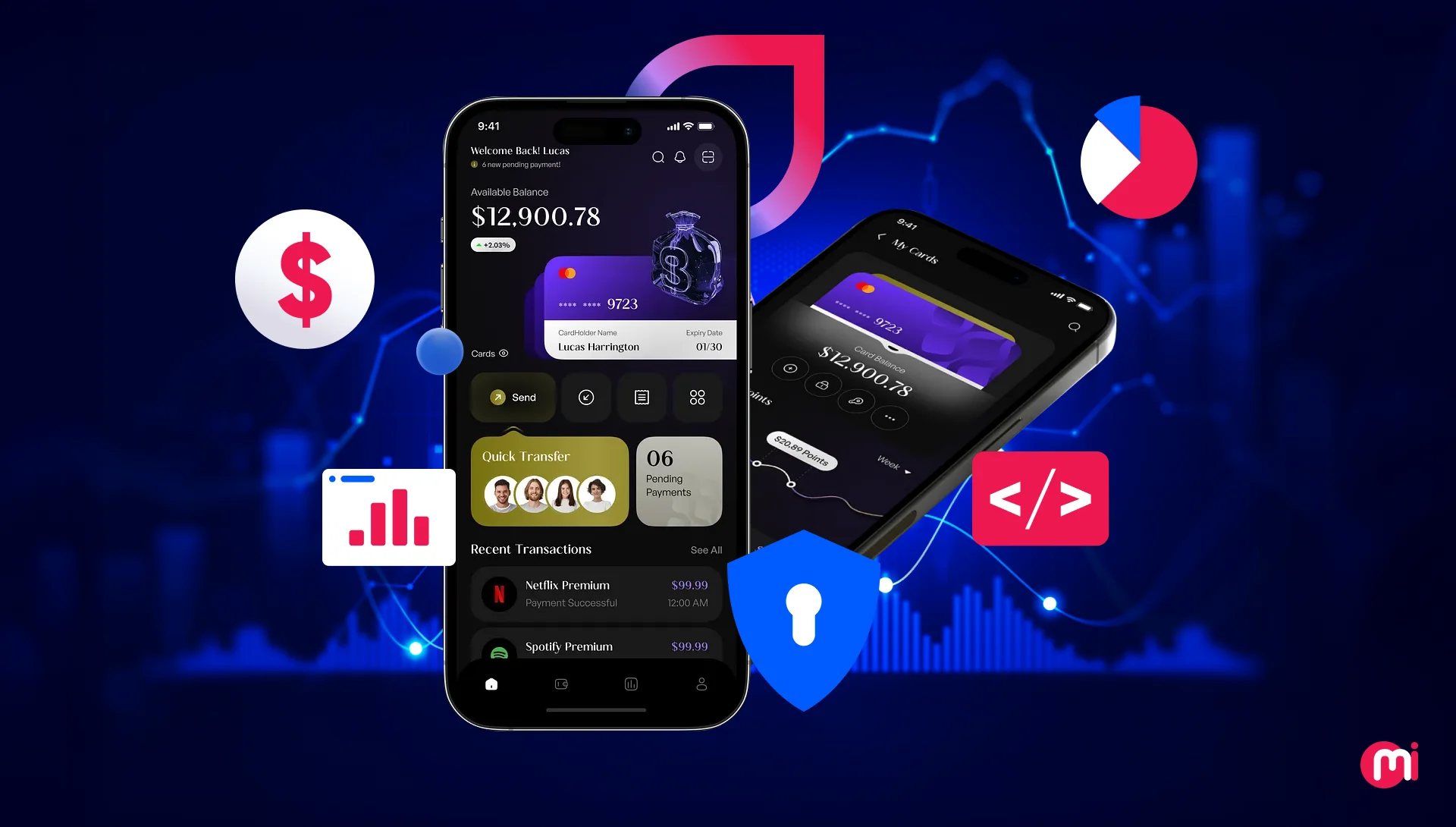
Building a Personal Finance Application: A Comprehensive Guide
In today’s modern financial landscape, personal finance application development has become essential. These apps play a crucial role in enhancing financial management, boosting productivity, tracking income and expenses, and automating tasks. For businesses, understanding how to create a budget app, identifying key features, and estimating costs are vital steps towards innovation in the fintech sector. In this article, we will provide you with all the necessary information to build a secure, effective, and engaging personal finance app.
The popularity of personal finance applications has surged in recent times, driven in part by the global pandemic, which has made individuals more conscious about their spending habits. Users are increasingly seeking ways to manage their resources, track expenses, and achieve financial goals. According to GlobalNewsWire research, the global finance app market is projected to exceed $330 billion by 2028. These statistics underscore the rapid growth of the global finance market, highlighting the importance of creating successful personal finance apps with the assistance of professional app development services.
However, developing a high-quality personal finance app entails more than just a great idea. It requires a deep understanding of user needs, robust security measures, and a well-defined budget app development process. This comprehensive guide will take you through each step of the personal finance app development journey, providing you with insights on how to create a powerful financial tool. Let’s delve into the details without delay.
Key Takeaways
- Building a personal finance application involves a six-step journey from concept to post-launch maintenance.
- Key features of a personal finance app include goal-tracking tools, AI-driven insights, and secure bank linking.
- The cost of developing a budget app depends on complexity, features, and the location of the development team.
What is a Personal Finance Application?
A personal finance application is a software designed to help individuals and businesses efficiently manage their financial activities. These apps provide tools for budgeting, expense tracking, and bill payments, enabling users to regulate their financial flows, set budgets, and gain insights into their expenditure and savings. These apps simplify money management by automating tasks such as expense tracking, purchase categorization, and goal setting, offering users transparency into their financial status and helping them prepare for emergencies and plan for the future.
Types of Personal Finance Applications
Personal finance applications can be broadly categorized into two types: simple and complex. Simple finance apps require users to manually input financial data, while complex apps automate the money management process by linking cards and bank accounts for data synchronization. Simple apps offer basic expense tracking and budgeting features, while complex apps provide advanced tools for comprehensive financial management.
Pros of Simple Finance Apps
- Low risk as no bank accounts are linked to the app.
- Cost-effective due to simple features and functionality.
Cons of Simple Finance Apps
- High potential for human error due to manual data input.
- Time-consuming for users to input data manually.
Pros of Complex Finance Apps
- Comprehensive features and functionalities.
- Efficient automation of money management tasks.
Cons of Complex Finance Apps
- Higher development costs compared to simple apps.
Steps to Build a Personal Finance Application
Building a personal finance app involves a structured process that takes an idea from concept to a market-ready product. Each step is crucial in creating a valuable and commercially viable solution. The steps include:
Step 1: Conduct User and Market Research
Research and analysis are essential to understand the competitive landscape and user needs. Define your target audience, create user personas, and validate your app idea.
Step 2: Focus on UI/UX and Prototyping
Design an intuitive and secure user interface, create wireframes, and develop prototypes for user testing and feedback.
Step 3: Define and Develop the Minimum Viable Product (MVP)
Create an MVP with essential features to solve user problems and gather feedback for iterative improvements.
Step 4: Choose the Right Technology Stack
Select the appropriate technology stack based on your app’s features and long-term goals, including frontend and backend technologies, APIs, and AI integrations.
Step 5: Conduct Testing and Quality Assurance (QA)
Perform functional, performance, usability, and security testing to ensure a bug-free and reliable app.
Step 6: Deploy, Maintain & Iterate
Deploy the app, monitor performance, gather user feedback, and iterate on updates and new features for continuous improvement.
Features to Include in Your Personal Finance App
Key features to consider for your personal finance app include:
1. Registration and Onboarding
Ensure a seamless and secure registration process with multi-factor authentication options.
2. Account Integration
Allow users to aggregate all financial accounts for comprehensive money management.
3. Knowledgeable Advice through AI Chatbots
Integrate AI chatbots to provide users with accurate and responsive financial advice.
4. Real-time Spending Tracker
Include a real-time expenditure tracking feature to help users manage their finances efficiently.
5. Personalization
Customize the user experience to meet individual needs and preferences.
6. Gamification
Introduce gamified elements to enhance user engagement and motivation.
7. 24*7 Customer Support
Offer round-the-clock customer support in multiple languages for user assistance.
8. Alerts and Notifications
Send push notifications for upcoming bills, low balances, and budget limits to keep users informed.
9. Points and Rewards
Incorporate a rewards system to incentivize user engagement and retention.
10. Financial Advice and Consultation
Provide users with expert financial advice to help them make informed decisions about their money.
Personal Finance App Development Cost
The cost of developing a personal finance app can vary widely, ranging from $30,000 for a basic app to over $250,000 for a complex one. Factors influencing the development cost include app complexity, features, platform selection, technology stack, development team location, and third-party integrations. Calculating the total cost involves multiplying development hours by the developers’ hourly rate.
How Can MindInventory Help You in Personal Finance Application Development
MindInventory is a leading provider of FinTech software development services, offering expertise in creating powerful personal finance applications. Their industry experts focus on core features, meticulous development processes, and user-centric design to empower users in managing their finances effectively. Partnering with MindInventory can help you navigate the app development process and create a successful financial tool for your users.
FAQs on Personal Finance App Development
The core usage of a personal finance app is about understanding and efficiently managing your expenses, income, and investments. The app works in the best possible way to gain financial stability and security.
Some of the most important features to be included in a personal finance application are: expense tracking, account aggregation, budgeting tools, saving goals, financial reports, robust security measures, and user notifications.
User-centric design plays a crucial role in personal finance apps because it helps ensure the app is accessible, intuitive, and engaging. It enhances the satisfaction and boosts adoption. Its user-friendly interface makes it easy for users to navigate, understand features, and benefit from the app.












Qilin Ransomware Breach Confirmed by Die Linke German Political Party

Wrangling Data: How Nomadic Secured $8.4 Million for Autonomous Vehicle Insights

On-the-Go Meetings: Google Meet Now Available on CarPlay

Breaking News: The BMW M2 CS Shooting Brake Hoax Shakes the Internet

NASA’s Tech Troubles: The Artemis II Outlook Reload

Hims & Hers Takes Action: Responds to Zendesk Support Ticket Breach

The Elder Scrolls Online: Night Market Chronicles – A Glimpse of Skyrim in 2027

Whoop Soars to $10 Billion Valuation: A Game-Changer in the Fitness Tech Industry

United App Introduces Real-Time TSA Wait Times Feature for Top US Airports

EU Takes Action Against Instagram and Facebook for Violating Illegal Content Rules

Warning: Facebook Creators Face Monetization Loss for Stealing and Reposting Videos

Facebook Compliance: ICE-tracking Page Removed After US Government Intervention

Facebook’s New Look: A Blend of Instagram’s Style

Facebook and Instagram to Reduce Personalized Ads for European Users

InstaDub: Meta’s AI Translation Tool for Instagram Videos

Reclaim Your Account: Facebook and Instagram Launch New Hub for Account Recovery

Meta discontinues Messenger apps for Windows and macOS

Breaking Updates: Meta Connect 2025 Unveils Latest Developments

6G – Explained!

Is Samsung about to take over?

The Problem with Fast Chargers.

if smartphone commercials were honest.

iPhone 12 – What were Apple thinking?

OnePlus 8T vs Google Pixel 5 – The Brutal Truth.

iPhone 12 / 12 Pro Unboxing – ft MKBHD!

iPhone 12 Pro vs iPhone 12 vs iPhone 11 Pro Camera Test Comparison.

Huawei Mate 40 Pro Unboxing – WHAT.
-
 Facebook5 months ago
EU Takes Action Against Instagram and Facebook for Violating Illegal Content Rules
-
 Facebook6 months ago
Warning: Facebook Creators Face Monetization Loss for Stealing and Reposting Videos
-
 Facebook6 months ago
Facebook Compliance: ICE-tracking Page Removed After US Government Intervention
-
 Facebook4 months ago
Facebook’s New Look: A Blend of Instagram’s Style
-
 Facebook4 months ago
Facebook and Instagram to Reduce Personalized Ads for European Users
-
 Facebook6 months ago
InstaDub: Meta’s AI Translation Tool for Instagram Videos
-
 Facebook4 months ago
Reclaim Your Account: Facebook and Instagram Launch New Hub for Account Recovery
-
 Apple6 months ago
Meta discontinues Messenger apps for Windows and macOS
