
Video Games
Embracing Chaos: A Diablo 2 Art Lead’s Critique of Diablo 4

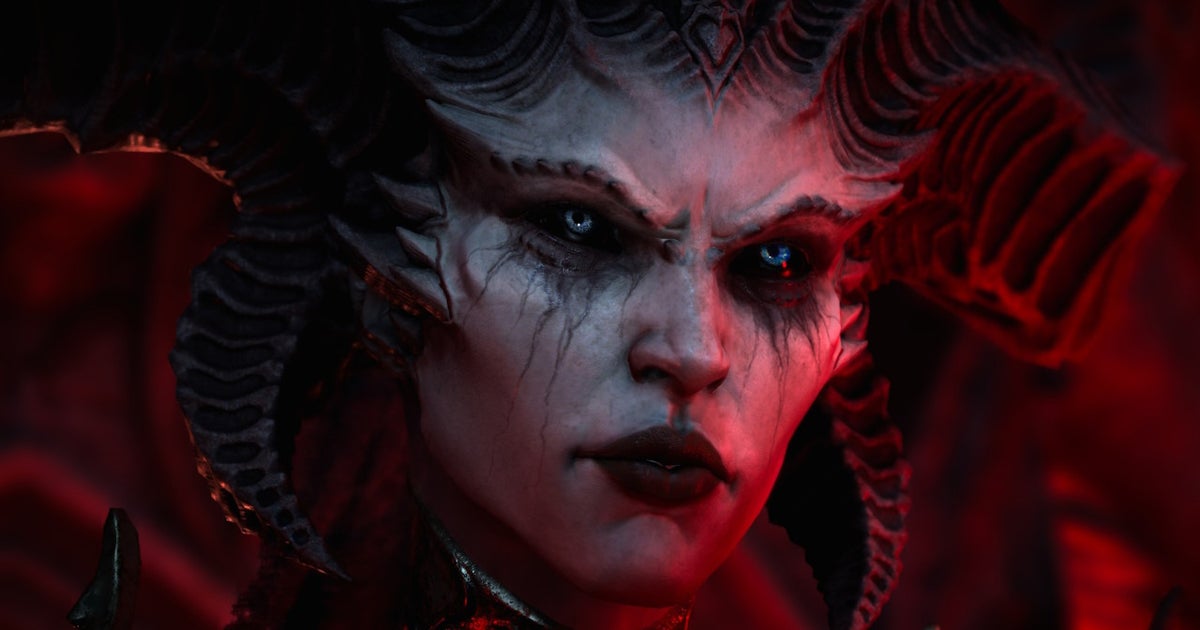
Last week, Moon Beast Productions officially revealed Darkhaven, a new action-RPG in the spirit of Diablo II, but with a changing, destructible, procedurally generated world that both echoes Minecraft and takes inspiration from the Diablo modding scene. Moon Beast are made up of ARPG royalty – their senior staff include original Diablo senior designer, art director and writer Erich Schaefer, Diablo 2 art lead Philip Shenk, and Diablo 2 programmer Peter Hu.
As you’d expect, the Darkhaven devs have many Thoughts about Diablo today, at once leveraging their credits for marketing (they’re about to launch a Kickstarter) and resisting the idea that they are making an unofficial Diablo sequel. I don’t get the sense that any of them outright despise Diablo IV – summarized by Alice Bell as “2023’s prettiest RSI machine” – but Shenk in particular argues that the game has squandered “the magic” of previous games by focusing on smooth progression and balancing and, in general, “overly engineering the experience” in order to keep people glued to the game’s live service.
All that’s from a chat I had with Shenk and Schaefer this week. At one point, I made the armchair designer observation that creating an ARPG with such a disorderly, malleable world is surely a nightmare for balancing and overall consistency. You need to ensure that players get their level-ups and gear of increasing rarity at a steady pace, and it’s hard to do that when, as in Darkhaven, people can dig through the majority of the terrain, or trigger a lich-summoning world event that slowly transforms the entire map into a necropolis.
Shenk pushed back on me a bit. “You mentioned about this, you know, perceived precision that needs to go into the design,” he said. “I feel like – not being the one who implements this, but I feel like that’s where the magic gets lost. Like, when you’re hammering down all the high points and leveling up all the low points, and trying to make smooth progressions. You know, like when Diablo 4 has their auto-scaling – nobody likes that, we’d like to have the spiky progression and we like to have the fun, cool moments.”
“I think it’s less precise than people think it should be,” he continued, “and I think that’s almost part of the problem with today’s games. They try to design it too perfectly and precisely, and the magic and the experimentation and the unexpected things, they never happen, you know – you gotta let some of the chaos in.”
Darkhaven’s chief instigator of chaos may be Erich Schaefer, partly because his process is to play the work-in-progress game every day, and he doesn’t want to get bored. “I play the game constantly and make notes and badger people to get things done,” he told me. “Which requires, since I have to play it all the time, that it can’t be that straightforward. It has to be different all the time.
“So that’s why I concentrate on things being kind of radically different. The maps really matter and how they unfold and how you explore the world and open things up. It’s different every time and it opens new challenges, you can take on different things at different times. That makes it exciting enough for me to play it every day.
“The world can be destroyed,” Schaeffer added. “You can lose this game. I haven’t really seen it happen, other than faking it on purpose, but you could let the Necropolis take over. Basically, the game will end if it takes over the entire world, and wipes out all the waypoints, so there’s nowhere to resurrect.” If that happens to you in Darkhaven, you can start over in a new world with the same character. Myself, I like the idea of trying to survive inside a Necropolis. Moderate 2b2t vibes.
I returned to Shenk’s Diablo 4 comparison later in the interview, asking how Darkhaven’s own post-release updates will differ from Blizzard’s live service. Schaeffer began by noting that Moon Beast do not have Blizzard’s billions, so enormous story bolt-ons like Vessel Of Hatred are unfeasible. “I think the big difference is their campaigns that they do, their expansions are extraordinarily expensive,” he said. “We can’t really even compete with this kind of thing.
“They put so much work into the cinematics and the new maps and the new classes – I guess we’re going to do that to some degree, but our procedural style and these event-driven things, we could just make little modules that fit into the world and, and hopefully give you at least as much entertainment as a new campaign, that’s good for one playthrough in Diablo 4.”
Shenk, meanwhile, linked Darkhaven’s approach to post-release updates back to his opening arguments about ‘designing too perfectly’, commenting that Moon Beast want to get away from the stifling philosophies of free-to-play games that are predictably designed for the sake of retention.
“I think Path Of Exile sort of started set this precedent, because it’s free to play,” he said. “Their business model is, they need to keep people coming back on a regular cadence, otherwise the business is in debt, right? You know, if you don’t have people coming in for new content and new reasons to spend, then you don’t have a business.
“And then you have these games that are like [pay upfront] retail games like Last Epoch or Diablo 3 or Diablo 4, that somehow took it upon themselves to compete with that.
The Challenges of Monetizing Games in Today’s Market
One of the biggest challenges facing game developers today is figuring out how to monetize their games effectively. With the rise of free-to-play games dominating the market, developers who choose not to follow this model often struggle to make a profit. This dilemma was highlighted by Shenk, who raised the question of where developers are making their money if they are not offering their game for free. The cost of creating new content and seasons can be substantial, and without a large player base, the benefits may not be realized.
Shenk emphasized the importance of creating games that have long-term replay value. Drawing inspiration from classics like Diablo 2, he pointed out that the key to longevity lies in continually injecting new content in a way that keeps players engaged. Unlike linear campaign games that require expensive new content to stay relevant, sandbox games like Diablo 2 offer a more unpredictable and immersive experience. The thrill of discovering new loot and building unique character builds adds an element of chaos and excitement that keeps players coming back for more.
Shenk criticized the trend of overly engineered gaming experiences that rely on scripted events and tightly designed challenges. He argued that such games often lack the magic and spontaneity that make titles like Diablo 2 so enduring. By contrast, sandbox games offer players the freedom to explore and create their own adventures, leading to a more dynamic and engaging gameplay experience.
The success of games like Diablo 2 serves as a reminder that longevity in the gaming industry is not just about creating big, expensive events but about fostering a sense of discovery and unpredictability. By focusing on replay value and player autonomy, developers can create games that stand the test of time and continue to captivate audiences for years to come.
Looking Ahead
Stay tuned for more insights from the Moon Beast developers as they continue to innovate and push the boundaries of game development. In the meantime, you can check out early gameplay footage of Darkhaven on YouTube to get a taste of the undead kingdoms that await in this exciting new title.












Bearlyfy Strikes Russian Companies with Unique GenieLocker Ransomware Attack

Innovative Ventures: The 8 Startups Investors Can’t Resist from YC Demo Day

The Future of iPhone Cameras: Is a 200 MP Lens Coming Soon?

Celebrating the First iX3 Delivery at BMW’s Debrecen Factory

iPhone 12 Pro Max vs Samsung Note 20 Ultra / Huawei / Xiaomi / OnePlus Battery Life DRAIN Test.

Stealthy Malware: The Hidden Threat Within Telnyx PyPI Package

Harvest of Suspicion: Grave Seasons Murder Mystery Farming Sim Arrives in August

Tech Giants Clash: OpenAI Halts Sora as Meta Faces Legal Setback

Apple’s AI Playlist Playground: Where Music Goes to Die

EU Takes Action Against Instagram and Facebook for Violating Illegal Content Rules

Warning: Facebook Creators Face Monetization Loss for Stealing and Reposting Videos

Facebook Compliance: ICE-tracking Page Removed After US Government Intervention

Facebook’s New Look: A Blend of Instagram’s Style

Facebook and Instagram to Reduce Personalized Ads for European Users

InstaDub: Meta’s AI Translation Tool for Instagram Videos

Reclaim Your Account: Facebook and Instagram Launch New Hub for Account Recovery

Meta discontinues Messenger apps for Windows and macOS

Breaking Updates: Meta Connect 2025 Unveils Latest Developments
iPhone 12 Pro Max vs Samsung Note 20 Ultra / Huawei / Xiaomi / OnePlus Battery Life DRAIN Test.

The BEST Smartphone of 2020 🏆

The Self-Healing Smartphones!

Apple is not what it used to be.

Smartphones are Boring now.

The Fastest Android Phone Ever.

Unboxing the $122,000 Smartphone. 🤯

Are Linux Smartphones about to KILL Android?

15 Smartphone FAILS to ruin your day 😂
-
 Facebook5 months ago
EU Takes Action Against Instagram and Facebook for Violating Illegal Content Rules
-
 Facebook5 months ago
Warning: Facebook Creators Face Monetization Loss for Stealing and Reposting Videos
-
 Facebook5 months ago
Facebook Compliance: ICE-tracking Page Removed After US Government Intervention
-
 Facebook4 months ago
Facebook’s New Look: A Blend of Instagram’s Style
-
 Facebook4 months ago
Facebook and Instagram to Reduce Personalized Ads for European Users
-
 Facebook5 months ago
InstaDub: Meta’s AI Translation Tool for Instagram Videos
-
 Facebook4 months ago
Reclaim Your Account: Facebook and Instagram Launch New Hub for Account Recovery
-
 Apple5 months ago
Meta discontinues Messenger apps for Windows and macOS
