
Security
Embracing Danger: How Hugging Face Became a Gateway for Android Malware


Hugging Face Platform Abused to Spread Android Malware
Recently, a new Android malware campaign has emerged, utilizing the Hugging Face platform as a repository for numerous variations of an APK payload designed to gather credentials for popular financial and payment services.
The Hugging Face platform is well-known for hosting and distributing artificial intelligence (AI), natural language processing (NLP), and machine learning (ML) models, datasets, and applications.
Although typically considered a trusted platform that does not raise security concerns, malicious actors have previously exploited it to host harmful AI models.
The campaign, uncovered by researchers at Romanian cybersecurity company Bitdefender, leverages the Hugging Face platform to distribute Android malware.
The attack begins by enticing victims to install a dropper app called TrustBastion, which uses scareware-style ads claiming the target’s device is infected. The malicious app masquerades as a security tool, purportedly detecting threats like scams, fraudulent SMS messages, phishing attempts, and malware.
Upon installation, TrustBastion displays a mandatory update alert with visuals resembling Google Play.
Source: Bitdefender
Instead of directly delivering malware, the dropper contacts a server associated with trustbastion[.]com, which redirects to a Hugging Face dataset repository hosting the malicious APK. The final payload is downloaded from the Hugging Face infrastructure and distributed via its content delivery network (CDN).
To evade detection, the threat actor employs server-side polymorphism, generating new payload variants every 15 minutes, as reported by Bitdefender.
“At the time of investigation, the repository was approximately 29 days old and had accumulated more than 6,000 commits,” Bitdefender stated.
While analyzing the payload-serving repository, it was taken down, but the operation resurfaced under a new name, ‘Premium Club,’ with new icons while retaining the same malicious code.
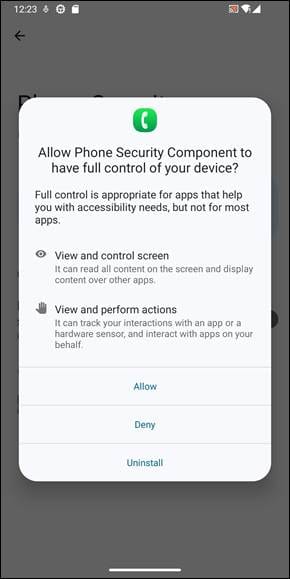
The primary payload, unnamed, acts as a remote access tool that aggressively exploits Android’s Accessibility Services, justifying the request as essential for security purposes.
Source: Bitdefender
This enables the malware to deploy screen overlays, capture the user’s screen, execute swipes, prevent uninstallation attempts, and more.
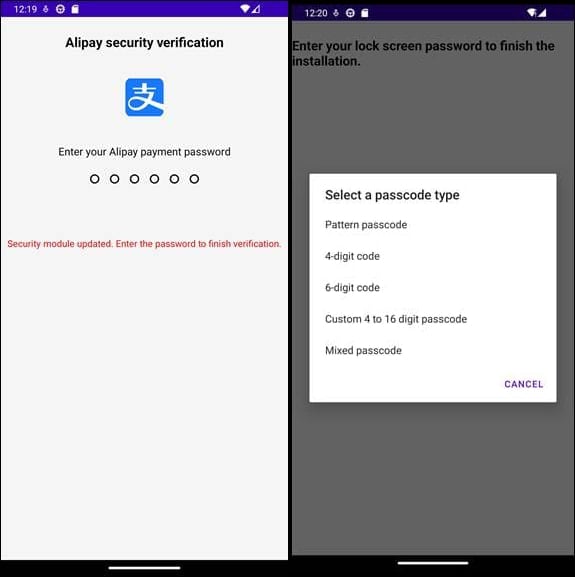
The malware, according to Bitdefender, monitors user activity, captures screenshots, and exfiltrates the data to its operators. It also presents fake login interfaces mimicking financial services like Alipay and WeChat to steal credentials and attempts to obtain the lock screen code.
Source: Bitdefender
The malware remains connected continuously to the command-and-control (C2) server, receiving stolen data, executing command instructions, updating configurations, and pushing fake in-app content to maintain TrustBastion’s legitimacy.
Bitdefender promptly informed Hugging Face about the repository used by threat actors, leading to the removal of datasets containing the malware. Additionally, researchers published a series of indicators of compromise for the dropper, network, and malicious packages.
It is advisable for Android users to steer clear of downloading apps from third-party stores or manually installing them. Reviewing an app’s permissions and ensuring their necessity for intended functionality is crucial.

Whether you’re cleaning up old keys or setting guardrails for AI-generated code, this guide helps your team build securely from the start.
Get the cheat sheet and take the guesswork out of secrets management.












Alphabet’s X Unveils Innovative Spinout Targeting Costly Bureaucratic Challenges

Lawsuit: Halide co-founder accuses Sebastiaan de With of code theft for Apple

Previewing the Next Level: Apple Unveils iOS 26.4 RC for iPhone with Exciting New Features

Revamped Design: BMW’s Modern Makeover for the i3 Sedan

GitHub Actions Exploited in Trivy Vulnerability Scanner Breach, Infostealer Unleashed

Minecraft Dungeons II: The Battle Continues

Feeding Frenzy: How AI Startups are Revolutionizing the Venture Industry with Impressive Returns

Get $50 Off the AirPods Pro 3 – Hurry Before They’re Gone!

Top 11 Must-Have Reading Apps for iPhone Users in 2026

EU Takes Action Against Instagram and Facebook for Violating Illegal Content Rules

Warning: Facebook Creators Face Monetization Loss for Stealing and Reposting Videos

Facebook Compliance: ICE-tracking Page Removed After US Government Intervention

Facebook’s New Look: A Blend of Instagram’s Style

Facebook and Instagram to Reduce Personalized Ads for European Users

InstaDub: Meta’s AI Translation Tool for Instagram Videos

Reclaim Your Account: Facebook and Instagram Launch New Hub for Account Recovery

Meta discontinues Messenger apps for Windows and macOS

Breaking Updates: Meta Connect 2025 Unveils Latest Developments

Beware of Fake Reviewers! ⚠️

Xiaomi Mi 11 Unboxing & Review.

The Galaxy S21 Ultra is Better than you think.

Samsung Galaxy S21 Ultra vs iPhone 12 Pro Max Camera Test Comparison.

Samsung S21 Ultra vs iPhone Battery Life Test!

The Truth about Xiaomi “Air Charging”

DON’T buy this Smartphone.

Galaxy S21 Ultra – Exynos vs Snapdragon.

I bought the strangest smartphones ever.
-
 Facebook5 months ago
EU Takes Action Against Instagram and Facebook for Violating Illegal Content Rules
-
 Facebook5 months ago
Warning: Facebook Creators Face Monetization Loss for Stealing and Reposting Videos
-
 Facebook5 months ago
Facebook Compliance: ICE-tracking Page Removed After US Government Intervention
-
 Facebook3 months ago
Facebook’s New Look: A Blend of Instagram’s Style
-
 Facebook3 months ago
Facebook and Instagram to Reduce Personalized Ads for European Users
-
 Facebook5 months ago
InstaDub: Meta’s AI Translation Tool for Instagram Videos
-
 Facebook4 months ago
Reclaim Your Account: Facebook and Instagram Launch New Hub for Account Recovery
-
 Apple5 months ago
Meta discontinues Messenger apps for Windows and macOS
