
Startups
Empowering Women in AgriTech: A Conversation with Anabel Millán Leiva, Co-founder of Cucare Diagnostics

Editor’s Note: This post was created in collaboration and with financial support from EIT Food.
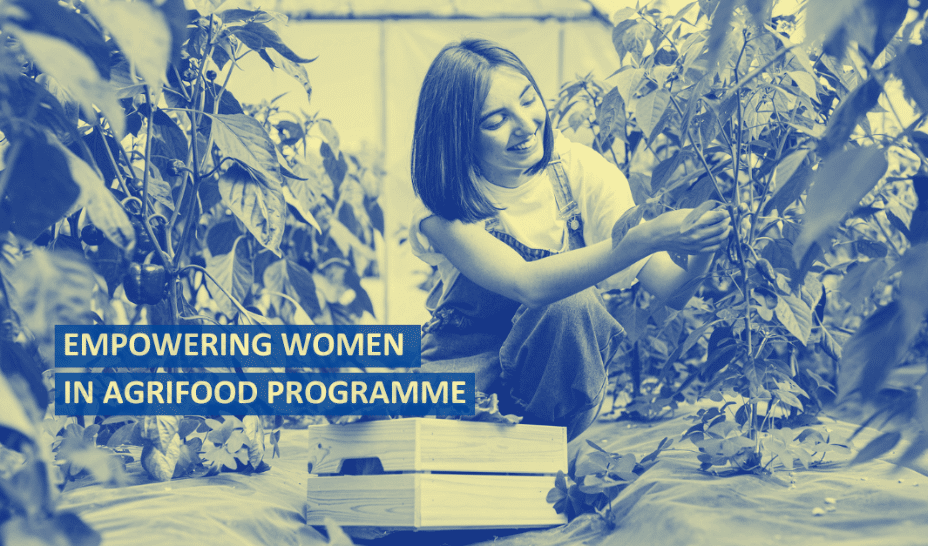
On 11 November, the Empowering Women in Agrifood (EWA) 2025 Demo Day programme took place in Seville, an initiative that supports women entrepreneurs working to create a more sustainable and innovative food system.
Now in its sixth edition, EWA 2025 is a six-month entrepreneurial programme designed to support aspiring and early-stage female entrepreneurs across 13 countries: Albania, Estonia, Greece, Italy, North Macedonia, Poland, Portugal, Romania, Serbia, Slovenia, Spain, Türkiye, and Ukraine.
Backed by EIT Food and the European Institute of Innovation and Technology (EIT), a body of the European Union, EWA helps participants build the skills, confidence and networks needed to develop and scale their ideas. Although women play a vital role in agriculture and rural innovation, their work often goes underrecognised. The programme helps address this gap by offering practical support, tailored training and access to a strong, long-lasting community.
This year’s edition brought together talented founders from across the region, each working on solutions that tackle real challenges in agriculture, sustainability and food production. On that note, today we start the first of a series of three interviews highlighting standout participants from this year’s EWA programme. We begin with a remarkable woman entrepreneur, whose work brings scientific expertise and practical innovation together to address key challenges in the agrifood sector.
Interview with Anabel Millán Leiva, Co-founder of Cucare Diagnostics
Can you start by sharing the inspiration behind Cucare Diagnostics and how your journey into insect science and agrifood innovation began?
The Cucare founding team are scientists specialising in insect genetics, pathogens, and pesticide resistance. Our journey began at the University of Valencia, where we have spent over 30 years studying how insects interact with microorganisms and pesticidal compounds.
Through close work with farmers and beekeepers, we started receiving urgent calls about pests destroying crops and diseases wiping out hives. Existing diagnostic tools were often unavailable or impractical in real-world conditions.
As insect farming began to grow as a source of alternative proteins, a new problem emerged. Producers were facing serious health issues in their colonies, but had no way to detect or understand the diseases affecting them. Many of these threats were still unknown, and no diagnostic tools existed to guide decision-making.
We realised we had the expertise to help, but our laboratory methods were not accessible to those who needed them most. That is when we decided to move beyond academia. By working directly with beekeepers and farmers, we developed and validated practical diagnostic tools in real production environments.
In 2025, we founded Cucare Diagnostics as a spin-off from the University of Valencia, with the goal of bringing fast, reliable, and usable diagnostics to insect production and agrifood systems.
What motivated you to focus on insect health, pest resistance and pathogen detection, and how do you see this work contributing to a more sustainable and resilient food system?
Our motivation comes from understanding the crucial role insects play in food systems. They can be both a challenge and a solution: insects cause major losses in agriculture and livestock production, but they are also essential as biological control agents and as one of the most sustainable protein sources available.
Through our close work with farmers, insect producers, and other stakeholders, we see firsthand the real challenges facing the agrifood sector and the lack of practical tools to address them. We have the scientific knowledge to help, and we felt a strong responsibility to turn that knowledge into solutions that work in the real world. At the same time, we know food production must increase, but not at the expense of the environment.
Pesticide resistance is a clear example. As resistance grows, pest control becomes less effective and pesticide use increases, often without knowing whether treatments will work. By detecting resistance at the genetic level before treatments are applied, we enable more targeted pest control, reducing chemical use and environmental impact while improving crop and livestock health.
Insect farming is another important part of the solution, offering a sustainable way to meet the growing demand for protein. However, this young industry faces serious health challenges. By enabling early disease detection and preventive health management, we help make insect production more resilient, efficient, and sustainable.
Ultimately, our work supports a more resilient food system by enabling smarter pest control, reducing environmental pressure, and strengthening sustainable protein production.
Cucare Diagnostics applies advanced genetic and molecular tools to insect management and large-scale insect production. Can you walk us through your approach and explain what sets your solutions apart from more traditional methods?
Our approach combines advanced genetic and molecular technologies with bioinformatics and proprietary databases to support insect management and large-scale insect production.
These tools allow us to detect pathogens in insect colonies at very early stages, long before visible symptoms appear. Early detection is crucial, as it gives producers time to intervene and prevent outbreaks, rather than reacting once losses are unavoidable. Importantly, our methods are not limited to known pathogens. We can analyse the entire microbial community within a colony, including unknown or unexpected disease agents, which is especially important in insect farming, where many pathogens are still poorly understood.
Traditional diagnostics rely mainly on visual inspection, microbiological cultures, or targeted PCR tests. These methods usually require higher pathogen levels, are reactive rather than preventive, and can only detect what is already known, often leading to delayed or inconclusive results.
The same applies to pesticide resistance detection. While laboratory methods exist, they are often complex, slow, expensive, and not accessible to farmers or beekeepers. Our resistance detection services are designed to be fast, scalable, and cost-effective.
Identifying resistance at the genetic level before treatments are applied supports better decision-making, reduces unnecessary chemical use, lowers costs, and minimizes environmental impact. Cucare’s ability to translate advanced molecular science into practical solutions that work in real production environments sets them apart from others in the industry.
The biggest challenge faced by Cucare in developing their diagnostics was shifting from an academic research mindset to building practical solutions for the agrifood industry. This required adapting advanced molecular techniques to be fast, practical, and affordable, as well as translating complex genetic results into actionable recommendations for farmers and producers. Building trust outside academia, securing funding, and navigating the business side of things were also significant challenges.
Participating in the EWA programme provided valuable mentorship, training, and a supportive community for Cucare. The mentorship offered professional guidance and emotional support, while the community of participants and the visibility provided by the programme helped the company grow faster and feel less isolated in the startup journey.
Cucare’s services focus on prevention and informed decision-making to reduce the use of pesticides in agriculture. By identifying resistance genes before treatments are applied, farmers can choose the most effective solution from the start, leading to more targeted pest control, fewer applications, lower chemical use, and reduced environmental impact.
Advances in insect science and biotechnology are shaping the future of agriculture, pest management, and sustainable protein production by moving towards more precise, data-driven pest control strategies and supporting insect health and welfare in the production sector. This shift towards preventive strategies aims to reduce losses and limit environmental impact from the start, making food production more sustainable and better managed. Research into insect nutrition, health, and disease is continuously growing, contributing to the advancement of large-scale insect farming by enhancing its reliability and resilience. This progress signifies a positive shift towards more sustainable, resilient, and environmentally friendly food production systems.
For aspiring women entrepreneurs looking to venture into science-based businesses within the agrifood sector, here is some valuable advice. Firstly, focus on addressing real-world challenges, remain adaptable, and validate your concepts early on. Trust in your expertise and capabilities, recognizing that your unique scientific background can be a powerful competitive edge rather than a limitation.
Moreover, it is crucial not to embark on this journey alone. Seek mentorship, engage with peer networks, and explore programs like EWA that offer comprehensive technical, business, and personal support. Building a company, especially in its initial stages, can be demanding, and having a supportive community can make a significant difference.
As part of the EWA 2025 program, Anabel became a part of a growing community of over 600 alumnae across Europe, fostering ongoing support and opportunities for early-stage female founders. She also seized the chance to present her idea at the Next Bite Satellite event, Accelerating Innovation Through Women Leadership, held in Warsaw, which brought together innovators, founders, and investors to reimagine the future of food and spotlight women-led innovation in the agrifood sector.
Looking ahead, registration for EWA 2026 will open soon, offering women the chance to contribute to a food future driven by female empowerment. For more details, stay tuned for updates on the program.
EIT Food stands as the largest and most dynamic food innovation community globally, supported by the European Institute of Innovation and Technology. Operating across the food value chain, EIT Food accelerates innovation and entrepreneurship, empowering change-makers with the necessary skills, tools, and backing to reshape the food industry’s future.
Established as one of the nine innovation communities under the European Institute of Innovation and Technology (EIT), EIT Food continues to drive innovation and entrepreneurship in Europe. For further insights, visit the EIT Food website or follow them on various social media platforms such as Twitter, LinkedIn, Facebook, YouTube, and Instagram. Transform the following sentence: “I will go to the store later.”
Transformed sentence: “Later, I will go to the store.”












if smartphone commercials were honest.

Unprotected: The Vulnerability of Over 14,000 F5 BIG-IP APM Instances to Remote Code Execution Attacks

Garry’s Mod 2: The Evolution of Creativity

Exploring the Benefits and Drawbacks of Android Desktop Mode: A Comprehensive Review

The Future of Sales: Essential Strategies for Competitive Teams in 2026

Avatar: The Last Airbender Season 2: Exciting Updates on Cast and Release Date

Exploring the Latest Apple Music Features: Playlist Playground and Beyond

The Electrifying Transformation of BMW’s Munich Plant: A $700M Journey to All-Electric Production by 2027

CrystalRAT Evolution: A Deadly Combination of RAT, Stealer, and Prankware

EU Takes Action Against Instagram and Facebook for Violating Illegal Content Rules

Warning: Facebook Creators Face Monetization Loss for Stealing and Reposting Videos

Facebook Compliance: ICE-tracking Page Removed After US Government Intervention

Facebook’s New Look: A Blend of Instagram’s Style

Facebook and Instagram to Reduce Personalized Ads for European Users

InstaDub: Meta’s AI Translation Tool for Instagram Videos

Reclaim Your Account: Facebook and Instagram Launch New Hub for Account Recovery

Meta discontinues Messenger apps for Windows and macOS

Breaking Updates: Meta Connect 2025 Unveils Latest Developments
if smartphone commercials were honest.

iPhone 12 – What were Apple thinking?

OnePlus 8T vs Google Pixel 5 – The Brutal Truth.

iPhone 12 / 12 Pro Unboxing – ft MKBHD!

iPhone 12 Pro vs iPhone 12 vs iPhone 11 Pro Camera Test Comparison.

Huawei Mate 40 Pro Unboxing – WHAT.

iPhone 12 vs iPhone 12 Pro / 11 Pro Max / 11 Pro / 11 / XR / SE Battery Life DRAIN Test.

19 Smartphone Gadgets that Blew me Away.

iPhone 12 Pro Max Unboxing & Review!
-
 Facebook5 months ago
EU Takes Action Against Instagram and Facebook for Violating Illegal Content Rules
-
 Facebook6 months ago
Warning: Facebook Creators Face Monetization Loss for Stealing and Reposting Videos
-
 Facebook6 months ago
Facebook Compliance: ICE-tracking Page Removed After US Government Intervention
-
 Facebook4 months ago
Facebook’s New Look: A Blend of Instagram’s Style
-
 Facebook4 months ago
Facebook and Instagram to Reduce Personalized Ads for European Users
-
 Facebook6 months ago
InstaDub: Meta’s AI Translation Tool for Instagram Videos
-
 Facebook4 months ago
Reclaim Your Account: Facebook and Instagram Launch New Hub for Account Recovery
-
 Apple5 months ago
Meta discontinues Messenger apps for Windows and macOS
