
Cars
Enhanced Suspension and Trim Options for the 2026 Mitsubishi Triton Ute Range

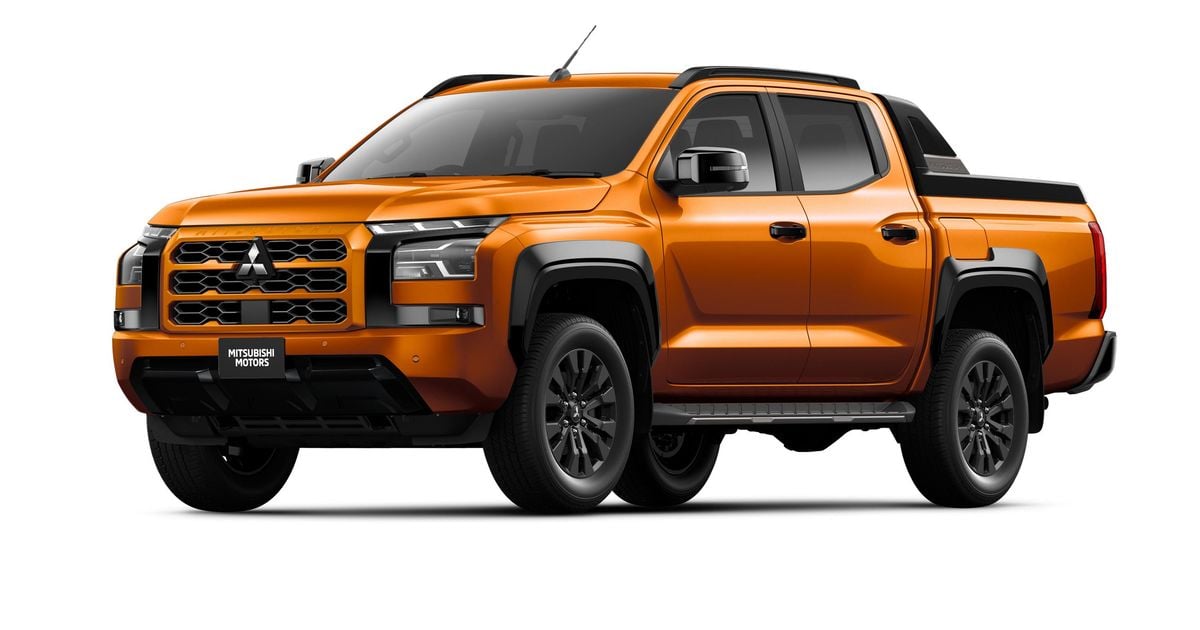
The Mitsubishi Triton has undergone updates for the 2026 model year (MY26), with a range of changes but a reduced lineup. The refreshed range will be available in Australian showrooms starting this May.
One notable change is the removal of the base GLX 4×2 single-cab/chassis manual variant, which was previously priced at $34,740 before on-road costs. The lineup now begins with the GLX 4×2 single-cab/chassis auto, priced at $37,090 before on-road costs, making it $100 more expensive than before.
Comparatively, the Mitsubishi Triton is now only $40 cheaper than the Ford Ranger XL Hi-Rider single-cab/chassis automatic but remains pricier than the Toyota HiLux Workmate 4×2 single-cab/chassis auto at $35,990 before on-road costs. However, the HiLux Workmate 4×2 single-cab/chassis manual is available at a lower price of $33,990 before on-road costs.
The MY26 Triton lineup has been reduced from 19 to 15 variants, with pricing adjustments ranging from $100 to $300 across the models. The GSR variant sees a $1000 increase in price. Mitsubishi has yet to unveil the anticipated Triton Raider flagship model.
All models now feature revised front and rear suspension, including softer front springs and ‘performance setting’ valves for all four shock absorbers, along with larger-diameter rear dampers. These changes are said to enhance ride comfort and reduce harshness while maintaining the Triton’s agility.
The sport-focused Triton GSR has been enhanced with Yamaha performance dampers to improve dynamics. These dampers are designed to enhance body control, sharpen steering response, and improve high-speed stability and refinement. The GLX-R, GLS, and GSR models retain ‘standard-duty’ three-leaf rear suspension, while the GLX and GLX+ models feature a ‘heavy-duty’ four-leaf setup.
All Triton models maintain a braked towing capacity of 3500kg, with the option for one-tonne payload upgrades on dual-cab pickup GLX-R, GLS, and GSR variants at no additional cost.
The Triton GSR MY26 introduces Mitsubishi Connect, a feature previously seen on the Outlander SUV. Mitsubishi Connect utilizes an inbuilt 4G modem with a Telstra connection, allowing users to remotely access various functions such as viewing the vehicle’s location, adjusting climate control, and locking, unlocking, and starting the vehicle. Additional safety and security features include vehicle theft alerts and an SOS emergency call function.
No further equipment changes have been disclosed, and the 2.4-litre turbo-diesel four-cylinder engine’s specifications remain unchanged, producing 150kW of power and 470Nm of torque with a choice of six-speed manual or six-speed automatic transmission.
The Triton GLS is offered with a Deluxe package for an additional $1500, which includes leather upholstery with silver stitching, a power-adjustable driver’s seat, and heated front seats.
As the second best-selling model for Mitsubishi in Australia, the Triton has gained ground in the competitive ute segment. In 2025, 4×4 Triton variants saw a 20.1% increase in sales year-on-year, outperforming other 4×4 utes, except for the GWM Cannon Alpha. The Triton’s popularity has been boosted by its versatility and performance.
Since its launch in Australia in 2023, the current-generation Triton has served as the foundation for the latest Nissan Navara model, featuring revised exterior styling and a unique suspension tune developed by Australian engineering firm Premcar.
The Triton is expected to play a key role in a future Mitsubishi SUV, as the Pajero Sport was discontinued due to new Australian safety regulations. A replacement model, possibly named the Pajero, is currently undergoing testing.
For detailed pricing information on the 2026 Mitsubishi Triton models, refer to the table below:
– 2026 Mitsubishi Triton GLX 4×2 single-cab/chassis automatic: $37,090 (+$100)
– 2026 Mitsubishi Triton GLX 4×2 dual-cab pickup automatic: $44,190 (+$100)
– 2026 Mitsubishi Triton GLX 4×4 single-cab/chassis automatic: $44,440 (+$100)
– 2026 Mitsubishi Triton GLX 4×4 Club Cab chassis automatic: $47,590 (+$100)
– 2026 Mitsubishi Triton GLX 4×4 dual-cab/chassis manual: $47,940 (+$200)
– 2026 Mitsubishi Triton GLX 4×4 dual-cab/chassis automatic: $50,190 (+$100)
– 2026 Mitsubishi Triton GLX+ 4×4 Club Cab pickup automatic: $50,690 (+$100)
– 2026 Mitsubishi Triton GLX 4×4 dual-cab pickup automatic: $51,640 (+$200)
– 2026 Mitsubishi Triton GLX+ 4×4 dual-cab/chassis automatic: $52,690 (+$200)
– 2026 Mitsubishi Triton GLX+ 4×4 dual-cab pickup automatic: $53,990 (+$200)
– 2026 Mitsubishi Triton GLX-R 4×4 dual-cab pickup automatic: $57,440 (+$200)
– 2026 Mitsubishi Triton GLS 4×4 dual-cab/chassis automatic: $58,590 (+$300)
– 2026 Mitsubishi Triton GLS 4×4 dual-cab pickup automatic: $60,140 (+$300)
– 2026 Mitsubishi Triton GSR 4×4 dual-cab/chassis automatic: $62,590 (+$300)
– 2026 Mitsubishi Triton GSR 4×4 dual-cab pickup automatic: $65,590 (+$1000)
For more information on the Mitsubishi Triton models, explore the Mitsubishi Triton showroom.











Qilin Ransomware Breach Confirmed by Die Linke German Political Party

Wrangling Data: How Nomadic Secured $8.4 Million for Autonomous Vehicle Insights

On-the-Go Meetings: Google Meet Now Available on CarPlay

Breaking News: The BMW M2 CS Shooting Brake Hoax Shakes the Internet

NASA’s Tech Troubles: The Artemis II Outlook Reload

Hims & Hers Takes Action: Responds to Zendesk Support Ticket Breach

The Elder Scrolls Online: Night Market Chronicles – A Glimpse of Skyrim in 2027

Whoop Soars to $10 Billion Valuation: A Game-Changer in the Fitness Tech Industry

United App Introduces Real-Time TSA Wait Times Feature for Top US Airports

EU Takes Action Against Instagram and Facebook for Violating Illegal Content Rules

Warning: Facebook Creators Face Monetization Loss for Stealing and Reposting Videos

Facebook Compliance: ICE-tracking Page Removed After US Government Intervention

Facebook’s New Look: A Blend of Instagram’s Style

Facebook and Instagram to Reduce Personalized Ads for European Users

InstaDub: Meta’s AI Translation Tool for Instagram Videos

Reclaim Your Account: Facebook and Instagram Launch New Hub for Account Recovery

Meta discontinues Messenger apps for Windows and macOS

Breaking Updates: Meta Connect 2025 Unveils Latest Developments

6G – Explained!

Is Samsung about to take over?

The Problem with Fast Chargers.

if smartphone commercials were honest.

iPhone 12 – What were Apple thinking?

OnePlus 8T vs Google Pixel 5 – The Brutal Truth.

iPhone 12 / 12 Pro Unboxing – ft MKBHD!

iPhone 12 Pro vs iPhone 12 vs iPhone 11 Pro Camera Test Comparison.

Huawei Mate 40 Pro Unboxing – WHAT.
-
 Facebook5 months ago
EU Takes Action Against Instagram and Facebook for Violating Illegal Content Rules
-
 Facebook6 months ago
Warning: Facebook Creators Face Monetization Loss for Stealing and Reposting Videos
-
 Facebook6 months ago
Facebook Compliance: ICE-tracking Page Removed After US Government Intervention
-
 Facebook4 months ago
Facebook’s New Look: A Blend of Instagram’s Style
-
 Facebook4 months ago
Facebook and Instagram to Reduce Personalized Ads for European Users
-
 Facebook6 months ago
InstaDub: Meta’s AI Translation Tool for Instagram Videos
-
 Facebook4 months ago
Reclaim Your Account: Facebook and Instagram Launch New Hub for Account Recovery
-
 Apple6 months ago
Meta discontinues Messenger apps for Windows and macOS
