
Cars
Exciting New Addition: Audi Q5 Introduces V6 Diesel with Electric Turbocharger

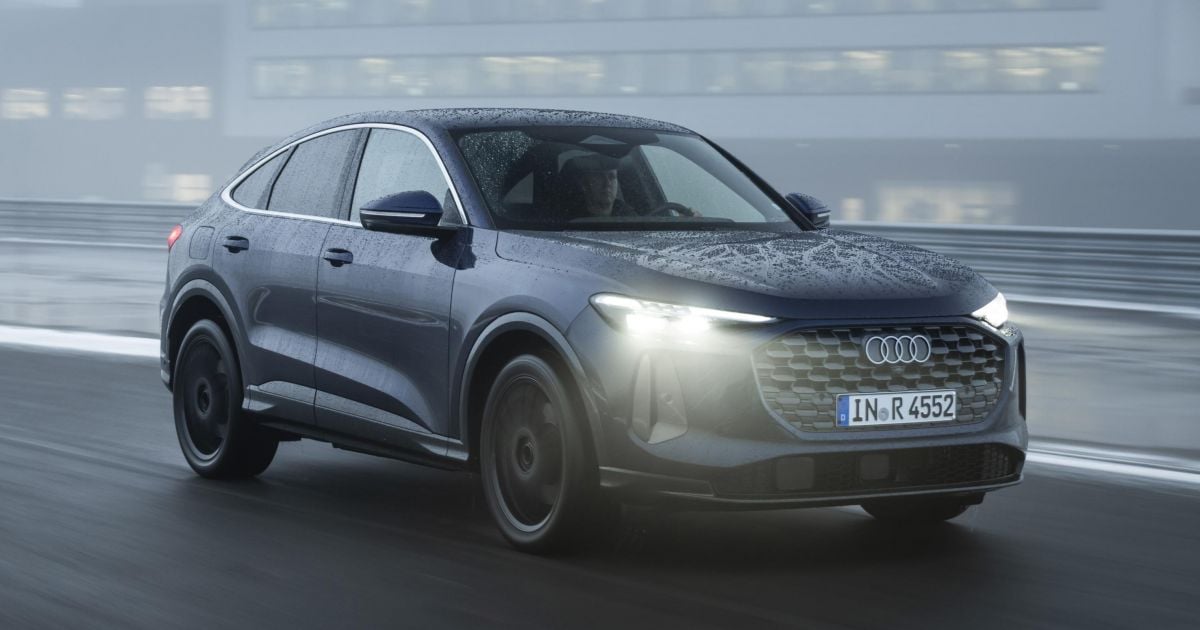
Audi has launched a new V6 turbo-dieselengine in the latest Q5 SUV as well as the A6 sedan, complete with the brand’s latest ‘MHEV plus’ mild-hybrid system and an electric turbocharger.
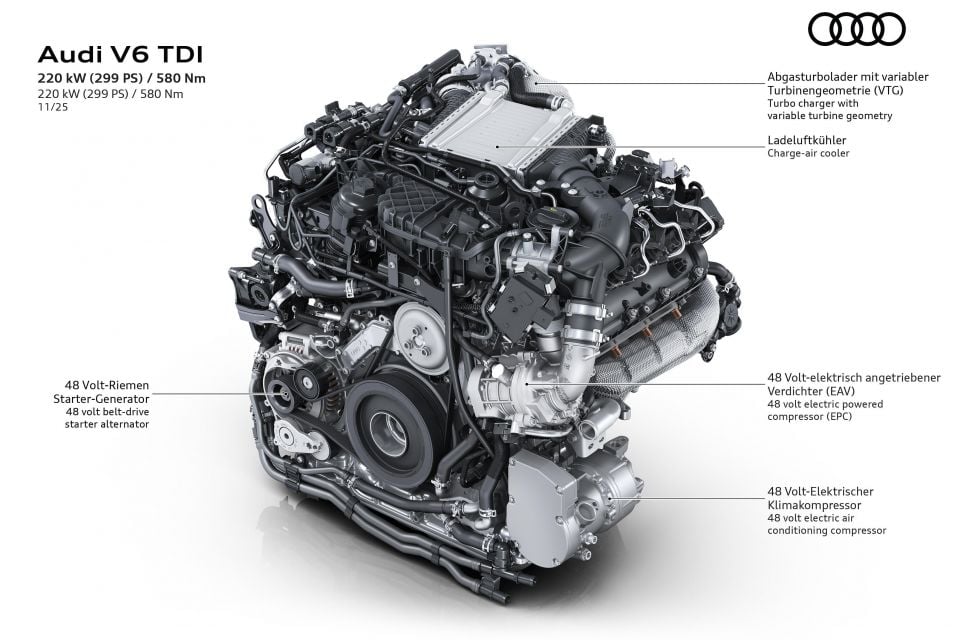
Available to order now in select markets throughout Europe, the new V6 TDI engine is a 3.0-litre unit generating 220kW of power and 580Nm of torque – by comparison, the previous-generation 3.0 V6 TDI made up to 210kW/600Nm.
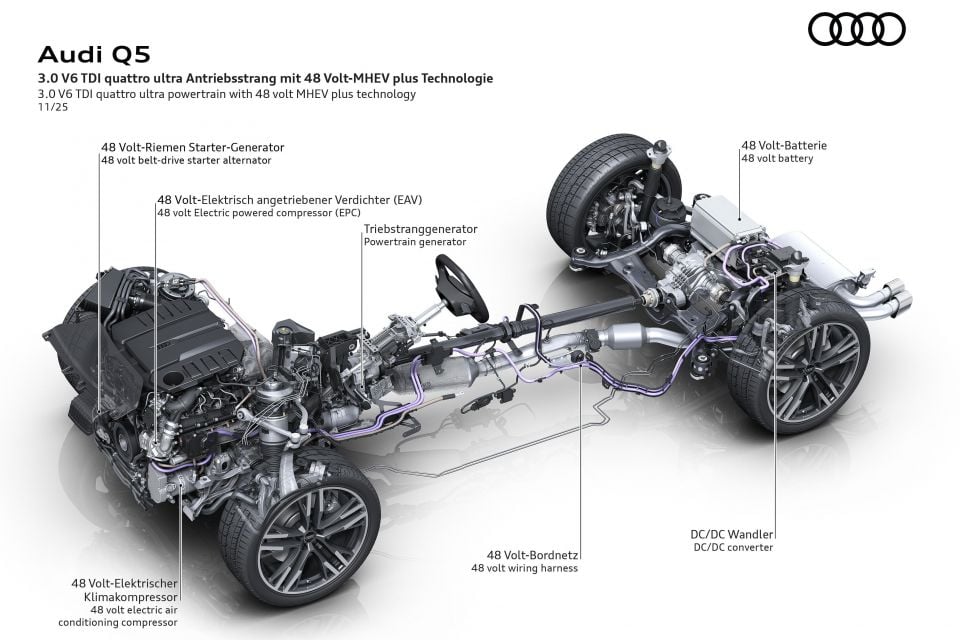
However, Audi’s MHEV plus system adds a generator, belt alternator stater and a lithium iron phosphate (LFP) battery into the mix, which can add up to 18kW/230Nm when “starting off and overtaking”. Further, the system can feed up to 25kW of energy back into the hybrid battery.
CarExpert can save you thousands on a new car. Click here to get a great deal.
Further to the new MHEV tech, the V6 TDI ‘EA897 evo4’ also gets a new electrically powered compressor, which compared to previous implementations of the technology claims to be “significantly” more powerful and operable across “the entire speed range”.
“When the load demand from the accelerator pedal is high, and the energy supply on the turbine side is low, the intake air is directed to the electrically powered compressor,” Audi explains in its media release.
“There, this air – already compressed by the exhaust-driven turbocharger – is further compressed before entering the combustion chamber.”
Audi claims this all contributes to more linear and faster response, particularly in the mid-range, as well as “more direct pedal feel, increased efficiency, and improved long-term durability”.
Max boost of 3.6 bar is claimed to build up nearly a second faster than before, with the compressor wheel spinning up to 90,000 revolutions per minute within 250 milliseconds, an increase of 40 per cent. The company says “it closely resembles the feel of an electric drive with similar power”.
In Europe, the new V6 TDI motor will be compatible with sustainable HVO fuel (hydrotreated vegetable oil). This fuel enables a “70 to 95 per cent reduction in CO2 emissions compared to petroleum-derived fuel”.
HVO is made using residual and waste materials, such as used cooking oil or agricultural by-products. Oils are converted into saturated aliphatic hydrocarbons using hydrogen, which modifies the properties of the vegetable oils to make them suitable for use in diesel engines.
Further, these can be blended with conventional diesel to replace fossil components, or used as a 100 per cent pure fuel alternative. Audi says new vehicles leaving its two German plants in Ingolstadt and Neckarsulm are delivered with HVO fuel already in the tank.
According to German specifications, the Audi Q5 TDI quattro 220kW accelerates from 0-100km/h in just 5.0 seconds, on its way to a top speed of 250km/h. Price-wise, it’s €5000 ($8844) more than the four-cylinder TFSI quattro 200kW.
“We now have a full range of drivetrains available including petrol, diesel, and plug-in hybrid for the Australian market,” said an Audi Australia spokesperson when asked whether the new engine will be introduced here.
“Of course, we evaluate all engine options for the Australian market. However, our primary focus remains on expanding our range with vehicles that align with NVES (New Vehicle Efficiency Standard) requirements while still delivering a broad range of spec, variants, and performance for Australian customers.”
The new A6 range has yet to be locked in for Australia, though the Q5 is already on sale and includes a four-cylinder turbo-diesel engine.
The brand’s local executives have thrown their support behind diesel engines, despite other manufacturers moving away from diesel engines following the VW Group’s Dieselgate emissions cheating scandal.

Audi Embraces Diesel Technology in New Q5 Model
During the launch event of the latest Q5 model in September, Audi Australia’s product manager Peter Strudwicke emphasized the importance of including a diesel option in the lineup. He mentioned that the significant volume of sales for big-volume cars like the Q5 made it essential to cater to customers who prefer diesel engines.
Head of product for Audi Australia, Matthew Dale, further elaborated on the advantages of incorporating a diesel powertrain in the new Q5. He highlighted the efficiency of the diesel engine and its seamless integration with mild hybrid electric vehicle (MHEV) technology. This combination allows for enhanced performance at both low and high speeds, showcasing the evolution of diesel technology in Audi vehicles.
Contrary to some of its rivals, such as the Mercedes-Benz GLC and Volvo XC60, Audi has opted to retain the diesel option in the Q5, recognizing the demand for this type of powertrain in the Australian market. While competitors like the BMW X3 offer limited diesel choices, Audi’s commitment to providing a diverse range of powertrain options sets it apart in the luxury SUV segment.
Related Articles:
- Audi: ‘We’d be losing customers’ without diesel in Australia
- Explore the Audi A6 showroom
- Explore the Audi Q5 showroom











Monster Hunter Stories 3: The Challenge of Twisted Reflection

Revolutionizing Cash-Pay Clinic Prescribing: VITL Secures $7.5M Amid GLP-1 Boom

Balancing Act: The Decision to Shut Down Sora

Exclusive Arrival: Cupra Born VZ Lands in Australia – But There’s a Twist!

iPhone 12 Pro Max vs Samsung Note 20 Ultra / Huawei Mate 40 Pro Camera Test Comparison.

ClickFix: The New Threat to macOS Security

Kingdom Come: Deliverance 2 – The Rise of Artificial Intelligence

Elon Musk’s Latest Venture Faces Uncertainty as Last Co-Founder Departs xAI

Apple Bids Farewell to the Mac Pro Tower: Is it Truly Dead?

EU Takes Action Against Instagram and Facebook for Violating Illegal Content Rules

Warning: Facebook Creators Face Monetization Loss for Stealing and Reposting Videos

Facebook Compliance: ICE-tracking Page Removed After US Government Intervention

Facebook’s New Look: A Blend of Instagram’s Style

Facebook and Instagram to Reduce Personalized Ads for European Users

InstaDub: Meta’s AI Translation Tool for Instagram Videos

Reclaim Your Account: Facebook and Instagram Launch New Hub for Account Recovery

Meta discontinues Messenger apps for Windows and macOS

Breaking Updates: Meta Connect 2025 Unveils Latest Developments
iPhone 12 Pro Max vs Samsung Note 20 Ultra / Huawei Mate 40 Pro Camera Test Comparison.

iPhone 12 Pro Max vs Samsung Note 20 Ultra / Huawei / Xiaomi / OnePlus Battery Life DRAIN Test.

The BEST Smartphone of 2020 🏆

The Self-Healing Smartphones!

Apple is not what it used to be.

Smartphones are Boring now.

The Fastest Android Phone Ever.

Unboxing the $122,000 Smartphone. 🤯

Are Linux Smartphones about to KILL Android?
-
 Facebook5 months ago
EU Takes Action Against Instagram and Facebook for Violating Illegal Content Rules
-
 Facebook5 months ago
Warning: Facebook Creators Face Monetization Loss for Stealing and Reposting Videos
-
 Facebook5 months ago
Facebook Compliance: ICE-tracking Page Removed After US Government Intervention
-
 Facebook4 months ago
Facebook’s New Look: A Blend of Instagram’s Style
-
 Facebook4 months ago
Facebook and Instagram to Reduce Personalized Ads for European Users
-
 Facebook6 months ago
InstaDub: Meta’s AI Translation Tool for Instagram Videos
-
 Facebook4 months ago
Reclaim Your Account: Facebook and Instagram Launch New Hub for Account Recovery
-
 Apple5 months ago
Meta discontinues Messenger apps for Windows and macOS
