
Startups
Expanding Horizons: Navigating Europe’s Growing Open-Source AI Community

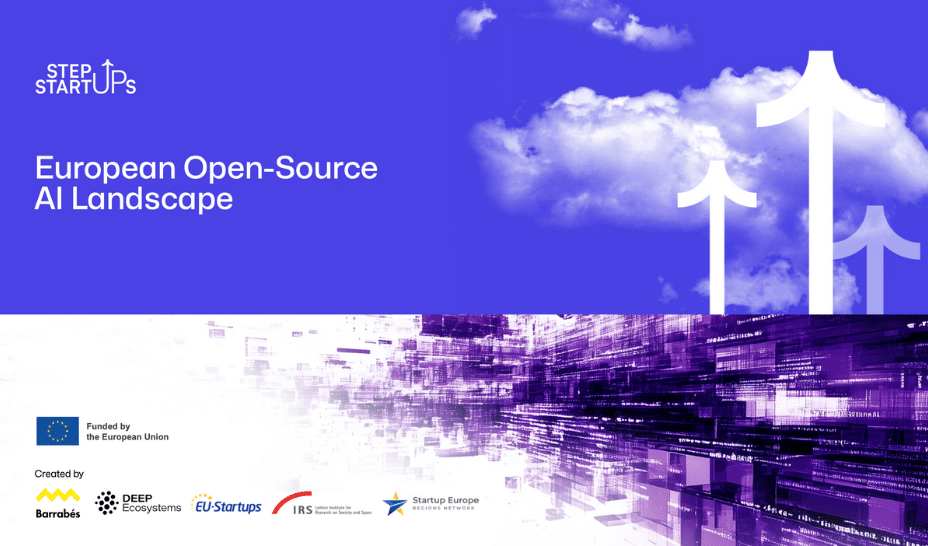
StepUp Startups recently released a groundbreaking report titled The European Open-Source AI Landscape. This report provides valuable insights into Europe’s current position in the global AI landscape and discusses the potential benefits of increased adoption of open-source AI in enhancing competitiveness and strengthening digital sovereignty within the EU.
Open-source AI encompasses models, tools, and datasets with openly available components, such as source code, model weights, and documentation. This transparency reduces barriers for universities, public institutions, startups, and established companies, enabling them to develop and deploy AI without being restricted to proprietary systems.
The report highlights the widespread integration of open-source across the AI tech stack, with more than half of developers regularly utilizing open models, datasets, or tools. Additionally, open-source promotes safer AI practices by providing researchers with the necessary visibility to thoroughly test and evaluate models.
The Rapidly Evolving Global AI Landscape
Since 2022, there has been a significant increase in the number of publicly released AI models, with a notable rise in models accompanied by open weights. This trend offers developers enhanced insights and control, positioning open models to compete with proprietary systems and even achieve expert-level performance on certain benchmarks.
Europe’s Strengths: Collaboration and Innovation
Europe holds strategic advantages in the AI landscape, including top-tier research institutions, strong collaboration between academia and industry, and significant contributions to essential tools like scikit-learn, spaCy, and PyTorch. Many European AI startups are also releasing open-source models under licenses, providing valuable resources for others to utilize and scale.
Despite these strengths, the adoption of AI in European businesses remains relatively low, with only 14% of EU firms utilizing AI in 2024. To address this challenge, the EU introduced its Apply AI strategy in October 2025, aiming to drive increased AI adoption among European companies. The report emphasizes the role of open-source AI in bridging this adoption gap by offering transparent, reusable, and cost-effective tools in alignment with EU values.
Expanding Open-Source AI: Europe’s Potential
Access to computing resources remains a critical issue for European innovators. The 19 EU-funded AI Factories and expanded EuroHPC supercomputers aim to address this challenge by providing startups and SMEs with free access to the GPU capacity required to develop European models, including open-weight systems.
This public infrastructure has already yielded results, as evidenced by Latvian SME Tilde’s launch of TildeOen LLM, a 30-billion-parameter open-source language model trained using 2 million GPU hours on the EuroHPC LUMI supercomputer in September 2025.
Towards Sovereign and Competitive AI
The cost of AI inference has significantly decreased in recent years, making AI more affordable and accessible. Coupled with Europe’s research expertise, multilingual talent pool, and regulatory framework, open-source AI presents a significant opportunity for the EU to establish a leading position in the global AI landscape.
Rather than solely focusing on developing large-scale frontier models, Europe can lead by creating open, trustworthy, multilingual, and industry-specific AI solutions aligned with its economic and societal priorities. Achieving this goal will require investments, improved access to computing resources, and targeted support to help organizations, especially SMEs, effectively adopt and deploy open-source AI solutions.
Download the full report to delve into the comprehensive findings.












Is BMW Ready to Challenge the Dominance of the Escalade?

19 Smartphone Gadgets that Blew me Away.

Critical Flaw in Smart Slider Plugin Puts 500K WordPress Sites at Risk

Exclusive Deal: PS5 Pro Price Jumping to £789 Next Week!

Lunar Love: How Watch Club Aims to Dominate the Werewolf Romance Market

Revolutionizing Technology: How the Macintosh Forever Transformed the World of Computers

Tech Savvy Heroes: AirTag Child Rescue, DarkSword Hack, and More Adventures

Chinese Brand’s Newest Small Electric Hatch Sets Safety Standard with Anticipated Five-Star Rating

The Unforeseen Lessons: A Microsoft VP’s Journey from India to the Age of AI

EU Takes Action Against Instagram and Facebook for Violating Illegal Content Rules

Warning: Facebook Creators Face Monetization Loss for Stealing and Reposting Videos

Facebook Compliance: ICE-tracking Page Removed After US Government Intervention

Facebook’s New Look: A Blend of Instagram’s Style

Facebook and Instagram to Reduce Personalized Ads for European Users

InstaDub: Meta’s AI Translation Tool for Instagram Videos

Reclaim Your Account: Facebook and Instagram Launch New Hub for Account Recovery

Meta discontinues Messenger apps for Windows and macOS

Breaking Updates: Meta Connect 2025 Unveils Latest Developments
19 Smartphone Gadgets that Blew me Away.

iPhone 12 Pro Max Unboxing & Review!

iPhone 12 Pro Max vs Samsung Note 20 Ultra / Huawei Mate 40 Pro Camera Test Comparison.

iPhone 12 Pro Max vs Samsung Note 20 Ultra / Huawei / Xiaomi / OnePlus Battery Life DRAIN Test.

The BEST Smartphone of 2020 🏆

The Self-Healing Smartphones!

Apple is not what it used to be.

Smartphones are Boring now.

The Fastest Android Phone Ever.
-
 Facebook5 months ago
EU Takes Action Against Instagram and Facebook for Violating Illegal Content Rules
-
 Facebook6 months ago
Warning: Facebook Creators Face Monetization Loss for Stealing and Reposting Videos
-
 Facebook6 months ago
Facebook Compliance: ICE-tracking Page Removed After US Government Intervention
-
 Facebook4 months ago
Facebook’s New Look: A Blend of Instagram’s Style
-
 Facebook4 months ago
Facebook and Instagram to Reduce Personalized Ads for European Users
-
 Facebook6 months ago
InstaDub: Meta’s AI Translation Tool for Instagram Videos
-
 Facebook4 months ago
Reclaim Your Account: Facebook and Instagram Launch New Hub for Account Recovery
-
 Apple5 months ago
Meta discontinues Messenger apps for Windows and macOS
