
Cars
Exploring the Future of BMW Performance Cars: The Decision to Rule Out Hydrogen Technology

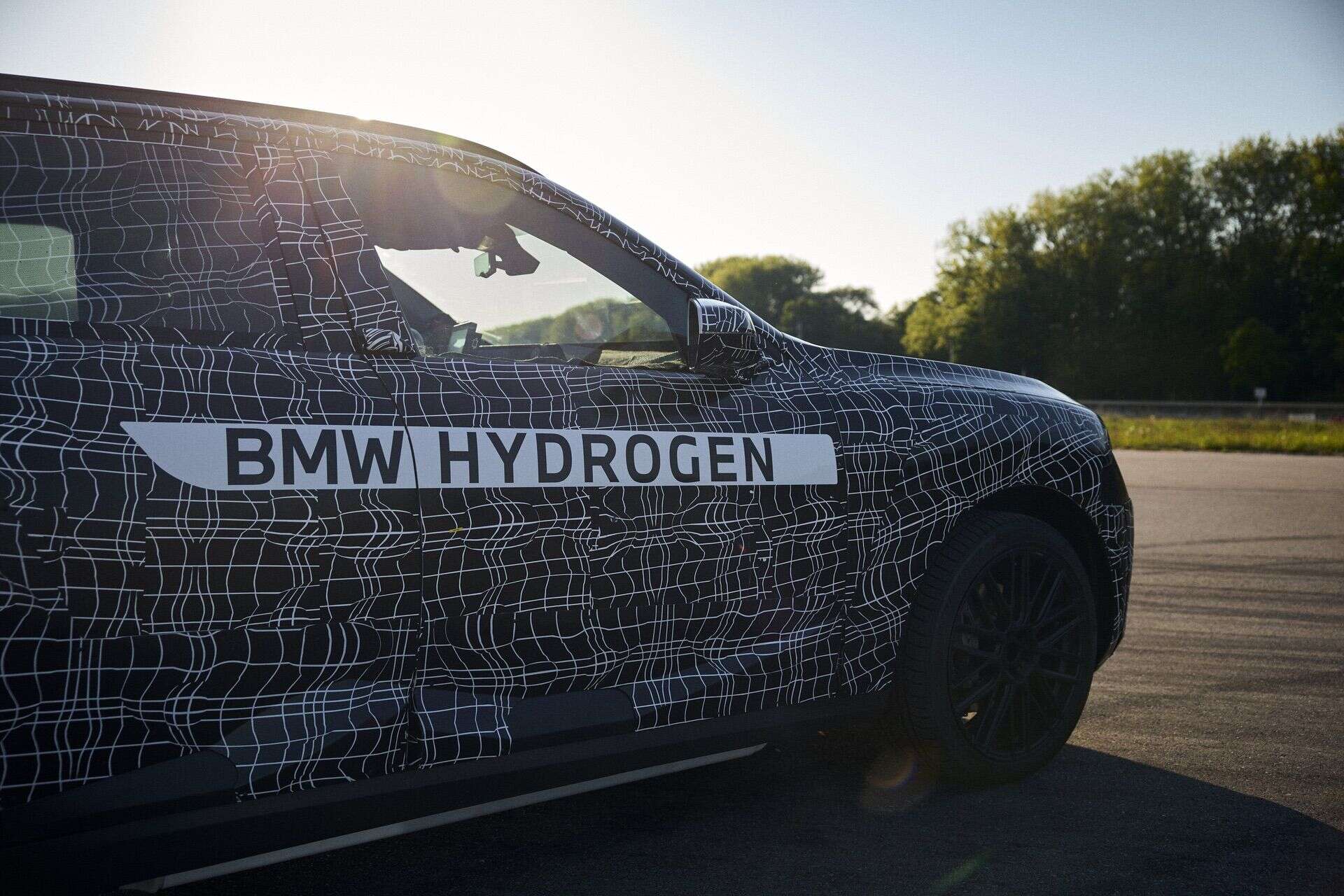
The Future of Hydrogen Fuel-Cell Technology at BMW
BMW remains one of the few traditional automakers that are deeply invested in the development of hydrogen fuel-cell technology. However, those hoping to see this technology in a high-performance M-badged car may need to adjust their expectations. According to Frank van Meel, the head of BMW M, while hydrogen fuel cells are not entirely ruled out, the current engineering challenges make it a distant possibility at best.
The Challenge of Packaging
The main obstacle lies in the physics and packaging requirements. A high-performance hydrogen fuel-cell system necessitates multiple stacks working together, each requiring its own thermal management system. When aiming for M-car power levels, the space and weight constraints become significant. Van Meel bluntly described the outcome as a vehicle the size of a truck, a challenge that BMW M has yet to overcome.
This challenge extends to motorsport as well. While BMW M has considered the use of hydrogen in endurance racing, finding a viable solution has proven elusive. While burning hydrogen directly in a combustion engine, as Toyota has explored in racing, would simplify the engineering, BMW’s focus on fuel cells and zero emissions limits this approach. Achieving zero tailpipe emissions with only water vapor as a byproduct presents a higher technical hurdle, especially in a racing environment where factors such as refueling time, weight distribution, and packaging are crucial.
Progress in Road Car Development
Despite these challenges, BMW’s commitment to hydrogen fuel-cell technology at the road car level remains unwavering. In September 2025, BMW announced that the hydrogen-powered iX5, expected to be named the iX5 60H xDrive, will enter mass production in 2028. This move makes BMW the first premium global automaker to bring a fuel-cell passenger car to the market at scale. Years of real-world testing, including a global pilot fleet since 2023, have paved the way for this milestone.
The production iX5 Hydrogen will utilize a third-generation fuel-cell system developed in partnership with Toyota, offering improved compactness, power, and efficiency compared to the previous generation. These enhancements make it suitable for a production SUV, although the packaging challenges for a sports car remain unresolved.
Local Production and Strategic Vision
The fuel-cell stacks for the iX5 Hydrogen will be manufactured at BMW’s Steyr plant in Austria, with key components produced at the Landshut facility in Germany. Positioned as one of five powertrain options in the next-generation X5 lineup, the iX5 Hydrogen underscores BMW’s strategic belief in the future of hydrogen technology, especially in regions with limited charging infrastructure.
While most competitors have shifted focus away from hydrogen, BMW’s steadfast commitment reflects a strategic conviction that the technology holds promise. However, for BMW M, the immediate focus remains on combustion performance, plug-in hybrids, and battery-electric models. The potential integration of fuel-cell technology into an M product hinges on advancements in miniaturization and thermal management that are currently lacking. While the door to hydrogen technology remains open at BMW M, significant progress is needed before it becomes a reality.











Exploring the Future of BMW Performance Cars: The Decision to Rule Out Hydrogen Technology

Amazon’s Robotics Restructuring: A Close Look at the Latest Layoffs

Bitwarden Introduces Passkey Login Feature for Windows 11

Assassin’s Creed Black Flag Resynced: The Official Announcement by Ubisoft

Comparing the Honor’s Magic V6 Folding Phone with Samsung and Motorola: A Closer Look at the Latest Technology

Revolutionizing Consumer Hardware: The PopSockets Success Story

MacBook Neo vs. MacBook Air: The Ultimate Showdown

Cinematic Insights: NotebookLM’s Research Summaries

Mastering AI for Seamless UI/UX Design: An In-Depth Tutorial

EU Takes Action Against Instagram and Facebook for Violating Illegal Content Rules

Warning: Facebook Creators Face Monetization Loss for Stealing and Reposting Videos

Facebook Compliance: ICE-tracking Page Removed After US Government Intervention

InstaDub: Meta’s AI Translation Tool for Instagram Videos

Facebook’s New Look: A Blend of Instagram’s Style

Facebook and Instagram to Reduce Personalized Ads for European Users

Reclaim Your Account: Facebook and Instagram Launch New Hub for Account Recovery

Meta discontinues Messenger apps for Windows and macOS

Breaking Updates: Meta Connect 2025 Unveils Latest Developments

How many Spy Cameras are Recording you right now?

Dear Apple.

22 NIGHTMARE Tech FAILS they want us to forget.

Do NOT buy the Freedom Phone!! 🤬

Nothing Ear 1 Review – The Problem with Hype.

Calyx OS – The next big Android Competitor!?

24 HOTTEST Inventions that will change your Life.

Galaxy Z Fold 3 – What was Samsung Thinking!?

Why Samsung is losing to Xiaomi.
-
 Facebook4 months ago
EU Takes Action Against Instagram and Facebook for Violating Illegal Content Rules
-
 Facebook5 months ago
Warning: Facebook Creators Face Monetization Loss for Stealing and Reposting Videos
-
 Facebook5 months ago
Facebook Compliance: ICE-tracking Page Removed After US Government Intervention
-
 Facebook5 months ago
InstaDub: Meta’s AI Translation Tool for Instagram Videos
-
 Facebook3 months ago
Facebook’s New Look: A Blend of Instagram’s Style
-
 Facebook3 months ago
Facebook and Instagram to Reduce Personalized Ads for European Users
-
 Facebook3 months ago
Reclaim Your Account: Facebook and Instagram Launch New Hub for Account Recovery
-
 Apple5 months ago
Meta discontinues Messenger apps for Windows and macOS
