
Tech News
Exploring the Key Types and Role of Best Practices in Action: Examples and Strategies for Success

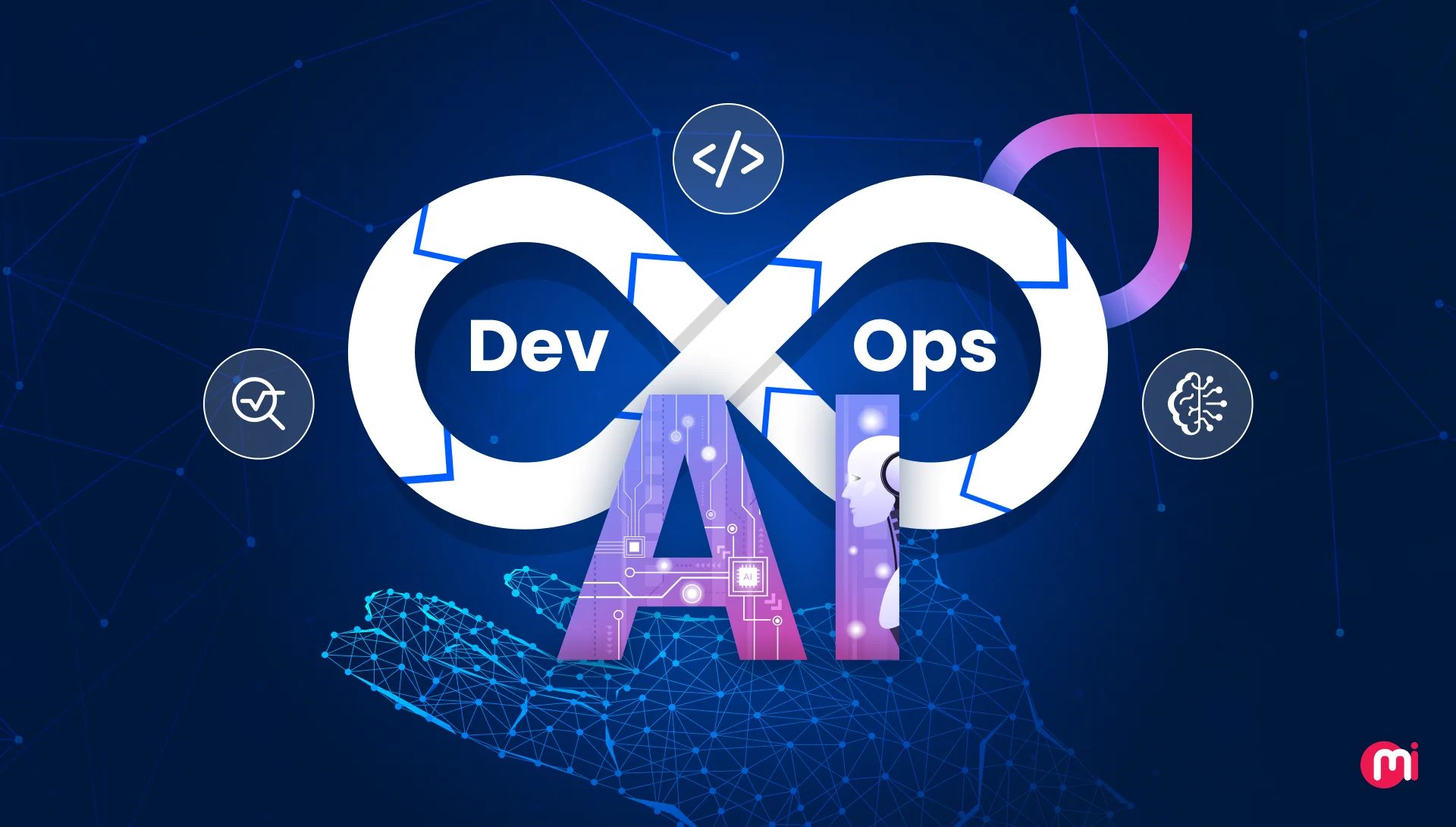
In the realm of modern software development, AI for DevOps is revolutionizing how teams create, deploy, and scale software applications. Originally bridging the gap between development and operations, DevOps is now evolving with the help of AI, automation, and predictive intelligence.
This shift towards AI DevOps was necessary due to the increasing complexity of applications and the acceleration of release cycles. Traditional DevOps practices often faced challenges with manual monitoring, reactive issue resolution, and repetitive tasks, hindering innovation.
So, what exactly is AI for DevOps?
AI for DevOps is an intelligent approach that utilizes machine learning and data-driven insights to automate and optimize processes throughout the software development lifecycle, from coding and testing to deployment and monitoring.
In this collaborative effort between DevOps and machine learning, the goal is to predict system failures, automate repetitive tasks, improve testing accuracy, and enhance security.
In this article, we will delve into everything you need to know about AI in DevOps, including its role, the challenges it addresses, the benefits it offers, best practices, tools, and steps to achieving intelligent DevOps.
Key Takeaways:
– AI for DevOps transforms software delivery from reactive to predictive, enabling teams to work faster and smarter.
– To incorporate AI into DevOps processes, start with a pilot use case and expand gradually as the return on investment becomes evident.
– Centralize data, automate feedback loops, and utilize appropriate AIOps tools to facilitate continuous learning and improvement.
– Early adoption of AI-enhanced DevOps provides businesses with an advantage in scalability, performance, and customer experience.
Key Statistics About AI in DevOps:
– 30% of mature DevOps teams that have implemented AI rate their effectiveness as extremely or very effective.
– 60% of DevOps teams are utilizing AI to enhance developer team efficiency.
– 54% of DevOps teams are using AI to bridge the skill gap.
– 47% of DevOps teams are leveraging AI to reduce costs.
– 42% of DevOps teams are using AI to enhance software quality.
– 32% of respondents estimate that AI-augmented DevOps tools save teams over 40 hours per month.
Why Traditional DevOps Needs AI:
Traditional DevOps brought speed, collaboration, and continuous delivery, but it was not designed for the scale, complexity, and speed of today’s systems. With expanding cloud environments and shrinking release cycles, teams are overwhelmed with alerts, metrics, and manual checks, making the continuous process feel more chaotic.
The limitations of traditional DevOps practices include:
– Reactive Monitoring: Traditional DevOps identifies issues only after they impact performance or user experience, relying on manual or rule-based monitoring.
– Inefficient Incident Management: Engineers spend hours searching through distributed logs to identify root causes, slowing down resolution and increasing downtime.
– Manual Testing and Deployment: Although DevOps automates much of the development process, associated tasks like regression testing, CI/CD validation, and deployment approvals still consume valuable engineering time.
– Lack of Predictive Insight: Traditional DevOps reacts to problems rather than anticipating them, with decisions based on past experiences rather than data-backed predictions.
– Data Overload and Fragmented Visibility: Metrics, logs, and alerts are spread across multiple tools, making it difficult to gain a unified view or identify hidden dependencies before they cause issues.
– Scaling Inefficiencies: Resource allocation often relies on static thresholds or manual judgment, leading to either overprovisioning (increased costs) or underperformance during demand spikes.
Types of AI to Use in DevOps Workflows:
The main types of AI used in DevOps workflows are machine learning, natural language models, large language models (LLMs), and computer vision.
Here’s how you can leverage these types of AI in DevOps workflows:
– Machine Learning: The fusion of DevOps and machine learning services can help analyze historical data from logs, metrics, and user behavior to predict future outcomes. This could involve predicting failures, detecting anomalies, scaling dynamic resources, and identifying security issues in code.
– Natural Language Processing (NLP): NLP in DevOps enables systems to understand and process human language. It can be used to analyze logs for insights, automate report generation and documentation, and power chatbots for developers to interact using conversational language.
– Large Language Models (LLMs): In DevOps, LLM development services can be utilized to create models that generate human-like code snippets, documentation, test cases, and assist with code reviews based on prompts.
– Computer Vision: Computer vision services in DevOps can be used for visual testing to identify UI regressions, automate interface monitoring, and perform image recognition tasks.
The Role of AI in DevOps Lifecycle:
AI for DevOps plays a transformative role by enabling intelligent automation, code assistance, predictive analytics, enhanced monitoring and observability, optimized resource management, improved security, and smarter decision-making and collaboration.
Here’s how AI impacts the different stages of the DevOps lifecycle:
AI Helps Teams Make Smarter, Data-Driven Decisions:
– AI-driven project management tools can estimate timelines, resource needs, and sprint efficiency based on historical performance.
– Predictive analytics can identify potential bottlenecks or risks during planning.
– DevOps and machine learning models can analyze code patterns, suggest improvements, and flag bugs or security flaws early on.
AI Promotes Intelligent Test Automation:
– AI-powered testing tools can automatically generate and prioritize test cases, leading to improved test coverage and accuracy.
– Intelligent test automation speeds up regression and performance testing by learning from previous results.
– AI algorithms in CI environments analyze build histories to predict potential failures or conflicts.
AI Makes Continuous Deployment Strategic and Anomaly-free:
– AI in deployment pipelines uses predictive analysis to assess the success probability of a release before rolling it out.
– Anomaly detection models monitor deployments in real-time and trigger automatic rollbacks if abnormal behavior is detected.
– AI can recommend the best deployment window by analyzing user traffic and minimizing downtime and user impact.
AI Ensures Proactive Monitoring and Incident Management:
– AI-powered observability tools continuously scan logs, metrics, and traces to detect anomalies that human eyes might miss.
– Root cause analysis becomes faster and more accurate with AI correlating events across systems.
– Predictive analytics forecast potential failures and automate incident alerts or self-healing actions.
AI Enables Continuous Intelligence in DevOps Workflows to Iterate Better:
– AI-driven analytics evaluate performance metrics, user behavior, and incident trends to recommend improvements for future sprints.
– DevOps and Machine Learning collaboration enables continuous learning from past data to redefine automation scripts, testing strategies, and deployment configurations.
– AI turns this feedback loop into continuous intelligence that learns, adapts, and optimizes DevOps workflows over time.
Key Benefits of Using AI in DevOps:
Integrating AI into DevOps workflows provides several benefits, including increased efficiency and speed, improved accuracy and reliability, better resource management, and enhanced security.
Key benefits of AI in DevOps workflows include:
– Increased DevOps efficiency as AI automates routine tasks like code integration, testing, and deployment.
– Improved software quality through proactive identification and resolution of performance bottlenecks in real-time.
– AI-powered decision-making by optimizing resource use, deployment timing, and system performance.
– Accelerated incident response through predictive failure detection, automated root cause analysis, and reduced mean time to resolution (MTTR).
– Faster and consistent delivery cycles with automated regression testing, CI/CD validation, and release scheduling.
– Optimized infrastructure costs as AI forecasts usage trends and dynamically scales cloud resources for cost and performance balance.
– Strengthened security and compliance with continuous vulnerability scanning, behavioral analytics, and automated policy enforcement.
– Improved code quality through intelligent reviews that detect bugs, syntax errors, and vulnerabilities early in the development cycle.
– Enhanced collaboration across Dev, Ops, QA, and Security teams with shared operational insights and unified dashboards.
– Increased system reliability as predictive analytics prevent outages and self-healing mechanisms maintain uptime.
How to Implement AI in Your DevOps Workflow:
To implement AI in DevOps workflows successfully, you need to assess readiness, define objectives, build a strong data foundation, integrate the right tools, train your team, and maintain human oversight.
Steps to implement AI in your DevOps workflow include:
– Evaluate your current DevOps maturity to determine readiness for AI integration.
– Identify where AI adds value in your pipeline, such as predictive monitoring, incident management, automated testing, or resource optimization.
– Build a robust data foundation by centralizing data, establishing governance policies, and ensuring security, compliance, and accuracy.
– Integrate AI tools like AIOps platforms for intelligent monitoring, AI-based testing tools for smart automation, and cloud services for operational intelligence.
– Automate feedback loops to refine AI systems with historical data and analytics for continuous improvement.
– Upskill your team on AI and ML tools, encourage cross-functional learning, and appoint an AIOps engineer to lead collaboration between DevOps and data teams.
– Track key metrics like MTTR, deployment frequency, and change failure rate for continuous refinement of AI models and scaling adoption across workflows.
Best Practices for Using AI in DevOps:
To ensure successful integration of AI in DevOps, it is essential to follow best practices such as defining clear KPIs, starting small and scaling strategically, ensuring top-notch data quality, continuously retraining models, prioritizing security and compliance, monitoring AI decision accuracy, and more.
Best practices for implementing AI in DevOps include:
– Define clear KPIs to measure the impact of AI on DevOps metrics like MTTR, deployment frequency, and change failure rate.
– Start with a small use case and expand based on proven results to ensure successful AI integration.
– Maintain data quality by centralizing and ensuring the accuracy of training and operational data.
– Integrate AI seamlessly with existing tools to avoid workflow disruption.
– Automate tasks with AI while retaining human oversight for critical decision-making.
– Continuously retrain AI models with updated data to ensure accuracy in dynamic environments.
– Prioritize security and compliance by implementing access controls, encryption, and bias checks.
– Promote cross-functional collaboration between Dev, Ops, QA, and data science teams.
– Monitor AI outputs for transparency, fairness, and trust across automated processes.
– Document AI models, configurations, and outcomes for scalability and continuous improvement.
Challenges of Integrating AI in DevOps and How to Address Them:
Implementing AI in DevOps may pose challenges such as integration complexity, data quality and availability, skill and knowledge gaps, cultural resistance to change, and security and compliance risks.
Ways to address challenges of integrating AI in DevOps include:
– Start with modular AI integrations that complement existing DevOps tools to avoid disrupting workflows.
– Build a unified data foundation by centralizing data and enforcing data governance policies.
– Upskill DevOps teams with AI/ML workshops or hire engineers with expertise in AIops and data science.
– Foster transparency and emphasize augmentation rather than replacement to address cultural resistance.
– Focus on implementing access controls, encryption, and compliance standards to mitigate security risks.
How Microsoft Uses AI to Reinvent DevOps Practices: Real-World Example:
Microsoft transformed its DevOps practices by automating test case generation with Azure DevOps and GitHub Copilot. They used Playwright for full-cycle software testing, resulting in faster test creation, broader coverage, seamless CI/CD integration, and on-demand test execution.
Take the Next Step Towards AI-Enhanced DevOps with MindInventory:
MindInventory helps organizations build AI-driven DevOps ecosystems for measurable business outcomes and technical efficiency. Certified DevOps and cloud engineers across AWS, GCP, and Azure offer expertise in AIops to assess current DevOps maturity and AI readiness.
MindInventory services include:
– Designing and implementing AI-powered automation for CI/CD, testing, and monitoring.
– Building data pipelines and AIOps frameworks for predictive decision-making.
– Modernizing infrastructure with intelligent scaling and cost optimization.
– Strengthening DevSecOps with continuous compliance and automated threat detection.
– Training teams in AI-first operations for sustainable improvement.
FAQs About AI in DevOps:
– How will AI impact the future of DevOps?
– How can a DevOps team take advantage of AI?
– What skills do DevOps engineers need in this AI era?
– Can AI replace DevOps?
– What is AIOps?
– Is AI the key to your DevOps success?
– How are enterprises using agentic AI in DevOps?
In conclusion, integrating AI into DevOps processes brings numerous benefits, including increased efficiency, improved accuracy, better resource management, and enhanced security. By following best practices and addressing challenges, organizations can leverage the power of AI to transform their software delivery lifecycle. MindInventory offers expertise in AI-driven DevOps solutions to help organizations achieve success in the modern software development landscape.













Secure APK Sideloading: Harnessing the Power of Advanced Flow for Safe Android Installation

Gunvolt Chronicles: Luminous Avenger iX – The Complete Dual Collection

K2 Launches Groundbreaking High-Powered Satellite for Advanced Space Computing

The End of Security: iOS 13 and 14 Vulnerabilities in 2026

Exclusive Look: The 2027 Chevrolet Corvette Grand Sport Unleashed at Sebring

DON’T buy a Screen Protector before watching this.

Exploiting Vulnerable Drivers: How EDR Killers Use BYOVD to Disable Security

Alphabet’s X Unveils Innovative Spinout Targeting Costly Bureaucratic Challenges

Lawsuit: Halide co-founder accuses Sebastiaan de With of code theft for Apple

EU Takes Action Against Instagram and Facebook for Violating Illegal Content Rules

Warning: Facebook Creators Face Monetization Loss for Stealing and Reposting Videos

Facebook Compliance: ICE-tracking Page Removed After US Government Intervention

Facebook’s New Look: A Blend of Instagram’s Style

Facebook and Instagram to Reduce Personalized Ads for European Users

InstaDub: Meta’s AI Translation Tool for Instagram Videos

Reclaim Your Account: Facebook and Instagram Launch New Hub for Account Recovery

Meta discontinues Messenger apps for Windows and macOS

Breaking Updates: Meta Connect 2025 Unveils Latest Developments
DON’T buy a Screen Protector before watching this.

Beware of Fake Reviewers! ⚠️

Xiaomi Mi 11 Unboxing & Review.

The Galaxy S21 Ultra is Better than you think.

Samsung Galaxy S21 Ultra vs iPhone 12 Pro Max Camera Test Comparison.

Samsung S21 Ultra vs iPhone Battery Life Test!

The Truth about Xiaomi “Air Charging”

DON’T buy this Smartphone.

Galaxy S21 Ultra – Exynos vs Snapdragon.
-
 Facebook5 months ago
EU Takes Action Against Instagram and Facebook for Violating Illegal Content Rules
-
 Facebook5 months ago
Warning: Facebook Creators Face Monetization Loss for Stealing and Reposting Videos
-
 Facebook5 months ago
Facebook Compliance: ICE-tracking Page Removed After US Government Intervention
-
 Facebook3 months ago
Facebook’s New Look: A Blend of Instagram’s Style
-
 Facebook3 months ago
Facebook and Instagram to Reduce Personalized Ads for European Users
-
 Facebook5 months ago
InstaDub: Meta’s AI Translation Tool for Instagram Videos
-
 Facebook4 months ago
Reclaim Your Account: Facebook and Instagram Launch New Hub for Account Recovery
-
 Apple5 months ago
Meta discontinues Messenger apps for Windows and macOS
