
Cars
From Humble Beginnings to Automotive Powerhouses: The Evolution of Subaru, Nissan, VW, and Chery in Australia

Cars like the Subaru Forester, Nissan X-Trail, and Volkswagen Golf are certainly big parts of why their respective brands are successful, but there’s more to their respective manufacturers than these popular models.
As we did a few weeks ago, we’re comparing the first cars to be sold in Australia by several popular manufacturers with their newest nameplates.
We’ve included only the newest nameplates to be offered in Australia by each of these companies, though existing nameplates may have subsequently received new powertrains and variants.
This is the second instalment in a feature series. You can read Part 1 here.
CarExpert can save you thousands on a new car. Click here to get a great deal.
Subaru: 360, Solterra
Subaru got its start in Australia through private imports, as many other brands did. A used-car dealer in Ballarat, Victoria, reportedly imported around 73 examples of the Subaru 360 in 1961, making it the first Subaru sold locally.
Weighing just 450kg and powered by a 356cc two-cylinder engine, the 360 was mechanically compliant with Japan’s Kei car regulations, and its bubbly styling earned it the “ladybug” nickname. This helped make it immensely popular in its home market as brands sought to motorise Japanese citizens post-war.
But in Australia and other overseas markets, the 360 was poorly received. This was particularly notable in the United States, where businessman Malcolm Bricklin imported 10,000 examples, only for the car to be criticised for safety concerns and a lack of power, leading to its rejection by the public.
Meanwhile, overheating issues plagued the earliest Australian examples, possibly due to our warmer climate and higher-speed driving demands. While a later update eventually remedied the problem, the dealership ceased further imports amid unsustainable losses caused by the 360.
Mind you, this and subsequent models like the Leone (1973) contributed to Subaru’s reputation as a fairly unremarkable, uninspiring car brand throughout the 1970s and 80s, though the Japanese automaker did have a unique selling point in its four-wheel drive models.
Subaru tried to shift its rather staid reputation with the introduction of sportier models like the XT (1985) and SVX (1993), though these were largely unsuccessful. It arguably wasn’t until the Impreza WRX launched in 1994 that Subaru truly vaulted into the public eye, with the turbocharged, rally-derived sedan now one of Subaru’s longest-running nameplates.
Several other cars, like the Forester, Outback, and performance Impreza WRX STI, followed, cementing the brand as a household name in the Australian market. Though not always a top-seller, Subaru consistently places on the fringes of the top 10, but Chinese challengers in particular have shaken things up.
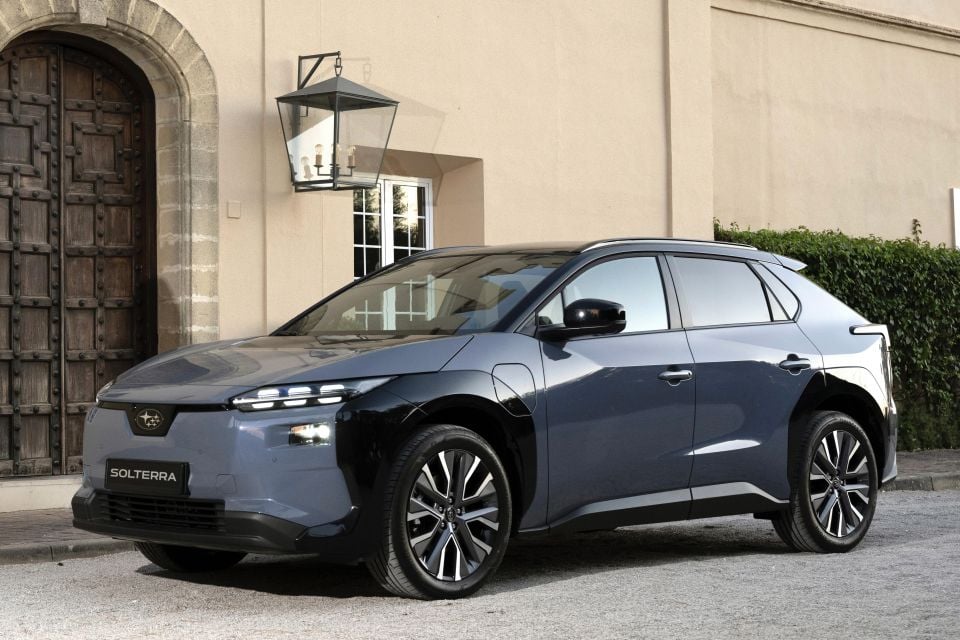
Subaru’s newest model is intended to take on many of those new rivals, but it hasn’t been popular so far. That’s the Solterra, the brand’s first fully electric vehicle – and a twin to the Toyota bZ4X – that launched in November 2023.
It’s currently Subaru’s slowest-selling local model, but orders are now open for a significantly updated version that brings revised looks, more power, more range, and improved tech, all at a much lower price than before.
MORE: Explore the Subaru showroom
Chery: J1 and J11, Tiggo 9
This list’s youngest brand is Chery, though in 15 years it’s found the time to take two bites of the Australian cherry. Its first stab was in 2011, when it launched with the J1 light hatch and J11 SUV.
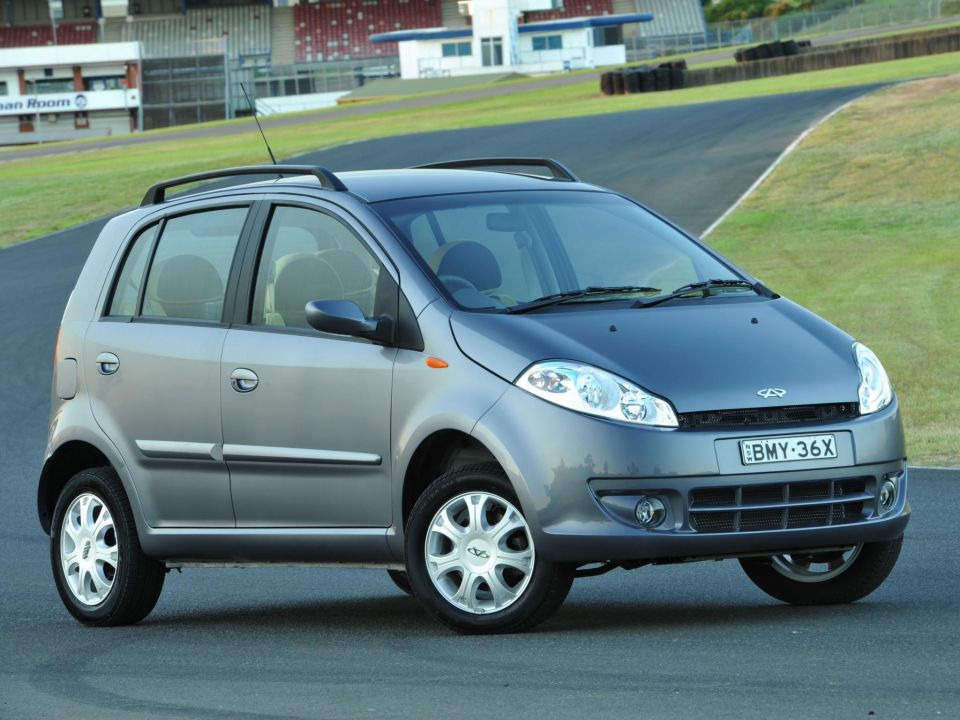
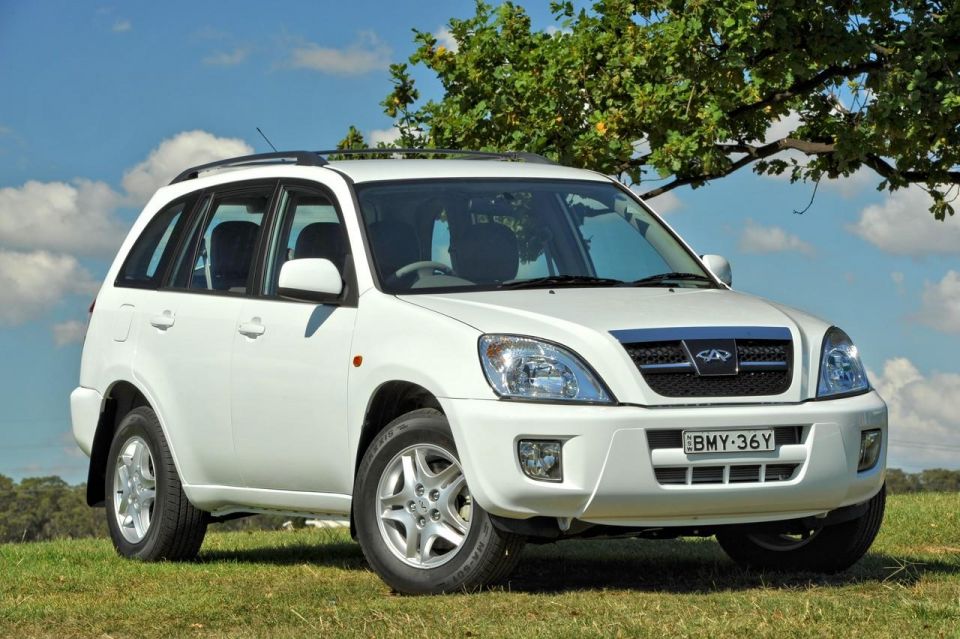
Distributed independently by Ateco, which is now responsible for brands like Renault and Ram, Chery’s first two cars (and the J3 small hatch that shortly followed) quickly fell afoul of government regulations mandating electronic stability control.
While this initially barred the brand from Victoria, the federal implementation of these regulations forced the brand to discontinue the J1. That wasn’t before its price was slashed to an astonishing $9990 drive-away, making it one of the only sub-$10,000 drive-away cars sold post-2000.
The other issue these cars faced was safety.
“` Chery responded to a three-star ANCAP rating for the J1 by issuing a recall to address the structural integrity of its seats. The J11, on the other hand, only managed to achieve a two-star rating. Updates to the J3 and J11 later included new engines and electronic stability control, but a lack of factory support from Chery led to the brand’s Australian operation fading away by 2015.
Chery made a second attempt in Australia in 2023 with full factory backing from its Chinese headquarters. The re-launch featured the Omoda 5 SUV, now known as the C5, which garnered over 5000 deliveries in its first year, surpassing the total sales from Chery’s initial effort. The brand quickly climbed to become a top-15 brand in Australia, challenging well-known Western brands like Volkswagen and Nissan.
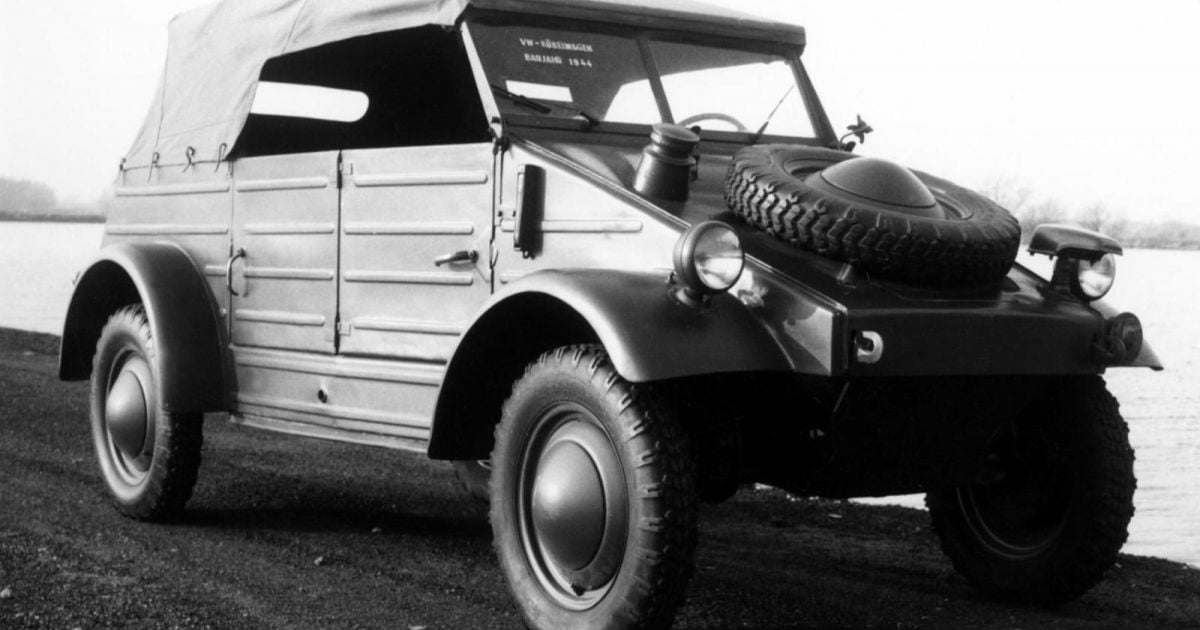
Chery further expanded its brand positioning by introducing the Omoda Jaecoo brand, featuring standalone Omoda and Jaecoo models, alongside new nameplates from Chery. The latest addition to the lineup is the Tiggo 9, a large plug-in hybrid SUV set for imminent release in Australia. The Army, recognizing the Kübelwagen’s performance during the war, sought to assess its suitability for Australian use in local conditions. As a result, the specific Kübelwagen in question is now part of the Australian War Memorial’s collection in Canberra. In 1947, Australia acquired eight VW passenger vehicles as part of wartime reparations for £160 each, equivalent to around A$11,000 today. While six vehicles remained in Germany, two prototypes – a Type 11 sedan and a Type 51 sedan with Kübelwagen running gear – were shipped to Melbourne. The first privately imported and owned Volkswagen in Australia was a black, right-hand drive 1946 model brought in by a German immigrant in 1951.
Volkswagen officially established a subsidiary in Australia in 1953, with the first cars available for sale in November of that year. Tax incentives led to a transition to local assembly, with the Beetle being the first model to undergo large-scale production in Australia. In 1967, the Australian-developed VW Country Buggy, resembling the iconic Thing, was introduced, constructed from Beetle and Kombi components. Local assembly operations continued in Clayton, Victoria, until 1976, when Nissan acquired the former Volkswagen plant.
Despite facing challenges in the 1980s, Volkswagen gradually solidified its position in the Australian market. Notably, the brand was embroiled in the Dieselgate scandal in 2015, involving emissions testing malpractices on certain diesel models. Nevertheless, Volkswagen has maintained a consistent presence as a top-15 brand in the Australian automotive market in recent years. The latest addition to its lineup is the Tayron, a seven-seat SUV derived from the Tiguan platform, serving as a direct replacement for the discontinued Tiguan Allspace. The Tayron was launched in September 2025.
For more information, feel free to explore the Volkswagen showroom. Transform the following:
Original: The cat is sleeping on the couch.
Transformed: On the couch, the cat is sleeping.








iPhone 12 Pro Max Unboxing & Review!

European Commission Launches Investigation into Amazon Cloud Account Breach

Drama and Dollars: The Evolution of Soap Opera-TikTok Hybrids

Maximizing MacBook Battery Life: Tips for Charging Slowly and Setting Charge Limits

Lost Legacy: The Disappearance of AC Schnitzer and the Changing Automotive Landscape

Cyber Warfare: The Battlefront of the Digital Age

Monster Hunter Stories 3: The Challenge of Twisted Reflection

Revolutionizing Cash-Pay Clinic Prescribing: VITL Secures $7.5M Amid GLP-1 Boom

Balancing Act: The Decision to Shut Down Sora

EU Takes Action Against Instagram and Facebook for Violating Illegal Content Rules

Warning: Facebook Creators Face Monetization Loss for Stealing and Reposting Videos

Facebook Compliance: ICE-tracking Page Removed After US Government Intervention

Facebook’s New Look: A Blend of Instagram’s Style

Facebook and Instagram to Reduce Personalized Ads for European Users

InstaDub: Meta’s AI Translation Tool for Instagram Videos

Reclaim Your Account: Facebook and Instagram Launch New Hub for Account Recovery

Meta discontinues Messenger apps for Windows and macOS

Breaking Updates: Meta Connect 2025 Unveils Latest Developments
iPhone 12 Pro Max Unboxing & Review!

iPhone 12 Pro Max vs Samsung Note 20 Ultra / Huawei Mate 40 Pro Camera Test Comparison.

iPhone 12 Pro Max vs Samsung Note 20 Ultra / Huawei / Xiaomi / OnePlus Battery Life DRAIN Test.

The BEST Smartphone of 2020 🏆

The Self-Healing Smartphones!

Apple is not what it used to be.

Smartphones are Boring now.

The Fastest Android Phone Ever.

Unboxing the $122,000 Smartphone. 🤯
-
 Facebook5 months ago
EU Takes Action Against Instagram and Facebook for Violating Illegal Content Rules
-
 Facebook5 months ago
Warning: Facebook Creators Face Monetization Loss for Stealing and Reposting Videos
-
 Facebook6 months ago
Facebook Compliance: ICE-tracking Page Removed After US Government Intervention
-
 Facebook4 months ago
Facebook’s New Look: A Blend of Instagram’s Style
-
 Facebook4 months ago
Facebook and Instagram to Reduce Personalized Ads for European Users
-
 Facebook6 months ago
InstaDub: Meta’s AI Translation Tool for Instagram Videos
-
 Facebook4 months ago
Reclaim Your Account: Facebook and Instagram Launch New Hub for Account Recovery
-
 Apple5 months ago
Meta discontinues Messenger apps for Windows and macOS
