
Cars
Hyundai’s N Division Thrives Down Under: Overcoming Strict Emissions Regulations in Australia

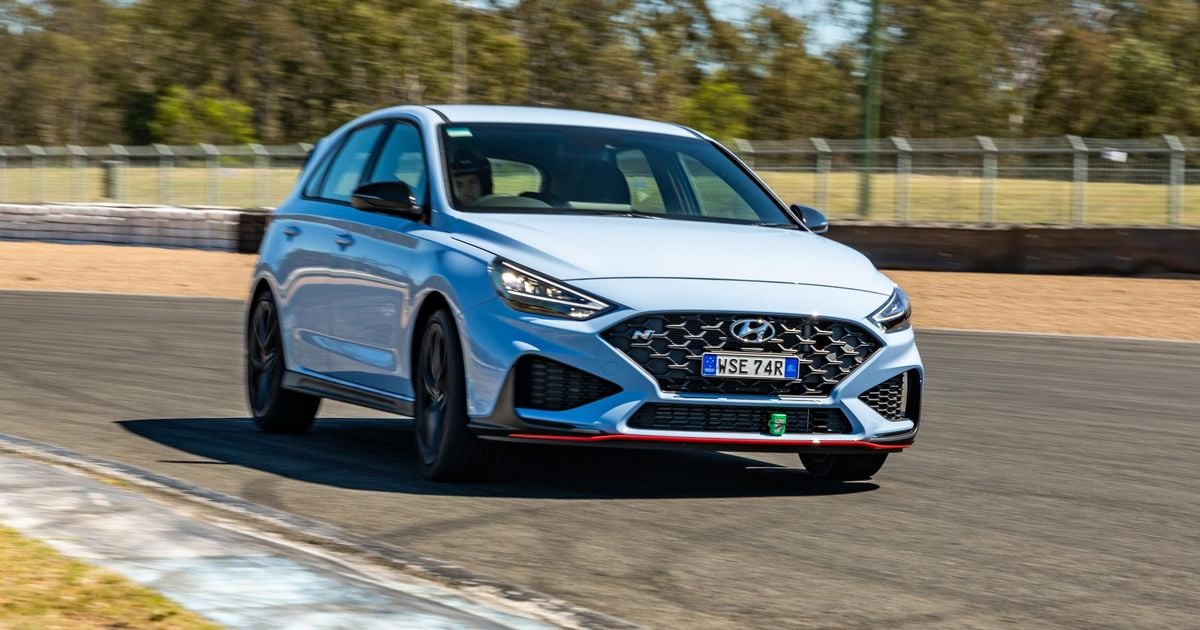
Hyundai Australia Commits to Keeping High-Performance N Models Despite Pressure from NVES
Hyundai Australia has made it clear that they have no intentions of discontinuing their high-performance N models, such as the i20 N and i30 N, despite the increasing pressure from the Federal Government’s New Vehicle Efficiency Standard (NVES). The NVES regulations have imposed tighter emissions caps, leading to potential penalties for manufacturers.
Gavin Donaldson, the chief operating officer of Hyundai Australia, stated in an interview with CarExpert that while the NVES regulations do add pressure and potential penalties, the Korean brand believes there is still a place for high-performance internal combustion engine (ICE) vehicles in their lineup.
Mr. Donaldson emphasized, “We think there’s a place for a high-performance ICE engine [in our lineup].” He also mentioned that Hyundai Australia is committed to maintaining their brand presence in Australia, despite the challenges posed by the NVES regulations.
Earlier this week, the Australian Government released the first results of the NVES, revealing that around two-thirds of brands have managed to beat their emissions targets. Type 1 vehicles, including passenger cars and SUVs, had a headline limit of 141g/km of carbon dioxide (CO2) emissions for 2025, while Type 2 vehicles, such as utes, vans, and large off-road SUVs, had a headline limit of 210g/km.
Hyundai Motor Company reported an ‘interim emissions value’ of 84,563 units, indicating that they will need to trade credit units with another company by December 31, 2027, to avoid penalties in February 2028.
For reference, the Hyundai i20 N has a combined CO2 emissions figure of 157g/km, even with Euro 6-homologated powertrain systems. The larger i30 Hatch N quotes 197-199g/km with its Euro 5-certified powertrain.
In the coming years, NVES CO2 caps are set to decrease, with Type 1 vehicles facing a limit of 117g/km. This means that the petrol-powered N range from Hyundai will likely incur even greater penalties. However, models like the all-electric Ioniq 5 N and the upcoming Ioniq 6 N can help offset these penalties with their zero-emissions powertrains.
Hyundai has ambitious plans to expand its N division lineup to seven models by 2030, including introducing their first hybrid model. Currently, the Hyundai N range includes models like the i20 N, i30 Hatch N, Elantra N (i30 Sedan N), Ioniq 5 N, and Ioniq 6 N.
There are speculations about a new-generation Elantra N/i30 Sedan N in the works, with potential plans for an N-branded SUV based on the Tucson. The compact Kona crossover could also receive an N version, while the Ioniq 3 compact EV may join the N lineup in the future.
Despite the challenges posed by NVES regulations, Hyundai Australia remains committed to offering high-performance N models and expanding their lineup to meet the changing automotive landscape.
Are you excited about Hyundai’s commitment to the N range in Australia? Let us know in the comments!
MORE: Explore the Hyundai showroom
Transform the following:
“He runs quickly”
to
“He is a fast runner”









Former BMW Designer Takes Helm at GM Advanced Design Studio

Xiaomi Mi 10 Ultra – Unboxing and Review.

Microsoft’s Solution: Repairing the Windows Start Menu Search Glitch

Dragon’s Fury: The Lost Legacy of AionGuard

Illuminate Your Yard: Nanoleaf’s 2026 Solar Garden Lights Shine with New Colour Scenes

Cheering on Arcee: The Small but Mighty Open Source AI Model Maker

Maximize Your Productivity with Vertical Browser Tabs

Enhancing iPhone Accessibility: Top 7 Features to Enable in 2026

Hyundai’s Future Ioniq EVs: A Farewell to Pixel Lights?

EU Takes Action Against Instagram and Facebook for Violating Illegal Content Rules

Warning: Facebook Creators Face Monetization Loss for Stealing and Reposting Videos

Facebook Compliance: ICE-tracking Page Removed After US Government Intervention

Facebook’s New Look: A Blend of Instagram’s Style

Facebook and Instagram to Reduce Personalized Ads for European Users

InstaDub: Meta’s AI Translation Tool for Instagram Videos

Reclaim Your Account: Facebook and Instagram Launch New Hub for Account Recovery

Meta discontinues Messenger apps for Windows and macOS

Breaking Updates: Meta Connect 2025 Unveils Latest Developments
Xiaomi Mi 10 Ultra – Unboxing and Review.

Galaxy Note 20 Ultra Review.

I bought every Galaxy Note ever.

Samsung and Google are at War.

OnePlus 7 Pro in 2020 – Wow.

Poco X3 – The Shady Truth.

Huawei is replacing Android.

14 MEGA Smartphone Fails we’ll never forget.

Why Samsung’s Transparent Phone will fail.
-
 Facebook6 months ago
EU Takes Action Against Instagram and Facebook for Violating Illegal Content Rules
-
 Facebook6 months ago
Warning: Facebook Creators Face Monetization Loss for Stealing and Reposting Videos
-
 Facebook6 months ago
Facebook Compliance: ICE-tracking Page Removed After US Government Intervention
-
 Facebook4 months ago
Facebook’s New Look: A Blend of Instagram’s Style
-
 Facebook4 months ago
Facebook and Instagram to Reduce Personalized Ads for European Users
-
 Facebook6 months ago
InstaDub: Meta’s AI Translation Tool for Instagram Videos
-
 Facebook4 months ago
Reclaim Your Account: Facebook and Instagram Launch New Hub for Account Recovery
-
 Apple6 months ago
Meta discontinues Messenger apps for Windows and macOS
