
Tech News
Innovative AI Applications: Industry-Specific Case Studies in 2026

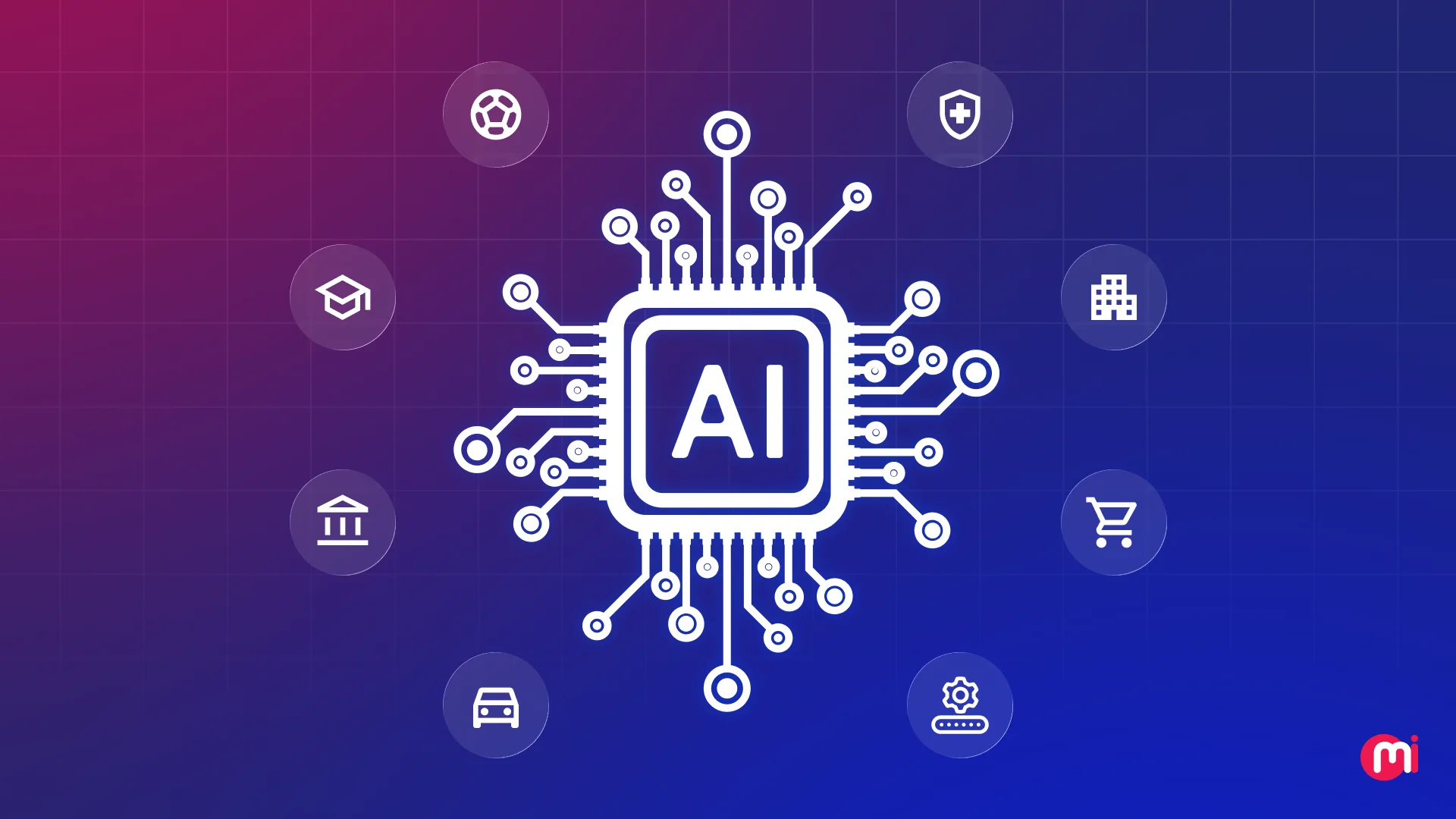
AI Use Cases Across Industries: Revolutionizing Operations with Artificial Intelligence
Imagine a world where machines predict diseases before symptoms appear, factories run without human error, and shopping sites understand exactly what you need. This is where artificial intelligence use cases come in, transforming industries today.
With technology advancing rapidly, industries without AI suffer from inefficiencies, unplanned manufacturing downtime costing billions annually, and manual diagnostics in healthcare that delay treatments.
According to stats by Grand View Research, the global artificial intelligence market size is projected to reach USD $3,497.26 billion by 2033, expanding at a CAGR of 30.6% from 2026 to 2033.
The massive growth AI offers is evident, with traditional sectors at risk of obsolescence amid surging AI use cases by industry, from AI in retail personalization to AI in construction optimization. AI integration services can help revolutionize operations with AI.
Let’s dive into artificial intelligence use cases across industries to understand the impact and potential benefits.
Key Takeaways
- AI performs human-like tasks such as data analysis, pattern recognition, and decision-making with ML algorithms.
- AI in healthcare includes patient data analysis, medical record summarization, and medical error reduction.
- AI in education offers intelligent tutoring systems, automated grading, and personalized learning.
- AI in real estate and construction involves property search, predictive analytics, and more.
- AI in manufacturing covers predictive maintenance, process optimization, and material research.
- AI in fintech includes fraud detection, credit risk assessment, and AI-powered virtual assistant chatbots.
- AI in retail encompasses merchandising, store operations management, and loss prevention.
Understanding AI Applications: What They Are and How They Work
Artificial intelligence is a computer system that performs human-like tasks such as data analysis, pattern recognition, and decision-making with ML algorithms.
AI systems use machine learning models and algorithms to analyze data and patterns, enhancing performance over time for swift and accurate decision-making.
AI utilizes machine learning, deep learning, and natural language processing (NLP) technologies to work in concert and derive actionable insights from complex datasets.
Machine Learning
Machine learning enables AI systems to learn from historical data without explicit programming, analyzing patterns and relationships for enhanced performance.
Deep Learning
Deep learning uses neural networks to process complex data like images and natural language, inspired by the human brain.
Natural Language Processing (NLP)
NLP interprets, understands, and generates human language, powering conversational interfaces like chatbots and voice assistants.
Top AI Use Cases Across Industries
Explore AI use cases revolutionizing industries, from healthcare breakthroughs to education innovations driven by artificial intelligence.
Healthcare
AI in healthcare leverages machine learning for patient data analysis, diagnostics, and outcomes with high accuracy.
Global AI in healthcare market size is expected to reach USD 613.81 billion by 2034, expanding at a CAGR of 36.83%.
AI aids in medical record summarization, diagnostic assistance, and chronic disease management in healthcare.
- Medical Record Summarization
AI extracts crucial details from records, condensing them for quick review, automating documentation, and reducing errors.
AI supports diagnosis, detects abnormalities in images, and provides evidence-based recommendations in healthcare.
AI minimizes errors in prescriptions, verifies data against guidelines, and enhances safety protocols in healthcare.
- Multi-Lingual Clinical Text Support
AI translates medical terms across languages, ensuring accurate interpretation of records for global accessibility.
Education
AI in education offers intelligent tutoring systems, automated grading, personalized learning, and learning difficulty screening.
- Intelligent Tutoring Systems
AI-powered tutoring provides personalized feedback, analyzes responses, and customizes explanations to enhance comprehension.
- Automated Grading and Assessment
AI streamlines grading, identifies struggling students, and optimizes teaching quality in education.
- Interactive and Learning Games
AI generates adaptive games, promotes problem-solving, and facilitates active learning in education.
AI customizes learning paths, adapts to student abilities, and provides a personalized learning experience in education.
- Learning Difficulty Screening
AI detects learning difficulties early, accelerates identification, and enables quick access to support in education.
Real Estate & Construction
AI in real estate and construction offers personalized property matching, predictive analytics, and smart building energy optimization.
- Property Search and Recommendation
AI analyzes buyer data, delivers tailored property suggestions, and sets new standards for real estate transactions.
- Predictive Analytics for Investment
AI forecasts market trends, property values, and investment returns, providing real-time evaluations for informed decisions.
AI-powered virtual tours, automated data comparison, and smart building energy optimization enhance efficiency in real estate.
Manufacturing
AI in manufacturing improves efficiency with predictive maintenance, process optimization, material research, and defect detection.
AI analyzes equipment data, streamlines workflows, and accelerates development cycles in manufacturing.
Predictive maintenance, process optimization, and defect detection in manufacturing reduce downtime, enhance efficiency, and ensure product quality.
- Wearable Technologies for Workspace Safety
AI integrates wearable tech for workplace safety, providing hands-free access to information and improving situational awareness in manufacturing.
Fintech
AI in fintech enhances security, credit risk assessment, and customer experience with fraud detection, loan prediction, and virtual assistant chatbots.
- Fraud Detection & Transaction Monitoring
AI identifies fraudulent activities, protects fintech platforms, and ensures security with sophisticated models.
- Credit Risk Assessment and Loan Prediction
AI analyzes financial behavior, automates approval processes, and assesses credit risks dynamically in fintech.
- AI-powered Virtual Assistant Chatbots
AI chatbots offer self-service options, interpret customer queries, and enable secure voice payments in fintech.
AI in trading analyzes data, generates market signals, minimizes risks, and adapts to market dynamics for profitable trading options.
Retail
AI in retail delivers personalized recommendations, store operations management, and loss prevention to enhance customer engagement and boost sales.
- Merchandising
AI-driven demand forecasting optimizes product assortments, reduces risks, and enhances inventory management in retail.
- Store Operations Management
AI-driven inventory management streamlines restocking processes, reduces stockouts, and improves operational efficiency in retail.
- Inventory and Supply Chain
AI uses ML and deep learning to provide real-time insights into supply chain dynamics, optimizing inventory levels in retail.
- Loss Prevention and Security
AI-powered video analytics enhance surveillance capabilities, detect threats, and improve security measures in retail.
AI transforms inventory forecasting, converts textual data into numerical representations, and provides accurate predictions in retail.
Conclusion
Artificial intelligence use cases across industries are reshaping operations and outcomes globally, delivering measurable efficiency gains and innovative solutions.
If you’re looking to leverage AI for your business, MindInventory, the #1 AI development company, offers tailored solutions and expert guidance to get started.
FAQs AI Use Cases Across Industries
AI improves manufacturing efficiency with predictive maintenance, defect detection, process automation, and wearable safety tech, minimizing downtime and boosting production precision.
Artificial intelligence (AI) focuses on creating machines capable of human-like tasks such as learning, problem-solving, and understanding language, speech, and visual data.
AI examples in real life include virtual assistants, navigation systems, recommendation engines in streaming services, and more.












Crunchyroll’s Security Breach: Hacker Claims to Have Stolen Data of 6.8 Million Users

Double Fine Unleashes the Fire: Kiln Set to Release in April

The Ultimate Arc Pulse Phone Case: A Comprehensive Review

Acquisition Adventure: Lovable’s Quest for Growth

Innovative AI Applications: Industry-Specific Case Studies in 2026

Battle of the Budget Macs: MacBook Neo vs Mac mini in 2026

Enhancing Financial Operations in the UK with Palantir AI

Empowering National Security: The Role of Compound Semiconductors in Defence Technology

Troubleshooting Email Access Issues: Understanding the Impact of Microsoft Exchange Online Service Changes

EU Takes Action Against Instagram and Facebook for Violating Illegal Content Rules

Warning: Facebook Creators Face Monetization Loss for Stealing and Reposting Videos

Facebook Compliance: ICE-tracking Page Removed After US Government Intervention

Facebook’s New Look: A Blend of Instagram’s Style

Facebook and Instagram to Reduce Personalized Ads for European Users

InstaDub: Meta’s AI Translation Tool for Instagram Videos

Reclaim Your Account: Facebook and Instagram Launch New Hub for Account Recovery

Meta discontinues Messenger apps for Windows and macOS

Breaking Updates: Meta Connect 2025 Unveils Latest Developments

I switched to iPhone – This is what I found out.

What happened to Beats by Dre?

DON’T buy a Screen Protector before watching this.

Beware of Fake Reviewers! ⚠️

Xiaomi Mi 11 Unboxing & Review.

The Galaxy S21 Ultra is Better than you think.

Samsung Galaxy S21 Ultra vs iPhone 12 Pro Max Camera Test Comparison.

Samsung S21 Ultra vs iPhone Battery Life Test!

The Truth about Xiaomi “Air Charging”
-
 Facebook5 months ago
EU Takes Action Against Instagram and Facebook for Violating Illegal Content Rules
-
 Facebook5 months ago
Warning: Facebook Creators Face Monetization Loss for Stealing and Reposting Videos
-
 Facebook5 months ago
Facebook Compliance: ICE-tracking Page Removed After US Government Intervention
-
 Facebook3 months ago
Facebook’s New Look: A Blend of Instagram’s Style
-
 Facebook3 months ago
Facebook and Instagram to Reduce Personalized Ads for European Users
-
 Facebook5 months ago
InstaDub: Meta’s AI Translation Tool for Instagram Videos
-
 Facebook4 months ago
Reclaim Your Account: Facebook and Instagram Launch New Hub for Account Recovery
-
 Apple5 months ago
Meta discontinues Messenger apps for Windows and macOS
