
Security
Malicious ClickFix Exploits App-V Scripts to Infect Windows Devices


New ClickFix Attacks Exploit Windows App-V Scripts to Distribute Malware
A recent malicious campaign has combined the ClickFix technique with a fake CAPTCHA and a signed Microsoft Application Virtualization (App-V) script to deliver the Amatera infostealing malware.
The Microsoft App-V script acts as a living-off-the-land binary, using a trusted Microsoft component to execute PowerShell and mask malicious activities.
Microsoft Application Virtualization allows applications to run in isolated virtual environments without actual installation on the system.
Past incidents have seen App-V scripts used to evade security solutions, but this marks the first instance of such a file being utilized in ClickFix attacks to distribute an information stealer.
BlackPoint Cyber reports that the attack commences with a fake CAPTCHA verification, prompting victims to manually execute a command via the Windows Run dialog.
.jpg)
Source: BlackPoint
The command leverages the legitimate SyncAppvPublishingServer.vbs App-V script to execute PowerShell, ensuring that the user manually executes it.
BlackPoint Cyber researchers note that if the execution is detected in an analysis environment, it stalls silently to potentially thwart automated analysis resources.
Once the conditions are met, the malware retrieves configuration data from a public Google Calendar file containing encoded values.
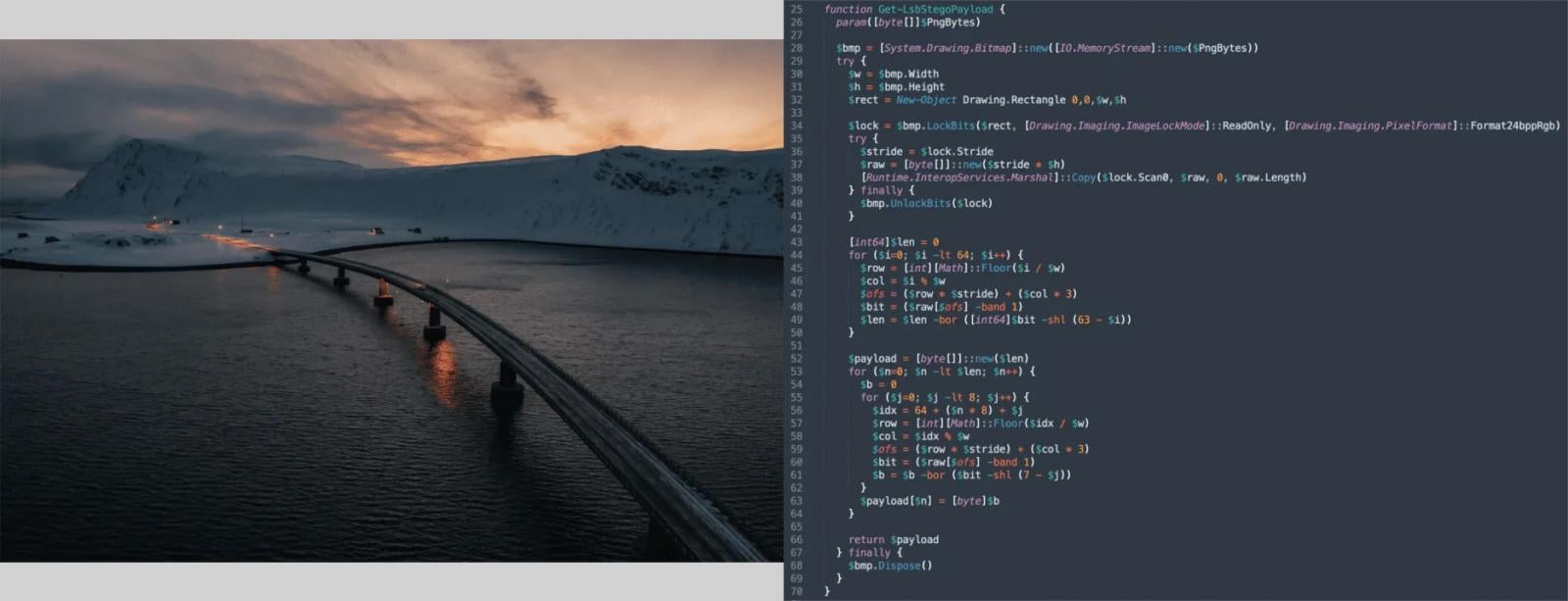
In subsequent stages, a hidden PowerShell process is spawned via the Windows Management Instrumentation framework, decrypting and loading multiple payloads into memory.
Source: BlackPoint
Payload data is decrypted, decompressed, and executed in memory, launching the Amatera infostealer.
.jpg)
Source: BlackPoint
Post-infection, the malware connects to a designated IP address to retrieve mappings and additional payloads via HTTP POST requests.
Amatera is classified as an infostealer that targets browser data and credentials, based on the ACR infostealer with evolving sophistication and available as malware-as-a-service.
Defense measures include restricting Windows Run dialog access, removing unnecessary App-V components, enabling PowerShell logging, and monitoring outbound connections for anomalies.

Explore our guide for secure secrets management and AI-generated code practices to fortify your team’s development processes.
Download the cheat sheet now to streamline your security practices.












Secure APK Sideloading: Harnessing the Power of Advanced Flow for Safe Android Installation

Gunvolt Chronicles: Luminous Avenger iX – The Complete Dual Collection

K2 Launches Groundbreaking High-Powered Satellite for Advanced Space Computing

The End of Security: iOS 13 and 14 Vulnerabilities in 2026

Exclusive Look: The 2027 Chevrolet Corvette Grand Sport Unleashed at Sebring

DON’T buy a Screen Protector before watching this.

Exploiting Vulnerable Drivers: How EDR Killers Use BYOVD to Disable Security

Alphabet’s X Unveils Innovative Spinout Targeting Costly Bureaucratic Challenges

Lawsuit: Halide co-founder accuses Sebastiaan de With of code theft for Apple

EU Takes Action Against Instagram and Facebook for Violating Illegal Content Rules

Warning: Facebook Creators Face Monetization Loss for Stealing and Reposting Videos

Facebook Compliance: ICE-tracking Page Removed After US Government Intervention

Facebook’s New Look: A Blend of Instagram’s Style

Facebook and Instagram to Reduce Personalized Ads for European Users

InstaDub: Meta’s AI Translation Tool for Instagram Videos

Reclaim Your Account: Facebook and Instagram Launch New Hub for Account Recovery

Meta discontinues Messenger apps for Windows and macOS

Breaking Updates: Meta Connect 2025 Unveils Latest Developments
DON’T buy a Screen Protector before watching this.

Beware of Fake Reviewers! ⚠️

Xiaomi Mi 11 Unboxing & Review.

The Galaxy S21 Ultra is Better than you think.

Samsung Galaxy S21 Ultra vs iPhone 12 Pro Max Camera Test Comparison.

Samsung S21 Ultra vs iPhone Battery Life Test!

The Truth about Xiaomi “Air Charging”

DON’T buy this Smartphone.

Galaxy S21 Ultra – Exynos vs Snapdragon.
-
 Facebook5 months ago
EU Takes Action Against Instagram and Facebook for Violating Illegal Content Rules
-
 Facebook5 months ago
Warning: Facebook Creators Face Monetization Loss for Stealing and Reposting Videos
-
 Facebook5 months ago
Facebook Compliance: ICE-tracking Page Removed After US Government Intervention
-
 Facebook3 months ago
Facebook’s New Look: A Blend of Instagram’s Style
-
 Facebook3 months ago
Facebook and Instagram to Reduce Personalized Ads for European Users
-
 Facebook5 months ago
InstaDub: Meta’s AI Translation Tool for Instagram Videos
-
 Facebook4 months ago
Reclaim Your Account: Facebook and Instagram Launch New Hub for Account Recovery
-
 Apple5 months ago
Meta discontinues Messenger apps for Windows and macOS
