
Tech News
Mastering Health Insurance Software Development: A Comprehensive Guide

In today’s fast-evolving world, the landscape of health and medical practices is undergoing significant changes. This article delves into the realm of health insurance software development, exploring its various types, benefits, development steps, features, and more. Read on to gain deep insights for informed decision-making.
The healthcare sector is embracing smart and automated technologies as it evolves. Statista reports that over 2 billion people worldwide are using digitized healthcare solutions, with the number expected to surpass 2 billion by 2029. Additionally, the global health insurance market is projected to exceed $4,475 billion by 2026, growing at a rate of 4.4% annually. These statistics underscore the importance for health insurance companies to adopt cutting-edge technologies to meet the growing demand and patient expectations.
The trend of health insurance software development has gained significant traction and is now a pivotal focus area for those seeking a competitive edge in the industry.
This comprehensive guide explores the advantages of developing health insurance software, delving into its types, features, and challenges encountered during the development process.
If you are venturing into this domain and require guidance, engaging a reputable healthcare software development company is recommended to kickstart your journey.

Key Takeaways
- A health insurance software enhances operational efficiency by automating critical tasks and reducing error risks.
- Various types of health insurance software include claims management solutions, agent management systems, policy management systems, lead management, data analysis, and risk analysis software.
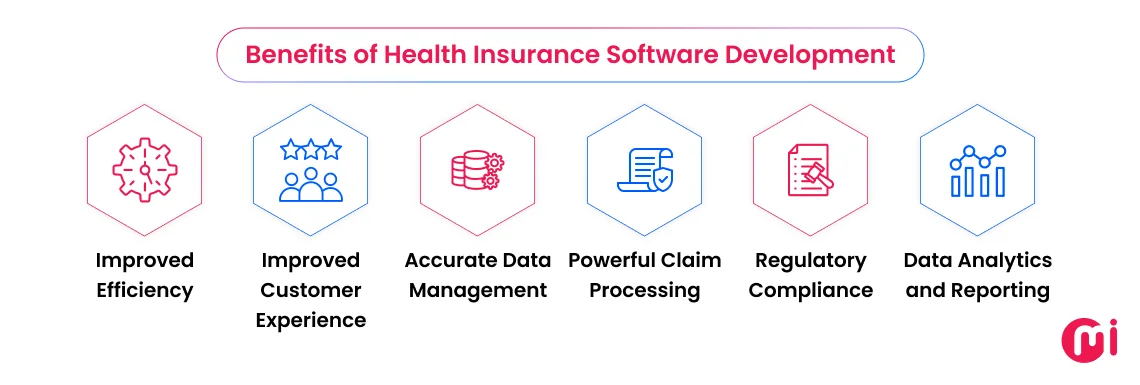
- The benefits of health insurance software are manifold, ranging from improved efficiency and enhanced customer experience to robust claim processing capabilities.
- The choice between cloud and on-premises solutions for health insurance software impacts flexibility, control, and security aspects.
- A customized health insurance software solution aligns with unique business objectives and leverages scalable technology.
What is Health Insurance Software?
Health insurance software serves as an application that simplifies the management of various aspects of health insurance. By leveraging such a system, insurance firms can operate more efficiently. This software facilitates tasks such as enrollment, claim processing, eligibility verification, invoicing, and customer support, streamlining medical insurance services for patients.
At its core, health insurance software relies on an agile framework to ensure optimal transaction processing and scalability. Given the critical nature of healthcare, API connections and integrations are vital to ensure seamless interoperability and connect all enterprise systems.
In essence, a health insurance system aims to enhance effectiveness, reduce errors, and offer user-friendly processes for healthcare providers and insurance representatives.
Types of Health Insurance Software
When embarking on the development of health insurance software solutions, you encounter various options tailored to address specific business needs. These software types aim to enhance accuracy, streamline operations, and ensure regulatory compliance based on your unique business objectives. Let’s explore the different types of health insurance software:
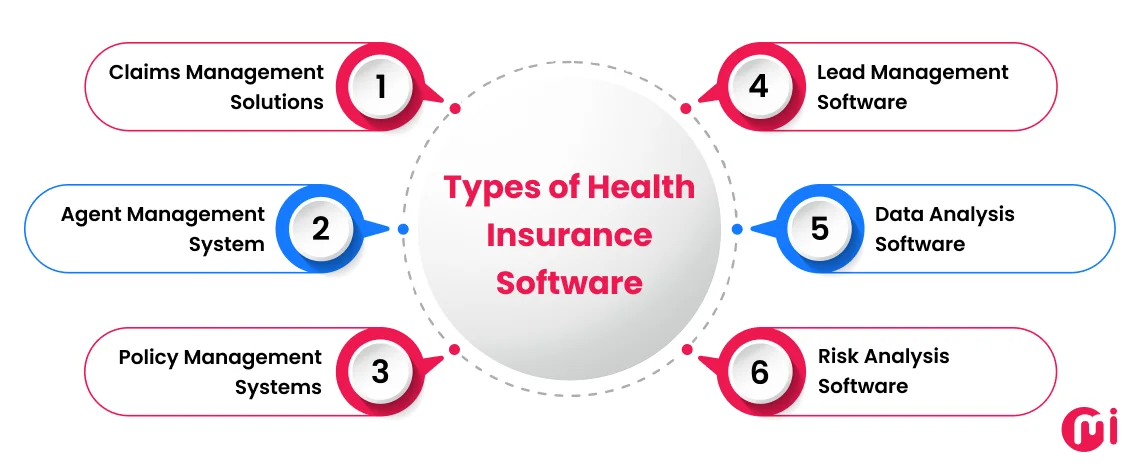
1. Claims Management Solutions
Claims management solutions simplify the verification, approval, and settlement of health insurance claims. These solutions enhance accuracy, reduce turnaround time, and automate documentation, eligibility checks, and payment processing.
Advanced analytics and compliance tools integrated into modern health insurance software frameworks ensure efficient, secure, and compliant claim processing.
2. Agent Management System
An agent management system improves coordination between insurers and agents by centralizing agent onboarding, performance tracking, and commission management. Predictive analytics and smart automation enhance transparency across sales channels.
Businesses often integrate agent management modules into health insurance software solutions to streamline workflows and boost productivity.
3. Policy Management Systems
Policy management systems organize and manage policies, offering modification options and quick search functionalities. These systems eliminate paper-based methods, ensuring easy access and efficient management of policy details to enhance interactions between customers and providers.
4. Lead Management Software
Lead management software helps capture, track, and nurture potential clients efficiently. It enables sales teams to automate follow-ups, categorize leads, and analyze conversion metrics. Integrated with healthcare insurance software solutions, it enhances marketing performance and customer engagement.
These systems streamline appointment processes and subsequent communications, fostering engagement with hospitals and boosting overall revenue.
5. Data Analysis Software
Data analysis software leverages substantial data to support informed decision-making. By analyzing claim trends, customer behavior, and process bottlenecks, it aids in fraud detection and provides valuable insights for operational planning and customer understanding.
6. Risk Analysis Software
Risk analysis software empowers insurers to assess risk levels based on clients’ medical histories, profiles, and past claims. It enhances data-driven precision in underwriting, mitigating financial losses and fraud. These systems integrate real-time analytics for proactive risk mitigation as part of comprehensive health insurance software development.
Benefits of Health Insurance Software Development
Technological advancements, particularly in health insurance software development, offer organizations a competitive edge by driving measurable improvements in operational compliance and customer-facing areas. Let’s delve into the advantages of developing software for healthcare insurance:
Improved Efficiency
Health insurance software automates repetitive tasks like policy management, claims filing, and underwriting, reducing manual errors and saving time. This boosts organizational productivity and accelerates processes, freeing up employees for other vital tasks.
Improved Customer Experience
Modern health insurance software solutions enhance user accessibility to policy information and claims details, fostering better customer relations. The shift from paper to digital platforms eliminates challenges such as technical legal jargon, enabling clients to easily access plan details.
Accurate Data Management
Data accuracy is paramount in the healthcare industry, and health insurance software provides a database ensuring data consistency across claims, policies, and customer records. Secure access and automated updates maintain data integrity, facilitating informed decision-making while reducing human errors and compliance risks.
Powerful Claim Processing
Health insurance software automates the claims process, minimizing errors and lengthy procedures. It expedites settlements, reduces fraud, and offers transparency through AI-driven assessments and digital tracking, cutting administrative overheads for swift and reliable claims handling.
Regulatory Compliance
Healthcare insurance software solutions can incorporate specific compliance modules to align with legal standards, ensuring data security and privacy. Compliance checks and features within the software mitigate compliance risks, maintaining data security and preventing penalties or legal liabilities.
Data Analytics and Reporting
Integrated analytics and reporting enable insurers to detect claim patterns, analyze business trends, and enhance risk assessment accuracy. Predictive algorithms drive informed decision-making, supporting smart business strategies.
Factors to Consider While Building Health Insurance Software
Prior to embarking on healthcare insurance software development, it’s essential to consider key factors to ensure a smooth development process and avoid pitfalls. Here are the factors to contemplate:
Complexity of the Development
The complexity of health insurance software development lies in advanced calculations and integrations. Allocate sufficient time and effort to navigate the intricacies and achieve desired objectives.
Customization Options
Offering complete customization to cater to various user preferences enhances customer satisfaction and engagement. Providing relevant and filtered information in a suitable format boosts user experience and interest.
Cloud Vs. On-Premises
Choosing between cloud-based and on-premises solutions impacts accessibility, maintenance, and control. Evaluate infrastructure capabilities and regulatory priorities to make an informed decision between the two options.
Integration and UX Design
Ensure seamless integration with existing systems and third-party applications. A well-crafted UX design enhances navigation, user adoption, efficiency, and stakeholder satisfaction in the insurance system.
Security and Compliance
Implement effective HIPAA compliance to safeguard sensitive patient data. Multi-layered encryption, GDPR compliance, and secure cloud hosting protect health data, reducing compliance risks and ensuring data security.
Steps to Develop a Health Insurance Software
Step 1: Choose a #1 Development Partner
Selecting a reliable healthcare software development company is crucial for successful health insurance software development. Partnering with experienced developers ensures a robust, customized solution aligned with your specific business goals.
Experienced developers can assist in building scalable and compliant health insurance software solutions.
Step 2: Define Your Requirements
List your requirements clearly after choosing a development partner. Defining needs helps clarify features, user roles, and compliance standards, enabling you to meet customer needs while ensuring regulatory compliance.
Step 3: Select the Technology Stack
Choosing the right technologies is essential for developing health insurance software. A well-chosen tech stack underpins sustainable solutions adaptable to evolving business and compliance demands.
Step 4: UI/UX Design
Design a user-friendly interface to enhance user interaction with the software. Pay attention to prototypes, wireframes, and user-flows to improve customer experience and retention rates.
Step 5: Build an MVP of the Product
Developing a Minimum Viable Product (MVP) enables early testing of core features and gathering actionable feedback. This validates software ideas, mitigates risks, and saves resources before full-scale development.
Step 6: Start with Full-Scale Development
After completing the MVP and gathering user feedback, proceed with full-scale development of the health insurance software. Integrate advanced features and compliance capabilities to address complex business needs effectively.
Step 7: Q/A Testing
Conduct thorough quality assurance testing to identify and address errors, bugs, and performance issues. Perform unit, integration, system, acceptance, and user testing to enhance software functionality, quality, and post-launch performance.
Step 8: Launch
Plan a strategic rollout, provide user training, and offer support during the launch phase. Continuously monitor and optimize your health insurance software for effective, compliant, and optimized performance to support business growth.
Key Features of Healthcare Insurance Software
Adding a range of features to healthcare insurance software is crucial to staying competitive in the market. These key features enhance operational efficiency and regulatory alignment. Let’s explore essential features of healthcare insurance software:
1. Policy Management
Policy management allows the creation, modification, and renewal of insurance policies with automation to reduce errors and streamline workflows.
2. Claims Processing
Claims processing handles claim submission, verification, and settlements efficiently to expedite processes and reduce fraud risks.
3. Underwriting Support
Underwriting support evaluates risks using predefined rules and data analysis, ensuring fair and informed underwriting decisions.
4. Billing and Payment Integration
Automates invoicing, payment tracking, and financial system integration for accurate, timely transactions and reporting.
5. CRM
Centralizes member data, facilitates communication, and enhances engagement through targeted services and updates.
6. Analytics and Reporting
Provides dashboards and custom reports to monitor performance, analyze trends, and support decision-making.
7. Regulatory Compliance Tools
Automates reporting, maintains audit trails, and manages policy-related documentation to ensure compliance with legal standards.
Challenges While Developing Health Insurance Software
Developing health insurance software poses various challenges that must be addressed to ensure successful software deployment. Let’s explore these challenges to make informed decisions for your business:
Data Security
Protecting sensitive data and complying with regulations like HIPAA are critical aspects of health insurance software development.
Interoperability
Ensuring interoperability with other platforms, such as third-party integration tools and healthcare records systems, can be challenging due to data format and protocol differences.
Regulatory Compliance
Maintaining compliance with industry standards like HIPAA and ACA can be daunting, requiring dedicated efforts to adhere to legal requirements.
System Integration
Integrating with internal and external systems poses challenges, requiring seamless interfacing to ensure smooth operations.
Evolving Industry Landscape
The rapidly evolving industry landscape necessitates continuous software updates and enhancements to remain relevant and provide optimal services to clients.
Why Choose MindInventory for Health Insurance Software Development
The realm of health insurance software development is dynamic and requires keeping pace with industry changes. Engaging a seasoned healthcare software development company is essential to stay ahead. MindInventory, a leading provider of healthcare web apps and software, offers a wide range of industry-leading solutions.
With extensive experience in the healthcare sector, our experts deliver custom software solutions aligned with trending healthcare industry features and components.
Whether you aim to modernize existing systems or embark on new developments, our health insurance software development experts can guide you. Connect with our industry leaders to explore tailored solutions for your business.
FAQs on Health Insurance Software Development
A custom healthcare solution offers specific features tailored to your needs. It allows you to create a unique solution that works seamlessly for your clients, enhancing quality and satisfaction.
Health insurance software enables medical providers to focus on patient care while efficiently managing administrative tasks, scheduling, and equipment management. It streamlines clinic operations for enhanced efficiency.











Porsche 911 GT3 RS Facelift: Unveiling the 992.2 Model in August 2026

Bearlyfy Strikes Russian Companies with Unique GenieLocker Ransomware Attack

Innovative Ventures: The 8 Startups Investors Can’t Resist from YC Demo Day

The Future of iPhone Cameras: Is a 200 MP Lens Coming Soon?

Celebrating the First iX3 Delivery at BMW’s Debrecen Factory

iPhone 12 Pro Max vs Samsung Note 20 Ultra / Huawei / Xiaomi / OnePlus Battery Life DRAIN Test.

Stealthy Malware: The Hidden Threat Within Telnyx PyPI Package

Harvest of Suspicion: Grave Seasons Murder Mystery Farming Sim Arrives in August

Tech Giants Clash: OpenAI Halts Sora as Meta Faces Legal Setback

EU Takes Action Against Instagram and Facebook for Violating Illegal Content Rules

Warning: Facebook Creators Face Monetization Loss for Stealing and Reposting Videos

Facebook Compliance: ICE-tracking Page Removed After US Government Intervention

Facebook’s New Look: A Blend of Instagram’s Style

Facebook and Instagram to Reduce Personalized Ads for European Users

InstaDub: Meta’s AI Translation Tool for Instagram Videos

Reclaim Your Account: Facebook and Instagram Launch New Hub for Account Recovery

Meta discontinues Messenger apps for Windows and macOS

Breaking Updates: Meta Connect 2025 Unveils Latest Developments
iPhone 12 Pro Max vs Samsung Note 20 Ultra / Huawei / Xiaomi / OnePlus Battery Life DRAIN Test.

The BEST Smartphone of 2020 🏆

The Self-Healing Smartphones!

Apple is not what it used to be.

Smartphones are Boring now.

The Fastest Android Phone Ever.

Unboxing the $122,000 Smartphone. 🤯

Are Linux Smartphones about to KILL Android?

15 Smartphone FAILS to ruin your day 😂
-
 Facebook5 months ago
EU Takes Action Against Instagram and Facebook for Violating Illegal Content Rules
-
 Facebook5 months ago
Warning: Facebook Creators Face Monetization Loss for Stealing and Reposting Videos
-
 Facebook5 months ago
Facebook Compliance: ICE-tracking Page Removed After US Government Intervention
-
 Facebook4 months ago
Facebook’s New Look: A Blend of Instagram’s Style
-
 Facebook4 months ago
Facebook and Instagram to Reduce Personalized Ads for European Users
-
 Facebook5 months ago
InstaDub: Meta’s AI Translation Tool for Instagram Videos
-
 Facebook4 months ago
Reclaim Your Account: Facebook and Instagram Launch New Hub for Account Recovery
-
 Apple5 months ago
Meta discontinues Messenger apps for Windows and macOS
