
Microsoft
Microsoft’s Plan to Revolutionize Data Center Efficiency Through Rewiring

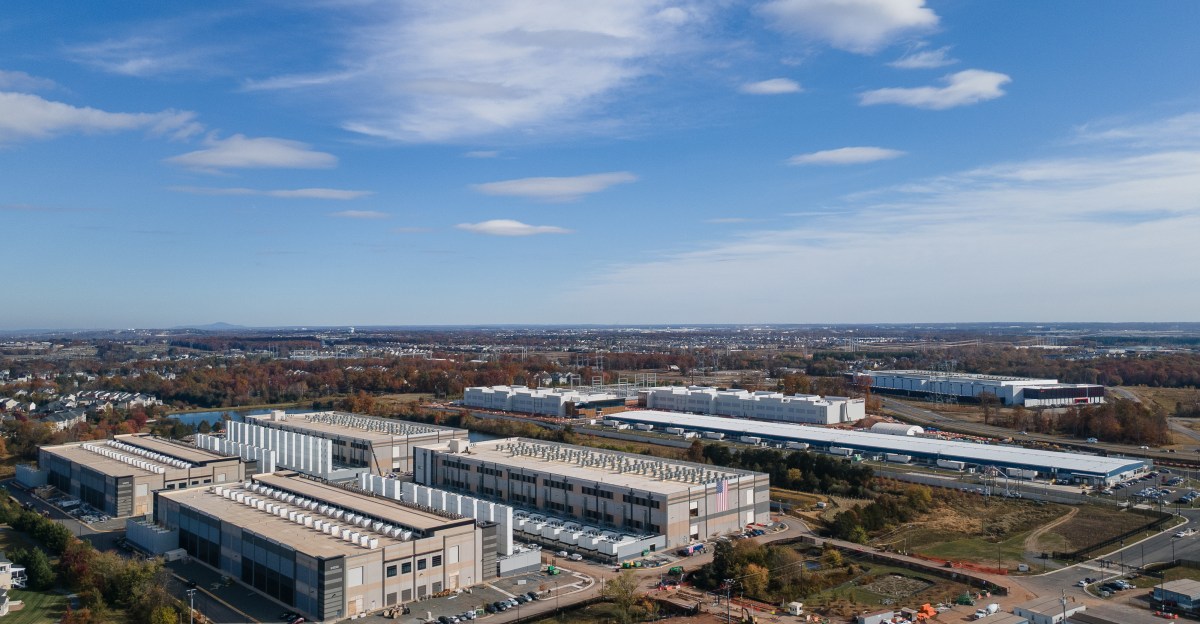
Microsoft’s Innovation in Data Center Design
Microsoft is working on revolutionizing data center efficiency by exploring the use of high-temperature superconductors (HTS) that allow electricity to flow without resistance. The company believes that if these materials make it to the market, they could significantly impact how data centers and the energy infrastructure they are connected to are constructed.
Addressing Power Demands and Infrastructure Challenges
Tech companies are currently facing challenges related to the high power demands of generative AI, delays in connecting to power grids with insufficient infrastructure, and the negative impact of building new data centers on local communities. HTS, if successfully implemented, could reduce the space requirements for data centers and the transmission lines that power them.
Microsoft’s GM of Global Infrastructure Marketing, Alistair Speirs, mentioned in a recent blog post that the company is exploring how HTS technology could strengthen electrical grids and minimize the impact of data centers on nearby communities.
“The future data center will be superconducting”
Traditional data centers and energy infrastructure rely on copper wires for electricity conduction, which is efficient but not without losses. In contrast, HTS cables can conduct electricity with zero resistance, significantly reducing energy loss in the process. Furthermore, HTS cables are lighter, more compact, and have already been used in limited capacities in MRI machines and power lines in major cities like Paris and Chicago.
However, the adoption of HTS cables has been limited due to complexities and higher costs compared to traditional copper cables. To achieve zero resistance, HTS cables need to be cooled to very low temperatures, often requiring liquid nitrogen. Additionally, the manufacturing of HTS “tape” for superconducting cables relies on rare-earth barium copper oxide materials, which poses supply chain challenges as the rare earth element is predominantly sourced from China.
Advancements in Fusion Research
Despite these challenges, the growing power demands of generative AI have accelerated research in nuclear fusion power plants, driving down costs for HTS materials. Microsoft’s interest in HTS technology extends to utilizing it within data centers to improve layout flexibility and reduce cable dimensions and weights.
Ziad Melhem, a professor at Lancaster University, envisions a future where data centers are superconducting, offering higher power efficiency in a more compact form. This shift could also benefit fusion companies by making HTS materials more accessible and affordable, further advancing nuclear fusion technology.
Collaboration for Infrastructure Expansion
Microsoft is open to collaborating with energy companies to deploy HTS in long-distance power lines, aiming to streamline the process of updating power grids and connecting data centers. By using superconducting cables, the space required for power lines could be significantly reduced, expediting construction timelines and lowering costs.
Experts like Dennis Whyte from MIT see this as a natural evolution of technology utilization, with the potential to drive advancements in nuclear fusion research and infrastructure development. Microsoft’s partnerships with fusion power plant developers signal a full-circle moment in the journey towards cleaner, more efficient energy solutions.
Follow topics and authors from this story to see more related content and receive email updates.
- Justine Calma
- Analysis
- Energy
- Microsoft
- Report
- Science
- Tech












Monster Hunter Stories 3: The Challenge of Twisted Reflection

Revolutionizing Cash-Pay Clinic Prescribing: VITL Secures $7.5M Amid GLP-1 Boom

Balancing Act: The Decision to Shut Down Sora

Exclusive Arrival: Cupra Born VZ Lands in Australia – But There’s a Twist!

iPhone 12 Pro Max vs Samsung Note 20 Ultra / Huawei Mate 40 Pro Camera Test Comparison.

ClickFix: The New Threat to macOS Security

Kingdom Come: Deliverance 2 – The Rise of Artificial Intelligence

Elon Musk’s Latest Venture Faces Uncertainty as Last Co-Founder Departs xAI

Apple Bids Farewell to the Mac Pro Tower: Is it Truly Dead?

EU Takes Action Against Instagram and Facebook for Violating Illegal Content Rules

Warning: Facebook Creators Face Monetization Loss for Stealing and Reposting Videos

Facebook Compliance: ICE-tracking Page Removed After US Government Intervention

Facebook’s New Look: A Blend of Instagram’s Style

Facebook and Instagram to Reduce Personalized Ads for European Users

InstaDub: Meta’s AI Translation Tool for Instagram Videos

Reclaim Your Account: Facebook and Instagram Launch New Hub for Account Recovery

Meta discontinues Messenger apps for Windows and macOS

Breaking Updates: Meta Connect 2025 Unveils Latest Developments
iPhone 12 Pro Max vs Samsung Note 20 Ultra / Huawei Mate 40 Pro Camera Test Comparison.

iPhone 12 Pro Max vs Samsung Note 20 Ultra / Huawei / Xiaomi / OnePlus Battery Life DRAIN Test.

The BEST Smartphone of 2020 🏆

The Self-Healing Smartphones!

Apple is not what it used to be.

Smartphones are Boring now.

The Fastest Android Phone Ever.

Unboxing the $122,000 Smartphone. 🤯

Are Linux Smartphones about to KILL Android?
-
 Facebook5 months ago
EU Takes Action Against Instagram and Facebook for Violating Illegal Content Rules
-
 Facebook5 months ago
Warning: Facebook Creators Face Monetization Loss for Stealing and Reposting Videos
-
 Facebook5 months ago
Facebook Compliance: ICE-tracking Page Removed After US Government Intervention
-
 Facebook4 months ago
Facebook’s New Look: A Blend of Instagram’s Style
-
 Facebook4 months ago
Facebook and Instagram to Reduce Personalized Ads for European Users
-
 Facebook6 months ago
InstaDub: Meta’s AI Translation Tool for Instagram Videos
-
 Facebook4 months ago
Reclaim Your Account: Facebook and Instagram Launch New Hub for Account Recovery
-
 Apple5 months ago
Meta discontinues Messenger apps for Windows and macOS
