
Startups
Navigating the Commercial Mortgage Landscape: Insights on Trends in Today’s Economy

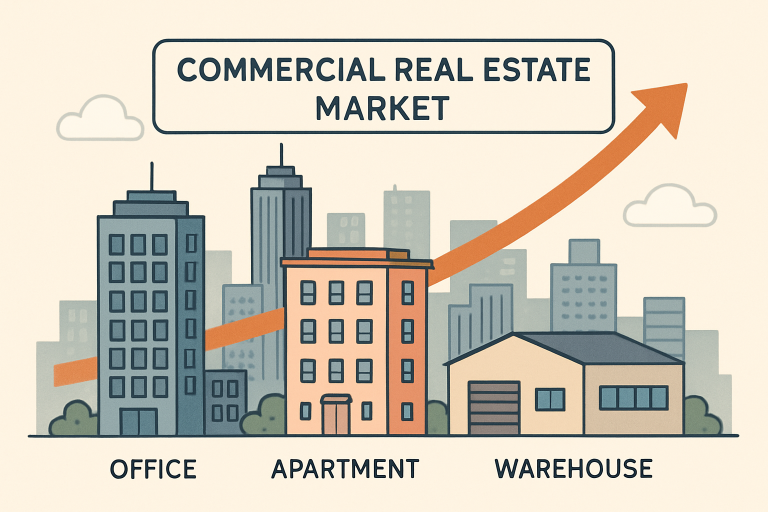
Introducing a Sneak Peek into the Market
Key Insights to Keep in Mind
- Recent trends show a surge in commercial mortgage originations, indicating a robust market and growing investor confidence.
- Delinquencies in the office sector are on the rise, highlighting ongoing challenges in this particular market segment.
- Policy changes, including tariffs, are influencing market sentiment and shaping future investment strategies.
- Multifamily mortgage debt is steadily increasing, emphasizing the sustained interest in this asset class due to ongoing housing demands.
- Upcoming maturities for office loans present a significant hurdle as lenders and borrowers navigate decisions on refinancing and restructuring.
The commercial real estate (CRE) landscape is constantly evolving in response to economic shifts, lending practices, and changing policies. For investors, developers, and industry professionals, staying informed about current trends is crucial for navigating the mortgage sector effectively. In a market where capital demands fluctuate, making informed decisions relies on timely insights and guidance from experienced commercial mortgage brokers. Amidst the current scenario, multifamily properties remain attractive, while challenges in the office space and impending loan deadlines pose complexities. Understanding financing trends is key to achieving stable returns and managing risks.
The changes in the commercial mortgage market are closely intertwined with broader economic indicators. From the increase in originations to the uptick in delinquencies in certain sectors, comprehending the impact across different asset classes is essential for making sound financing choices. Stakeholders and observers are closely monitoring the effects of new tariffs and looming loan maturities on investor behaviors and lending standards.
The Rise in Commercial Mortgage Originations
The demand for commercial and multifamily loans has surged, signaling a rebound in investor and lender activities. Statistics reveal an 18% quarterly and 36% yearly increase in total commercial mortgage originations in Q3 2025, marking the fifth consecutive quarter of growth. This surge reflects a renewed confidence in commercial real estate assets, driven by stronger property fundamentals and a growing interest in alternative investments. The momentum not only indicates investor optimism but also reflects a broader recovery in the retail and hospitality sectors, benefiting from improved economic conditions.
With the expansion of commercial mortgage markets, various properties are thriving, from warehouses capitalizing on e-commerce trends to hotels regaining momentum with increased travel. This widespread progress has encouraged active participation from lenders, maintaining cautious underwriting standards amidst macroeconomic challenges.
Increasing Delinquencies in the Office Segment
Despite overall market growth, the office sector is experiencing heightened distress. In September 2025, U.S. office loan delinquencies surged, driven by a significant default on a Manhattan skyscraper and uncertainties surrounding return-to-office trends. The office loan delinquency rate rose by 42 basis points to 8.12%, raising concerns about the future of legacy office properties as companies reassess workplace needs and adapt to flexible models. These changes have led to decreased occupancy rates, lower rents, and increased scrutiny from lenders within the office segment.
Resilience and Diversification in Various Sectors
While the office sector faces challenges, segments like industrial and self-storage continue to display resilient fundamentals. Strategies such as mixed-use developments and adaptive reuse are gaining traction as property owners seek to align assets with evolving demand patterns. Amid rising office delinquency rates, diversification and careful leverage management are crucial for risk mitigation.
Impacts of Tariffs on Market Sentiment
New tariffs introduced in 2025 have injected uncertainty into the CRE market. Market sentiment experienced a significant decline in the first quarter, with nearly 80% of participants anticipating deteriorating economic conditions in the coming year. Tariff-related disruptions, combined with global tensions, have prompted investors to adopt a more cautious approach to commercial property investments.
Lenders and borrowers are closely monitoring policy changes that could affect financing costs, trade logistics, and overall economic growth. These uncertainties highlight the importance of partnering with knowledgeable advisors to navigate turbulent times and mitigate risks effectively.
Growth in Multifamily Mortgage Debt
The multifamily sector continues to exhibit strong fundamentals and consistent investor demand. In Q2 2025, multifamily mortgage debt increased by $27.7 billion, a 1.3% rise that pushed outstanding balances to $2.19 trillion. This growth is driven by factors such as population growth, urbanization, and persistent housing affordability challenges, sustaining the demand for rental properties and apartment constructions.
Institutional investors, private equity firms, and life insurance companies favor multifamily properties as a defensive strategy in uncertain markets. Strong tenant demand and stable cash flows make this sector a reliable anchor for diversified portfolios.
Challenges with Maturing Office Loans
The commercial mortgage industry faces a critical juncture as 14,000 office properties anticipate loan maturities by the end of 2027, representing nearly $290 billion in debt. With one-third of outstanding office loans requiring refinancing, repayment, or restructuring, borrowers and lenders are navigating challenges like reduced leasing activity, higher vacancy rates, and stricter lending criteria. Failing to meet refinancing terms could trigger distressed sales or increased defaults without market improvements or policy interventions.
Both lenders and borrowers are exploring options like loan extensions, modifications, and structured workouts to address the impending deadlines. As the maturity dates approach, transparency, communication, and risk assessment become crucial. Analysts emphasize the significance of addressing these challenges to prevent broader economic repercussions.
In Conclusion
The commercial mortgage landscape in 2025 witnesses rapid changes and varied sector performances. While multifamily housing drives new lending and debt growth, the office sector faces ongoing obstacles from evolving workspace needs and impending debt obligations. External factors like tariffs and geopolitical events add uncertainties, underlining the importance of market awareness.
For investors, developers, and asset managers, staying informed about emerging risks and aligning strategies with current market trends is essential for success in a complex environment. Collaborating with expert commercial mortgage advisors empowers stakeholders to make informed decisions, stabilize assets, and capitalize on opportunities as the market evolves.













Beyond the Stars: For All Mankind Season 5 Unveiled in Liminal Film Expose

Top 10 Fuel-Efficient Cars for Less Than $50,000

The Illusionists: Mastering Deception in Hacking and ArtForgery

PUBG: Blindspot Shuts Down Early Despite Record Revenues

The High Stakes of AI: OpenAI’s Bold Move to Kill Sora

Top Apple Innovations: A Ranking of the Best Products Over 50 Years

Access Over 70 Languages on Your iPhone with Google’s Live Translate Feature

Caroline’s Legacy: The Unique Bugatti Mistral

The BEST Smartphone of 2020 🏆

EU Takes Action Against Instagram and Facebook for Violating Illegal Content Rules

Warning: Facebook Creators Face Monetization Loss for Stealing and Reposting Videos

Facebook Compliance: ICE-tracking Page Removed After US Government Intervention

Facebook’s New Look: A Blend of Instagram’s Style

Facebook and Instagram to Reduce Personalized Ads for European Users

InstaDub: Meta’s AI Translation Tool for Instagram Videos

Reclaim Your Account: Facebook and Instagram Launch New Hub for Account Recovery

Meta discontinues Messenger apps for Windows and macOS

Breaking Updates: Meta Connect 2025 Unveils Latest Developments
The BEST Smartphone of 2020 🏆

The Self-Healing Smartphones!

Apple is not what it used to be.

Smartphones are Boring now.

The Fastest Android Phone Ever.

Unboxing the $122,000 Smartphone. 🤯

Are Linux Smartphones about to KILL Android?

15 Smartphone FAILS to ruin your day 😂

World’s Biggest Smartphone Collection?
-
 Facebook5 months ago
EU Takes Action Against Instagram and Facebook for Violating Illegal Content Rules
-
 Facebook5 months ago
Warning: Facebook Creators Face Monetization Loss for Stealing and Reposting Videos
-
 Facebook5 months ago
Facebook Compliance: ICE-tracking Page Removed After US Government Intervention
-
 Facebook4 months ago
Facebook’s New Look: A Blend of Instagram’s Style
-
 Facebook4 months ago
Facebook and Instagram to Reduce Personalized Ads for European Users
-
 Facebook5 months ago
InstaDub: Meta’s AI Translation Tool for Instagram Videos
-
 Facebook4 months ago
Reclaim Your Account: Facebook and Instagram Launch New Hub for Account Recovery
-
 Apple5 months ago
Meta discontinues Messenger apps for Windows and macOS
