
Mobile Tech
Rethinking the Hype: Reevaluating the 5 Most Overrated Tech Trends of 2025

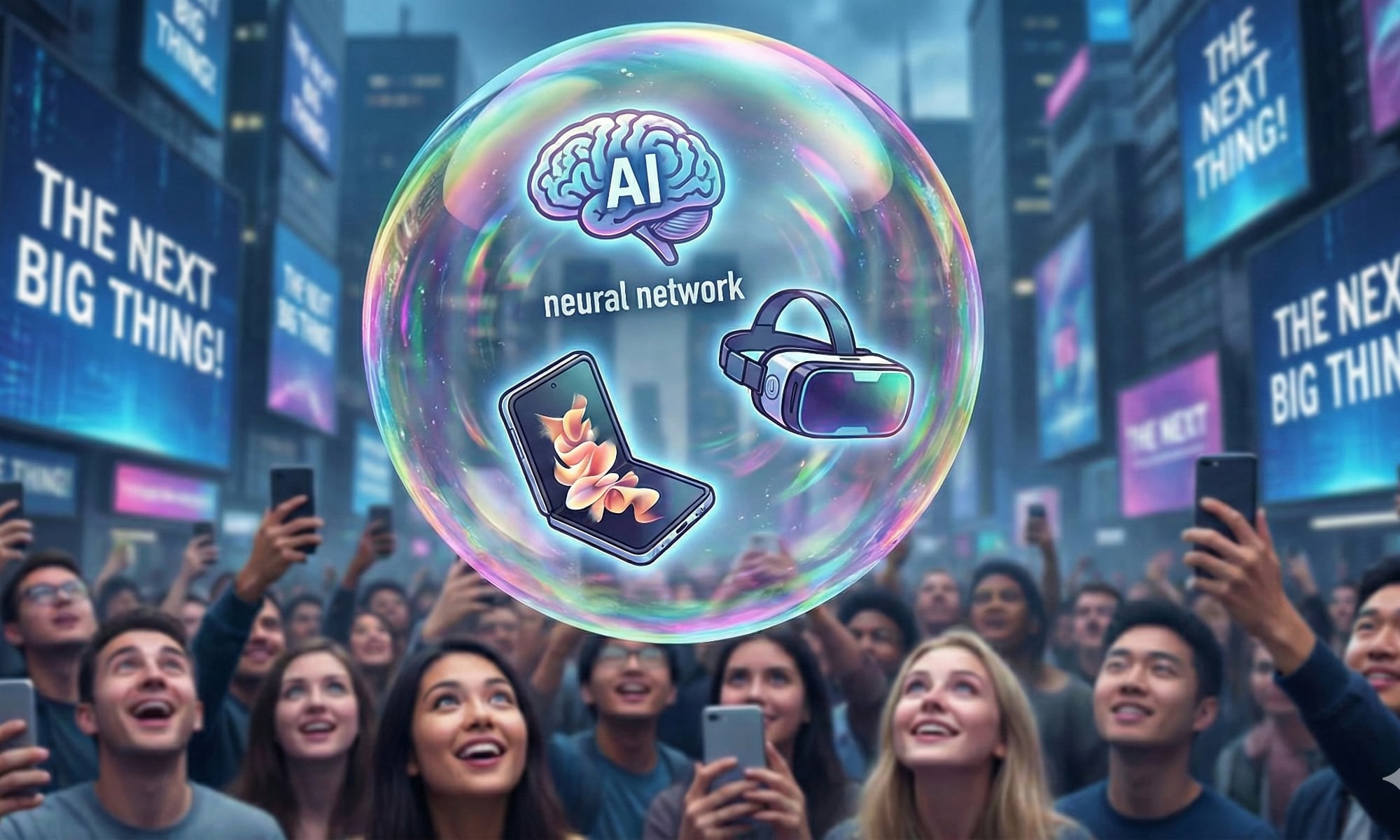
Every year, tech companies line up to tell you that they’ve finally developed a breakthrough in technology that will change everything from your daily life to the way you work. And because of that, the higher price is more than justified.
Sometimes that may be true, but more often than not, the “next big thing” turns into another fad that clutters your home screen, drains your wallet, or never quite works the way the presentation promised (we’re looking at you, Apple Intelligence).
If you’re deep into the tech world, you’ve probably already seen trends like these wash over the industry every few years. Unfortunately, not all tech fads die the same, and there are still a bunch of new trends that persist to this day that we’re getting really tired of.
Here are some of the most overrated and hated tech trends that still exist in 2025.
AI Is Still Everywhere
Let’s start with a trend most of us are already tired of: turning absolutely everything into an “AI product.” While real advances in AI are genuinely useful — it has some fantastic practical applications for consumers and can help in fields like medicine — we’re tired of seeing how Will Smith eats spaghetti.
The problem is that once “AI” became the buzzword of the decade, everyone decided they needed a piece. Suddenly, your TV “enhances” movies with distracting AI smoothing, smartphones have traded hardware innovation for generative AI tricks that no one asked for, and smart-home gadgets brag about “AI routines” that are basically just glorified timers.
Many of these “features” are just regular algorithms with a fresh coat of marketing paint. They don’t solve real problems, and sometimes they even make basic tasks slower.
You can see this clearly in consumer electronics. Smart TVs now ship with so-called AI upscaling or AI motion smoothing that’s barely distinguishable from the enhancements they’ve already been doing for years. Many apps claim that they have a new AI feature, when it is actually just a simple “If” statement, and if you drank a shot of vodka every time Samsung, Apple, or Google used the word “AI” in their last presentations, you’d be in the hospital before you could see the new iPhone.
AI in and of itself isn’t the problem here. Company overbranding is. When everything is “AI-powered,” nothing stands out, and you have to waste time figuring out which tools are genuinely helpful and which ones are just nothing burgers that do little more than needlessly consume energy to power their algorithms.
The Broken Promise of Foldable Phones
Foldable phones are one of those ideas that sound undeniably cool. A device that’s a phone in your pocket and a tablet when you open it feels like something straight out of science fiction. Samsung, Google, and a handful of smaller brands have been pushing this category for years, and Apple is widely rumored to be working on releasing its own foldable device next fall.
The problem is that even in 2025, the reality still doesn’t justify the price. Foldables usually cost in the neighborhood of $2,000, making them more expensive than even some of Apple’s premium computers.
For that extra money, you get a heavier, thicker device, a visible crease down the center of the display, and a long list of durability questions. Hinges have improved, sure, but they haven’t magically become immune to wear, dust, or accidental damage. If you drop your foldable phone once, you’re basically done, and repairs are complicated and more expensive than with a regular phone.
Then there’s the software issue. On paper, foldables are supposed to make multitasking easier, give you more room for apps, and transform productivity on the go. In practice, many apps still don’t scale elegantly across different screen ratios, so you end up with awkward layouts that clearly weren’t designed for a foldable form factor. A lot of users end up treating the extra screen space as a small plus rather than the game-changer it’s supposed to be.
Battery life can also take a hit. Two large displays demand more power than a single screen. That means vendors either cram in larger batteries (increasing weight even more) or accept shorter battery life compared to cheaper and thinner non-folding phones.
All of that might be easier to swallow if foldables were clearly the future, but right now they feel more like expensive prototypes, and it doesn’t look like that’s going to change anytime soon. With Samsung’s new trifold phone taking the spotlight, more companies will undoubtedly focus on copying yet another new trend instead of fixing the issues with current foldable technology.
VR Headsets as Everyday Computers
Virtual reality has been the future for some time now. Meta, Valve, and now Apple have all made big bets on headsets that immerse you in games, apps, and virtual workspaces. Apple joined the party in early 2024 with the Vision Pro, positioning it as a “spatial computer” rather than just another VR toy. For early adopters, it truly delivers some “wow” moments — but it also doesn’t come cheap.
Still, the larger trend of pushing VR headsets as everyday computing devices is badly overhyped. For most people, these devices are still too heavy, too expensive, and too isolating to replace a laptop, iPad, or TV.
Even the most polished headsets feel uncomfortable after long sessions, especially if you wear glasses or are sensitive to motion. Battery packs and cables add more problems than solutions. And as impressive as high-resolution displays and hand tracking are, you’re still strapping a computer to your face.
There’s also a content problem. Games like Beat Saber, Half-Life: Alyx, and Apple’s own immersive experiences can feel incredible in the moment, but once the novelty wears off, many struggle to see a place for virtual reality in their everyday lives.
Productivity apps often feel slower than using a MacBook or iPad with a physical keyboard. Social VR remains super niche, since most of your friends and coworkers aren’t hanging out in virtual spaces every night.
That doesn’t mean spatial computing is doomed.
The potential for VR technology is promising in the long term, especially with advancements in lighter and more affordable devices. However, the idea of VR headsets replacing traditional computers or becoming as essential as smartphones is currently more of a fantasy than reality.
The concept of a smart home, with automated features like lights, blinds, locks, and thermostats, can indeed make life easier and assist individuals with mobility issues. The concern lies in the trend of making every home product “smart” by adding Wi-Fi chips and companion apps, which may not always offer significant convenience compared to regular products. Additionally, the proliferation of poorly secured smart devices raises privacy and security risks, potentially exposing home networks to threats.
The trend of transforming regular apps into subscription-based services is becoming increasingly prevalent. While some services may justify recurring payments, the industry’s shift towards subscription models for all software has led to subscription fatigue among users. The accumulation of small subscription fees can strain finances, especially when combined with essential monthly expenses.
Despite these trends persisting, it is essential for users to evaluate the value of subscriptions and prioritize apps that genuinely enhance daily life. By canceling unused subscriptions, choosing cost-effective apps, and supporting developers who offer fair pricing, users can navigate the subscription overload effectively.
In conclusion, while these trends are likely to continue, users can make informed choices by focusing on tools that address their specific needs and provide tangible benefits. By avoiding unnecessary subscriptions and selecting apps that offer practical solutions, users can optimize their digital experiences and avoid overspending on redundant services. Transform the following sentence:
Original: “I am going to the store to buy some groceries.”
Transformed: “To buy some groceries, I am going to the store.”













OnePlus 8T vs Google Pixel 5 – The Brutal Truth.

Enhanced Google Drive Security: Ransomware Detection Now Included for Premium Users

Toyota’s Woven Capital Accelerates Search for the Future of Mobility with New CIO and COO Appointments

Stay Connected on the Go with ChatGPT on Apple CarPlay

Revolutionizing In-Car Communication: ChatGPT Integration with CarPlay on iOS 26.4

Why Aren’t Petrol and Diesel Prices Reflecting the Fuel Excise Cut?

Code Chaos: The Unintentional NPM Leak

Operation Zero Parades: The Spy’s Last Stand

Mercor’s Cyberattack: The Fallout of the Open-Source LiteLLM Project Compromise

EU Takes Action Against Instagram and Facebook for Violating Illegal Content Rules

Warning: Facebook Creators Face Monetization Loss for Stealing and Reposting Videos

Facebook Compliance: ICE-tracking Page Removed After US Government Intervention

Facebook’s New Look: A Blend of Instagram’s Style

Facebook and Instagram to Reduce Personalized Ads for European Users

InstaDub: Meta’s AI Translation Tool for Instagram Videos

Reclaim Your Account: Facebook and Instagram Launch New Hub for Account Recovery

Meta discontinues Messenger apps for Windows and macOS

Breaking Updates: Meta Connect 2025 Unveils Latest Developments
OnePlus 8T vs Google Pixel 5 – The Brutal Truth.

iPhone 12 / 12 Pro Unboxing – ft MKBHD!

iPhone 12 Pro vs iPhone 12 vs iPhone 11 Pro Camera Test Comparison.

Huawei Mate 40 Pro Unboxing – WHAT.

iPhone 12 vs iPhone 12 Pro / 11 Pro Max / 11 Pro / 11 / XR / SE Battery Life DRAIN Test.

19 Smartphone Gadgets that Blew me Away.

iPhone 12 Pro Max Unboxing & Review!

iPhone 12 Pro Max vs Samsung Note 20 Ultra / Huawei Mate 40 Pro Camera Test Comparison.

iPhone 12 Pro Max vs Samsung Note 20 Ultra / Huawei / Xiaomi / OnePlus Battery Life DRAIN Test.
-
 Facebook5 months ago
EU Takes Action Against Instagram and Facebook for Violating Illegal Content Rules
-
 Facebook6 months ago
Warning: Facebook Creators Face Monetization Loss for Stealing and Reposting Videos
-
 Facebook6 months ago
Facebook Compliance: ICE-tracking Page Removed After US Government Intervention
-
 Facebook4 months ago
Facebook’s New Look: A Blend of Instagram’s Style
-
 Facebook4 months ago
Facebook and Instagram to Reduce Personalized Ads for European Users
-
 Facebook6 months ago
InstaDub: Meta’s AI Translation Tool for Instagram Videos
-
 Facebook4 months ago
Reclaim Your Account: Facebook and Instagram Launch New Hub for Account Recovery
-
 Apple5 months ago
Meta discontinues Messenger apps for Windows and macOS
