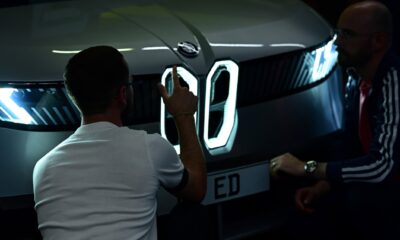
Ferrari has unveiled the first interior images of its inaugural all-electric supercar, named the Ferrari Luce, which translates to “light” in Italian. This marks the second occasion where the Italian automaker has teased the Luce (previously known as Elettrica) without revealing the actual car or even a silhouette. However, the interior images are certainly noteworthy, especially considering the renowned designer behind the project: Jony Ive.
Ferrari made a strategic decision to entrust the interior design of the Luce to Ive and his partner Marc Newson, who jointly operate the design studio LoveFrom. Ive, best known for his groundbreaking work as Apple’s former chief designer, where he played a pivotal role in creating iconic products such as the iMac, iPhone, iPad, and Apple Watch, is now channeling his expertise towards a Ferrari vehicle. This collaboration offers a glimpse into what an Apple car might have looked like if Apple had pursued its secretive Project Titan.
Ferrari and LoveFrom have been engaged in a discreet partnership for five years, with the Luce being the first tangible outcome of their collaboration. While the technological framework was unveiled in Italy last year, the exterior of the vehicle is set to debut in May 2026.
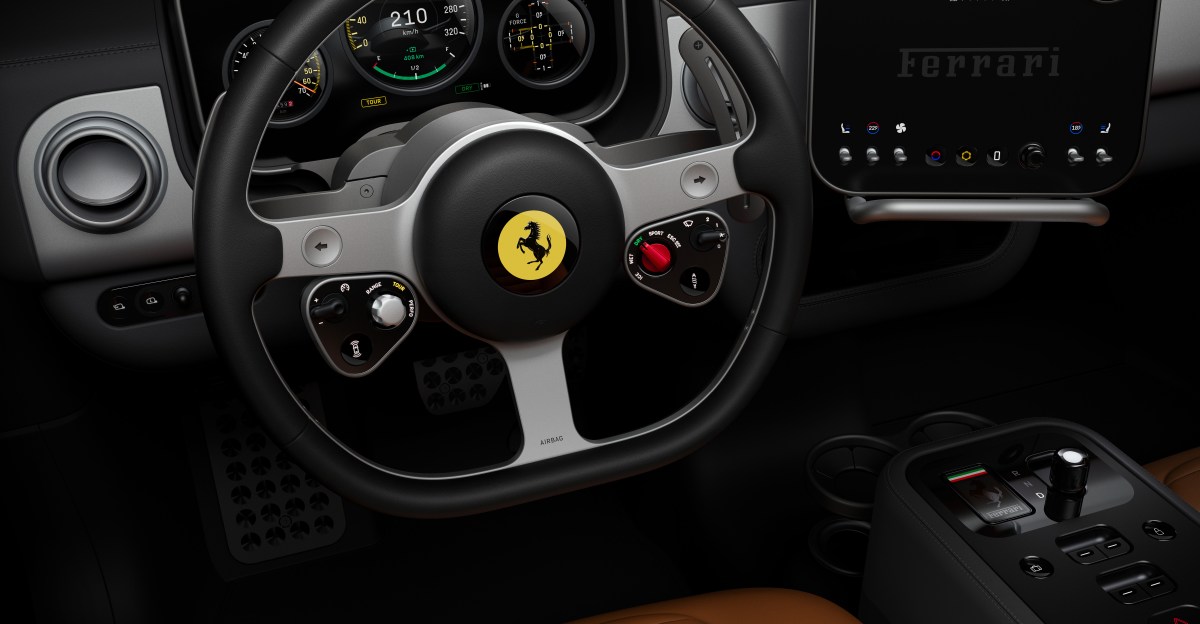
Ive’s design philosophy at Apple emphasized sleek minimalism, making it somewhat surprising to observe a plethora of physical buttons in the Luce’s interior. Initially expecting Ive to opt for a touchscreen interface, the presence of physical controls was a pleasant deviation. Nevertheless, the screens feature rounded corners reminiscent of Apple’s signature design language, showcasing Ive’s unmistakable influence.
Ive’s design influence extends to the materials utilized in the Luce’s interior, such as anodized aluminum and strengthened glass sourced from specialist firm Corning, both integral components of Apple’s product portfolio.
The steering wheel boasts a simplified three-spoke design inspired by classic Ferrari wheels from the 1950s and ’60s. Crafted from 100% recycled aluminum and CNC-machined from 19 individual parts, the wheel is 400 grams lighter than a standard Ferrari wheel.
The Luce features three primary displays: an instrument cluster, a central display, and a rear control panel. Noteworthy is the gauge cluster’s innovative movement with the steering wheel, a first for Ferrari, achieved through overlapping OLED displays that blend digital and analog elements. The ultra-thin OLED displays, produced by Samsung, incorporate cutouts that unveil a secondary display underneath, creating a visually striking depth effect.
Ive’s influence is also felt in the materials used in the Luce’s interior, such as anodized aluminum and strengthened glass from specialist firm Corning
The central display is mounted on a ball-and-socket joint, allowing it to swivel towards either the driver or passenger. It also incorporates a palm rest for convenient interaction with controls without necessitating visual attention. Additionally, the mechanical multigraph display, equipped with three independent motors, serves as a clock, chronograph, compass, and launch control indicator.
The key fob boasts its own E Ink display, a pioneering feature in the automotive realm, which consumes power solely during color transitions. Upon insertion into the central console, the E Ink screen transitions from yellow to black as the cabin initiates.
The gear shifter showcases Gorilla glass, with over 40 components featuring this durable, scratch-resistant material dispersed throughout the cabin. Some pieces even feature laser-drilled micro-holes for graphic deposition.
It comes as no surprise that Ferrari opted to collaborate with Ive and LoveFrom, given that the Ferrari FF was the first production car to incorporate Apple CarPlay back in 2014. However, the automaker has yet to confirm whether it will embrace the more integrated CarPlay Ultra in future models.
Ive personally unveiled the new interior in San Francisco, revealing that his team had been working clandestinely for half a decade. The esteemed designer confessed his initial unfamiliarity with the safety and regulatory standards of automotive design before undertaking this particular endeavor.