
Inovation
Revolutionizing Connectivity: The Path to Sustainable Innovation with 6G Technology


The Importance of Integrating Societal, Environmental, and Economic Values in 6G Technology Development
In today’s rapidly advancing technological landscape, the 6G4Society project stands out for its commitment to incorporating societal, environmental, and economic considerations into the evolution of 6G technology. This initiative aims to ensure that progress in connectivity aligns with ethical standards and sustainability principles.
The ongoing debates surrounding sustainability, digital rights, and responsible innovation underscore the fact that mere technical feasibility is no longer sufficient. It is imperative to consider not only the adoption of technologies but also their acceptability, trustworthiness, ethical alignment, sustainability contribution, and reflection of shared social values. As 6G technology continues to evolve, addressing these aspects is crucial for establishing its legitimacy. The 6G4Society project delves into how 6G can seamlessly integrate societal, environmental, and economic dimensions into the innovation process itself.
Europe’s vision for 6G emphasizes the correlation between technology and sustainability, policy, and ethics. The Smart Networks and Services Joint Undertaking (SNS JU) serves as the foundation for research and innovation efforts, supporting projects like 6G4Society in exploring how 6G technology can align with European values of inclusivity, trust, and sustainability.
The evolving policy landscape in Europe reflects a unified belief that 6G must not only offer increased speed and efficiency but also serve as a driver for environmental, social, and economic sustainability. The 6G4Society project, in conjunction with other SNS initiatives, is leading this transformation by developing business models focused on sustainability and establishing measurable indicators that connect technological advancements to tangible real-world benefits and sustainability outcomes. These innovative models introduce concepts like Sustainability-as-a-Platform, circular resource marketplaces, and impact-driven partnerships, aiming to shift from volume-based metrics to value-based outcomes.
Empowering European Connectivity through Sustainability
The inception of 6G4Society underscores the necessity of prioritizing societal and environmental values as foundational pillars of technological progress. By fostering collaboration among social scientists, engineers, citizens, and policymakers, this project aims to develop practical tools and frameworks that render social acceptability and sustainability quantifiable, actionable, and indispensable in shaping Europe’s digital future.
For Europe to truly embrace a holistic approach, it must leverage frameworks, public engagement strategies, value-driven indicators, cross-project synergies, and policy integration. Let’s delve deeper into each of these strategic levers.
Framework Development for Ethical Technology Assessment
The Acceptance Models of 6G Technology framework, introduced by 6G4Society, provides a structured methodology for evaluating how new technologies resonate with ethical norms, cultural contexts, and public trust. This framework goes beyond conventional performance metrics like throughput or energy efficiency, incorporating qualitative and quantitative dimensions such as citizen attitudes, inclusivity, and perceived fairness.
By integrating such frameworks into research endeavors, societal impacts can be assessed alongside technical outcomes, reflecting a broader shift within the SNS JU towards designing networks that prioritize people over performance.
Early Engagement with the Public
6G4Society places a strong emphasis on public engagement through initiatives like the Citizen Survey, which captures diverse perspectives from across Europe regarding expectations, concerns, and aspirations related to the next generation of networks.
Through participatory mechanisms such as workshops, focus groups, and living-lab pilots, the project integrates public engagement into policymaking and innovation governance processes. Proactively involving citizens at an early stage enables developers and policymakers to identify emerging issues before they escalate into significant challenges.
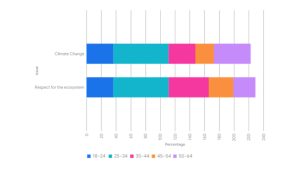
The comprehensive Citizen Survey, conducted in multiple languages and garnering over 1,800 responses, incorporates both quantitative and qualitative inquiries to elicit unbiased reflections on lived experiences.
The survey outcomes reveal a spectrum of public attitudes, ranging from curiosity and optimism to skepticism and weariness. While many respondents acknowledge the potential of 6G to enhance daily life through improved access to information and connectivity, they also express concerns that the rapid technological advancements may outpace societal needs.
Across various age groups, a common theme emerges: a collective emphasis on environmental responsibility. Particularly, younger participants demonstrate heightened awareness of societal and environmental impacts, often linking connectivity to issues like energy consumption and material usage. Prioritizing ecosystem respect and biodiversity emerges as a top concern across generations, followed by climate change. Participants also underscore the importance of equitable access to connectivity, associating digital inclusivity with broader concepts of solidarity and social cohesion.
These insights underscore the public’s expectation for purposeful, transparent, and responsible design of 6G technology. The survey findings serve as a critical reference point for the Social Acceptance Model being developed by 6G4Society, ensuring that the future of connectivity is guided by public values and geared towards human and planetary well-being.
Establishing Key Value and Sustainability Indicators
A sustainable 6G ecosystem necessitates the adoption of new metrics. While traditional Key Performance Indicators (KPIs) offer insights into network performance, they fall short in evaluating sustainability and equity advancements. To bridge this gap, 6G4Society advocates for the implementation of Key Value Indicators (KVIs) and Key Sustainability Indicators (KSIs).
These indicators gauge critical aspects such as energy consumption, emissions, material circularity, resilience, fairness, inclusivity, and trust.
Developing KVIs and KSIs enables cross-project and policy domain comparisons, aiding the EU in evaluating whether public investments genuinely align with the Green Deal and Digital Decade objectives. Within the SNS JU ecosystem, 6G4Society collaborates with other initiatives to standardize definitions and methodologies, ensuring that sustainability metrics are both credible and interoperable.
Fostering Synergies Across Projects
6G4Society actively seeks to create synergies across the diverse landscape of European research and innovation. By collaborating with other SNS JU projects, the initiative ensures that social acceptability and sustainability considerations are integrated rather than treated as standalone issues.
This collaborative spirit extends beyond the SNS JU community. 6G4Society engages with European and international initiatives focusing on standardization, regulation, and digital inclusion to align goals and share best practices. Through workshops and joint publications, the project contributes to establishing a shared language among engineers, policymakers, and social scientists.
Integrating Insights into Policy Formulation
Sustainable impact necessitates the integration of research insights into policy and regulatory frameworks. 6G4Society plays a pivotal role in mapping the intersection of societal values with existing and emerging legislative structures. By analyzing these intersections, the project identifies areas where policy mechanisms can reinforce sustainability and acceptance.
The ultimate objective is to ensure that incentives and regulations incentivize positive impacts. Policy integration involves aligning research outcomes with the European Green Deal, Digital Decade targets, and the ethical principles enshrined in EU legislation. It also entails establishing sustainability and equity as fundamental prerequisites for funding, deployment, and standardization.
Through the publication of position papers, workshops, and direct engagements with policymakers, 6G4Society translates academic insights into actionable directives.
Cultivating a Value-Driven Future for 6G Technology
The endeavors of 6G4Society exemplify Europe’s transition from aspiration to implementation in embedding societal and environmental values in technological systems. A 6G network anchored in sustainability and equity transcends technical accomplishments; it signifies a democratic and cultural milestone. It signals that Europe’s technological evolution will be gauged by the depth of trust, inclusivity, and shared prosperity it fosters.
References
- Calisti, M., Aseeva, A., & Onwude, D. (2025). 6G Sustainability: Prospective Business Models. ACM. https://doi.org/10.1145/3748699.3749820
- 6G4Society project: D1.1- SOCIETAL ASPECTS IN 6G TECHNOLOGY: CONCERNS, ACCEPTANCE MODELS AND SUSTAINABILITY INDICATORS
- D2.1 PUBLIC ENGAGEMENT STRATEGY AND PLAN
- Rezaki, A., Trichias, K., Mesodiakaki, A., Gavras, A., Aseeva, A., Berardinelli, G., Osman, H., Gutiérrez Terán, J., Petersen, K., Gramaglia, M., Katz, M., Bezzi, M., & Ghoraishi, M. (Eds.). (2025). Sustainability in SNS JU Projects – Targets, Methodologies, Trade-offs and Implementation Considerations Towards 6G Systems.
- Petersen, K., Bezzi, M., Gavras, A., Calisti, M., & Mohnani, P. (2025). Value Approach of 6G: The Role of Key Value Indicators in Design and Societal Impact
- 6G4Society project: D3.1 – Report on Liaison Activities
- 6G4Society project: D1.2 – Towards a socially accepted and sustainably 6G-Policy Brief
- 6G4Society project: D4.1 – Dissemination and Communication Strategy and Plan
Kindly note, this article will be featured in the 24th edition of our quarterly publication.












Is BMW Ready to Challenge the Dominance of the Escalade?

19 Smartphone Gadgets that Blew me Away.

Critical Flaw in Smart Slider Plugin Puts 500K WordPress Sites at Risk

Exclusive Deal: PS5 Pro Price Jumping to £789 Next Week!

Lunar Love: How Watch Club Aims to Dominate the Werewolf Romance Market

Revolutionizing Technology: How the Macintosh Forever Transformed the World of Computers

Tech Savvy Heroes: AirTag Child Rescue, DarkSword Hack, and More Adventures

Chinese Brand’s Newest Small Electric Hatch Sets Safety Standard with Anticipated Five-Star Rating

The Unforeseen Lessons: A Microsoft VP’s Journey from India to the Age of AI

EU Takes Action Against Instagram and Facebook for Violating Illegal Content Rules

Warning: Facebook Creators Face Monetization Loss for Stealing and Reposting Videos

Facebook Compliance: ICE-tracking Page Removed After US Government Intervention

Facebook’s New Look: A Blend of Instagram’s Style

Facebook and Instagram to Reduce Personalized Ads for European Users

InstaDub: Meta’s AI Translation Tool for Instagram Videos

Reclaim Your Account: Facebook and Instagram Launch New Hub for Account Recovery

Meta discontinues Messenger apps for Windows and macOS

Breaking Updates: Meta Connect 2025 Unveils Latest Developments
19 Smartphone Gadgets that Blew me Away.

iPhone 12 Pro Max Unboxing & Review!

iPhone 12 Pro Max vs Samsung Note 20 Ultra / Huawei Mate 40 Pro Camera Test Comparison.

iPhone 12 Pro Max vs Samsung Note 20 Ultra / Huawei / Xiaomi / OnePlus Battery Life DRAIN Test.

The BEST Smartphone of 2020 🏆

The Self-Healing Smartphones!

Apple is not what it used to be.

Smartphones are Boring now.

The Fastest Android Phone Ever.
-
 Facebook5 months ago
EU Takes Action Against Instagram and Facebook for Violating Illegal Content Rules
-
 Facebook6 months ago
Warning: Facebook Creators Face Monetization Loss for Stealing and Reposting Videos
-
 Facebook6 months ago
Facebook Compliance: ICE-tracking Page Removed After US Government Intervention
-
 Facebook4 months ago
Facebook’s New Look: A Blend of Instagram’s Style
-
 Facebook4 months ago
Facebook and Instagram to Reduce Personalized Ads for European Users
-
 Facebook6 months ago
InstaDub: Meta’s AI Translation Tool for Instagram Videos
-
 Facebook4 months ago
Reclaim Your Account: Facebook and Instagram Launch New Hub for Account Recovery
-
 Apple5 months ago
Meta discontinues Messenger apps for Windows and macOS
