
Tech News
Revolutionizing Healthcare with Conversational AI: A Complete Overview

Transforming Healthcare with Conversational AI
Booking an appointment with a healthcare specialist can be overwhelming in today’s fast-paced world. Knowing where to start and dealing with long waiting times can be exhausting. The timing is crucial in healthcare, and adding a personal touch can make a significant difference. According to a McKinsey survey, a quarter of customers struggle to access the care they need.
Artificial Intelligence (AI) has revolutionized the healthcare sector, making it more efficient and personalized. Conversational AI tools in healthcare benefit both patients and providers. This article explores the impact and benefits of conversational AI in healthcare.
The advancements in AI, machine learning, and big data have expanded the capabilities of healthcare applications, providing advanced tools for diagnostics, monitoring, and treatment. From telemedicine apps supporting remote patient monitoring to AI-driven diagnostic tools for early disease detection, conversational AI is transforming the healthcare industry.
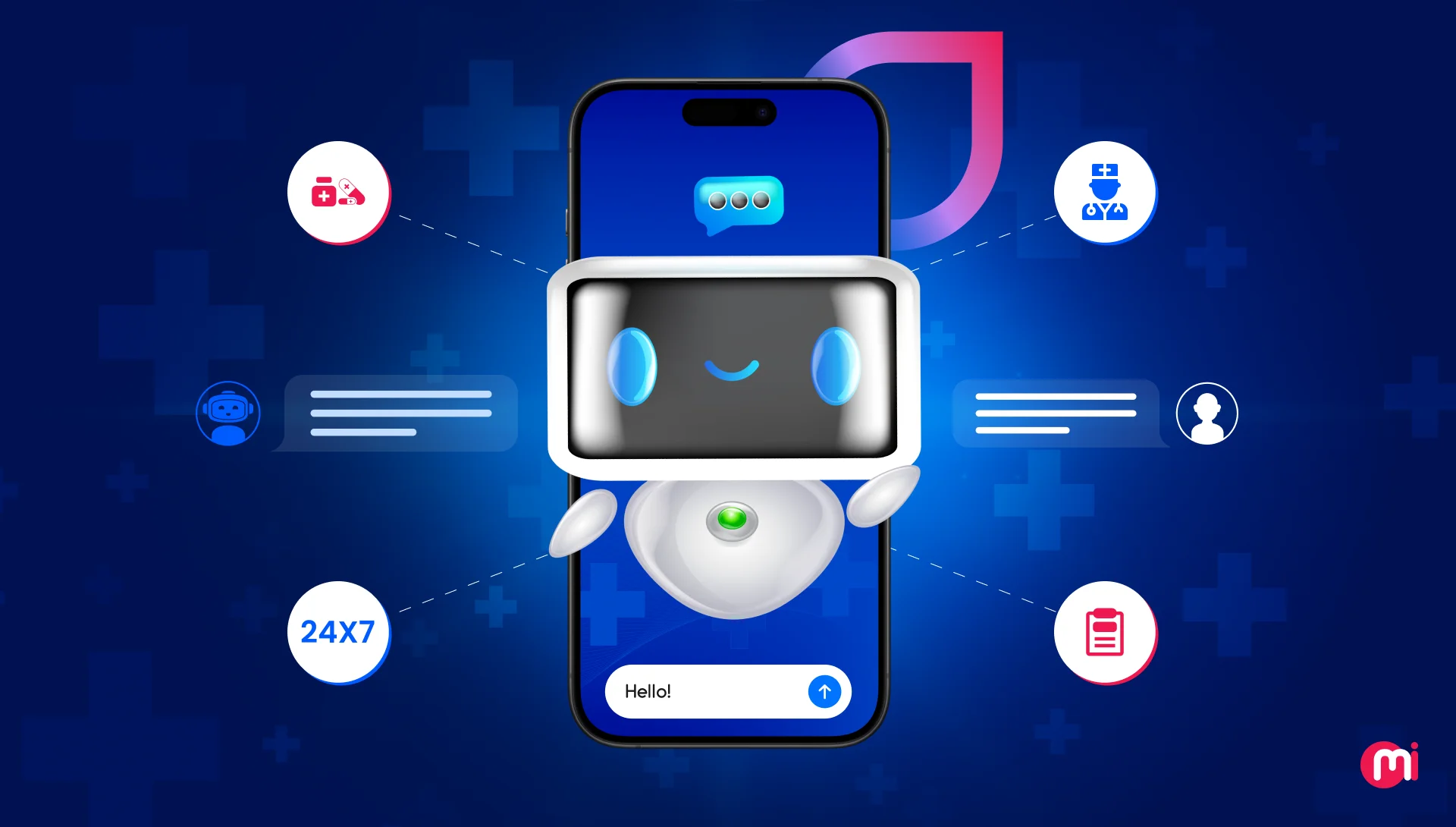
Conversational AI is not just a trend; it is integrated into various applications such as virtual assistants, chatbots, and tools that automate repetitive tasks for healthcare providers. Its potential benefits for patients include 24/7 assistance for symptom management, appointment scheduling, and mental health support.
As technology evolves rapidly, medical conversational AI promises to redefine patient experiences and improve healthcare systems’ quality. Implementing conversational AI in healthcare requires expertise, and partnering with a leading healthcare software development provider can help organizations leverage this technology effectively.
Key Takeaways
- Conversational AI in healthcare enhances patient engagement and provides efficient care.
- Benefits for healthcare providers include improved efficiency, decision support, and cost savings.
- Patient benefits of conversational AI include 24/7 support, customized health information, and reduced wait times.
- Use cases of conversational AI in healthcare range from symptom assessment to insurance handling.
- Challenges of conversational AI include data security, accuracy, integration, and user adoption.
What is Conversational AI in Healthcare?
Conversational AI in healthcare encompasses a wide range of voice-enabled technologies powered by artificial intelligence to enhance patient care. It automates appointment scheduling, simulates human conversations, and gathers clinical information effectively.
This transformative technology streamlines patient engagement, saving healthcare providers time by summarizing clinical touchpoints efficiently.
Benefits of Conversational AI in Healthcare for Patients and Healthcare Providers
Conversational AI enhances operational efficiency for healthcare providers and refines patient engagement, providing a more accessible and customized healthcare experience. Let’s delve into the advantages for patients and healthcare providers:
Benefits for Healthcare Providers
Conversational AI automates routine queries and documentation, allowing providers to focus on complex tasks. AI tools analyze medical history patterns for informed decision-making and streamline follow-ups and scheduling processes accurately.
- Improved Customer Service
Healthcare providers can respond faster and consistently manage high-volume patient interactions 24/7 with AI support. Conversational AI organizes patient information in real-time, improving record accuracy and clinical insights while reducing operational costs.
Benefits for Patients
- 24/7 Access to Information
Patients receive instant answers to queries, reducing dependence on hospital visits and improving clarity.
- Tailored Health Information
AI tools offer customized health guidance based on symptoms, records, and medical history.
- Remote Monitoring Capabilities
Continuous support with AI-powered monitoring tools tracks patient vitals for immediate notifications.
Patients benefit from reduced wait times, digital assistance, better access to medical reports, and self-service options for convenience, improving overall healthcare experience.
9 Use Cases of Conversational AI in Healthcare
Conversational AI reshapes the healthcare industry with practical use cases that add value to healthcare organizations worldwide:
1. Automated Appointment Booking and Smart Reminders
AI-powered appointment scheduling streamlines booking, reminders, and cancellations, reducing administrative burden and providing instant confirmation for patients.
2. AI-Enabled Symptom Assessment
AI-patient triage systems assess symptoms, recommend care levels, and prioritize urgent cases with specific questions based on patient data.
3. Enhancing Medication Adherence with Customized Alerts
AI-powered reminders enhance medication adherence by notifying patients to take medicines, refill prescriptions, or follow dosage instructions.
4. Real-time Updates on Lab Reports
Patient access to lab updates and test reports through secure channels enhances transparency and reduces follow-up calls.
5. 24/7 Virtual Health Assistants
Virtual health assistants provide consistent support, answering medical queries, and offering self-care practices to patients.
6. Patient Feedback Collection and Insightful Analysis
Automated patient feedback systems collect and analyze patient feedback to improve healthcare service quality and outcomes.
7. Ongoing Mental Health Support
Conversational AI tools support patients with mental health issues, providing accessible support, mood tracking, and emergency escalation when needed.
8. Simplified Insurance Claim Handling
AI insurance claim processing systems simplify billing and insurance verification, improving transparency and communication with patients.
9. AI-Driven Chronic Disease Management
AI tools support long-term care for chronic diseases by monitoring symptoms, providing tailored recommendations, and educating patients about self-management strategies.
Top Real-World Examples of Conversational AI in Healthcare
Real clinics and hospitals are integrating conversational AI to enhance symptom assessment, patient navigation, and digital triage. Let’s explore examples of conversational AI in healthcare:
1. Mayo Clinic AI-Powered Symptom Checker
Mayo Clinic uses evidence-based online symptom checkers to help people understand possible causes, assess urgency, and make informed care decisions.
2. Cleveland Clinic’s Virtual Health Assistant for Patient Support
Cleveland Clinic’s virtual health assistants support patient navigation and telehealth services, improving access and reducing call-center load.
3. NHS 111 Online Triage and Digital Advice Service
NHS 111 online triage service helps people check symptoms, follow safety steps, and determine the need for urgent care, supporting public health needs effectively.
Challenges of Conversational AI in Healthcare
While conversational AI offers numerous benefits, implementing it in healthcare systems poses challenges:
Data Security and Privacy Concerns
Ensuring robust security measures to prevent data breaches and misuse during patient interactions is crucial for conversational AI systems.
Accuracy and Reliability
Ensuring high clinical accuracy to provide trustworthy health guidance and avoid misinterpretations of symptoms is essential.
Integration with Existing Systems
Integrating conversational AI seamlessly with existing systems to ensure data flow without disruptions is challenging but necessary for effective deployment.
User Adoption and Trust
Building user trust and encouraging widespread adoption of conversational AI tools among patients and providers require safe, consistent, and user-friendly AI systems.
Cybersecurity Considerations
Addressing cybersecurity risks to protect patient data and ensure secure AI application functioning is critical for healthcare organizations.
Algorithm Bias and Fairness
Developing AI applications with diverse datasets, ongoing audits, and transparent practices to avoid algorithmic bias and ensure fairness in healthcare AI systems is paramount.
How to Implement Conversational AI for Your Platform
Implementing conversational AI on your platform involves several essential steps for seamless integration and optimal performance:
Step 1: Define Objective and Use Cases
Clearly define the objective of implementing conversational AI and analyze specific use cases to enhance user experience and add value.
Step 2: Choose the Right Technology Stack
Select a technology stack aligned with your platform’s requirements, considering factors like natural language processing capabilities and machine learning models.
Step 3: Data Collection and Preparation
Gather relevant data for training your conversational AI model, ensuring it is clean, labeled, and ready for training.
Step 4: Develop or Choose a Conversational AI Model
Develop a tailored conversational AI model or utilize pre-built models or frameworks based on your resources and requirements.
Step 5: Training and Fine-Tuning
Train your conversational AI model with prepared data, fine-tuning it for accuracy, context understanding, and effective handling of user queries.
Step 6: Integration with Your Platform
Integrate your conversational AI with your platform, ensuring compatibility with existing user interfaces, applications, and backend systems.
Step 7: Implement Multi-Channel Support
Extend conversational AI support across multiple channels like mobile and web apps for a consistent user experience.
Step 8: Security Compliance and Regulation
Implement robust user authentication, encryption protocols, and comply with data protection regulations to ensure data security and privacy.
Step 9: Evaluate Performance
Evaluate the performance of your conversational AI regularly, monitor user interactions, analyze areas for improvement, and address issues for optimal performance.
Step 10: User Training and Support
Provide user resources, training materials, FAQs, and support to maximize the benefits of conversational AI and address user queries effectively.
How MindInventory Turns Conversational AI into Clinic-Grade Solutions
MindInventory specializes in developing clinic-grade conversational AI solutions that meet clinical standards and enhance patient care. Our experts design AI chatbots and agents that support symptom guidance, follow-ups, and patient engagement, seamlessly integrated with healthcare workflows.
One of our core solutions includes an AI-powered copilot for doctors that transcribes consultations in real-time, generates accurate prescription notes, and integrates structured data into EHRs while maintaining compliance.
With specialized healthcare software development solutions, we ensure seamless integration of conversational AI with EHRs, telehealth platforms, and mobile apps. Our focus on security, accuracy, and regulatory compliance ensures safe and reliable interactions for users.
Partner with MindInventory to deploy clinically useful and operationally efficient conversational AI solutions tailored to your healthcare organization’s needs.
FAQs on Conversational AI in Healthcare
Yes, conversational AI can be seamlessly integrated with existing healthcare systems, offering flexibility and compatibility.
Generative AI enhances conversational AI by producing natural, human-like responses, improving the interaction experience for users.
The future of conversational AI in healthcare is promising, with advancements in AI and machine learning making it more intuitive, personalized, and secure.
“`













Balancing Act: The Decision to Shut Down Sora

Exclusive Arrival: Cupra Born VZ Lands in Australia – But There’s a Twist!

iPhone 12 Pro Max vs Samsung Note 20 Ultra / Huawei Mate 40 Pro Camera Test Comparison.

ClickFix: The New Threat to macOS Security

Kingdom Come: Deliverance 2 – The Rise of Artificial Intelligence

Elon Musk’s Latest Venture Faces Uncertainty as Last Co-Founder Departs xAI

Apple Bids Farewell to the Mac Pro Tower: Is it Truly Dead?

Porsche 911 GT3 RS Facelift: Unveiling the 992.2 Model in August 2026

Bearlyfy Strikes Russian Companies with Unique GenieLocker Ransomware Attack

EU Takes Action Against Instagram and Facebook for Violating Illegal Content Rules

Warning: Facebook Creators Face Monetization Loss for Stealing and Reposting Videos

Facebook Compliance: ICE-tracking Page Removed After US Government Intervention

Facebook’s New Look: A Blend of Instagram’s Style

Facebook and Instagram to Reduce Personalized Ads for European Users

InstaDub: Meta’s AI Translation Tool for Instagram Videos

Reclaim Your Account: Facebook and Instagram Launch New Hub for Account Recovery

Meta discontinues Messenger apps for Windows and macOS

Breaking Updates: Meta Connect 2025 Unveils Latest Developments
iPhone 12 Pro Max vs Samsung Note 20 Ultra / Huawei Mate 40 Pro Camera Test Comparison.

iPhone 12 Pro Max vs Samsung Note 20 Ultra / Huawei / Xiaomi / OnePlus Battery Life DRAIN Test.

The BEST Smartphone of 2020 🏆

The Self-Healing Smartphones!

Apple is not what it used to be.

Smartphones are Boring now.

The Fastest Android Phone Ever.

Unboxing the $122,000 Smartphone. 🤯

Are Linux Smartphones about to KILL Android?
-
 Facebook5 months ago
EU Takes Action Against Instagram and Facebook for Violating Illegal Content Rules
-
 Facebook5 months ago
Warning: Facebook Creators Face Monetization Loss for Stealing and Reposting Videos
-
 Facebook5 months ago
Facebook Compliance: ICE-tracking Page Removed After US Government Intervention
-
 Facebook4 months ago
Facebook’s New Look: A Blend of Instagram’s Style
-
 Facebook4 months ago
Facebook and Instagram to Reduce Personalized Ads for European Users
-
 Facebook6 months ago
InstaDub: Meta’s AI Translation Tool for Instagram Videos
-
 Facebook4 months ago
Reclaim Your Account: Facebook and Instagram Launch New Hub for Account Recovery
-
 Apple5 months ago
Meta discontinues Messenger apps for Windows and macOS
