
Inovation
Revolutionizing Solar Power Efficiency with Organic Layer Promises

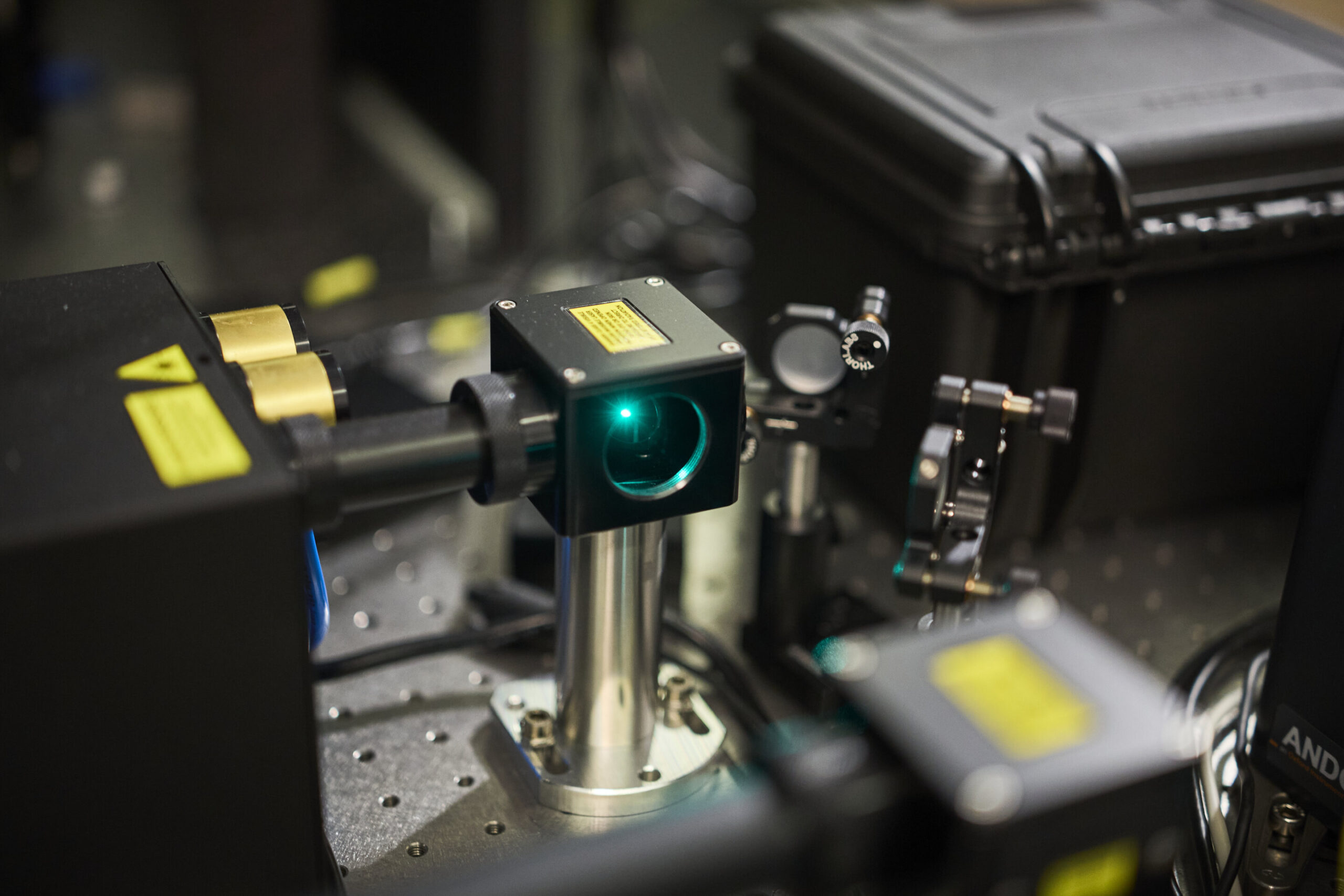
A team of scientists and engineers from UNSW Sydney has made significant progress in advancing solar energy technology by overcoming a major limitation in renewable technology.
Singlet fission, a process where a single photon of light can be split into two packets of energy, has the potential to double the electrical output for solar technologies. In a study published in ACS Energy Letters, the UNSW team, known as “Omega Silicon,” demonstrated how singlet fission can be applied to organic materials that could be mass-produced for use in solar panels.
Dr. Ben Carwithen, a postdoctoral researcher at UNSW’s School of Chemistry, explains, “A lot of the energy from light in a solar cell is wasted as heat. We’re finding ways to take that wasted energy and turn it into more electricity instead.”
Unlocking Greater Efficiency
Most solar panels today are made from silicon, which has limitations in efficiency. Singlet fission offers a way to surpass these limitations by producing two lower-energy excitations from one high-energy photon when sunlight interacts with certain organic materials.
Professor Ned Ekins-Daukes, the project lead and head of UNSW’s School of Photovoltaic & Renewable Energy Engineering, states, “Introducing singlet fission into a silicon solar panel will increase its efficiency by providing additional current.”
Previous attempts at utilizing singlet fission were hindered by material degradation. However, the UNSW team has successfully demonstrated the use of a stable compound called DPND, which can undergo singlet fission while remaining stable under real-world conditions.
Dr. Carwithen adds, “We’ve shown that you can interface silicon with this stable material, which undergoes singlet fission, and then injects extra electrical charge. It’s the first demonstration that this can work in a realistic system.”
Innovative Breakthroughs
The technology builds upon fundamental research led by Professor Tim Schmidt, who used magnetic fields to reveal the singlet fission pathway. By understanding the underlying physics, the researchers were able to design better materials and structures to enhance efficiency.
Associate Professor Murad Tayebjee describes the work as “a big step forward” for solar panel technology, highlighting the use of stable organic molecules based on industrial pigments for singlet fission.
Paving the Way for Future Solar Cells
The new technology involves adding an ultra-thin organic layer to conventional silicon cells, potentially increasing efficiency to around 45%. Dr. Carwithen envisions a significant leap in solar panel efficiency, with the theoretical limit being 45%.
The research is part of a larger effort to make solar power more affordable and powerful. The Australian Renewable Energy Agency (ARENA) has selected UNSW’s singlet fission project for its Ultra Low Cost Solar program, aiming to deliver highly efficient panels at a low cost by 2030.
Industry partners are closely monitoring the progress of the Omega Silicon team, with potential commercialization on the horizon. Dr. Carwithen anticipates a proof of concept within a few years, with the ultimate goal of revolutionizing solar panel technology.
Citation:
Sunlight split in two: Organic layer promises leap in solar power efficiency (2025, October 31)
retrieved 31 October 2025
from https://techxplore.com/news/2025-10-sunlight-layer-solar-power-efficiency.html
This document is subject to copyright. Apart from any fair dealing for the purpose of private study or research, no
part may be reproduced without the written permission. The content is provided for information purposes only.













Exclusive Arrival: Cupra Born VZ Lands in Australia – But There’s a Twist!

iPhone 12 Pro Max vs Samsung Note 20 Ultra / Huawei Mate 40 Pro Camera Test Comparison.

ClickFix: The New Threat to macOS Security

Kingdom Come: Deliverance 2 – The Rise of Artificial Intelligence

Elon Musk’s Latest Venture Faces Uncertainty as Last Co-Founder Departs xAI

Apple Bids Farewell to the Mac Pro Tower: Is it Truly Dead?

Porsche 911 GT3 RS Facelift: Unveiling the 992.2 Model in August 2026

Bearlyfy Strikes Russian Companies with Unique GenieLocker Ransomware Attack

Innovative Ventures: The 8 Startups Investors Can’t Resist from YC Demo Day

EU Takes Action Against Instagram and Facebook for Violating Illegal Content Rules

Warning: Facebook Creators Face Monetization Loss for Stealing and Reposting Videos

Facebook Compliance: ICE-tracking Page Removed After US Government Intervention

Facebook’s New Look: A Blend of Instagram’s Style

Facebook and Instagram to Reduce Personalized Ads for European Users

InstaDub: Meta’s AI Translation Tool for Instagram Videos

Reclaim Your Account: Facebook and Instagram Launch New Hub for Account Recovery

Meta discontinues Messenger apps for Windows and macOS

Breaking Updates: Meta Connect 2025 Unveils Latest Developments
iPhone 12 Pro Max vs Samsung Note 20 Ultra / Huawei Mate 40 Pro Camera Test Comparison.

iPhone 12 Pro Max vs Samsung Note 20 Ultra / Huawei / Xiaomi / OnePlus Battery Life DRAIN Test.

The BEST Smartphone of 2020 🏆

The Self-Healing Smartphones!

Apple is not what it used to be.

Smartphones are Boring now.

The Fastest Android Phone Ever.

Unboxing the $122,000 Smartphone. 🤯

Are Linux Smartphones about to KILL Android?
-
 Facebook5 months ago
EU Takes Action Against Instagram and Facebook for Violating Illegal Content Rules
-
 Facebook5 months ago
Warning: Facebook Creators Face Monetization Loss for Stealing and Reposting Videos
-
 Facebook5 months ago
Facebook Compliance: ICE-tracking Page Removed After US Government Intervention
-
 Facebook4 months ago
Facebook’s New Look: A Blend of Instagram’s Style
-
 Facebook4 months ago
Facebook and Instagram to Reduce Personalized Ads for European Users
-
 Facebook5 months ago
InstaDub: Meta’s AI Translation Tool for Instagram Videos
-
 Facebook4 months ago
Reclaim Your Account: Facebook and Instagram Launch New Hub for Account Recovery
-
 Apple5 months ago
Meta discontinues Messenger apps for Windows and macOS
