
Inovation
Revolutionizing Solar Power: Ultra-Black Nanoneedles Absorb 99.5% of Light for Next-Generation Solar Towers

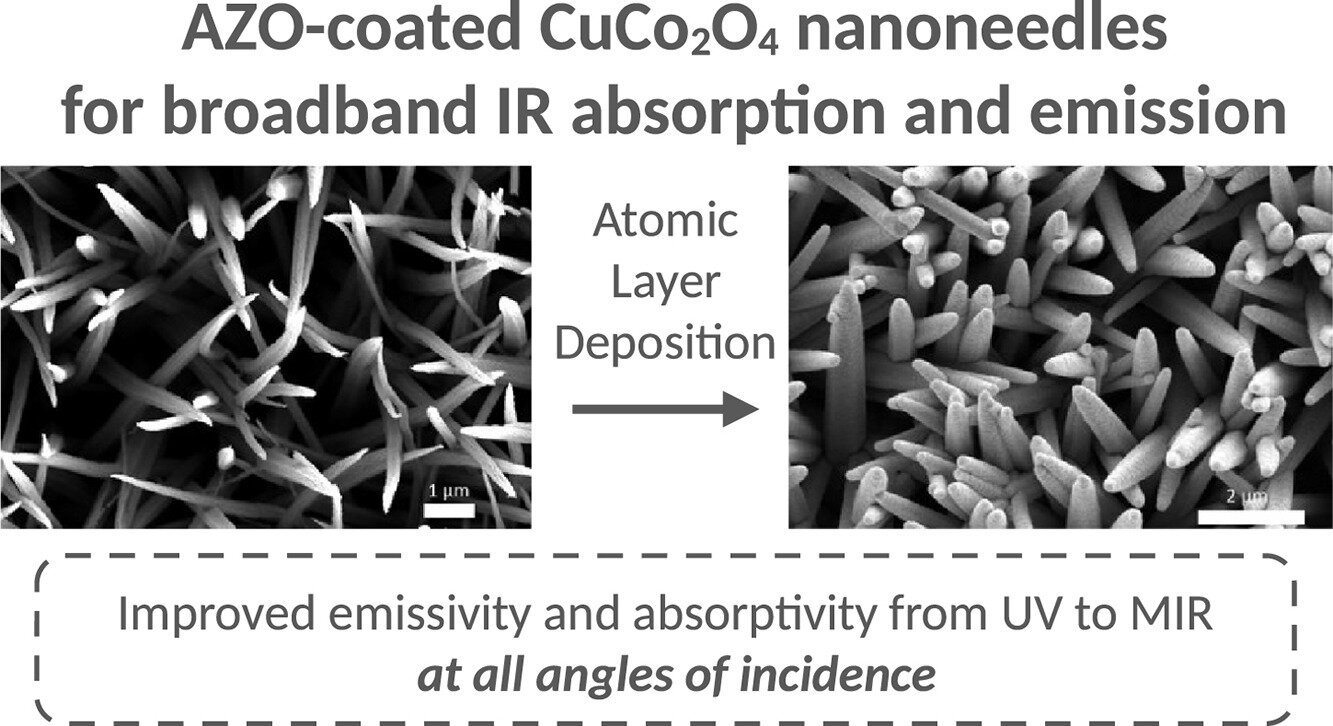
A research team from the University of the Basque Country (EHU) has conducted a thorough analysis of ultra-black copper cobaltate nanoneedles to assess their solar energy absorption capabilities. The study revealed that these new nanoneedles exhibit exceptional thermal and optical properties, making them ideal for efficient energy absorption. This breakthrough opens up possibilities for concentrated solar power applications in the renewable energy sector.
The experiments were conducted in a specialized high-temperature research laboratory. The findings were recently published in the journal Solar Energy Materials and Solar Cells.
Concentrated solar power is emerging as a key player in the future of renewable energy due to its ability to store thermal energy effectively. While historically more complex and costly than photovoltaic power, recent advancements in concentrated solar power technology have made it more accessible. These systems are now being deployed in various countries as part of sustainable energy strategies.
Dr. Iñigo González de Arrieta, a researcher in the Thermophysical Properties of Materials group, emphasized the team’s focus on exploring ultra-black materials for solar tower applications. In these systems, solar energy is concentrated onto an energy-absorbing tower using mirrors.
Dr. González de Arrieta highlighted the importance of enhancing the efficiency of absorbing materials to improve the competitiveness of solar energy systems. The team utilizes cutting-edge equipment developed in their own lab to conduct thermo-optical analyses for measuring sample absorption properties, as high-temperature research facilities are limited globally.
The researchers at EHU analyzed the thermal and optical characteristics of patented copper cobaltate nanoneedles from the University of California San Diego. Dr. González de Arrieta noted that these nanoneedles outperformed carbon nanotubes traditionally used in such applications, especially when coated with zinc oxide.
Striving for Optimal Light Absorption
Solar tower plants rely on hundreds of mirrors to concentrate sunlight onto a focal point. Achieving maximum absorption on the tower requires ultra-black absorbing materials. While vertically aligned carbon nanotubes are currently the darkest available materials, they are not stable at high temperatures and humidity levels. Dr. González de Arrieta explained that despite absorbing about 99% of light, carbon nanotubes are unsuitable for solar towers.
The introduction of copper cobaltate nanoneedles represents a significant advancement in this field. These nanoneedles exhibit greater stability at high temperatures, with zinc oxide-coated variants surpassing the absorption efficiency of carbon nanotubes. While existing materials on solar towers absorb 95% of light, copper cobaltate nanoneedles achieve 99% absorption, rising to 99.5% with zinc oxide coating.
Collaboration between Dr. Renkun Chen of the University of California San Diego and the U.S. Department of Energy aims to deploy copper cobaltate nanoneedles coated with doped zinc oxide on solar towers. However, uncertainties in the current U.S. landscape could impact these plans.
Solar tower plants are operational in Andalusia and various desert locations worldwide. In Spain, only 5% of energy comes from this technology. Dr. González de Arrieta emphasized the importance of advancing renewable energy sources due to their environmental benefits and ability to store thermal energy for use during non-daylight hours.
Thermal energy absorbed by solar towers is stored by melting specific salts, which retain heat effectively and can be reintegrated into power grids when needed.
Dr. González de Arrieta stressed the ongoing need for developing new coatings with enhanced optical properties for solar tower applications. He also hinted at future explorations into coating nanoneedles with materials offering improved conductivity.
Citation:
Ultra-black nanoneedles absorb 99.5% of light for future solar towers (2025, October 29)
retrieved 30 October 2025
from https://techxplore.com/news/2025-10-ultra-black-nanoneedles-absorb-future.html
This document is subject to copyright. Apart from any fair dealing for the purpose of private study or research, no
part may be reproduced without the written permission. The content is provided for information purposes only.












Russian CTRL: RDP Hijacking with Malicious LNK Files and FRP Tunnels

Exclusive Look: The Must-Have Games of April 2026 on PlayStation Plus

Mastering the Modern Real Estate and Rental Landscape

Save $30 on Powerbeats Fit in Amazon’s Big Spring Sale for a Gym-Ready Workout

Uncovering the Gaps: RSAC 2026’s Five Agent Identity Frameworks Revealed

Exploring the Exciting Updates of iOS 26.5 Beta 1: A Comprehensive Look at the Latest Features

2026 Toyota HiLux BEV: Affordable Electric Ute Hits the Australian Market

Data Breach Alert: Patient Information Compromised by Hackers at CareCloud Healthcare Tech Firm

Unveiling Kliff: The Evolution of a Scottish Warrior in Crimson Desert

EU Takes Action Against Instagram and Facebook for Violating Illegal Content Rules

Warning: Facebook Creators Face Monetization Loss for Stealing and Reposting Videos

Facebook Compliance: ICE-tracking Page Removed After US Government Intervention

Facebook’s New Look: A Blend of Instagram’s Style

Facebook and Instagram to Reduce Personalized Ads for European Users

InstaDub: Meta’s AI Translation Tool for Instagram Videos

Reclaim Your Account: Facebook and Instagram Launch New Hub for Account Recovery

Meta discontinues Messenger apps for Windows and macOS

Breaking Updates: Meta Connect 2025 Unveils Latest Developments

Huawei Mate 40 Pro Unboxing – WHAT.

iPhone 12 vs iPhone 12 Pro / 11 Pro Max / 11 Pro / 11 / XR / SE Battery Life DRAIN Test.

19 Smartphone Gadgets that Blew me Away.

iPhone 12 Pro Max Unboxing & Review!

iPhone 12 Pro Max vs Samsung Note 20 Ultra / Huawei Mate 40 Pro Camera Test Comparison.

iPhone 12 Pro Max vs Samsung Note 20 Ultra / Huawei / Xiaomi / OnePlus Battery Life DRAIN Test.

The BEST Smartphone of 2020 🏆

The Self-Healing Smartphones!

Apple is not what it used to be.
-
 Facebook5 months ago
EU Takes Action Against Instagram and Facebook for Violating Illegal Content Rules
-
 Facebook6 months ago
Warning: Facebook Creators Face Monetization Loss for Stealing and Reposting Videos
-
 Facebook6 months ago
Facebook Compliance: ICE-tracking Page Removed After US Government Intervention
-
 Facebook4 months ago
Facebook’s New Look: A Blend of Instagram’s Style
-
 Facebook4 months ago
Facebook and Instagram to Reduce Personalized Ads for European Users
-
 Facebook6 months ago
InstaDub: Meta’s AI Translation Tool for Instagram Videos
-
 Facebook4 months ago
Reclaim Your Account: Facebook and Instagram Launch New Hub for Account Recovery
-
 Apple5 months ago
Meta discontinues Messenger apps for Windows and macOS
