
Tech News
Revolutionizing Web Development: Top 10 Frameworks for 2026

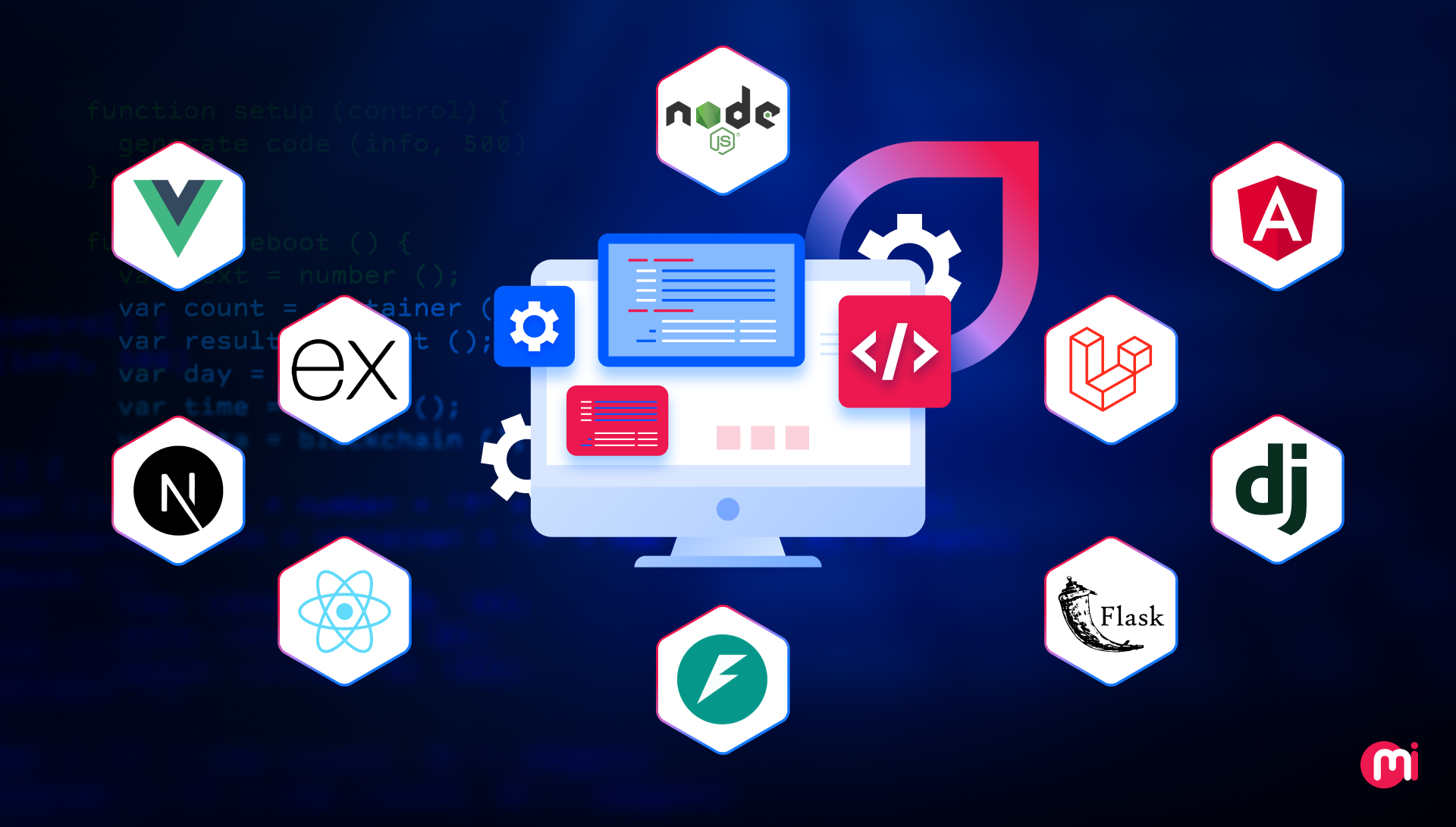
The landscape of web frameworks is diverse and constantly evolving, with new options emerging every year. Making the right choice of framework has become a significant challenge in today’s web app development market.
As we enter 2026, development teams are faced with new software architecture patterns, AI-driven capabilities, higher performance expectations, and the pressure to deliver faster without compromising quality. It is crucial to select the appropriate web framework to meet these challenges.
It’s important to note that the choice of web framework directly impacts long-term development costs, speed of delivery, availability of talent, security posture, response times, scalability, and overall maintainability of the product. These criteria can determine the success or failure of an application in the future.
This guide explores the top web development frameworks of 2026, providing a comparison of their strengths, limitations, and best-fit scenarios to help you confidently choose the right foundation for your next digital product.
Key Takeaways
- The choice of your web framework determines the speed, scalability, security, and long-term cost of your web application development project.
- React and Next.js continue to dominate the frontend space, especially for enterprise apps, SEO-heavy platforms, and high-performance SaaS products.
- Angular and Vue remain strong choices for structured architectures and teams seeking predictable, maintainable UI systems.
- Node.js, Express.js, FastAPI, Django, Flask, and Laravel cover a wide range of backend needs, from real-time systems to enterprise-grade, database-driven platforms.
- No single framework is “best” for every project; the right choice depends on the complexity of your app, performance requirements, internal skill set, and long-term roadmap.
- Speed, scalability, talent availability, and built-in security should be the four non-negotiable pillars when selecting any web framework.
- Frameworks with strong communities and corporate backing (React, Angular, Next.js, Django, and Laravel) offer greater long-term stability and lower maintenance risk.
What is a Web Application Framework?
A web application framework is a software framework designed to streamline how web developers build and maintain web-based applications. It provides a predefined structure, reusable components, and proven architectural patterns so teams don’t have to reinvent the wheel for every project.
Why Do You Need to Use Web Frameworks?
Web frameworks benefit developers by facilitating faster development and efficiency, maintaining a structured and organized codebase, enhancing security, simplifying database interaction, providing better community support and resources, ensuring scalability, and reducing costs. Let’s explore how web app development frameworks benefit developers:
- Frameworks provide prebuilt components, libraries, and tools that significantly speed up web application development.
- They enforce consistent architectural patterns (such as MVC), resulting in well-structured, maintainable, and scalable codebases.
- Many web frameworks include built-in security features and best practices to protect applications from common vulnerabilities like SQL injection, cross-site scripting (XSS), and cross-site request forgery (CSRF).
- Most frameworks offer Object-Relational Mappers (ORMs) or similar abstractions, simplifying database interactions and reducing the need for manual SQL queries.
- Popular web frameworks benefit from large, active communities with extensive documentation, tutorials, and support resources, making it easier for teams to resolve issues quickly.
- Selecting the right framework based on your application’s complexity and long-term requirements enhances scalability and future-proofing.
- Frameworks accelerate development and streamline workflows, reducing overall development costs and speeding up time-to-market for web projects.

Top 10 Web Application Development Frameworks to Use in 2026
In 2026, the top 10 web application development frameworks include React, Next.js, Angular, Vue.js, Node.js, Express.js, FastAPI, Django, Flask, and Laravel.
Let’s explore all these frameworks to compare and choose the best one for your web app development project:
1. React
React is a leading JavaScript library developed by a company for building fast, interactive, and component-driven user interfaces. It dominates the frontend ecosystem due to its flexibility and massive community support. React is stable and promises maturity for over 10 years.
In 2026, React app development services will remain the default choice for enterprise-grade UIs, high-performance SPAs, and scalable frontend systems. It continues to be a leading JS framework and library with features like React Server Components and improved concurrency.
Best Use Cases of React
- Complex UIs and dashboards
- High-traffic SaaS apps
- Cross-platform apps using React Native
- Component-driven design systems
Pros of React
- React is MIT-licensed and free to use.
- Saves developers time and effort by allowing them to build reusable UI components.
- Leads to faster rendering and a more responsive user interface, as it uses a Virtual DOM and an efficient reconciliation algorithm.
- Works seamlessly with backend APIs.
- Relatively easy to learn for developers already familiar with JavaScript.
- Protects against injection attacks using JSX, which mixes HTML and JavaScript.
- Easier to write tests for code in React due to its component-based structure.
- Has a large and active community providing resources, tutorials, third-party tools, and support for developers.
Limitations of React
- Steeper learning curve for beginners due to JSX and different tools needed for building a full application.
- Relies on third-party libraries for routing, styling, form handling, and more, leading to potential compatibility issues and increased dependency management.
- Focuses primarily on the view layer and lacks a built-in solution for complex state management in larger applications.
- Client-side rendered React apps can face SEO challenges as search engine crawlers may struggle to index dynamically generated content effectively. Utilizing Next.js can make a React website SEO-friendly.
- Setting up a new React project, especially with various tools and libraries, can involve significant boilerplate code and configuration.
- While React’s Virtual DOM optimizes updates, complex or deeply nested component hierarchies can still lead to performance issues if not carefully optimized.
Top Examples of Web Applications Built Using React
- Facebook, Instagram, Netflix, Airbnb, WhatsApp Web, Discord, and many other applications are built using React.

2. Vue.js
Vue.js is a progressive, open-source JavaScript framework that focuses on simplicity, reactivity, and ease of integration. The main idea behind creating this web framework is to build a simple and flexible web application development tool that helps craft user interfaces and single-page applications (SPAs).
It offers a gentle learning curve and delivers strong performance with its lightweight architecture.
In 2026, Vue development services remain a popular choice among startups and mid-sized businesses for the framework’s flexibility, Composition API, and smooth developer experience.
Best Use Cases of Vue.js
- Single-Page Applications (SPAs)
- Progressive Web Applications (PWAs)
- Enterprise applications
- E-commerce platforms
- Custom widgets and UI components
- Mobile applications
- Gaming interfaces
Pros of Vue.js
- Easy to learn and get started with basic knowledge of HTML, CSS, and JavaScript.
- Notably lightweight, delivering faster loading times and improved performance, positively impacting SEO and user experience.
- Follows a component-based architecture, meaning that the application is built from small, self-contained, reusable pieces called components. This promotes modularity and reusability, leading to efficient development.
- Flexible and can be easily integrated into existing projects.
- Has a vibrant and supportive open-source community of developers, making it a reliable web app development framework to adopt.
- Applications built using Vue.js benefit from optimized performance, as it utilizes a virtual DOM and optimized rendering algorithms.
- Offers a robust set of development tools, including the Vue CLI, a command-line interface for quickly creating and managing projects.
- Vue Devtools browser extension for debugging and inspection, streamlining the development workflow.
Limitations of Vue.js
- Smaller ecosystem, and the community is still growing.
- Lacks corporate backing like Angular and React.
- Challenges with large, complex projects with multiple developers arise if not managed carefully.
- A significant portion of the Vue.js community and resources are Chinese-speaking, creating a language barrier for English-speaking developers seeking in-depth documentation or community assistance.
- While Vue.js is known for its ease of entry, mastering its more advanced features and patterns can take time.
- Applications built with Vue.js can face compatibility issues with older browsers.
Top Examples of Web Applications Built Using Vue.js
- 9gag, Behance, GitLab, Grammarly, and Wizz Air are examples of popular applications built using Vue.js.
Also Read: Vue vs React: Which is Best for Frontend Development?
3. Angular
Angular is a comprehensive TypeScript-based frontend framework maintained by Google. It provides an all-in-one solution with built-in routing, form handling, dependency injection, RxJS integration, and enterprise-level tooling, making it a structured choice for large-scale, long-term applications.
In 2026, Angular app development services will remain dominant in enterprise environments. Its opinionated architecture and strong standards reduce decision fatigue for teams that prefer convention over configuration.
Best Use Cases of Angular
- Enterprise-level web applications
- Single-Page applications (SPAs)
- Progressive Web Applications (PWAs)
- Data-driven applications and dashboards
- E-commerce platforms
Pros of Angular
- Saves time on debugging through early error detection achieved using TypeScript app development services to build structured, readable, and scalable code.
- Reduces manual updates in dynamic applications and forms as it supports two-way data binding.
- Supports scalable architecture developers thanks to its robust structure and modularity.
- Built to handle complex requirements and manage a large number of components effortlessly.
- Build cross-platform apps using Electron and NativeScript with Angular.
- Has a rich ecosystem developed by its large, active, and dedicated community.
Limitations of Angular
- As compared to React and Vue, Angular has a complex structure, making the learning curve steeper.
- It can be a heavyweight framework, which might be a disadvantage for some simple projects.
- Two-way data binding and other framework capabilities can lead to performance issues in large applications.
- While Angular manages the DOM, improper practices like directly manipulating it can create compatibility issues and make code harder to maintain.
- By default, Angular apps are heavily client-side rendered, which can lead to poor search engine optimization.
- Some developers report that the official CLI documentation lacks sufficient detail, requiring them to search for answers on other platforms like GitHub.
Top Examples of Web Applications Built Using Angular
- G












Apple Bids Farewell to the Mac Pro Tower: Is it Truly Dead?

Porsche 911 GT3 RS Facelift: Unveiling the 992.2 Model in August 2026

Bearlyfy Strikes Russian Companies with Unique GenieLocker Ransomware Attack

Innovative Ventures: The 8 Startups Investors Can’t Resist from YC Demo Day

The Future of iPhone Cameras: Is a 200 MP Lens Coming Soon?

Celebrating the First iX3 Delivery at BMW’s Debrecen Factory

iPhone 12 Pro Max vs Samsung Note 20 Ultra / Huawei / Xiaomi / OnePlus Battery Life DRAIN Test.

Stealthy Malware: The Hidden Threat Within Telnyx PyPI Package

Harvest of Suspicion: Grave Seasons Murder Mystery Farming Sim Arrives in August

EU Takes Action Against Instagram and Facebook for Violating Illegal Content Rules

Warning: Facebook Creators Face Monetization Loss for Stealing and Reposting Videos

Facebook Compliance: ICE-tracking Page Removed After US Government Intervention

Facebook’s New Look: A Blend of Instagram’s Style

Facebook and Instagram to Reduce Personalized Ads for European Users

InstaDub: Meta’s AI Translation Tool for Instagram Videos

Reclaim Your Account: Facebook and Instagram Launch New Hub for Account Recovery

Meta discontinues Messenger apps for Windows and macOS

Breaking Updates: Meta Connect 2025 Unveils Latest Developments
iPhone 12 Pro Max vs Samsung Note 20 Ultra / Huawei / Xiaomi / OnePlus Battery Life DRAIN Test.

The BEST Smartphone of 2020 🏆

The Self-Healing Smartphones!

Apple is not what it used to be.

Smartphones are Boring now.

The Fastest Android Phone Ever.

Unboxing the $122,000 Smartphone. 🤯

Are Linux Smartphones about to KILL Android?

15 Smartphone FAILS to ruin your day 😂
-
 Facebook5 months ago
EU Takes Action Against Instagram and Facebook for Violating Illegal Content Rules
-
 Facebook5 months ago
Warning: Facebook Creators Face Monetization Loss for Stealing and Reposting Videos
-
 Facebook5 months ago
Facebook Compliance: ICE-tracking Page Removed After US Government Intervention
-
 Facebook4 months ago
Facebook’s New Look: A Blend of Instagram’s Style
-
 Facebook4 months ago
Facebook and Instagram to Reduce Personalized Ads for European Users
-
 Facebook5 months ago
InstaDub: Meta’s AI Translation Tool for Instagram Videos
-
 Facebook4 months ago
Reclaim Your Account: Facebook and Instagram Launch New Hub for Account Recovery
-
 Apple5 months ago
Meta discontinues Messenger apps for Windows and macOS
