
Startups
Shareholder Success: Building the Ideal Roster for Your IPO Journey

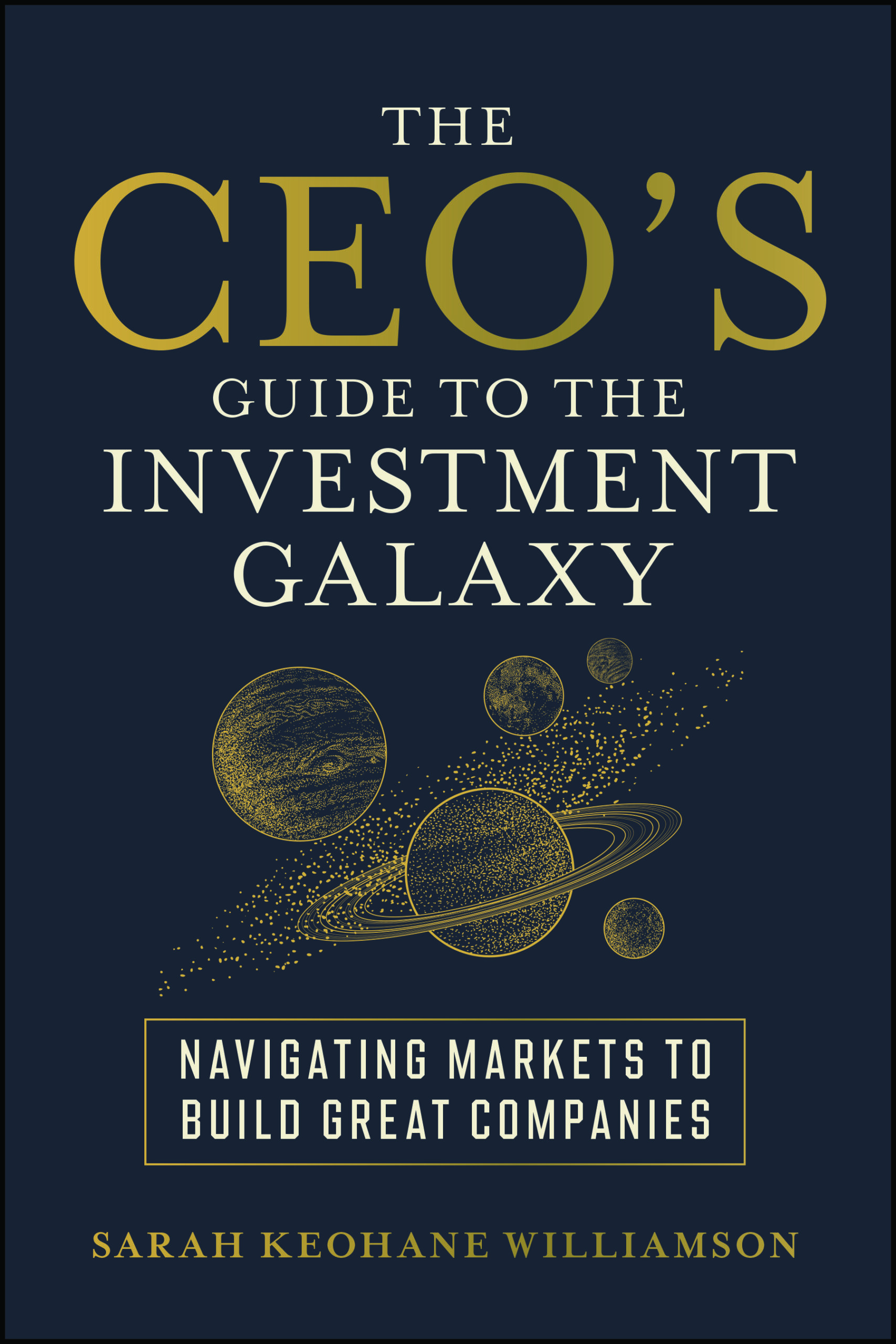
This is an excerpt from The CEO’s Guide to the Investment Galaxy: Navigating Markets to Build Great Companies by Sarah Williamson.
Let’s say you lead a young company. You’ve built a team, created an in-demand product or service, and you’re considering going public.
There are lots of benefits to being a public company, but there are costs, too. The goal is to maximize the benefits and minimize the costs.
The first benefit of being a public company is access to large pools of capital. Being listed opens up the equity market to fund you in an IPO but also puts you on the radar for other types of capital, such as follow-on offerings of equity, convertible bonds, and all sorts of structures that trade in the public markets. This new capital could fuel your next stage of growth by allowing you to invest in the R&D, talent, and technology you need to grow. It also allows you to issue stock in the future if you want to acquire another company.
The second benefit is more subtle: public markets impose discipline and confer credibility; they make you grow up. The rules, regulations, and independent board members that public markets require mean that there is a framework for doing things that goes beyond the founder’s or leader’s vision and quirks. With a few notable exceptions, public companies behave in a more deliberate and predictable way than pre-IPO companies. And there is prestige to being a public company, making you more visible to potential customers and employees.
The third benefit is liquidity for you and your employees. Perhaps you started this company years ago and while the equity value has grown, you and your employees have little cash. Maybe it is time to buy houses, diversify wealth, or take a well-earned vacation. Liquidity is an important consideration for going public, but going public isn’t a cash-out event if you’re building a long-term company. As an extreme example, when Amazon went public in 1997, it sold 3 million shares and raised $54 million, leading to a market cap of $438 million. Jeff Bezos retained a 43% stake in the company, a far cry from cashing out. The rest is history.
Of course, going public has costs too. You have to deal with all those pesky inhabitants of the investment galaxy that we met earlier. The first cost is that you have to follow the rules. While rules impose discipline, they also impose costs and constraints. Reporting, disclosure, and even board minutes become really important.
The second is that going public is expensive. The advisors that will take you public are experts that expect to get paid and paid handsomely. While there are ways around this (like a Dutch auction or a direct listing), the traditional IPO comes with a hefty price tag.
The third is that you need to change or add to your board. Good public company boards are a strategic asset of the corporation. The board members represent the public shareholder and the long-term vision of the company, not their own pocketbook. A strong board that can provide guidance to a public company is likely different from the board you have right now. A well-known business book by Marshall Goldsmith is entitled What Got You Here Won’t Get You There—and this applies to boards too.
Some early board members can switch their perspective to become excellent long-term public company board members, but others may continue to see themselves as VCs looking for their next deal. Be sure you have the right mix, ideally well before the IPO.
Finally, you need to change the way you think about your shareholders and how you deal with them. Your pre-IPO shareholders are probably insiders, part of your team: employees, a few VCs, friends, and family. But now that you’re moving into the rough and tumble world of public markets, you will find yourself with a different mix. Starting out with the right shareholders will make your life much better over time. Getting the right shareholders, however, is hard work.
The way IPOs traditionally work is that a group of investment banks underwrites the company, usually with one in the lead left role. They do the work to prep the financials and the management team for the scrutiny of the public market. They may work with you to ensure your board is ready for the public markets. Their analysts will write about your company’s prospects, and their bankers will take the management team on a road show, introducing you and your team to a range of investors that you probably don’t know.
By underwriting your company, the investment banks put their stamp of approval on you and your strategy. And then they price the IPO—making an intelligent guess based on their market knowledge of the demand for your company’s stock.
Pricing an IPO properly is hard. Bankers pricing an IPO must navigate between leaving too much money on the table if they price it too low or watching the stock flounder on its first day of trading if they price it too high.
Usually, they price the IPO on the low side. People like stocks to rise rather than fall in the first few days of trading: it feels good to have an IPO pop. And if the price starts to fall, the banks will typically step in to support it, which they don’t want to do.
But remember that if you price something too low, and the value goes up right away, you’ve probably left money on the table. The key long-term issue is who gets what allocations.
Investment banks have traditionally distributed IPO shares to their top clients. These clients, who are frequent traders, may not necessarily be the ideal long-term shareholders for a company. When short-term investors are given more shares in an IPO, it can diminish the value for long-term shareholders that are crucial for the company’s sustained growth.
To ensure long-term success for a young company going public, it is essential to establish strong governance, align incentives, devise a clear investor strategy, and avoid focusing on quarterly guidance. While transitioning to the public markets will require some adjustments, it does not mean sacrificing long-term goals, as demonstrated by companies like Alphabet and Amazon.
Key stakeholders in the investment universe that a company going public should prioritize include investment bankers, regulators, exchanges, lawyers, and active managers. Selecting the right investment banker, understanding regulatory requirements, and targeting long-term investors are crucial steps in preparing for a successful IPO.
Going public marks a significant milestone for a company, providing the necessary resources to propel it forward. However, it is important to remember that the IPO is just the beginning of a new phase in the company’s journey. By focusing on building relationships with long-term investors and adhering to best practices, a company can set itself up for sustained growth in the public markets.
Adapted from “The CEO’s Guide to the Investment Galaxy: Navigating Markets to Build Great Companies” by Sarah Keohane Williamson.











Cloudflare Evasion: How Phishing Targets TikTok Business Accounts Through Turnstile Tactics

The Unfair Boundaries of Genre: A Conversation with the Original Stalker Designer on Eurojank in International Games

Sequoia’s Confidence in Harvey’s $11B Valuation Triples

Troubleshooting HDMI Audio: Essential Fixes & More Tips

Unveiling the Powerhouse: Mercedes-AMG GT Black Series with Dynamic Aero System Spotted at Nurburgring

iPhone 12 Pro Max Unboxing & Review!

European Commission Launches Investigation into Amazon Cloud Account Breach

Drama and Dollars: The Evolution of Soap Opera-TikTok Hybrids

Maximizing MacBook Battery Life: Tips for Charging Slowly and Setting Charge Limits

EU Takes Action Against Instagram and Facebook for Violating Illegal Content Rules

Warning: Facebook Creators Face Monetization Loss for Stealing and Reposting Videos

Facebook Compliance: ICE-tracking Page Removed After US Government Intervention

Facebook’s New Look: A Blend of Instagram’s Style

Facebook and Instagram to Reduce Personalized Ads for European Users

InstaDub: Meta’s AI Translation Tool for Instagram Videos

Reclaim Your Account: Facebook and Instagram Launch New Hub for Account Recovery

Meta discontinues Messenger apps for Windows and macOS

Breaking Updates: Meta Connect 2025 Unveils Latest Developments
iPhone 12 Pro Max Unboxing & Review!

iPhone 12 Pro Max vs Samsung Note 20 Ultra / Huawei Mate 40 Pro Camera Test Comparison.

iPhone 12 Pro Max vs Samsung Note 20 Ultra / Huawei / Xiaomi / OnePlus Battery Life DRAIN Test.

The BEST Smartphone of 2020 🏆

The Self-Healing Smartphones!

Apple is not what it used to be.

Smartphones are Boring now.

The Fastest Android Phone Ever.

Unboxing the $122,000 Smartphone. 🤯
-
 Facebook5 months ago
EU Takes Action Against Instagram and Facebook for Violating Illegal Content Rules
-
 Facebook6 months ago
Warning: Facebook Creators Face Monetization Loss for Stealing and Reposting Videos
-
 Facebook6 months ago
Facebook Compliance: ICE-tracking Page Removed After US Government Intervention
-
 Facebook4 months ago
Facebook’s New Look: A Blend of Instagram’s Style
-
 Facebook4 months ago
Facebook and Instagram to Reduce Personalized Ads for European Users
-
 Facebook6 months ago
InstaDub: Meta’s AI Translation Tool for Instagram Videos
-
 Facebook4 months ago
Reclaim Your Account: Facebook and Instagram Launch New Hub for Account Recovery
-
 Apple5 months ago
Meta discontinues Messenger apps for Windows and macOS
