
Tech News
The Future of Construction: A Comprehensive Guide to AI Technology in 2025

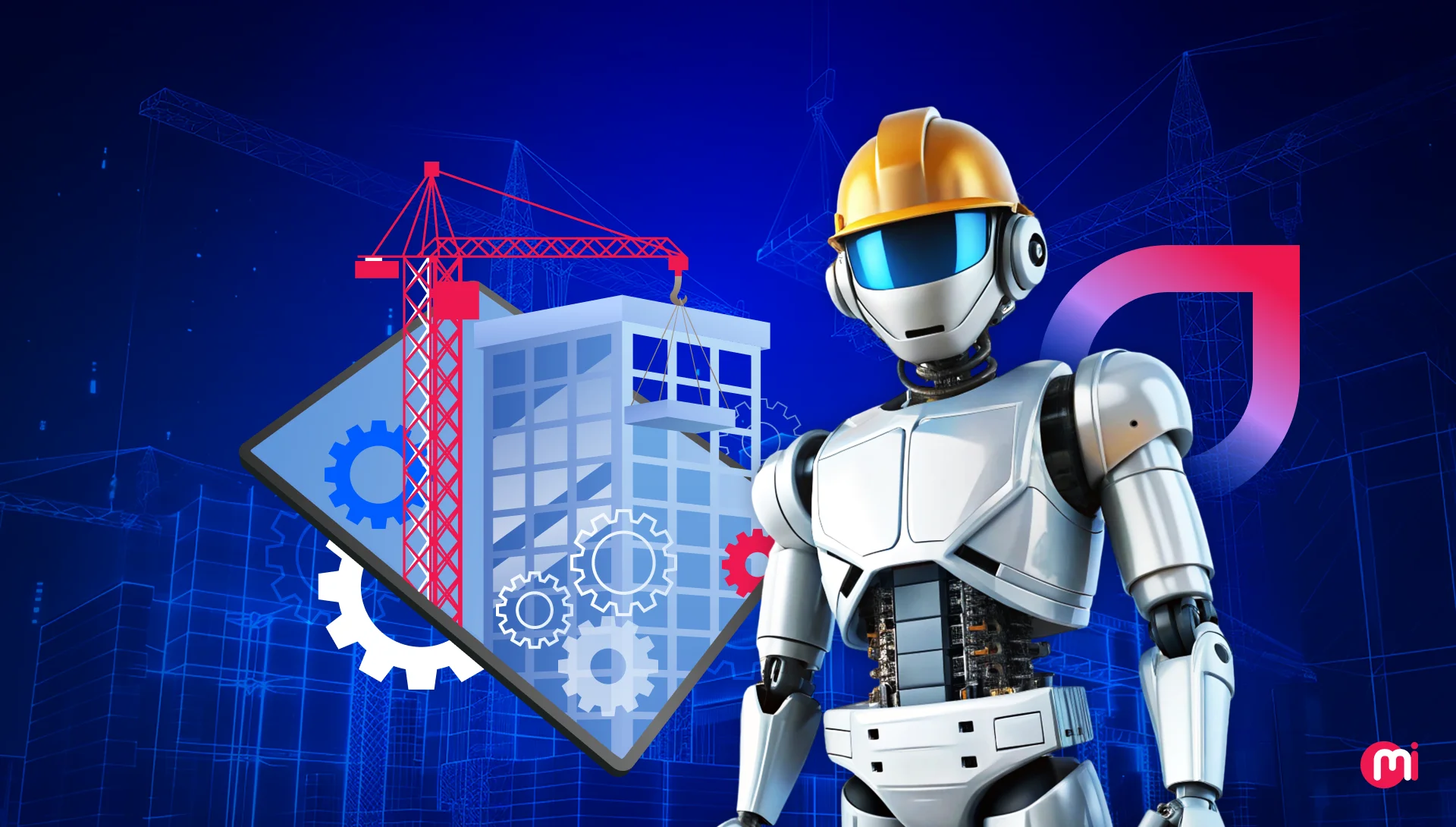
Artificial Intelligence (AI) is revolutionizing the construction industry, impacting all aspects from design and planning to safety and resource management. This technology is reshaping traditional workflows and taking charge of various processes. In this comprehensive guide, we will delve into the world of AI in construction, covering types, examples, benefits, and use cases.
The integration of AI in construction can bring about significant transformations by offering innovative solutions that enhance safety, efficiency, and project management. Projects are now planned, executed, and maintained with greater simplicity and precision, thanks to AI.
AI has emerged as a game-changer for the construction sector, prompting many companies to seek the expertise of specialized AI and Machine Learning development firms to implement transformative solutions.
From automating machinery to streamlining construction processes and predicting issues beforehand, AI is leading the way. By leveraging AI in construction, human errors, costs, and other inefficiencies are minimized, ensuring smart decision-making based on data-driven insights.
Recent statistics on AI in construction, collected by Global Market Insights, indicate that the market size was valued at $2.5 billion in 2022 and is expected to grow at a CAGR of 20% by 2032.
This growth trajectory signifies enhanced efficiency and productivity in the sector through optimized product scheduling, resource allocation, and task management, leading to reduced timelines and costs. Let’s delve deeper into this transformative technology.
Key Takeaways
- AI is revolutionizing the construction business by bridging the gap between project planning and on-site execution, converting vast data into actionable insights for improved efficiency, safety, and profitability.
- Benefits of AI in construction include better project management, cost reduction, accurate timeline estimation, proactive risk management, and data-driven decision-making.
- Real-time use cases of AI in construction demonstrate its value across preconstruction, construction, and post-construction phases, providing significant benefits throughout the project lifecycle.
AI in Construction
Insights from Research and Markets reveal that the global market for AI in construction was valued at US$2.4 billion in 2024 and is projected to reach US$12.1 billion by 2030, growing at a CAGR of 31.0% from 2024 to 2030.
This underscores the substantial benefits AI can offer throughout construction projects, from preconstruction to post-construction maintenance. Companies can leverage AI for processing power and predictive insights to enhance design, construction, and maintenance processes.
For instance, AI chatbots can save companies valuable time in completing basic tasks, while predictive analysis can recommend project changes that lead to significant cost savings. The integration of AI empowers construction firms to control rising costs, anticipate supply chain disruptions, find qualified workers, and boost productivity.
Examples of How to Use AI in Construction
Exploring the benefits of AI in construction reveals innovative tools that drive industry advancements. Here are examples of how companies are currently utilizing AI in construction:
Example 1: Construction AI for Design and Planning
AI is revolutionizing the design and planning stages by providing advanced tools to architects, engineers, and professionals, streamlining processes and enhancing decision-making.
One significant advancement is AI-powered Building Information Modeling (BIM), a 3D model-based process integrating various plans for more comprehensive project visualization.
Example 2: AI in Project Management
Advanced AI tools analyze photo and video footage from work sites, offering real-time insights to track progress and crew productivity.
With a data-driven approach, managers can address issues as they arise, make project timeline adjustments, and visualize project stages using 3D models and BIM.
Example 3: AI in Project Planning
AI-powered drones capture aerial views of construction sites, collecting high-resolution data for enhanced project monitoring.
Early detection of material placement deviations allows project managers to address potential issues before they escalate into costly delays.
Example 4: Predictive Maintenance to Detect Anomalies
Predictive maintenance with AI detects equipment anomalies, extending machinery life, enhancing site safety, and preventing costly downtime.
AI analyzes sensor data like vibration and temperature to identify potential equipment issues, improving overall equipment management.
Example 5: AI in Bidding and Negotiating
AI streamlines bidding and negotiation processes, reducing turnaround times, enhancing accuracy, and facilitating bid comparison for project teams.
By leveraging AI tools, project teams can efficiently review bids and negotiate contracts, improving overall project efficiency.
Example 6: Enhanced Communication with AI
AI-powered tools enable seamless communication and collaboration among project teams, regardless of location.
Custom AI chatbots provide real-time access to safety protocols and project information, while virtual and augmented reality tools enhance collaboration and visualization of project plans.
Example 7: Boost Job Site Productivity with AI
AI solutions on job sites expedite project completion, enhance safety, and optimize resource allocation.
Advanced AI-powered machinery, such as self-driving equipment, improves on-site productivity and accuracy, while technologies like facial recognition and real-time monitoring track worker performance.
AI Use Cases in the Construction Industry
AI applications are prevalent in every construction phase, offering impactful use cases throughout the project lifecycle:
Preconstruction
AI enhances project preconstruction activities, including design development, risk analysis, scheduling, and permitting, by automating tasks and preventing errors.
Improved Building Information Modeling (BIM) automatically detects clashes in 3D models, preventing on-site errors and enhancing project efficiency.
Construction
During execution, AI aids in project management with predictive analytics to anticipate issues like supply chain disruptions and equipment maintenance needs.
Predictive maintenance with AI forecasts equipment maintenance requirements, reducing downtime and preventing malfunctions.
Post Construction
After project completion, AI adds value by quantifying risk possibilities and providing insights for informed decision-making to prevent future issues.
AI integration in software development allows for analysis of historical and real-time data, enhancing post-construction maintenance processes.
Conclusion
AI is transforming the construction sector, improving schedules, ensuring site safety, and enhancing overall efficiency. The future of AI in construction lies in augmenting human expertise, empowering teams to build more efficiently and sustainably.
By partnering with expert AI development services like MindInventory, construction firms can unlock data-driven insights, automate processes, and gain a competitive edge in the industry.
Whether enhancing project planning with predictive analysis or improving safety with computer vision, the right technology partner can help navigate the construction landscape. By embracing AI integration and comprehensive software development services, construction companies can innovate and build the future today.
FAQs AI in Construction
AI is utilized in construction to enhance workflows, improve safety, and optimize decision-making. It analyzes data to identify risks, streamline scheduling, and ensure quality control throughout projects.
AI assists construction businesses in streamlining proposals, optimizing marketing efforts, and enhancing project delivery to attract more business. It improves resource management and marketing materials, setting companies apart in the competitive market.
Integrating AI in construction offers numerous benefits, including faster project timelines, cost reduction, enhanced safety, improved resource allocation, predictive analysis, and risk mitigation.
Common AI technologies in construction include machine learning for predictive analysis, computer vision for defect detection, Internet of Things for real-time monitoring, generative design for building optimization, and AI-powered collaboration platforms for efficiency.
The future of AI in construction points towards a highly integrated, automated, and predictive industry. AI will serve as the foundational operating system throughout the project lifecycle, with advancements in hyper automation, generative designs, predictive risk management, and a connected workforce.












The Anticipated Arrival of the Entry-Level iPad

The Future of Brand Discovery: AEO vs. GEO in the Age of AI (2026)

Government Announces Crackdown on Gouging Amid Record Fuel Prices

iPhone 12 vs iPhone 12 Pro / 11 Pro Max / 11 Pro / 11 / XR / SE Battery Life DRAIN Test.

TeamPCP Releases Telnyx Versions on PyPI, Conceals Malicious Stealer in WAV Files

The Sunday Gazette: Gaming News and Reviews

Y Combinator Graduate Glimpse Secures $35M Funding Round with a16z Leading Investment

Upgrade to iOS 26.4: The Latest and Greatest Features

Koenigsegg Gemera Hits the Production Line: A 6-Year Journey from Unveiling to Reality

EU Takes Action Against Instagram and Facebook for Violating Illegal Content Rules

Warning: Facebook Creators Face Monetization Loss for Stealing and Reposting Videos

Facebook Compliance: ICE-tracking Page Removed After US Government Intervention

Facebook’s New Look: A Blend of Instagram’s Style

Facebook and Instagram to Reduce Personalized Ads for European Users

InstaDub: Meta’s AI Translation Tool for Instagram Videos

Reclaim Your Account: Facebook and Instagram Launch New Hub for Account Recovery

Meta discontinues Messenger apps for Windows and macOS

Breaking Updates: Meta Connect 2025 Unveils Latest Developments
iPhone 12 vs iPhone 12 Pro / 11 Pro Max / 11 Pro / 11 / XR / SE Battery Life DRAIN Test.

19 Smartphone Gadgets that Blew me Away.

iPhone 12 Pro Max Unboxing & Review!

iPhone 12 Pro Max vs Samsung Note 20 Ultra / Huawei Mate 40 Pro Camera Test Comparison.

iPhone 12 Pro Max vs Samsung Note 20 Ultra / Huawei / Xiaomi / OnePlus Battery Life DRAIN Test.

The BEST Smartphone of 2020 🏆

The Self-Healing Smartphones!

Apple is not what it used to be.

Smartphones are Boring now.
-
 Facebook5 months ago
EU Takes Action Against Instagram and Facebook for Violating Illegal Content Rules
-
 Facebook6 months ago
Warning: Facebook Creators Face Monetization Loss for Stealing and Reposting Videos
-
 Facebook6 months ago
Facebook Compliance: ICE-tracking Page Removed After US Government Intervention
-
 Facebook4 months ago
Facebook’s New Look: A Blend of Instagram’s Style
-
 Facebook4 months ago
Facebook and Instagram to Reduce Personalized Ads for European Users
-
 Facebook6 months ago
InstaDub: Meta’s AI Translation Tool for Instagram Videos
-
 Facebook4 months ago
Reclaim Your Account: Facebook and Instagram Launch New Hub for Account Recovery
-
 Apple5 months ago
Meta discontinues Messenger apps for Windows and macOS
