
Microsoft
The Future of Innovation: How a $3.1B Foundation is Revolutionizing Science and Technology

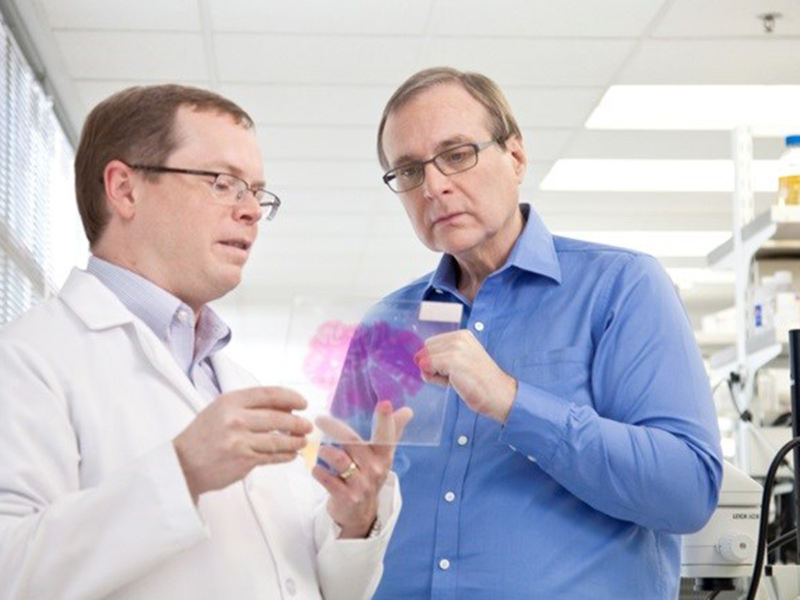
Even in the final years of his life, Microsoft co-founder Paul Allen was as excited as ever about what the future would bring for science, technology, and the world — telling GeekWire in a 2017 interview, “It really is a golden age of what’s possible.”
Allen’s optimism — and the impact of his wealth — will live on in a new nonprofit foundation charged with making bold bets on the future.
With an initial $3.1 billion endowment from the late Microsoft co-founder’s estate, the new Fund for Science and Technology will deploy at least $500 million over the next four years to accelerate progress in bioscience, the environment, and AI for good — starting with $15 million in grants to Seattle research institutions.
“Our primary role is to ask big questions and have a big impact,” said Dr. Lynda Stuart, the CEO of the Seattle-based foundation, a physician-scientist with extensive experience in immunology and global health, in an interview with GeekWire.
The mission isn’t an interpretation of Allen’s wishes — it’s a direct implementation. Allen personally directed the foundation’s formation and focus areas before his 2018 death from complications of non-Hodgkin’s lymphoma.

From his early software work with Bill Gates to far-flung investments in tech and science, Allen was known as the “Idea Man.” Years later, the fact that bioscience, AI and the environment are not only still relevant but among the most important areas for research speaks to Allen’s “magical ability to see into the future,” Stuart said.
A representative of Allen’s estate confirmed that Allen himself also named the foundation’s board in his plans. It’s chaired by Allen’s sister, Jody Allen, and includes several others who knew and worked closely with Paul Allen in various capacities.
- Former Microsoft CEO Steve Ballmer, whose friendship with Allen was cemented in their post-Microsoft years over their involvement in the NBA.
- Allan Jones, former Allen Institute CEO, who worked directly with Allen to build the influential bioscience research organization.
- Dr. Thomas Daniel, Allen Institute board member and outgoing CEO of the Washington Research Foundation.
- Nancy Peretsman, a longtime investment advisor and managing director at investment bank Allen & Co. who counseled Allen on major investments.
“With this new foundation, we’re bringing Paul’s philanthropic vision to bear,” said Jody Allen, in a news release announcing the milestone.
The creation of the foundation, known informally FFST, is also a major step toward answering the longstanding question of what would happen to the wealth that Allen amassed starting with Microsoft’s 1986 stock market debut.
While the separate Allen Family Philanthropies will continue to support a wide range of community and arts initiatives — such as its recent $10 million grant to 930 arts and culture organizations across Washington state — FFST is structured to handle large-scale funding for high-impact science and technology projects.
The foundation is emerging from the extended process of selling many of Allen’s far-flung assets — luxury properties, yachts, museums, art, vintage computers, and more — and focusing the proceeds on his long-term philanthropic priorities. That process of estate administration is still under way, and it’s expected to continue for years given the size and complexity of what Allen left behind.
FFST’s endowment could grow substantially in future years with the expected sale of the Portland Trail Blazers NBA franchise and eventually the Seahawks NFL team.
All proceeds from the sale of the teams will go to philanthropic causes, as Allen directed, confirmed Jason Hunke, a spokesperson for the Paul G. Allen Estate. He declined to say whether FFST would get the bulk of the proceeds, explaining that details of the broader plan will be “revealed at the appropriate time” in the future.
In the meantime, FFST already ranks among the top U.S. philanthropies, particularly in science and technology, in the realm of others such as the Simons Foundation ($3.5 billion), and the Alfred P.
The Fred Hutchinson Foundation for Science and Technology (FFST) is a new foundation with a focus on frontier science, contrasting itself with the Gates Foundation. The Gates Foundation is known for its later-stage work on delivery into the field, while FFST is more of a “discovery organization.”
The foundation, with an initial team of six people, is based in Seattle, housed in the building that also houses Vale Group, formerly known as Allen’s Vulcan holding company. The Allen estate, known for funding the UW’s Allen School of Computer Science & Engineering, also started the bioscience-focused Allen Institute and the Allen Institute for AI (Ai2).
FFST’s funding priorities will be driven by its strategy, which will be revealed over time. The foundation’s initial focus is on Seattle, with an initial $15 million investment in “centers of excellence” to encourage scientific collaboration and strengthen the region as a powerhouse in the areas of focus.
Initial grant recipients include the Benaroya Research Institute (BRI), University of Washington College of the Environment, Fred Hutchinson Cancer Center, and Seattle Children’s. These grants support various research projects related to understanding the human immune system, tackling climate change, fighting cancer and autoimmune diseases, and developing new treatments for children.
The foundation’s launch comes at a time when many scientific organizations are facing challenges in federal funding. The grants provided by FFST will support vital infrastructure and research projects that may otherwise struggle to secure funding in an unstable environment.
The grant to the Benaroya Research Institute will support its biorepository, a collection of biological samples that allow for rapid testing of new ideas about the immune system. This type of core infrastructure is crucial for many projects but often difficult to support through traditional grants.
Similarly, the grant to Seattle Children’s will ensure continued funding for research and development of off-the-shelf cell therapies, particularly important in a time when federal support for scientific research is under scrutiny.
Overall, FFST aims to make a lasting impact in science and technology, guided by its larger mission aligned with Paul Allen’s vision. The foundation’s funding offers a unique opportunity for the scientific community to come together and reimagine how progress can be made in various fields.












Bearlyfy Strikes Russian Companies with Unique GenieLocker Ransomware Attack

Innovative Ventures: The 8 Startups Investors Can’t Resist from YC Demo Day

The Future of iPhone Cameras: Is a 200 MP Lens Coming Soon?

Celebrating the First iX3 Delivery at BMW’s Debrecen Factory

iPhone 12 Pro Max vs Samsung Note 20 Ultra / Huawei / Xiaomi / OnePlus Battery Life DRAIN Test.

Stealthy Malware: The Hidden Threat Within Telnyx PyPI Package

Harvest of Suspicion: Grave Seasons Murder Mystery Farming Sim Arrives in August

Tech Giants Clash: OpenAI Halts Sora as Meta Faces Legal Setback

Apple’s AI Playlist Playground: Where Music Goes to Die

EU Takes Action Against Instagram and Facebook for Violating Illegal Content Rules

Warning: Facebook Creators Face Monetization Loss for Stealing and Reposting Videos

Facebook Compliance: ICE-tracking Page Removed After US Government Intervention

Facebook’s New Look: A Blend of Instagram’s Style

Facebook and Instagram to Reduce Personalized Ads for European Users

InstaDub: Meta’s AI Translation Tool for Instagram Videos

Reclaim Your Account: Facebook and Instagram Launch New Hub for Account Recovery

Meta discontinues Messenger apps for Windows and macOS

Breaking Updates: Meta Connect 2025 Unveils Latest Developments
iPhone 12 Pro Max vs Samsung Note 20 Ultra / Huawei / Xiaomi / OnePlus Battery Life DRAIN Test.

The BEST Smartphone of 2020 🏆

The Self-Healing Smartphones!

Apple is not what it used to be.

Smartphones are Boring now.

The Fastest Android Phone Ever.

Unboxing the $122,000 Smartphone. 🤯

Are Linux Smartphones about to KILL Android?

15 Smartphone FAILS to ruin your day 😂
-
 Facebook5 months ago
EU Takes Action Against Instagram and Facebook for Violating Illegal Content Rules
-
 Facebook5 months ago
Warning: Facebook Creators Face Monetization Loss for Stealing and Reposting Videos
-
 Facebook5 months ago
Facebook Compliance: ICE-tracking Page Removed After US Government Intervention
-
 Facebook4 months ago
Facebook’s New Look: A Blend of Instagram’s Style
-
 Facebook4 months ago
Facebook and Instagram to Reduce Personalized Ads for European Users
-
 Facebook5 months ago
InstaDub: Meta’s AI Translation Tool for Instagram Videos
-
 Facebook4 months ago
Reclaim Your Account: Facebook and Instagram Launch New Hub for Account Recovery
-
 Apple5 months ago
Meta discontinues Messenger apps for Windows and macOS
