
AI
The Future of Work: Humanoid Robots in the Workplace

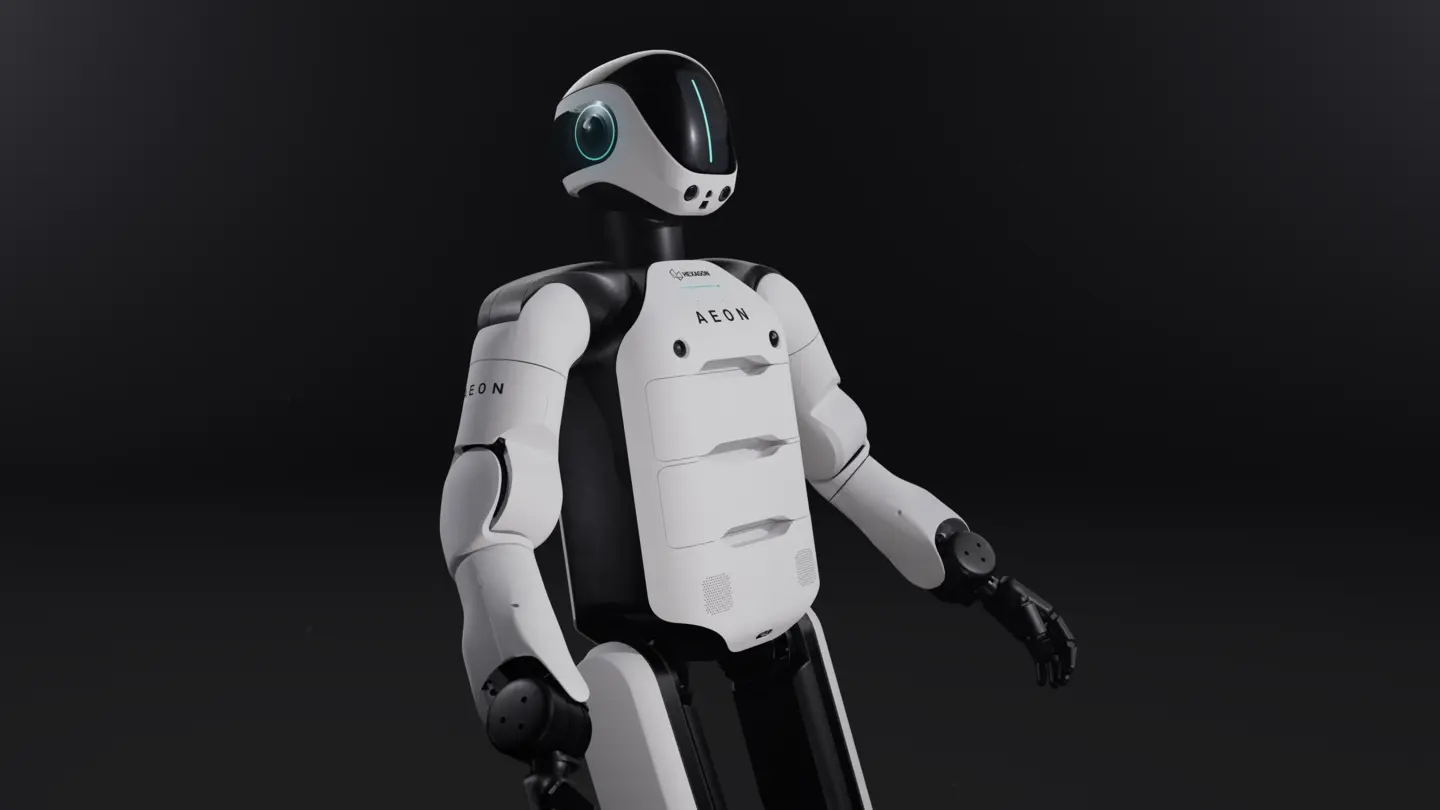
The Future of Humanoid Robots in Industrial Environments
Microsoft and Hexagon Robotics have recently joined forces to revolutionize the field of humanoid, AI-powered robots in industrial settings. This collaboration signifies a significant advancement in the commercialization of physical AI systems, merging Microsoft’s cloud and AI infrastructure with Hexagon’s expertise in robotics, sensors, and spatial intelligence.
The focal point of this partnership is AEON, Hexagon’s industrial humanoid robot designed to function autonomously in various industrial environments such as factories, logistics hubs, engineering plants, and inspection sites.
Through this collaboration, the emphasis will be on multimodal AI training, imitation learning, real-time data management, and integration with existing industrial systems. The initial target industries include automotive, aerospace, manufacturing, and logistics, where labor shortages and operational complexities are hindering financial growth.
The Evolution of Humanoid Robots
While humanoid robots have long been a subject of research and technology showcases, the past few years have seen a shift towards practical deployment in real-world industrial settings. Advancements in perception, reinforcement learning, and the availability of scalable cloud infrastructure have enabled this transition.
Agility Robotics’ Digit and Tesla’s Optimus program are prime examples of humanoid robots being utilized in logistics, warehouse operations, and automotive manufacturing facilities. These robots are designed to augment human workers by handling physically demanding tasks.
Applications in Inspection and Hazardous Environments
Humanoid and quasi-humanoid robots are finding early success in industrial inspection tasks. Boston Dynamics’ Atlas has been utilized in live industrial trials for inspection and disaster-response scenarios, showcasing its ability to navigate challenging terrains and manipulate tools in hazardous environments.
Toyota Research Institute has also deployed humanoid robotics platforms for remote inspection and manipulation tasks, leveraging multimodal perception and human-in-the-loop control for optimal performance.
The Role of Cloud Platforms in Robotics
The partnership between Microsoft and Hexagon underscores the importance of cloud infrastructure in scaling humanoid robots. Utilizing platforms like Azure and Azure IoT Operations allows for fleet-wide training, updating, and monitoring of physical AI systems, leading to shared learning and improved consistency.
With humanoid robots becoming more integrated into industrial environments, they offer a solution to address labor shortages and operational challenges in sectors such as manufacturing and logistics.
Considerations for Investment
Before investing in humanoid robots, decision-makers should focus on task specificity, data governance, security, and workforce integration. While humanoid robots won’t replace human workers entirely, they offer a way to stabilize operations in uncertain human availability scenarios.
As humanoid robots continue to evolve and demonstrate their value in real-world applications, the question for businesses is not if, but when to adopt this technology on a larger scale.
(Image source: Hexagon Robotics)
Want to learn more about AI and big data from industry leaders? Check out the AI & Big Data Expo taking place in Amsterdam, California, and London. The event is part of TechEx and co-located with other leading technology events. Explore upcoming enterprise technology events and webinars hosted by TechForge Media here.













Troubleshooting HDMI Audio: Essential Fixes & More Tips

Unveiling the Powerhouse: Mercedes-AMG GT Black Series with Dynamic Aero System Spotted at Nurburgring

iPhone 12 Pro Max Unboxing & Review!

European Commission Launches Investigation into Amazon Cloud Account Breach

Drama and Dollars: The Evolution of Soap Opera-TikTok Hybrids

Maximizing MacBook Battery Life: Tips for Charging Slowly and Setting Charge Limits

Lost Legacy: The Disappearance of AC Schnitzer and the Changing Automotive Landscape

Cyber Warfare: The Battlefront of the Digital Age

Monster Hunter Stories 3: The Challenge of Twisted Reflection

EU Takes Action Against Instagram and Facebook for Violating Illegal Content Rules

Warning: Facebook Creators Face Monetization Loss for Stealing and Reposting Videos

Facebook Compliance: ICE-tracking Page Removed After US Government Intervention

Facebook’s New Look: A Blend of Instagram’s Style

Facebook and Instagram to Reduce Personalized Ads for European Users

InstaDub: Meta’s AI Translation Tool for Instagram Videos

Reclaim Your Account: Facebook and Instagram Launch New Hub for Account Recovery

Meta discontinues Messenger apps for Windows and macOS

Breaking Updates: Meta Connect 2025 Unveils Latest Developments
iPhone 12 Pro Max Unboxing & Review!

iPhone 12 Pro Max vs Samsung Note 20 Ultra / Huawei Mate 40 Pro Camera Test Comparison.

iPhone 12 Pro Max vs Samsung Note 20 Ultra / Huawei / Xiaomi / OnePlus Battery Life DRAIN Test.

The BEST Smartphone of 2020 🏆

The Self-Healing Smartphones!

Apple is not what it used to be.

Smartphones are Boring now.

The Fastest Android Phone Ever.

Unboxing the $122,000 Smartphone. 🤯
-
 Facebook5 months ago
EU Takes Action Against Instagram and Facebook for Violating Illegal Content Rules
-
 Facebook6 months ago
Warning: Facebook Creators Face Monetization Loss for Stealing and Reposting Videos
-
 Facebook6 months ago
Facebook Compliance: ICE-tracking Page Removed After US Government Intervention
-
 Facebook4 months ago
Facebook’s New Look: A Blend of Instagram’s Style
-
 Facebook4 months ago
Facebook and Instagram to Reduce Personalized Ads for European Users
-
 Facebook6 months ago
InstaDub: Meta’s AI Translation Tool for Instagram Videos
-
 Facebook4 months ago
Reclaim Your Account: Facebook and Instagram Launch New Hub for Account Recovery
-
 Apple5 months ago
Meta discontinues Messenger apps for Windows and macOS
