
Cars
The Growing Concern: Europe’s Hydrogen Race Slipping Away, BMW Warns


BMW Group CEO Oliver Zipse is sharpening his warning that Europe—and Germany in particular—is falling behind in the global race to industrialize hydrogen technologies. Speaking at the Automobilwoche Kongress in November, he emphasized, according to Automotive News, that the biggest investments in next-generation drivetrains are now happening in Asia and the United States, not in Europe. In his view, hydrogen has moved from a niche experiment to a strategic technology that other regions are scaling far more aggressively.
Zipse noted that while Europe has directed the majority of its regulatory and political focus toward battery-electric vehicles, countries such as China, Japan, Korea, and the U.S. (especially California) are building long-term strategies that treat hydrogen as a serious pillar of future mobility.
BMW Remains One of Europe’s Last Hydrogen Holdouts

Among European automakers, BMW stands out almost alone in continuing to develop hydrogen fuel cell passenger vehicles. The company has decades of experience in the field, starting with hydrogen combustion experiments in the early 2000s and evolving into modern fuel cell systems that operate much like battery-electric vehicles, but with electricity generated onboard.
Unlike combustion prototypes of past decades, today’s fuel cell architecture is built around electric motors and shares much of its hardware with BMW’s BEVs. The difference is how energy is stored and generated. This is where BMW sees value: fast refueling, consistent performance in very cold or very hot climates, and lighter onboard energy storage for long-distance driving.
iX5 Hydrogen to Enter Production in 2028

The clearest example of BMW’s continued commitment is the iX5 Hydrogen. After several years of global testing and a dedicated pilot fleet, BMW will move the vehicle into series production in 2028. Volumes will remain relatively low, but this marks the first time BMW will build a hydrogen-powered model as part of its regular manufacturing roadmap, not just as a technology showcase.
The fuel cell stack is produced in Germany, the hydrogen tanks store gas at very high pressure, and a compact battery buffer supplies short bursts of power during hard acceleration. The entire system was engineered to integrate into the existing X5 platform with minimal structural changes. That compatibility is a key part of BMW’s belief that future platforms need to remain flexible rather than locked to a single propulsion type.
Public Funding Helps, but Not Enough to Catch Up
BMW’s fuel cell development is supported by €273 million in public funding from the German federal government and the state of Bavaria through the EU’s IPCEI Hydrogen initiative. The investment is intended to support industrialization of a scalable fuel cell powertrain for passenger vehicles.
Even with this support, Zipse argued that Germany is not advancing fast enough compared with regions that treat hydrogen as an industrial priority. He warned that if Europe continues to rely on a narrow interpretation of future mobility, the continent risks losing influence over an entire technology sector.
Skepticism Remains Strong
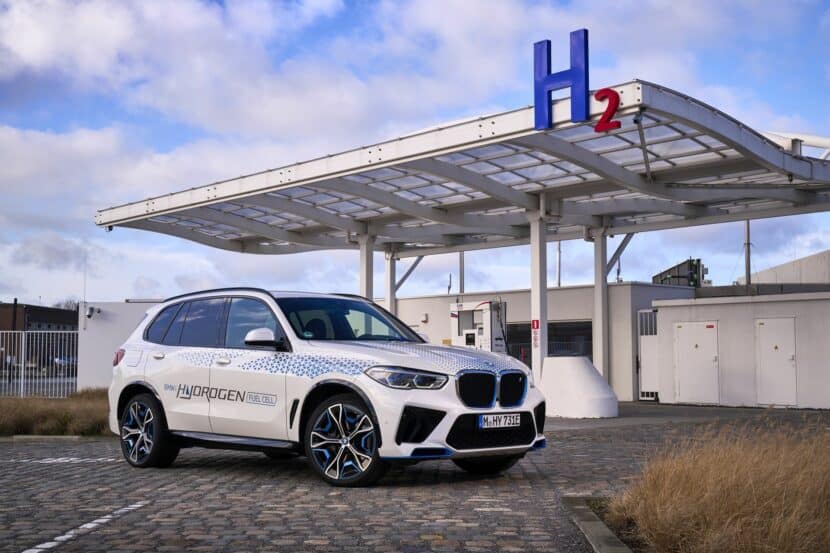
Many analysts remain unconvinced that hydrogen has a meaningful future in passenger cars. Critics argue that fuel cell vehicles are still expensive to produce, lack infrastructure, and trail far behind BEVs in maturity. Some also say the efficiency losses in hydrogen production and distribution make it difficult for the technology to compete on cost.
These views reflect the broader policy environment BMW finds itself in: Europe has largely aligned itself behind battery-electric mobility and expects BEVs to dominate new car sales from the mid-2030s onward.
Zipse Pushes Back on EU’s Regulatory Direction

Zipse has become one of the industry’s strongest voices criticizing the EU’s “tailpipe-only” regulatory framework. He argues that the current rules ignore the broader decarbonization work automakers are already doing, from low-carbon steel sourcing to renewable-powered factories and cleaner supply chains. In his view, regulations should account for a vehicle’s entire lifecycle emissions, not just what comes out of the exhaust.
BMW’s position is that relying on a single technology increases risk and reduces Europe’s industrial resilience.
BMW’s Versatile Platform Strategy and the Role of Hydrogen in its Future
BMW’s CEO, Zipse, emphasized the importance of the company’s flexible platform strategy, which allows for the production of various types of vehicles, including BEVs, hybrids, combustion engines, and hydrogen fuel cell models, all based on the same basic structure. This strategy is crucial for BMW to cater to global markets with different infrastructure realities and energy constraints.
BMW’s Vision for Hydrogen Technology
Hydrogen fuel cell vehicles are not meant to replace BEVs in BMW’s lineup. Instead, the company views them as a viable alternative in specific scenarios. These scenarios include markets lacking reliable fast-charging networks, regions with limited electrical grid capacity, and situations where range consistency and quick refueling are essential, such as long-distance driving or carrying heavy loads. BMW also sees hydrogen as an option for customers who find it challenging to fully embrace a pure battery-electric lifestyle.
While BMW’s hydrogen program is currently operating at low volume, the decision to move towards series production of the iX5 Hydrogen represents a significant shift for the company. Zipse mentioned a growing interest from international partners and anticipates that hydrogen will play a more substantial role in BMW’s vehicle lineup in the coming years, provided that Europe makes progress in infrastructure development, funding support, and regulatory adaptability.
Zipse’s statement was clear: if Europe does not prioritize the development of hydrogen technology, other regions are ready to take the lead in this area.

“Please remember to bring your ID for the event.”
into
“Don’t forget to bring your ID to the event.”








Porsche 911 GT3 RS Facelift: Unveiling the 992.2 Model in August 2026

Bearlyfy Strikes Russian Companies with Unique GenieLocker Ransomware Attack

Innovative Ventures: The 8 Startups Investors Can’t Resist from YC Demo Day

The Future of iPhone Cameras: Is a 200 MP Lens Coming Soon?

Celebrating the First iX3 Delivery at BMW’s Debrecen Factory

iPhone 12 Pro Max vs Samsung Note 20 Ultra / Huawei / Xiaomi / OnePlus Battery Life DRAIN Test.

Stealthy Malware: The Hidden Threat Within Telnyx PyPI Package

Harvest of Suspicion: Grave Seasons Murder Mystery Farming Sim Arrives in August

Tech Giants Clash: OpenAI Halts Sora as Meta Faces Legal Setback

EU Takes Action Against Instagram and Facebook for Violating Illegal Content Rules

Warning: Facebook Creators Face Monetization Loss for Stealing and Reposting Videos

Facebook Compliance: ICE-tracking Page Removed After US Government Intervention

Facebook’s New Look: A Blend of Instagram’s Style

Facebook and Instagram to Reduce Personalized Ads for European Users

InstaDub: Meta’s AI Translation Tool for Instagram Videos

Reclaim Your Account: Facebook and Instagram Launch New Hub for Account Recovery

Meta discontinues Messenger apps for Windows and macOS

Breaking Updates: Meta Connect 2025 Unveils Latest Developments
iPhone 12 Pro Max vs Samsung Note 20 Ultra / Huawei / Xiaomi / OnePlus Battery Life DRAIN Test.

The BEST Smartphone of 2020 🏆

The Self-Healing Smartphones!

Apple is not what it used to be.

Smartphones are Boring now.

The Fastest Android Phone Ever.

Unboxing the $122,000 Smartphone. 🤯

Are Linux Smartphones about to KILL Android?

15 Smartphone FAILS to ruin your day 😂
-
 Facebook5 months ago
EU Takes Action Against Instagram and Facebook for Violating Illegal Content Rules
-
 Facebook5 months ago
Warning: Facebook Creators Face Monetization Loss for Stealing and Reposting Videos
-
 Facebook5 months ago
Facebook Compliance: ICE-tracking Page Removed After US Government Intervention
-
 Facebook4 months ago
Facebook’s New Look: A Blend of Instagram’s Style
-
 Facebook4 months ago
Facebook and Instagram to Reduce Personalized Ads for European Users
-
 Facebook5 months ago
InstaDub: Meta’s AI Translation Tool for Instagram Videos
-
 Facebook4 months ago
Reclaim Your Account: Facebook and Instagram Launch New Hub for Account Recovery
-
 Apple5 months ago
Meta discontinues Messenger apps for Windows and macOS
