
Amazon
The Reign of Amazon’s Cloud Empire and the Future of AI: A GeekWire Analysis

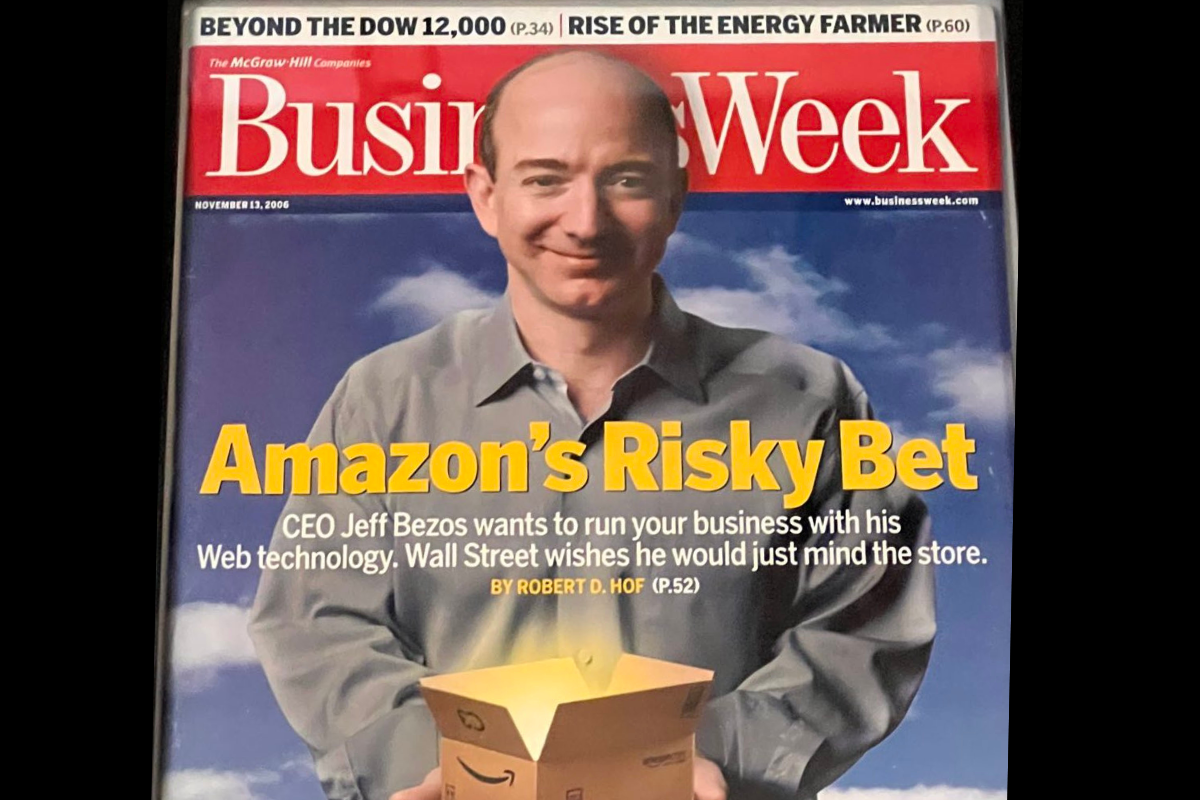
But even as Amazon’s web services business grew, it was still a side project, separate from the company’s core e-commerce business, and largely unnoticed by the outside world, as former Amazon VP Adam Selipsky told GeekWire in 2013.
Bezos, however, was paying attention. In the spring of 2003, he asked Selipsky to create a business plan for the web services unit, and when Selipsky presented it, he got the green light to start building out the team.
Bryar, who had moved on to other roles at Amazon, returned to lead business development for the web services unit, and the effort picked up steam. In a 2016 interview with GeekWire, Bryar said the business started to take off after the team launched EC2, the Elastic Compute Cloud, which allowed developers to “rent” computing power by the hour, as Barr had been pitching on the road.
“The rest is history,” Bryar said.
The current challenge
But now, as AWS marks its 20th anniversary, the company is grappling with new challenges. Microsoft Azure, Google Cloud, and others are nipping at its heels, and the rise of AI is creating new competitive dynamics in the industry.
While AWS remains the market leader in cloud computing, the question remains: can it continue to innovate and stay ahead in a rapidly changing landscape?
As AWS looks to the future, it faces tough competition and new technological challenges. But as the company that defined cloud computing, it has a track record of innovation and success that suggests it may be able to rise to the occasion once again.
As they continued to ask for services like storage, hosting, and compute, Frederick, who worked at Amazon until mid-2006, recalled the shift in developer requests. This shift may have opened the minds of Amazon’s leaders to bigger opportunities. Another early Amazon employee, Dave Schappell, who joined in 1998 as Andy Jassy’s MBA intern, also noticed this change. Schappell went on to work with Jassy for seven years, running the associates program and becoming an early head of product for AWS.
Schappell played a key role in hiring the original product managers for AWS, including Jeff Lawson, who later founded Twilio. Schappell himself became a successful entrepreneur in Seattle before returning to AWS for four years after Amazon acquired his startup TeachStreet.
Jeff Barr, now an Amazon VP and AWS chief evangelist, was one of the developers who recognized the potential of Amazon’s new product catalog web service in 2002. This move to offer product data through APIs was a pivotal moment that caught the attention of developers like Barr, who quickly signed up for the beta and provided feedback to Amazon.
The shift towards creating what we now know as the cloud began in mid-2003 when Andy Jassy, then Bezos’s technical advisor, identified the inefficiencies in building software solutions from scratch. This led to the realization that other companies likely faced similar challenges. With the recruitment of Werner Vogels as chief technology officer and the focus on breaking down capabilities into fundamental building blocks, AWS started to take shape.
The philosophy of building fault-tolerant systems, with servers touched only twice during their lifecycle, became a cornerstone of AWS’s architecture. The streamlined decision-making process and focus on customer usage-based billing set AWS apart from traditional licensing models.
The early days of AWS were marked by intense collaboration and focus on building the most basic building blocks for cloud services. The commitment to fault tolerance, scalability, and customer-centric pricing laid the foundation for what would become a game-changing platform in the tech industry. Singh remembered Cohen’s response, “Yeah, you’re really smart, aren’t you? Let’s see if you can actually build this,” which eventually led to the creation of Simple Storage Service, or S3.
While the queuing service SQS had launched in 2004 in beta, S3 was the first service made generally available. Jassy, who was then the VP in charge of AWS, would hold meetings with a small team of engineers, emphasizing that AWS could become a billion-dollar business, even though it had no revenue at the time.
Despite being skeptical at first, Singh later joked with Jassy that the prediction was wrong, as AWS became a multi-billion dollar business. Early customers like FilmmakerLive and CastingWords took a bet on the fledgling platform, changing the economics of building technology almost overnight.
Meanwhile, in Cape Town, Chris Pinkham set up a development office where his team built EC2, the Elastic Compute Cloud, largely independent of the Seattle operation. The local tech community was intrigued by Amazon’s presence in the city.
EC2 launched in August 2006, adding compute to storage as another fundamental building block of AWS and the cloud. Early customers, including a Spider-Man movie and Facebook apps like FarmVille, showcased EC2’s capabilities.
Brown joined the EC2 team in 2007, working out of a tiny office in Cape Town. The team faced challenges like a slow internet connection and limited computing capacity, but they were able to keep the service running.
Marc Brooker, who joined the EC2 team in 2008, was drawn to the team’s innovation in making a distributed system look like a physical hard drive to the operating system. The small team environment fostered camaraderie and pranks, like covering a colleague’s office in sticky notes. Here are 20 other things I can think of that we could do with that kind of technology:
1. Create more efficient supply chain forecasting systems
2. Enhance streaming infrastructure for media companies
3. Develop secure cloud solutions for government agencies
4. Improve pricing models for tech companies
5. Expand raw computing infrastructure offerings
6. Build platforms for running applications
7. Implement cloud-based solutions for large enterprises
8. Enhance financial reporting and analytics
9. Optimize revenue generation strategies
10. Facilitate remote work and collaboration
11. Enable data storage and management for businesses
12. Enhance customer service through AI and automation
13. Improve cybersecurity measures for online platforms
14. Develop personalized marketing strategies
15. Enhance e-commerce platforms for better user experience
16. Implement IoT solutions for smart homes and cities
17. Develop virtual reality and augmented reality applications
18. Enhance healthcare systems with cloud-based solutions
19. Create personalized learning platforms for education
20. Develop sustainable technology solutions for a greener future. Margins dropped to 24%. The investment eventually reached $8 billion, which was considered significant at the time. Selipsky departed AWS in mid-2024, and Garman took over as CEO, entrusted with guiding the cloud business into a new era.
Prior to the emergence of ChatGPT, Amazon had already been working on a generative AI service that could write code from plain English prompts. Initially met with skepticism internally, the project eventually evolved into CodeWhisperer in 2023. However, following the success of ChatGPT, the team pivoted to create Bedrock, a platform offering customers access to a variety of foundation models through a single service.
Bedrock, launched in 2023, quickly became the fastest-growing service in AWS history, attracting over 100,000 customers within two years. The platform’s success led Amazon to introduce its own family of foundation models called Nova in late 2024, positioned as a cost-effective alternative to third-party models on the Bedrock platform.
As AWS expanded its AI offerings, it also invested in building physical infrastructure to support them, including Project Rainier, a massive AI compute cluster in Indiana powered by Amazon’s Trainium2 chips. The project marked a shift in how AWS approached AI infrastructure, with a focus on minimizing the time between chip fabrication and customer workload deployment.
In a strategic move, OpenAI partnered with Amazon in a deal worth up to $50 billion in investment and a cloud agreement exceeding $100 billion over eight years. This partnership solidified Amazon’s position in the AI market and marked a significant milestone in the company’s growth trajectory.
By late 2025, AWS revenue was growing rapidly, with Trainium and Graviton chips contributing over $10 billion in annual revenue. The competitive landscape was also evolving, with Microsoft Azure and Google Cloud gaining ground. Despite increased competition, AWS remained a dominant force in the market, driving record capital spending to support its growth initiatives.
Amazon’s Ambitious AI Investment: A Deep Dive
During the latest earnings call, Amazon’s CEO Jassy stood firm in defending the company’s plan to allocate $200 billion this year, with a major focus on AI infrastructure.
The sheer magnitude of this figure would consume almost all of Amazon’s operating cash flow. In response to criticism from Wall Street, Jassy highlighted artificial intelligence as a unique opportunity that could revolutionize the scale of AWS and Amazon as a whole.
Exploring the Bear and Bull Cases
Industry experts are divided on Amazon’s AI strategy.
Cloud economist Corey Quinn, known for his work with AWS customers, expressed skepticism about Amazon’s Nova models, noting their limited real-world impact. He pointed out that some businesses opt for third-party providers like Anthropic over Amazon’s Bedrock platform due to capacity limitations and slower speeds.
Quinn drew a parallel with Cisco’s evolution from a tech giant to a more subdued entity over time, suggesting that AWS might follow a similar trajectory.
On the other hand, tech writer Om Malik criticized Amazon’s OpenAI investment, highlighting the high cost compared to Microsoft’s earlier deals and the lack of exclusive rights.
Former Amazon executive Rossman offered a contrasting view, emphasizing AWS’s strength in cloud infrastructure as a competitive advantage. He highlighted the importance of AWS’s vertical integration in delivering cost-effective AI solutions.
Rossman emphasized the significance of the underlying infrastructure, such as chips, servers, and data centers, as the true value drivers in the AI landscape.
In a recent internal meeting, Jassy projected that AI could propel AWS to $600 billion in annual revenue, doubling his previous estimate. He credited AI with reshaping his long-term revenue projections for AWS.
Regardless of the viewpoint, Amazon’s bold AI investment signals a strategic shift that could reshape the tech landscape for years to come.
Transform the following sentence into a question:
“The cat is sleeping peacefully on the windowsill.”
Is the cat sleeping peacefully on the windowsill?













Sneak Peek: The All-New 2027 BMW 7 Series Set to Shine in April

What happened to Beats by Dre?

The Reign of Amazon’s Cloud Empire and the Future of AI: A GeekWire Analysis

Unveiling the Dark Secrets of VoidStealer: How the Malware Steals Chrome Master Key with a Clever Debugger Trick

AI Artistry: Unveiling the Mystery of Crimson Desert’s Suspiciously Generated Creations

Revolutionizing Coding: The Moonshot AI Kimi Integration with Cursor
![Apple pushing back on 'vibe coding' iPhone apps, developers say [U]](https://bennetttechinnovation.com/wp-content/uploads/2026/03/Apple-Stands-Firm-Against-Vibe-Coding-iPhone-Apps-Defying-Developers-80x80.jpg)
Apple Stands Firm Against ‘Vibe Coding’ iPhone Apps, Defying Developers

Secure APK Sideloading: Harnessing the Power of Advanced Flow for Safe Android Installation

Gunvolt Chronicles: Luminous Avenger iX – The Complete Dual Collection

EU Takes Action Against Instagram and Facebook for Violating Illegal Content Rules

Warning: Facebook Creators Face Monetization Loss for Stealing and Reposting Videos

Facebook Compliance: ICE-tracking Page Removed After US Government Intervention

Facebook’s New Look: A Blend of Instagram’s Style

Facebook and Instagram to Reduce Personalized Ads for European Users

InstaDub: Meta’s AI Translation Tool for Instagram Videos

Reclaim Your Account: Facebook and Instagram Launch New Hub for Account Recovery

Meta discontinues Messenger apps for Windows and macOS

Breaking Updates: Meta Connect 2025 Unveils Latest Developments
What happened to Beats by Dre?

DON’T buy a Screen Protector before watching this.

Beware of Fake Reviewers! ⚠️

Xiaomi Mi 11 Unboxing & Review.

The Galaxy S21 Ultra is Better than you think.

Samsung Galaxy S21 Ultra vs iPhone 12 Pro Max Camera Test Comparison.

Samsung S21 Ultra vs iPhone Battery Life Test!

The Truth about Xiaomi “Air Charging”

DON’T buy this Smartphone.
-
 Facebook5 months ago
EU Takes Action Against Instagram and Facebook for Violating Illegal Content Rules
-
 Facebook5 months ago
Warning: Facebook Creators Face Monetization Loss for Stealing and Reposting Videos
-
 Facebook5 months ago
Facebook Compliance: ICE-tracking Page Removed After US Government Intervention
-
 Facebook3 months ago
Facebook’s New Look: A Blend of Instagram’s Style
-
 Facebook3 months ago
Facebook and Instagram to Reduce Personalized Ads for European Users
-
 Facebook5 months ago
InstaDub: Meta’s AI Translation Tool for Instagram Videos
-
 Facebook4 months ago
Reclaim Your Account: Facebook and Instagram Launch New Hub for Account Recovery
-
 Apple5 months ago
Meta discontinues Messenger apps for Windows and macOS
