
AI
The Rise of AI in Manufacturing: Revolutionizing Profitability in the Industry


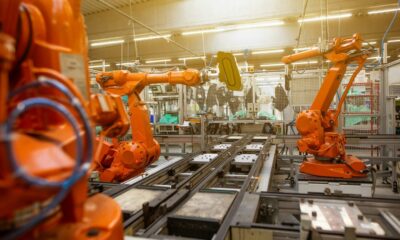
Manufacturing leaders are investing a significant portion of their modernization budgets in artificial intelligence (AI), with the expectation that these technologies will drive profits in the near future. According to the Future-Ready Manufacturing Study 2025 conducted by Tata Consultancy Services (TCS) and AWS, 88 percent of manufacturers believe that AI will contribute to at least five percent of their operating margin, with one in four expecting returns of over 10 percent.
Despite the optimism surrounding AI, there are challenges in translating financial forecasts into tangible outcomes on the factory floor. While investments in AI are increasing, there are concerns about the underlying data infrastructure and risk management strategies that still rely heavily on manual processes.
Manufacturers are heavily prioritizing AI investments over other areas such as workforce reskilling and cloud infrastructure modernization. This imbalance poses a challenge for CIOs who must navigate deploying advanced algorithms on outdated systems.
Anupam Singhal, President of Manufacturing at TCS, emphasizes the transformative potential of AI in enhancing decision-making processes and driving business outcomes in the manufacturing industry.
The industry’s heavy investment in predictive capabilities contrasts with its reliance on traditional safety measures during disruptions. While AI offers dynamic inventory optimization, many manufacturers still resort to stockpiling inventory and using physical safeguards.
Ozgur Tohumcu, General Manager of Automotive and Manufacturing at AWS, highlights the shift towards AI-powered autonomous operations that aim to enhance decision-making processes and operations in manufacturing.
The primary obstacle to realizing the full potential of AI in manufacturing lies in the quality and integration of data. Many manufacturers struggle with fragmented data systems and legacy infrastructure that hinder the effectiveness of AI algorithms.
The industry is moving towards agentic AI, where systems can make decisions with limited human oversight. This shift is expected to impact various aspects of manufacturing operations, with a focus on augmenting human roles rather than replacing them.
To convert AI investments into profitable outcomes, manufacturing leaders must prioritize modernizing data infrastructure, building trust in AI systems, and adopting a multi-platform approach to maintain flexibility and leverage in the evolving landscape.
In conclusion, the manufacturing industry’s increasing focus on AI presents both opportunities and challenges. By addressing key issues related to data quality, trust in AI systems, and platform strategy, manufacturers can maximize the benefits of AI investments and drive future success.











Maximizing MacBook Battery Life: Tips for Charging Slowly and Setting Charge Limits

Lost Legacy: The Disappearance of AC Schnitzer and the Changing Automotive Landscape

Cyber Warfare: The Battlefront of the Digital Age

Monster Hunter Stories 3: The Challenge of Twisted Reflection

Revolutionizing Cash-Pay Clinic Prescribing: VITL Secures $7.5M Amid GLP-1 Boom

Balancing Act: The Decision to Shut Down Sora

Exclusive Arrival: Cupra Born VZ Lands in Australia – But There’s a Twist!

iPhone 12 Pro Max vs Samsung Note 20 Ultra / Huawei Mate 40 Pro Camera Test Comparison.

ClickFix: The New Threat to macOS Security

EU Takes Action Against Instagram and Facebook for Violating Illegal Content Rules

Warning: Facebook Creators Face Monetization Loss for Stealing and Reposting Videos

Facebook Compliance: ICE-tracking Page Removed After US Government Intervention

Facebook’s New Look: A Blend of Instagram’s Style

Facebook and Instagram to Reduce Personalized Ads for European Users

InstaDub: Meta’s AI Translation Tool for Instagram Videos

Reclaim Your Account: Facebook and Instagram Launch New Hub for Account Recovery

Meta discontinues Messenger apps for Windows and macOS

Breaking Updates: Meta Connect 2025 Unveils Latest Developments
iPhone 12 Pro Max vs Samsung Note 20 Ultra / Huawei Mate 40 Pro Camera Test Comparison.

iPhone 12 Pro Max vs Samsung Note 20 Ultra / Huawei / Xiaomi / OnePlus Battery Life DRAIN Test.

The BEST Smartphone of 2020 🏆

The Self-Healing Smartphones!

Apple is not what it used to be.

Smartphones are Boring now.

The Fastest Android Phone Ever.

Unboxing the $122,000 Smartphone. 🤯

Are Linux Smartphones about to KILL Android?
-
 Facebook5 months ago
EU Takes Action Against Instagram and Facebook for Violating Illegal Content Rules
-
 Facebook5 months ago
Warning: Facebook Creators Face Monetization Loss for Stealing and Reposting Videos
-
 Facebook6 months ago
Facebook Compliance: ICE-tracking Page Removed After US Government Intervention
-
 Facebook4 months ago
Facebook’s New Look: A Blend of Instagram’s Style
-
 Facebook4 months ago
Facebook and Instagram to Reduce Personalized Ads for European Users
-
 Facebook6 months ago
InstaDub: Meta’s AI Translation Tool for Instagram Videos
-
 Facebook4 months ago
Reclaim Your Account: Facebook and Instagram Launch New Hub for Account Recovery
-
 Apple5 months ago
Meta discontinues Messenger apps for Windows and macOS
