
Mobile Tech
The Secret Puppetmasters of Siri 2.0: Unveiling the True Power Players

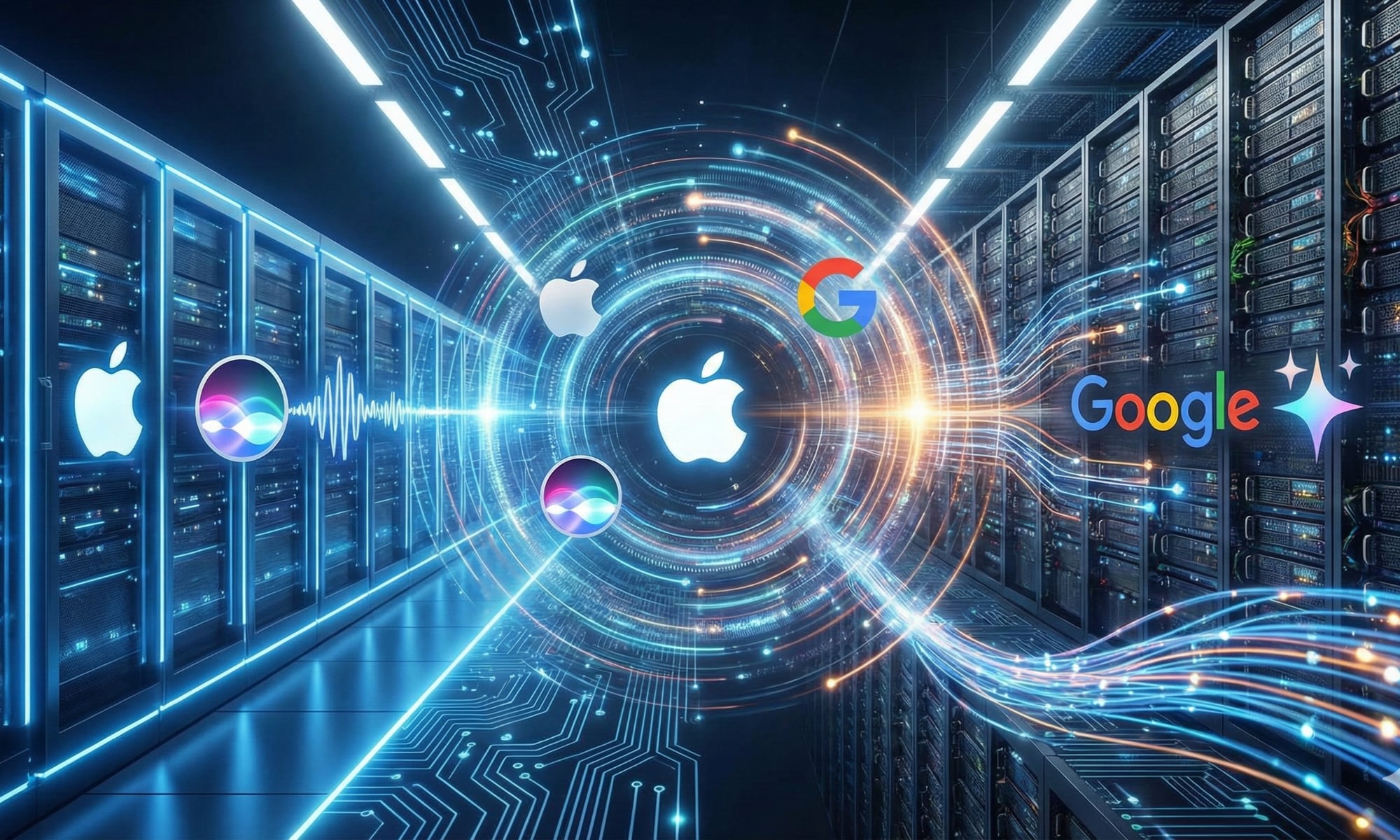
A recent statement from Google CEO Sundar Pichai has cast some doubt on whether Apple’s upcoming Gemini-powered Siri will truly remain within the Cupertino company’s infrastructure or be farmed out to Google’s servers. However, as always, the truth may be somewhere in the middle.
To say that Apple and Google have been somewhat coy since announcing their groundbreaking partnership last month to power the new “Siri 2.0” would be an understatement. Beyond a brief joint statement and a few evasive comments from both CEOs, we still don’t have a clear picture of the bigger plan.
The new deal was one of the hottest topics during last week’s quarterly earnings call, Apple CEO Tim Cook naturally dodged questions about the financial details of the partnership during the company’s quarterly earnings call last week, offering mostly vague boilerplate responses.
However, one thing Cook did reiterate was that Apple’s plans for the next-generation of Siri wouldn’t compromise on privacy. “We will continue to run on the device and run in private cloud compute,” Cook said, “And maintain our industry-leading standards in doing so.”
That gelled with what the initial joint announcement had said, specifically that “Apple Intelligence will continue to run on Apple devices and Private Cloud Compute, while maintaining Apple’s industry-leading privacy standards,” but the waters got muddied when Google CEO Sundar Pichai and appeared to be reading from a different song sheet yesterday.
During Google parent company Alphabet’s Q4 2025 earnings call, Pichai referred to his company as Apple’s “preferred cloud provider.”
I’m pleased that we are collaborating with Apple as their preferred Cloud provider and to develop the next generation of Apple Foundation Models, based on Gemini technology
Sundar Pichai
This phrasing was echoed verbatim by Chief Business Officer Philipp Schindler a few moments later, suggesting it was more carefully-crafted PR-speak. It’s also interesting that “preferred” was used here rather than “exclusive,” which not only leaves the door open to Apple arranging other partnerships, but also avoids potential problems from the US Justice Department.
While “cloud provider” can be read a few different ways, many took this to mean that Apple’s collaboration with Google would result in Siri being hosted on Google’s servers, potentially placing it outside of Apple’s direct control and raising privacy concerns.
Of course, a deal where Apple “leases” more powerful AI servers from Google doesn’t necessarily mean that Google will have any of its fingers directly in Siri. After all, Apple already securely stores exabytes of iCloud data on Google infrastructure, all fully encrypted in such a way that only Apple and its users can read it.
Still, Apple made a lot of noise in 2024 about how its Private Cloud Compute (PCC) architecture was designed with strong privacy protections at its core. These were hardened servers with no persistent storage, designed in such a way that even the most skilled Apple engineers couldn’t extract data from them if they tried. Even if Apple leases “bare metal” AI servers from Google to run its own Apple Foundation Models based on Gemini, it’s unlikely they’ll be built to the same high privacy standards as Apple’s PCC servers. If Siri moves to Google Cloud, Apple may have a lot of explaining to do on how Google’s servers will meet its same privacy standards.
So, Which Is It?
While neither Cook nor Pichai have offered enough concrete information to come to any firm conclusions, additional insider context provided by Bloomberg’s Mark Gurman gives us a few more lines to read between.
Gurman has been following the Apple-Google deal since last summer when it was still up in the air, but in a more recent report after the collaboration was announced, he noted that Apple may very well have plans to run Siri on Google’s more powerful AI servers — but not right away.
The first wave of Siri improvements are expected to arrive in the coming weeks when the first iOS 26.4 beta shows up. These are the ones that will fulfill the promises Apple made during its June 2024 Worldwide Developers Conference (WWDC) keynote.
These short-term Siri improvements are expected to be based on Apple Foundation Models (AFM) version 10, a 1.2 trillion parameter version of Google’s AI models that represents an 8x jump over the in-house models that Apple has been building over the past two years. These will reportedly be hosted on Apple’s Private Cloud Compute Infrastructure.
However, Gurman says there’s a bigger “Siri 3.0” on the horizon for iOS 27. Code-named “Campos,” this will turn the dial up to version 11 for a more conversational, chatbot-like Siri. Sources say that Apple has at least been considering hosting Campos directly on Google’s servers, but it’s still much more likely Apple is looking to host or lease Google-built servers with their tensor processing units (TPUs), rather than mixing Siri into Google’s own AI farms.
In other words, one possibility is that Cook is talking about the shorter-term plan for iOS 26.4, while Pichai is looking at where Apple may end up with iOS 27 and beyond. However, it’s also possible that Cook is playing semantic games here by considering “Apple Intelligence” and “Siri” to be two entirely different things, as Gurman suggested yesterday.
The difference may be Apple is considering Siri and Apple Intelligence 2 different things. Apple servers for non-Siri features + Google servers for new Siri features. The last thing Apple wants is to hurt its privacy stance, which is its only (albeit irrelevant) differentiator.
Apple Foundation Models and Google Cloud: What’s the Deal?
Recently, Mark Gurman tweeted about Apple Foundation Models and their potential link to Google Cloud. According to Gurman, Apple may be using Google Cloud for the chat Siri in the upcoming fall. This raises questions about the future of Apple’s infrastructure and partnerships.
Tim Cook could potentially confirm that Apple Foundation Models will still operate on the device and private cloud compute. However, the alleged use of Google Cloud for Siri adds a layer of complexity to Apple’s ecosystem. Gurman’s tweet seems definitive, but there is still uncertainty surrounding the final decision.
Google’s projected increase in capital expenditures for 2026, ranging from $175 to $185 billion, hints at a significant investment in cloud infrastructure. This surge aligns with the speculated launch of Siri 3.0 later this year, potentially utilizing Google’s cloud resources. Alphabet’s CFO mentioned that a substantial portion of Google’s machine learning compute will be dedicated to its cloud business, catering to clients like Apple.
While Apple is expected to unveil iOS 26.4 improvements at an upcoming Siri launch event, the details of the underlying infrastructure remain undisclosed. The possibility of showcasing Campos at WWDC in June raises questions about the long-term implications of the Apple-Google partnership. Sundar Pichai’s remarks about planning for the future suggest a prolonged collaboration beyond 2025, signaling a fundamental shift in Siri’s functionality.











Tech Savvy Heroes: AirTag Child Rescue, DarkSword Hack, and More Adventures

Chinese Brand’s Newest Small Electric Hatch Sets Safety Standard with Anticipated Five-Star Rating

The Unforeseen Lessons: A Microsoft VP’s Journey from India to the Age of AI

Cloudflare Evasion: How Phishing Targets TikTok Business Accounts Through Turnstile Tactics

The Unfair Boundaries of Genre: A Conversation with the Original Stalker Designer on Eurojank in International Games

Sequoia’s Confidence in Harvey’s $11B Valuation Triples

Troubleshooting HDMI Audio: Essential Fixes & More Tips

Unveiling the Powerhouse: Mercedes-AMG GT Black Series with Dynamic Aero System Spotted at Nurburgring

iPhone 12 Pro Max Unboxing & Review!

EU Takes Action Against Instagram and Facebook for Violating Illegal Content Rules

Warning: Facebook Creators Face Monetization Loss for Stealing and Reposting Videos

Facebook Compliance: ICE-tracking Page Removed After US Government Intervention

Facebook’s New Look: A Blend of Instagram’s Style

Facebook and Instagram to Reduce Personalized Ads for European Users

InstaDub: Meta’s AI Translation Tool for Instagram Videos

Reclaim Your Account: Facebook and Instagram Launch New Hub for Account Recovery

Meta discontinues Messenger apps for Windows and macOS

Breaking Updates: Meta Connect 2025 Unveils Latest Developments
iPhone 12 Pro Max Unboxing & Review!

iPhone 12 Pro Max vs Samsung Note 20 Ultra / Huawei Mate 40 Pro Camera Test Comparison.

iPhone 12 Pro Max vs Samsung Note 20 Ultra / Huawei / Xiaomi / OnePlus Battery Life DRAIN Test.

The BEST Smartphone of 2020 🏆

The Self-Healing Smartphones!

Apple is not what it used to be.

Smartphones are Boring now.

The Fastest Android Phone Ever.

Unboxing the $122,000 Smartphone. 🤯
-
 Facebook5 months ago
EU Takes Action Against Instagram and Facebook for Violating Illegal Content Rules
-
 Facebook6 months ago
Warning: Facebook Creators Face Monetization Loss for Stealing and Reposting Videos
-
 Facebook6 months ago
Facebook Compliance: ICE-tracking Page Removed After US Government Intervention
-
 Facebook4 months ago
Facebook’s New Look: A Blend of Instagram’s Style
-
 Facebook4 months ago
Facebook and Instagram to Reduce Personalized Ads for European Users
-
 Facebook6 months ago
InstaDub: Meta’s AI Translation Tool for Instagram Videos
-
 Facebook4 months ago
Reclaim Your Account: Facebook and Instagram Launch New Hub for Account Recovery
-
 Apple5 months ago
Meta discontinues Messenger apps for Windows and macOS

Newsletter Signup
Subscribe to our weekly newsletter below and never miss the latest News or an exclusive offer.