
Mobile Tech
The Ultimate Showdown: A18 Pro Takes on the M1 and M4 in a Battle of Performance


Apple’s most groundbreaking product of early 2026 isn’t a flagship powerhouse, but rather a modest entry-level MacBook that redefines what a budget laptop can do.
Unveiled last among a week that was filled with other product announcements, the MacBook Neo is remarkable not so much for its raw performance overall but for a tacit demonstration of how capable Apple’s iPhone silicon actually is.
That’s because it’s powered by an A18 Pro — essentially the same chip used in the 2024 iPhone 16 Pro and iPhone 16 Pro Max models, but with one less GPU. While that’s led some to dismiss the MacBook Neo as an expensive toy, let’s not forget that this chip’s predecessor, the A17 Pro, brought PS5-level AAA console games to the iPhone, including Resident Evil Village and Assassin’s Creed Mirage — games that are well beyond the capabilities of the average $600 laptop.
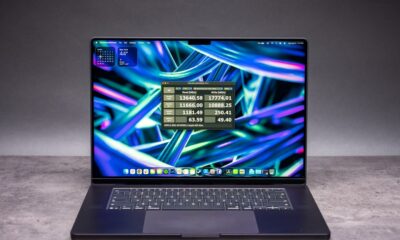
The bottom line is that the A18 Pro chip is a serious powerhouse, and now the first MacBook Neo benchmarks have arrived to back this up.
Single-Core Speed That Rivals the M4
In terms of raw performance, Apple’s 2024 iPhone silicon compares very favorably to Apple’s M-series chips — and in single-core performance it can even hold its own against the M4 that was released that same year.
That last part isn’t surprising, as the A18 Pro and M4 were fabricated using the same 3-nanometer (3 nm) production process, and likely have identical performance cores; the M4 just has more of them, which lets it pull well ahead in multi-core performance.
Specifically, the A18 Pro has a six-core CPU made up of two performance cores and four efficiency cores, while the M4 has up to 10, four of which are performance cores.
That’s always been a “core” advantage of Apple’s M-series chips (pun only slightly intended), which is why the A18 Pro falls back into the earlier M1/M2 generation in multi-core performance.
The A18 Pro and M4 both had eight-core chips, with their four performance cores individually slower than those of the M1 and M4. However, having twice as many cores gave them a multi-core advantage. The MacBook Neo slightly surpassed the M1 in multi-core performance, approaching the M2.
In terms of single-core performance, the MacBook Neo’s target audience will find it most relevant, as the extra cores are not typically utilized for tasks like web browsing, writing, streaming video, or basic photo and video editing.
On the GPU side, the Metal scores of the MacBook Neo are similar to the M1, but it offers additional features like hardware ray tracing, mesh shading, and dynamic caching. These features are likely to enhance gaming performance by enabling better light, shadow, and reflection calculations, as well as real-time GPU memory allocation for complex 3D scenes.
The A18 Pro also includes media engines that were previously exclusive to the M1 Pro and were later introduced to Apple’s base M3 chip.










Audi RS3 Competition Limited Edition: The Ultimate Performance in Sportback and Saloon Models

The Thinnest Smartphone in the World.

Court bans AI agents from shopping on Amazon: Judge rules against Perplexity

CISA Alert: Cyber Attackers Exploiting SolarWinds, Ivanti, and Workspace One Vulnerabilities

Kalshi Boosts Meta’s Threads with New Sharing Feature

Uncovering SAST’s Blind Spot: Anthropic and OpenAI’s Revelations

Silo Season 3 Premiere Teased by Rebecca Ferguson

ALPINA XB7 Debut, E46 M3 Touring, and the Ultimate Cars and Coffee Showcase of the Year

Transformations: Witness the Incredible Before and After Photos on GeekWire

EU Takes Action Against Instagram and Facebook for Violating Illegal Content Rules

Warning: Facebook Creators Face Monetization Loss for Stealing and Reposting Videos

Facebook Compliance: ICE-tracking Page Removed After US Government Intervention

Facebook’s New Look: A Blend of Instagram’s Style

InstaDub: Meta’s AI Translation Tool for Instagram Videos

Facebook and Instagram to Reduce Personalized Ads for European Users

Reclaim Your Account: Facebook and Instagram Launch New Hub for Account Recovery

Meta discontinues Messenger apps for Windows and macOS

Breaking Updates: Meta Connect 2025 Unveils Latest Developments
The Thinnest Smartphone in the World.

Mi 11 Ultra Review – Xiaomi just KILLED Samsung!?

15 Smartphone Gadgets that’ll SHOCK you! ⚠️

The $200,000 Smartphone Unboxing 💀

20 Next-Level Inventions you didn’t think were Possible.

How THIS instagram story kills your phone.

Zenfone 8 – The most boring INCREDIBLE phone ever.

The BEST Smartphones of 2021! (Mid Year)

I bought the SMALLEST Tech in the world.
-
 Facebook5 months ago
EU Takes Action Against Instagram and Facebook for Violating Illegal Content Rules
-
 Facebook5 months ago
Warning: Facebook Creators Face Monetization Loss for Stealing and Reposting Videos
-
 Facebook5 months ago
Facebook Compliance: ICE-tracking Page Removed After US Government Intervention
-
 Facebook3 months ago
Facebook’s New Look: A Blend of Instagram’s Style
-
 Facebook5 months ago
InstaDub: Meta’s AI Translation Tool for Instagram Videos
-
 Facebook3 months ago
Facebook and Instagram to Reduce Personalized Ads for European Users
-
 Facebook3 months ago
Reclaim Your Account: Facebook and Instagram Launch New Hub for Account Recovery
-
 Apple5 months ago
Meta discontinues Messenger apps for Windows and macOS
