
Apple
Unlocking the Potential: Camera Support in Matter 1.5 Enhances Your Smart Home Experience

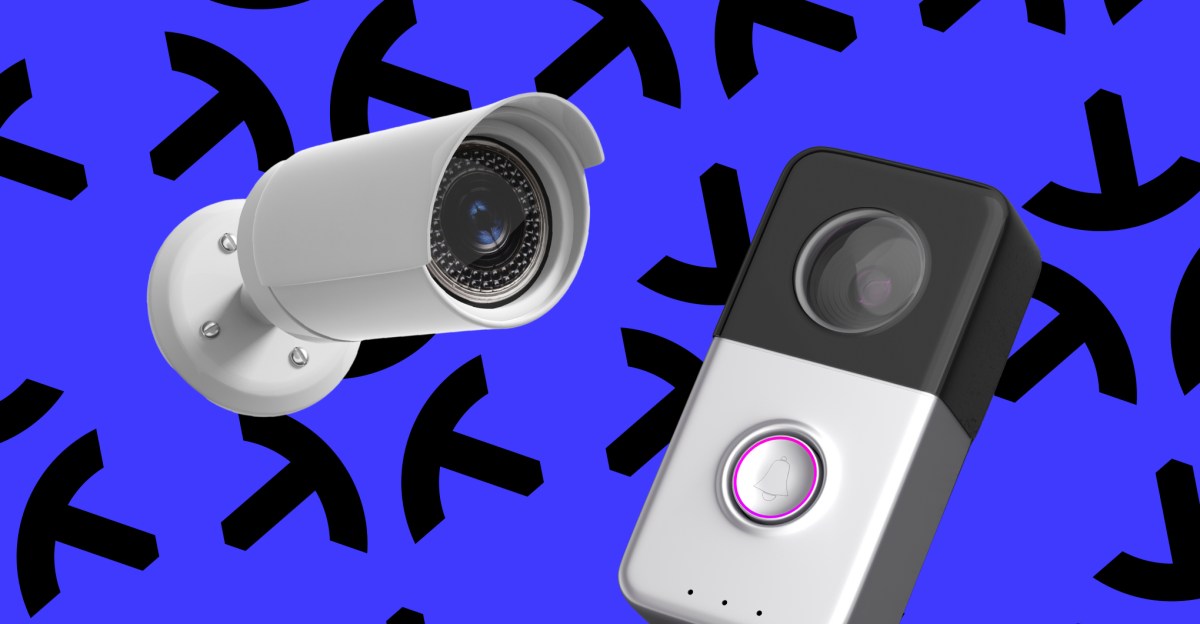
It’s finally happening. Three years after Matter launched, the interoperability standard now includes the most popular smart home devices: cameras.
The Matter 1.5 spec, announced today, adds support for all types of video cameras — from indoor and outdoor, wired and battery-powered cameras, to video doorbells, baby monitors, pet cams, and more. Matter support should be possible with an OTA update, so some of your existing cameras could become Matter-compatible. The new spec also adds garage door controllers, soil sensors, bi-directional charging for EVs, and more advanced integration with utilities for energy management.
So far, cameras have been among the least interoperable devices in our homes, and bringing them into Matter is a big win for the standard. With Matter, you should be able to add any certified camera to your smart home platform of choice, such as Apple Home, Amazon’s Alexa, and Google Home, and access it there alongside cameras from different manufacturers.
“Cameras might create even more momentum [for Matter]. Cameras might leapfrog everything.”
Cameras will use Matter-over-WiFi (or ethernet), which, as a local protocol, should improve reliability and latency, especially for things like streaming footage to your smart display and using camera events, such as motion, to trigger other devices and smart home automations.
However, all of these benefits will ultimately depend on how each platform and manufacturer decides to implement support — specifically, whether they decide to support cameras in Matter at all.
What capabilities will cameras have in Matter?
According to the Connectivity Standards Alliance, the organization behind Matter, Matter-certified home security cameras will support live video and audio streaming, two-way talk, and local and remote access. The standard also allows for pan-tilt-zoom controls for the cameras and the setting of detection and privacy zones.
Along with streaming, Matter 1.5 enables continuous and event-based recording, with the option to store recordings locally or in the cloud. But it doesn’t cover the storage of that footage. Instead, Matter hands off to whatever local or cloud storage options are available from the device makers and platforms.
“It should be possible for most modern cameras on the market today, and in people’s homes, to be updated to support Matter.”
This means a camera company could support Matter, but still require a cloud subscription in order for you to review recorded footage, Chris LaPré, head of strategy at the CSA, told The Verge in an interview. Additionally, while Matter support will likely be an add-on to a camera manufacturer’s connectivity options at first, the local storage route presents the possibility that someone could develop a network video recording (NVR) system that records everything locally, works with every smart home platform (that supports cameras in Matter), and never touches the cloud.
With Matter, all footage will be encrypted in transit, with end-to-end data encryption available “if the ecosystem wants to use it,” says LaPré. The standard supports streaming using the popular WebRTC protocol and access via STUN and TURN. It will also support TCP transport.
This covers all the different streaming technologies camera companies use, he says, which is one of the reasons it took a while to bring cameras into the spec. “We didn’t want to piecemeal this,” says LaPré. “We wanted to launch with a full-scoped spec.” (If you want to dig into the nitty-gritty, check out the Matter camera Device Type GitHub page.)
Matter doesn’t specify or limit the resolution of camera footage, nor does it dictate or manage features such as AI-powered detection types (person, package, etc.). These will be part of how camera manufacturers and platforms can differentiate their offerings — through adding things like AI-powered descriptive alerts (which Ring, Arlo, Wyze, and Google Nest offer).
The CSA says the standard is backward compatible. “It should be possible for most modern cameras on the market today, and in people’s homes, to be updated to support Matter,” LaPré says. However, which models will get the update is entirely up to each manufacturer.
When will Apple, Google, and Amazon support Matter cameras?
Aqara plans to bring Matter support to some of its cameras and video doorbells.
Image: Aqara
Based on previous rollouts, it takes at least a year from the release of a specification to achieve market penetration of devices. It’s been three years since Matter 1.0 was released, and we have plenty of lightbulbs, smart plugs, and locks. But other device types have taken longer.
Household appliance support arrived in 2023 with Matter 1.2, but there are still only a handful of Matter-certified appliances. However, with backwards compatibility and the huge popularity of cameras, movement is anticipated to happen faster, possibly beginning with CES 2026, which is just two months away.
Aqara, a strong supporter of Matter, is aiming to launch its first Matter camera in the first half of 2026. Cathy You of Aqara also plans to add Matter support to some existing cameras. Eve, another early supporter of the standard, won’t be updating its existing cameras but plans to introduce Matter-enabled models at some point.
The big three – Apple Home, Amazon’s Alexa, and Google Home – have been slow to adopt new Matter device types. Amazon’s Ring and Blink cameras do not currently support Matter, and Google declined to comment on its Nest cameras. Other camera manufacturers like Arlo, Reolink, and Eufy have not responded to inquiries about Matter support.
Apple is likely to support cameras in Matter, especially given the involvement of Apple Engineer Aron Rosenberg in the Matter GitHub project. If Apple does support cameras, they would likely connect to Apple Home’s existing HomeKit Secure Video platform and process video locally on an Apple Home Hub.
SmartThings is expected to adopt Matter, as Samsung could benefit from broader camera support that Matter offers. Home Assistant also has support on the roadmap but needs to develop certain features before fully implementing Matter cameras.
Google Home and Amazon’s Alexa may not quickly adopt Matter due to their integrated AI-powered assistants with their in-house camera brands. Momentum and platform support will play a key role in the adoption of Matter by camera manufacturers and smart home platforms.
The recent momentum gained by companies like Ikea and Philips Hue supporting Matter could boost the standard. The addition of cameras to the Matter standard is seen as a significant development that could generate more interest and momentum for the standard.
Matter 1.5 introduces better energy management features and garage door controls, making it easier to control the energy use of appliances in your home across various brands. The new “electrical energy tariff” device type allows utilities to integrate with Matter and share real-time pricing and grid information. The data collected by Matter devices in your home can be used to automatically adjust energy usage, either independently or through a Matter smart home platform with energy management capabilities. LaPré emphasizes the importance of coordinating when devices like the EV charger, dishwasher, and pool pump run to balance usage and make energy consumption a whole-home decision.
Furthermore, the energy tariff device type can incorporate real-time or predictive data from a solar installation to track both the energy generated and used in your home. Utilities can also use Matter to communicate the needs of the grid to your home, allowing for more control and participation in demand response programs.
In the latest update, Matter now supports garage door controllers and a new category called “Support for Closures” covers devices like shades, drapes, awnings, and gates. Additionally, soil sensors are now a device type in Matter, providing data to automate watering systems.
The Matter 1.5 spec has officially launched, allowing developers to start working with the SDK and test tools. However, it may take several months or even years before we see these products in our homes. Developed by Apple, Amazon, Google, Samsung, and others, Matter is an open-sourced, IP-based connectivity software layer for smart home devices that works over various networking protocols. Transform the following:
“Running is the best way to stay in shape.”
into
“The best way to stay in shape is running.” “Please make sure to complete the assignment by tomorrow”
into
“Kindly ensure that the assignment is finished by tomorrow.” Transform the following:
Original: I will go to the store and buy some milk.
Transformed: I am going to the store to purchase some milk. Transform the following:
“Please let me know if you need any further assistance”
to
“Feel free to reach out if you require any additional help”










Apple WWDC 2026: The Ultimate Guide to What’s Coming Next

Unleashing the Beast: The 2027 Mercedes-AMG GT Black Series

15 Smartphone FAILS to ruin your day 😂

Data Breach at Mazda: Employee and Partner Information Exposed

City of Legends: Wartales Expansion – Choose Your Fate

Xiaomi 17 vs 17 Ultra Comparison: Why You Should Consider the Standard Model

Insight Partners Investigates ‘Fake Compliance’ Allegations, Delays Demos and Scrubs Investment Plans

Wuthering Heights: A Tale of Love and Loss Streaming Now

The Evolution of Apple’s AirPods Max: Unveiling the AirPods Max 2

EU Takes Action Against Instagram and Facebook for Violating Illegal Content Rules

Warning: Facebook Creators Face Monetization Loss for Stealing and Reposting Videos

Facebook Compliance: ICE-tracking Page Removed After US Government Intervention

Facebook’s New Look: A Blend of Instagram’s Style

Facebook and Instagram to Reduce Personalized Ads for European Users

InstaDub: Meta’s AI Translation Tool for Instagram Videos

Reclaim Your Account: Facebook and Instagram Launch New Hub for Account Recovery

Meta discontinues Messenger apps for Windows and macOS

Breaking Updates: Meta Connect 2025 Unveils Latest Developments
15 Smartphone FAILS to ruin your day 😂

World’s Biggest Smartphone Collection?

I switched to iPhone – This is what I found out.

What happened to Beats by Dre?

DON’T buy a Screen Protector before watching this.

Beware of Fake Reviewers! ⚠️

Xiaomi Mi 11 Unboxing & Review.

The Galaxy S21 Ultra is Better than you think.

Samsung Galaxy S21 Ultra vs iPhone 12 Pro Max Camera Test Comparison.
-
 Facebook5 months ago
EU Takes Action Against Instagram and Facebook for Violating Illegal Content Rules
-
 Facebook5 months ago
Warning: Facebook Creators Face Monetization Loss for Stealing and Reposting Videos
-
 Facebook5 months ago
Facebook Compliance: ICE-tracking Page Removed After US Government Intervention
-
 Facebook3 months ago
Facebook’s New Look: A Blend of Instagram’s Style
-
 Facebook4 months ago
Facebook and Instagram to Reduce Personalized Ads for European Users
-
 Facebook5 months ago
InstaDub: Meta’s AI Translation Tool for Instagram Videos
-
 Facebook4 months ago
Reclaim Your Account: Facebook and Instagram Launch New Hub for Account Recovery
-
 Apple5 months ago
Meta discontinues Messenger apps for Windows and macOS
