
Microsoft
Unveiling the Secrets of Amazon’s $50 Billion OpenAI Partnership: How It Works Behind the Scenes

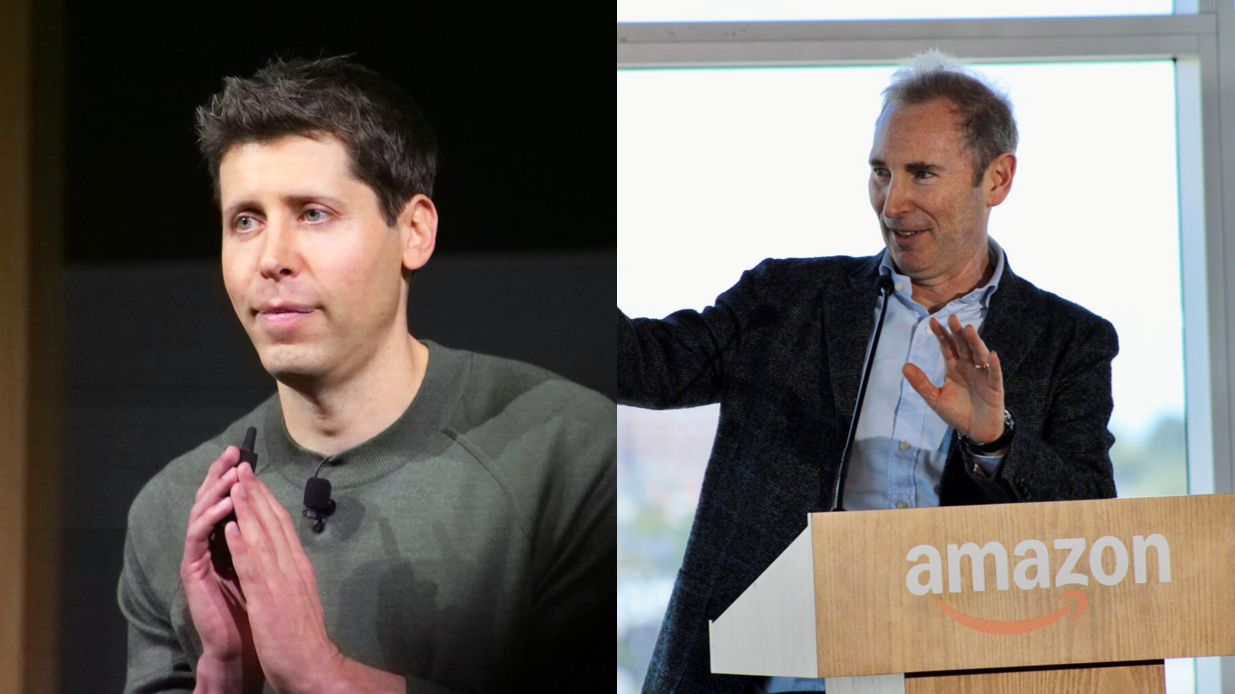
Amazon’s OpenAI Investment and Cloud Partnership: A Detailed Look
Amazon’s recent investment in OpenAI and their cloud partnership agreement made significant waves in the tech world. However, the intricate details of the deal, such as the financial mechanics, payment triggers, and potential scenarios, are outlined in SEC filings, revealing a more complex narrative.
Let’s delve into how this partnership operates, decipher the information disclosed in the filings, and uncover what remains undisclosed.
Financial Commitment: Amazon’s investment in OpenAI amounts to $50 billion, split into two phases.
- $15 billion in OpenAI Series C Preferred Stock, with a deadline of March 31.
- A subsequent commitment of $35 billion, subject to specific triggers that dictate the timing of this investment. The exact figure, $34,999,999,447.98, highlights the meticulous nature of the financial arrangement.
This investment is part of a broader funding round, where OpenAI secured a total of $110 billion at a pre-money valuation of $730 billion. Alongside Amazon’s contribution, SoftBank and Nvidia each added $30 billion. OpenAI anticipates additional financial investors joining the round in due course.
Microsoft, a significant existing investor in OpenAI, has the option but has not yet participated in this round. However, Microsoft did invest $5 billion in Anthropic last year, aligning both Seattle-based tech giants with stakes in cutting-edge AI technologies.
Investment Triggers: Amazon holds the authority to acquire the remaining shares at its discretion. However, two specific events can mandate the additional investment.
- A “Mandatory Funding Event” necessitating Amazon to purchase all remaining shares within five business days, with the milestone undisclosed in the filings.
- An OpenAI IPO triggers Amazon to procure all remaining shares. Amazon must act within four weeks of receiving notice or five business days post the public S-1 filing.
During a joint CNBC appearance with Amazon’s Andy Jassy, OpenAI CEO Sam Altman expressed openness to taking OpenAI public at an appropriate juncture. The nature of the investment may evolve based on the timing of Amazon’s share purchase.
Expiration Terms: The equity commitment is set to expire on December 31, 2028. Should the triggers not materialize, and Amazon fails to invest the complete amount by then, the obligation lapses.
In cases of non-compliance by either party, monetary damages are capped at the unfunded commitment sum. Both entities retain the right to seek legal recourse to enforce the agreement, with a waiver of jury trial rights.
Cloud Partnership: Beyond the equity investment, Amazon and OpenAI also entered into a Joint Collaboration Agreement (JCA) and a cloud services deal, integral components referenced in the filings but not fully disclosed.
The expanded cloud services agreement entails OpenAI consuming 2 gigawatts of Trainium capacity through Amazon Web Services (AWS), showcasing the scale of computing involved. Trainium, Amazon’s custom AI chip, serves as a cost-effective alternative to Nvidia’s GPUs, with OpenAI committed to utilizing it for their AI endeavors.
Additionally, the collaboration features the development of a Stateful Runtime Environment by Amazon and OpenAI, designed to leverage OpenAI models within Amazon Bedrock, AWS’s AI model platform. This environment enables AI agents to retain context, recall past activities, and operate seamlessly across diverse systems over time, with a slated launch in the coming months.
The partnership also includes the creation of customized models by OpenAI to power Amazon’s consumer-facing applications, augmenting Amazon’s existing AI models suite.
These intertwined equity and cloud partnership agreements underscore the interdependent nature of the collaboration. The termination of the JCA would nullify the additional $35 billion equity commitment, emphasizing the intricacies of the intertwined agreements.
Long-Standing Discussions: The filings reference a mutual nondisclosure agreement dated May 23, 2023, indicating prolonged discussions between Amazon and OpenAI preceding the recent announcement. Notably, Microsoft’s prior rights agreement hindered an earlier deal between OpenAI and Amazon.
However, in October 2025, Microsoft and OpenAI restructured their partnership, allowing OpenAI to engage with third parties for product development and removing Microsoft’s compute rights. In return, OpenAI committed to significant Azure service purchases.
During a shared interview, Andy Jassy mentioned that the OpenAI partnership was factored into Amazon’s strategic planning, aligning with their substantial capital expenditure plans for the year.
Unrevealed Aspects: The redacted filings withhold critical deal specifics, including milestone triggers, termination events for the $35 billion commitment, breach definitions, and conditions preceding additional share purchases.
Speculation suggests that these undisclosed milestones might be linked to achieving artificial general intelligence (AGI), a pivotal milestone in AI progression. However, Altman clarified that the deals are not contingent on reaching AGI.
Microsoft’s Position: Microsoft and OpenAI released a joint statement reaffirming their partnership, with Microsoft Azure serving as the exclusive cloud provider for stateless OpenAI APIs. The statement highlighted Microsoft’s continued access to OpenAI’s intellectual property and revenue-sharing arrangements.
OpenAI’s proprietary products, including Frontier, remain hosted on Azure, with AWS becoming the exclusive distributor for third-party access to Frontier. This delineates a shared ecosystem where Microsoft retains core API operations, while Amazon focuses on innovative AI solutions.
Conclusion: The evolving landscape of AI partnerships signifies a shift towards collaborative engagements across tech giants. While Microsoft maintains its core API business and revenue-sharing model with OpenAI, Amazon secures a pivotal role in cutting-edge AI developments through its collaboration and investment in OpenAI.
With both companies actively investing in Anthropic and OpenAI attracting diverse investments, the competitive boundaries in the AI sector are blurring, with major players diversifying their partnerships and investments.












24 HOTTEST Inventions that will change your Life.

Porsche’s High-Performance K1 SUV Stays True to Tradition with Gasoline Power

Unveiling the Secrets of Amazon’s $50 Billion OpenAI Partnership: How It Works Behind the Scenes

Samsung TV Privacy Policy Update: Ensuring Texans’ Data is Collected with Express Consent

Unveiling Tomorrow: We Were Here Sequel Announced for PC, PS5, and Xbox Series XS

Revolutionizing Connectivity: Anker Unveils Cutting-Edge Tech at MWC 2026

Staying Connected: Strategies for Small Businesses to Keep in Touch with Customers

Breaking the Mold: A Review of the Honor MagicPad 4

Revolutionizing Technology: The Arrival of the Touchscreen Mac

EU Takes Action Against Instagram and Facebook for Violating Illegal Content Rules

Warning: Facebook Creators Face Monetization Loss for Stealing and Reposting Videos

Facebook Compliance: ICE-tracking Page Removed After US Government Intervention

InstaDub: Meta’s AI Translation Tool for Instagram Videos

Facebook’s New Look: A Blend of Instagram’s Style

Facebook and Instagram to Reduce Personalized Ads for European Users

Reclaim Your Account: Facebook and Instagram Launch New Hub for Account Recovery

Meta discontinues Messenger apps for Windows and macOS

Breaking Updates: Meta Connect 2025 Unveils Latest Developments
24 HOTTEST Inventions that will change your Life.

Galaxy Z Fold 3 – What was Samsung Thinking!?

Why Samsung is losing to Xiaomi.

I bought the CHEAPEST Tech in the World 🌍

How Tech Companies Manipulate the Media ft. MKBHD

What you didn’t know about Tesla.

iPhone 13 – What was Apple Thinking?

iPhone 13 Unboxing – Are they ACTUALLY Good!?

iPhone 13 Pro Max vs Samsung Galaxy S21 Ultra CAMERA TEST 🔥
-
 Facebook4 months ago
EU Takes Action Against Instagram and Facebook for Violating Illegal Content Rules
-
 Facebook5 months ago
Warning: Facebook Creators Face Monetization Loss for Stealing and Reposting Videos
-
 Facebook5 months ago
Facebook Compliance: ICE-tracking Page Removed After US Government Intervention
-
 Facebook5 months ago
InstaDub: Meta’s AI Translation Tool for Instagram Videos
-
 Facebook3 months ago
Facebook’s New Look: A Blend of Instagram’s Style
-
 Facebook3 months ago
Facebook and Instagram to Reduce Personalized Ads for European Users
-
 Facebook3 months ago
Reclaim Your Account: Facebook and Instagram Launch New Hub for Account Recovery
-
 Apple4 months ago
Meta discontinues Messenger apps for Windows and macOS
