
Microsoft
Unveiling the Truth: Inside the AI Alliance – A Deep Dive into Internal Documents

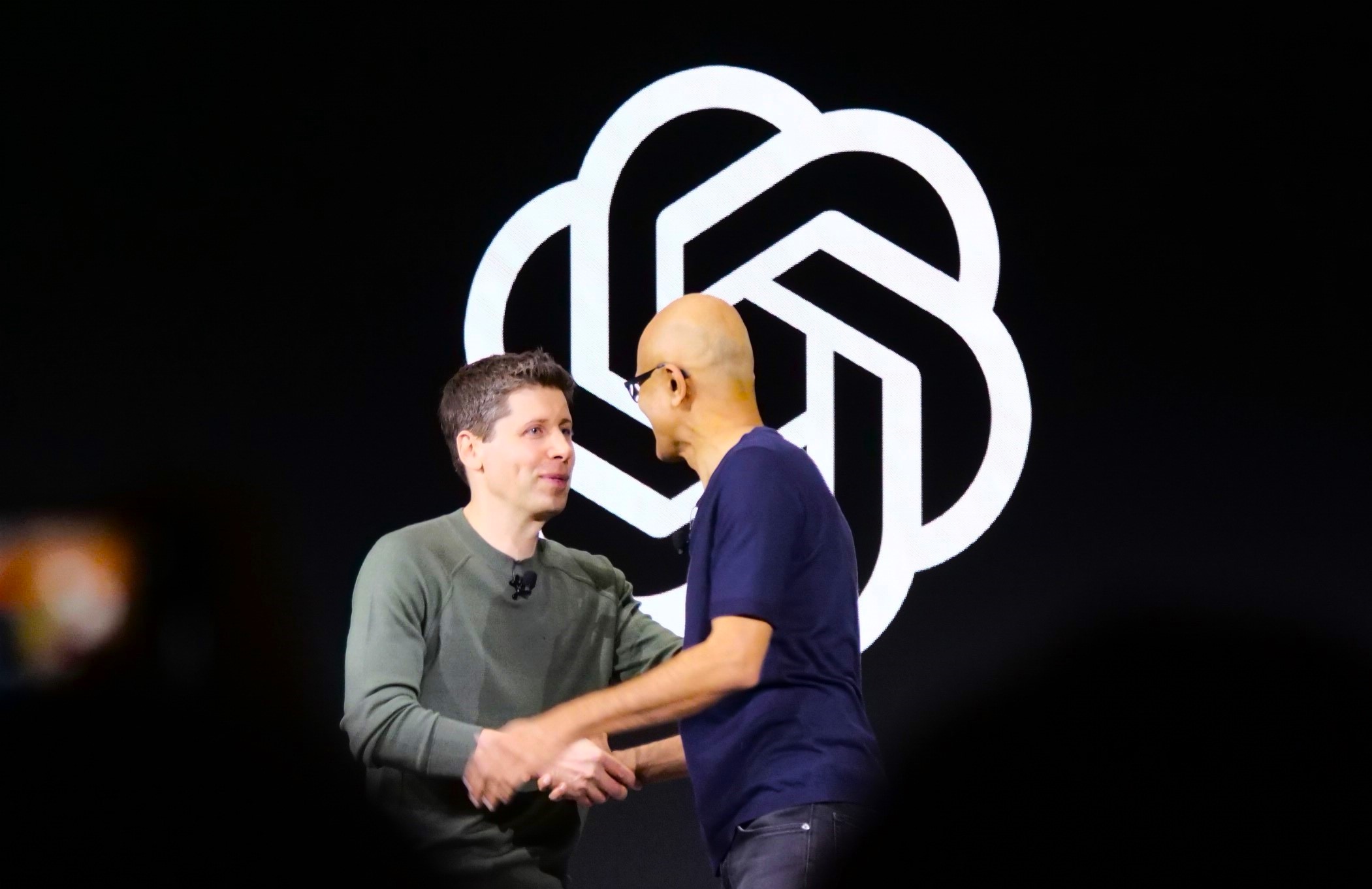
The launch of the AI lab that would redefine Microsoft caught the tech giant by surprise.
“Did we get called to participate?” Satya Nadella wrote to his team on Dec. 12, 2015, hours after OpenAI announced its founding. “AWS seems to have sneaked in there.”
Nadella had been Microsoft CEO for less than two years. Azure, the company’s cloud platform, was five years old and chasing Amazon Web Services for market share. And now AWS had been listed as a donor in the “Introducing OpenAI” post. Microsoft wasn’t in the mix.
In the internal message, which hasn’t been previously reported, Nadella wondered how the new AI nonprofit could remain truly “open” if it was tied only to Amazon’s cloud.
Within months, Microsoft was courting OpenAI. Within four years, it would invest $1 billion, adding more than $12 billion in subsequent rounds. Within a decade, the relationship would culminate in a $250 billion spending commitment for Microsoft’s cloud and a 27% equity stake in one of the most valuable startups in history.
New court filings offer an inside look at one of the most consequential relationships in tech. Previously undisclosed emails, messages, slide decks, reports, and deposition transcripts reveal how Microsoft pursued, rebuffed and backed OpenAI at various moments over the past decade, ultimately shaping the course of the lab that launched the generative AI era.
More broadly, they show how Nadella and Microsoft’s senior leadership team rally in a crisis, maneuver against rivals such as Google and Amazon, and talk about deals in private.
For this story, GeekWire dug through more than 200 documents, many of them made public Friday in Elon Musk’s ongoing suit accusing OpenAI and its CEO Sam Altman of abandoning the nonprofit mission. Microsoft is also a defendant. Musk, who was an OpenAI co-founder, is seeking up to $134 billion in damages. A jury trial is scheduled for this spring.
OpenAI has disputed Musk’s account of the company’s origins. In a blog post last week, the company said Musk agreed in 2017 that a for-profit structure was necessary, and that negotiations ended only when OpenAI refused to give him full control.
The recently disclosed records show that Microsoft’s own leadership anticipated the possibility of such a dispute. In March 2018, after learning of OpenAI’s plans to launch a commercial arm, Microsoft CTO Kevin Scott sent Nadella and others an email offering his thoughts.
“I wonder if the big OpenAI donors are aware of these plans?” Scott wrote. “Ideologically, I can’t imagine that they funded an open effort to concentrate ML [machine learning] talent so that they could then go build a closed, for profit thing on its back.”
The latest round of documents, filed as exhibits in Musk’s lawsuit, represents a partial record selected to support his claims in the case. Microsoft declined to comment.
Elon helps Microsoft win OpenAI from Amazon
Microsoft’s relationship with OpenAI has been one of its key strategic advantages in the cloud. But the behind-the-scenes emails make it clear that Amazon was actually there first.
According to an internal Microsoft slide deck from August 2016, included in recent filings, OpenAI was running its research on AWS as part of a deal that gave it $50 million in computing for $10 million in committed funds. The contract was up for renewal in September 2016.
Microsoft wanted in. Nadella reached out to Altman, looking for a way to work together.
In late August, the filings show, Altman emailed Musk about a new deal with Microsoft: “I have negotiated a $50 million compute donation from them over the next 3 years!” he wrote. “Do you have any reason not to like them, or care about us switching over from Amazon?”
Musk, co-chair of OpenAI at the time, gave his blessing to the Microsoft deal in his unique way, starting with a swipe at Amazon founder Jeff Bezos: “I think Jeff is a bit of a tool and Satya is not, so I slightly prefer Microsoft, but I hate their marketing dept,” Musk wrote.
He asked Altman what happened to Amazon.
Altman responded, “Amazon started really dicking us around on the T+C [terms and conditions], especially on marketing commits. … And their offering wasn’t that good technically anyway.”
Microsoft and OpenAI announced their partnership in November 2016 with a blog post highlighting their plans to “democratize artificial intelligence,” and noting that OpenAI would use Azure as its primary cloud platform going forward.

Internally, Microsoft saw multiple benefits. The August 2016 slide deck, titled “OpenAI on Azure Big Compute,” described it as a prime opportunity to flip a high-profile customer to Azure.
The presentation also emphasized bigger goals: “thought leadership” in AI, a “halo effect” for Azure’s GPU launch, and the chance to recruit a “net-new audience” of developers and startups. It noted that OpenAI was a nonprofit “unconstrained by a need to generate financial return” — an organization whose research could burnish Microsoft’s reputation in AI.
But as the ambition grew, so did the bill.
‘Most impressive thing yet in the history of AI’
In June 2017, Musk spoke with Nadella directly to pitch a major expansion. OpenAI wanted to train AI systems to beat the best human players at competitive esports, Valve’s Dota 2. The computing requirements were massive: 10,000 servers equipped with the latest Nvidia GPUs.
“This would obviously be a major opportunity for Microsoft to promote Azure relative to other cloud systems,” Musk wrote in an email to OpenAI colleagues after the call.
Nadella said he’d talk about it internally with his Microsoft cloud team, according to the email.
Musk wrote that it sounds like there is a good chance they will do it. Two months later, Altman followed up with a formal pitch, stating that he thinks it will be the most impressive thing yet in the history of AI. Microsoft’s cloud executives ran the numbers and were hesitant, with Zander expressing that the deal would cost too much to be feasible. Ultimately, Microsoft passed on the opportunity, and OpenAI contracted with Google instead.
Microsoft’s relationship with OpenAI began to deteriorate, with internal emails showing a struggle to find internal sponsors for an expanded deal. Microsoft executives felt that OpenAI was treating them merely as a source of computing power and expressed doubts about the breakthroughs in AGI. Despite pitching a collaboration focused on extending human intellect with AI, Microsoft did not sense much interest from OpenAI.
The risk of walking away was that OpenAI might turn to Amazon instead, building credibility in the AI community at Microsoft’s expense. Eventually, Microsoft decided to invest $1 billion in OpenAI in 2019, with the option for a second billion, in exchange for exclusive cloud computing rights and a commercial license to OpenAI’s technology. This decision was driven by concerns over Google’s AI progress and OpenAI’s specific research direction into transformers and large language models. Hood, Microsoft’s CFO, criticized OpenAI’s profit caps as being almost meaningless, but noted that the real money for Microsoft would come from Azure revenue.
The investment gave Microsoft approval rights over major decisions at OpenAI, solidifying its position as the dominant investor in the partnership. 19, Nadella texted Altman: “Sam, I am sorry to hear about what happened at OpenAI. I know it must be a tough time for you. Please know that we are here to support you and the team in any way we can.”
Altman responded, “Thanks Satya, I really appreciate that.”
Microsoft’s influence was clear. The company had been instrumental in OpenAI’s growth and now played a key role in its future. The events leading up to Altman’s removal highlighted the power dynamics at play, with Microsoft’s investment giving them significant leverage over the direction of OpenAI.
In a text message exchange, Nadella contacted Altman to discuss an idea he had. Altman, who was on a board call at the time, replied that they could talk later. That evening, Nadella sent a detailed message outlining the establishment of a new subsidiary called Microsoft RAI Inc., focused on Responsible Artificial Intelligence. The legal work was completed promptly, and the subsidiary was ready to be filed with the Secretary of State on Monday morning.
The cost of absorbing the OpenAI team was estimated to be around $25 billion, as confirmed by Nadella in a later deposition. Microsoft swiftly made moves to hire Altman and key members of his team to prevent them from joining competitors. The transition was challenging, but necessary to retain talent and expertise.
Discussions continued regarding the composition of the OpenAI board, with Nadella and Scott providing input on potential candidates. The process was delicate, as Microsoft did not have a board seat at OpenAI, but exerted influence over the selection of board members. Ultimately, a board framework was established with Altman proposing board members and himself as CEO.
Despite some concerns raised by Smith about the board composition, Altman accepted the proposed arrangement to move forward. The crisis was resolved, and Altman was reinstated as CEO with a newly constituted board.
In the following months, OpenAI announced changes to its structure, including unwinding its capped-profit structure in a project known as “Project Watershed.” Microsoft played a significant role in approving major decisions, including the conversion of OpenAI’s for-profit entity into a public benefit corporation.
Negotiations around OpenAI’s valuation were a key focus, with estimates varying between $122 billion to $353 billion. The timing of these decisions was crucial, as they impacted the SoftBank-led financing and the future direction of OpenAI. Microsoft’s approval was essential for these changes to proceed, highlighting the company’s influence in shaping OpenAI’s future.
The Evolution of OpenAI: A Strategic Partnership with Microsoft
Initially, the Memorandum of Understanding (MOU) between OpenAI and Microsoft set Microsoft’s stake in OpenAI at 32.5 percent. However, due to dilution during the SoftBank round, Microsoft’s stake decreased to 27 percent by the time the deal closed.
OpenAI, at the time, had an implied valuation of $500 billion, a record-breaking figure that reflected the willingness of both buyers and sellers in the market. This valuation was later surpassed by SpaceX, founded by Elon Musk. Sam Altman, in his deposition, acknowledged the market price and did not dispute it.
The deal between Microsoft and OpenAI was a give-and-take arrangement. Microsoft relinquished its right of first refusal on new cloud workloads, while OpenAI committed to making future Azure purchases worth $250 billion.
The partnership also resolved a potential issue regarding artificial general intelligence. Previously, OpenAI’s board declaring artificial general intelligence would have severed Microsoft from future models. However, under the new agreement, such a declaration must be made by an independent panel, and Microsoft retains its intellectual property rights until 2032.
The transaction between Microsoft and OpenAI was finalized on October 28, 2025. Despite the completion of the deal, OpenAI transitioned into the OpenAI Foundation and became a minority shareholder in the company it once governed.
Shortly after, OpenAI secured a significant seven-year, $38 billion infrastructure deal with Amazon Web Services, marking a return to prominence for the company in the cloud services sector.

In a recent statement, OpenAI CFO Sarah Friar highlighted the company’s shift towards working with multiple compute providers, ensuring resilience and compute certainty. This strategic move has resulted in a substantial increase in revenue from $2 billion in 2023 to over $20 billion in 2025.
OpenAI has transformed from a research lab dependent on Microsoft’s cloud services to a platform company with significant leverage in the industry. This evolution signifies a new era for OpenAI, where it no longer relies solely on Microsoft.
In December 2015, Satya Nadella had to inquire about Microsoft’s involvement in the OpenAI launch. A decade later, Microsoft has become an indispensable partner for OpenAI, shaping the company’s trajectory in the technology landscape.
Despite the deep-rooted partnership between Microsoft and OpenAI, OpenAI’s recent strategic moves indicate a shift towards independence and diversification. OpenAI’s future endeavors will involve collaborations with various technology providers, signaling a new chapter in the company’s journey.
“Can you help me with this project?”
to
“Would you be able to assist me with this project?”












The End of Security: iOS 13 and 14 Vulnerabilities in 2026

Exclusive Look: The 2027 Chevrolet Corvette Grand Sport Unleashed at Sebring

DON’T buy a Screen Protector before watching this.

Exploiting Vulnerable Drivers: How EDR Killers Use BYOVD to Disable Security

Alphabet’s X Unveils Innovative Spinout Targeting Costly Bureaucratic Challenges

Lawsuit: Halide co-founder accuses Sebastiaan de With of code theft for Apple

Previewing the Next Level: Apple Unveils iOS 26.4 RC for iPhone with Exciting New Features

Revamped Design: BMW’s Modern Makeover for the i3 Sedan

GitHub Actions Exploited in Trivy Vulnerability Scanner Breach, Infostealer Unleashed

EU Takes Action Against Instagram and Facebook for Violating Illegal Content Rules

Warning: Facebook Creators Face Monetization Loss for Stealing and Reposting Videos

Facebook Compliance: ICE-tracking Page Removed After US Government Intervention

Facebook’s New Look: A Blend of Instagram’s Style

Facebook and Instagram to Reduce Personalized Ads for European Users

InstaDub: Meta’s AI Translation Tool for Instagram Videos

Reclaim Your Account: Facebook and Instagram Launch New Hub for Account Recovery

Meta discontinues Messenger apps for Windows and macOS

Breaking Updates: Meta Connect 2025 Unveils Latest Developments
DON’T buy a Screen Protector before watching this.

Beware of Fake Reviewers! ⚠️

Xiaomi Mi 11 Unboxing & Review.

The Galaxy S21 Ultra is Better than you think.

Samsung Galaxy S21 Ultra vs iPhone 12 Pro Max Camera Test Comparison.

Samsung S21 Ultra vs iPhone Battery Life Test!

The Truth about Xiaomi “Air Charging”

DON’T buy this Smartphone.

Galaxy S21 Ultra – Exynos vs Snapdragon.
-
 Facebook5 months ago
EU Takes Action Against Instagram and Facebook for Violating Illegal Content Rules
-
 Facebook5 months ago
Warning: Facebook Creators Face Monetization Loss for Stealing and Reposting Videos
-
 Facebook5 months ago
Facebook Compliance: ICE-tracking Page Removed After US Government Intervention
-
 Facebook3 months ago
Facebook’s New Look: A Blend of Instagram’s Style
-
 Facebook3 months ago
Facebook and Instagram to Reduce Personalized Ads for European Users
-
 Facebook5 months ago
InstaDub: Meta’s AI Translation Tool for Instagram Videos
-
 Facebook4 months ago
Reclaim Your Account: Facebook and Instagram Launch New Hub for Account Recovery
-
 Apple5 months ago
Meta discontinues Messenger apps for Windows and macOS
