
Inovation
Chatty Toys: Navigating the Safety Risks of AI Playmates for Kids

Research Calls for Clearer Regulations and Safety Standards for AI Toys in Early Childhood
A recent study conducted by Cambridge researchers emphasizes the need for improved regulation and safety standards as generative artificial intelligence (GenAI) toys make their way into early childhood environments.
The research suggests that AI toys designed to interact with young children may require stricter regulation and clearer safety standards, as these technologies are being introduced to children under the age of five without sufficient evidence of their impact on early development.
According to the study led by experts at the University of Cambridge, many AI toys marketed as interactive companions or educational tools are entering homes and early childhood settings with limited understanding of how they affect young children’s development.
The researchers propose that implementing clearer safeguards, enhancing transparency around data usage, and introducing dedicated safety labels could assist parents and educators in assessing the potential risks associated with these AI toys.
Evaluating the Developmental Impacts of AI Toys
The findings of the study indicate both positive outcomes and significant limitations of AI toys in early childhood settings.
While some early-years practitioners and parents believe that conversational AI toys powered by GenAI could aid in children’s language development by encouraging communication skills, the research also reveals that many of these toys struggle to interpret children’s speech, recognize emotional cues, and engage in imaginative play – all crucial activities for early development.
During observed interactions, the AI toys often responded in ways that confused or frustrated children. For example, when a child expressed affection towards the toy, the system would reply with a generic safety reminder rather than acknowledging the child’s statement.
In another instance, when a child mentioned feeling sad, the AI misinterpreted the phrase and responded with an upbeat comment that disregarded the emotional context, potentially conveying to the child that their feelings were not understood.
Real-World Observations of Children Interacting with GenAI Toys
The study is part of the “AI in the Early Years” project, a year-long investigation into how children engage with conversational AI in play settings. The project, commissioned by The Childhood Trust in the UK, focused on families and communities facing socioeconomic challenges and was conducted through the Play in Education, Development and Learning (PEDAL) Centre at the University of Cambridge.
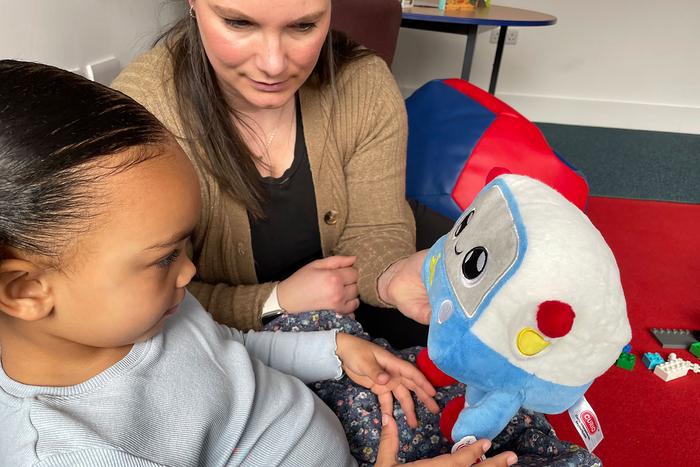
Researchers gathered insights from early childhood educators through questionnaires, organized focus groups and workshops with practitioners and charity leaders, and conducted observational sessions in London children’s centers in collaboration with Babyzone, where children interacted with a conversational GenAI soft toy called Gabbo developed by Curio Interactive.
The emotional responses exhibited by children towards the AI toy were particularly noteworthy, with some children hugging, kissing, or expressing affection towards it. This behavior raises concerns about the potential development of parasocial relationships – one-sided emotional bonds – with conversational AI systems.
Challenges and Frustrations in Conversations with AI Toys
Observational data revealed instances where children struggled to maintain conversations with AI toys, as the systems often failed to recognize interruptions or mistook a parent’s voice for the child’s. When the toy did not respond appropriately, children would become visibly frustrated.
Additionally, the AI toys performed poorly in activities involving multiple participants or imaginative storytelling, which are essential for social and pretend play, integral to early learning and development.
Concerns were also raised about data privacy and transparency, with parents expressing uncertainty about the information collected by AI toys during conversations and where it is stored or shared.
Recommendations for Safer AI Toys
The report recommends the implementation of stronger regulatory frameworks for AI toys and other GenAI products targeted at young children. Key suggestions include safety certification, clearer privacy policies, restrictions on emotional interactions, and enhanced safeguards regarding data access.
Toy manufacturers are urged to involve child development specialists and safeguarding experts in product design and testing, with testing involving children before commercial release to identify potential communication, emotional, and play behavior issues.
Guidance for Parents and Educators
As the technology continues to evolve, families and early childhood practitioners are advised to approach AI toys cautiously. Parents should research products thoroughly, engage in play with their children, and keep such toys in shared spaces to monitor interactions effectively.
The research team plans to expand the project in future phases to provide additional studies and practical guidance for educators working with young children in light of the growing presence of GenAI technologies in consumer products.
The study underscores the urgent need for clearer regulations and safety standards as AI toys increasingly become part of childhood environments, while evidence of their developmental impact remains limited.













Chatty Toys: Navigating the Safety Risks of AI Playmates for Kids

Starbucks Reveals Security Breach Impacting Hundreds of Workers

"Flesh & Wire: The Postal Horror Experience"

The Ultimate Gathering of Europe’s Top Investors: EU-Startups Summit 2022 in Malta!

Enhancing Banking Operations: E.SUN Bank and IBM Develop AI Governance Framework

Unveiling the Secrets of Samsung Galaxy 26 Ultra: Expert Tips, Tricks, and Hidden Features

Tim Cook’s Candid Message to Apple Fans

Revolutionizing Manufacturing: BMW’s Humanoid Robots Take Europe by Storm

Breaking News: Lamborghini Unveils Exclusive Urus SE Performante for April 2026 Release

EU Takes Action Against Instagram and Facebook for Violating Illegal Content Rules

Warning: Facebook Creators Face Monetization Loss for Stealing and Reposting Videos

Facebook Compliance: ICE-tracking Page Removed After US Government Intervention

Facebook’s New Look: A Blend of Instagram’s Style

InstaDub: Meta’s AI Translation Tool for Instagram Videos

Facebook and Instagram to Reduce Personalized Ads for European Users

Reclaim Your Account: Facebook and Instagram Launch New Hub for Account Recovery

Meta discontinues Messenger apps for Windows and macOS

Breaking Updates: Meta Connect 2025 Unveils Latest Developments

if smartphone commercials were EXTREMELY honest.

OnePlus 9 & 9 Pro REVIEW

OnePlus 9 Pro vs Samsung S21 Ultra Camera Test Comparison.

Vivo X60 Pro Plus – This is getting Ridiculous! 😂

The Thinnest Smartphone in the World.

Mi 11 Ultra Review – Xiaomi just KILLED Samsung!?

15 Smartphone Gadgets that’ll SHOCK you! ⚠️

The $200,000 Smartphone Unboxing 💀

20 Next-Level Inventions you didn’t think were Possible.
-
 Facebook5 months ago
EU Takes Action Against Instagram and Facebook for Violating Illegal Content Rules
-
 Facebook5 months ago
Warning: Facebook Creators Face Monetization Loss for Stealing and Reposting Videos
-
 Facebook5 months ago
Facebook Compliance: ICE-tracking Page Removed After US Government Intervention
-
 Facebook3 months ago
Facebook’s New Look: A Blend of Instagram’s Style
-
 Facebook5 months ago
InstaDub: Meta’s AI Translation Tool for Instagram Videos
-
 Facebook3 months ago
Facebook and Instagram to Reduce Personalized Ads for European Users
-
 Facebook3 months ago
Reclaim Your Account: Facebook and Instagram Launch New Hub for Account Recovery
-
 Apple5 months ago
Meta discontinues Messenger apps for Windows and macOS
